
Written by Mavis Tham, Shamaine Soh and Yuna Zhuang, Principal Hand Occupational Therapists at Phoenix Rehab.Clinically reviewed by Nigel Chua, Principal Hand Occupational Therapist & Director, AHPC A1300362Z.Last reviewed 16 October 2026.
TFCC Tear and Wrist Injury: Hand Therapy Treatment in Singapore
A TFCC tear is an injury to the triangular fibrocartilage complex, the cushion of cartilage and ligaments on the little-finger side of your wrist. It causes pain on that side of the wrist when you twist, grip or push up from a chair, and sometimes a click.
Many TFCC injuries settle without surgery. TFCC tear treatment starts with a splint that rests the wrist, changes to the movements that load it, and a hand therapy program that rebuilds the muscles protecting the joint.
The location of the tear shapes how it heals. The outer rim of the TFCC has a blood supply and can heal. The central disc has little blood supply and seldom heals back, yet many central tears stop causing pain once the wrist is strong and the tear stops being irritated.
A hand surgeon repairs or trims the tears that stay painful or leave the forearm bones unstable. At Phoenix Rehab Group, our hand therapists examine the little-finger side of your wrist, refer you to a doctor for imaging when needed, and make a custom splint in the same appointment.
You do not need a doctor’s referral. If ulnar-sided wrist pain has lasted more than two weeks, or your wrist clicks when you twist it, WhatsApp us to Get Assessed & Treated.
Hand therapy, with or without surgery
TFCC and Wrist Arthroscopy Recovery Program
The little finger side of the wrist is the slowest part of the wrist to settle, and the part most often rushed.
For TFCC sprains and tears managed in a splint, and for wrist arthroscopy, TFCC repair or debridement. A staged hand therapy program run to your surgeon’s plan where there is one, at five Singapore clinics.
No referral needed to start. Bring your MRI report or operation note if you have one.
Start here
Where are you right now?
A TFCC injury is a different problem depending on where you are with it. Pick the one that matches.
How the program runs
4-Stage Structured Recovery
You move up a stage when you meet the criteria for it, not when a number of weeks has passed. That is Criteria Before Clearance, and it is why the last appointment is a graduation rather than a discharge.
The shape of it
What happens, week by week
The weeks below are the usual shape for a TFCC injury in a splint and after a debridement. A TFCC repair is protected for longer, often in a splint that stops the forearm turning. Your surgeon’s protocol takes precedence over anything on this page, every time.
- Weeks 0 to 4Stage 1 · Calm & ProtectSplint as fitted, usually most of the day. Fingers, elbow and shoulder kept moving. After a repair, the splint stops the palm turning up and down.
- Weeks 4 to 8Stage 2 · Move & MobilizeOut of the splint for longer each day. Wrist and forearm range brought back gradually, staying inside the limits you are given.
- Weeks 8 to 12Stage 3 · Rebuild & StrengthenGrip and forearm strength. Load through the hand in stages, from a table lean to a wall push to the floor.
- Month 3 onwardStage 4 · Return & PerformPush-ups, racquet, gym and the job, tested rather than assumed. After a repair, sport often waits for four to six months.
In the first months
Is this normal?
Usually expected
- Clicking on the little finger side without pain or swelling.
- Aching after use that settles overnight.
- A wrist that tires quickly for months.
- Turning the palm up feeling tighter than turning it down.
- Grip that is weaker than the other side for a while.
- Stiffness after the splint comes off.
Contact your doctor
- Emergency department now: a finger or hand that turns pale, cold or blue, or pain under a cast or splint that keeps rising despite elevation and pain relief.
- Doctor the same day: fever, or a wound that is red, hot, opening or leaking.
- Doctor soon: numbness or tingling in the ring and little fingers.
- Doctor soon: the wrist gives way, or the end of the forearm bone at the little finger side starts to stand out more than the other side.
- Doctor first: pain that started after a fall onto the hand, if the wrist has never been X-rayed. A fracture needs ruling out before any program.
- Review soon: no change in pain or grip over 3 to 4 weeks of therapy.
We would rather send you back to your surgeon early than be the reason you went late.
If it is not going to plan
Months on, and you still cannot push up through that hand
The scan came back. You rested it, you wore the splint, and it feels fine until you ask it to do anything.
You push up from the chair on your knuckles. You open doors with the other hand. In the gym you skip the push-ups and the planks and tell yourself it is temporary. The pain is always in the same spot, on the little finger side, every time you lean on it.
The little finger side of the wrist is where waiting does least. A joint that is never loaded never finds out what it can take, and the answer keeps being no. The fix starts with measurement: grip in kilograms, rotation in degrees, and the load at which it complains.
The Stalled Recovery Review is three appointments, one a week for three weeks, with the same therapist. The first finds what is holding you back. The next two measure how it responds, because what a joint does under load cannot be read in one visit. $690, nett, no GST.
More on what the three appointments cover: the Stalled Recovery Review.
Logistics
When can I…
Your surgeon decides, based on healing and what your job demands. These are typical points, not permissions.
| Activity | Typical point | What has to be true first |
|---|---|---|
| Typing | 1 to 2 weeks | Splint on if it is still prescribed. Short spells first. |
| Driving | 2 to 6 weeks | Out of a splint that stops the forearm turning, and full control of the wheel. Your surgeon agrees after surgery. |
| Lifting a kettle, a bag | 6 to 8 weeks | Grip strength coming back, and Stage 3 has started. |
| Push-ups, planks, yoga | 3 months or later | Load through the hand without pain at the earlier steps of the progression. |
| Racquet sport, golf, gym | 3 to 6 months | Stage 4 criteria met. After a repair, your surgeon’s clearance. |
| Medical certificate | Your doctor issues it | Hand therapists do not issue MCs. We can write a report on your functional limits for your doctor or employer. |
The program
What it costs and what is in it
TFCC and Wrist Arthroscopy Recovery Program, Stages 1 to 4
Per 45-minute appointment, nett, no GST. The TFCC and Wrist Arthroscopy Recovery Program is 12 appointments, $2,760 in all. You pay for each appointment as you attend it. If you need more, your therapist shows you which stage criteria are still open, and each extra appointment is $230.
- An Assessment & Treatment first, at $230: which stage you are in, what is limiting you, and a written plan you walk out holding
- A custom thermoplastic splint shaped during the appointment, where one is needed
- Staged range and strength work, progressed on criteria
- Grip in kilograms and forearm rotation in degrees, measured against the other side
- A home program, written down
- A one-page report to your surgeon at weeks 2, 6 and 12 if you were referred
- Your next stage review dated into the diary, with the same therapist
Graduation, Not Discharge. The program ends when you meet the Stage 4 criteria for the load your work, gym or sport puts through that wrist.
Who you will see
Managed by our hand therapy team
TFCC injuries sit with the hand therapy team, because the splinting and the loading are the same craft. All five of our hand therapists treat them, so you can start at the clinic nearest you. You stay with the same therapist through the program, and every appointment is one to one for the whole 45 minutes.

Principal Hand Occupational Therapist. Wrist fractures, TFCC and wrist ligament injuries, custom splinting. Has treated around 200 wrist ligament injuries since 2018.
Tanjong Pagar

Principal Hand Occupational Therapist. Stiffness and scar tightness after hand or wrist surgery.
Orchard, Sundays

Principal Hand Occupational Therapist. Carpal and cubital tunnel, sports wrist and finger injuries, tennis elbow.
Orchard, Serangoon, Tampines

Principal Hand Occupational Therapist. Finger and wrist fractures, De Quervain’s, wrist ligament injuries.
Orchard

Principal Hand Occupational Therapist. TFCC and wrist ligament injuries, trigger finger, thumb and wrist pain after pregnancy.
Jurong East, from 25 October
This program runs Stages 1 to 4 of the Phoenix Recovery Protocol. It sits under hand therapy after surgery, alongside the other recovery programs.
Timings on this page are typical ranges, not predictions for any individual recovery, and your surgeon’s protocol takes precedence. Hand therapists assess, splint, exercise, educate and refer; doctors diagnose, inject, prescribe and order imaging. If we find something that needs medical review we refer you back to your doctor.
TFCC tear at a glance
| What it is | A tear or sprain of the cartilage and ligaments on the little-finger (ulnar) side of the wrist |
| Also called | TFCC injury, TFCC sprain, ulnar-sided wrist ligament tear |
| Main symptoms | Pain on the little-finger side with twisting, gripping and pushing up; clicking; weak grip |
| Common causes | A fall on an outstretched hand, a twisting injury, racquet and club sports, a wrist fracture, age-related wear |
| First-line care | A splint, changes to the movements that load it, and graded strengthening with a hand therapist |
| Typical recovery | 6 to 12 weeks for many sprains and stable tears; 4 to 6 months after a surgical repair |
| See a doctor first if | The wrist looks deformed after a fall, the forearm bones feel loose or clunk, or your ring and little fingers go numb |
What the TFCC is
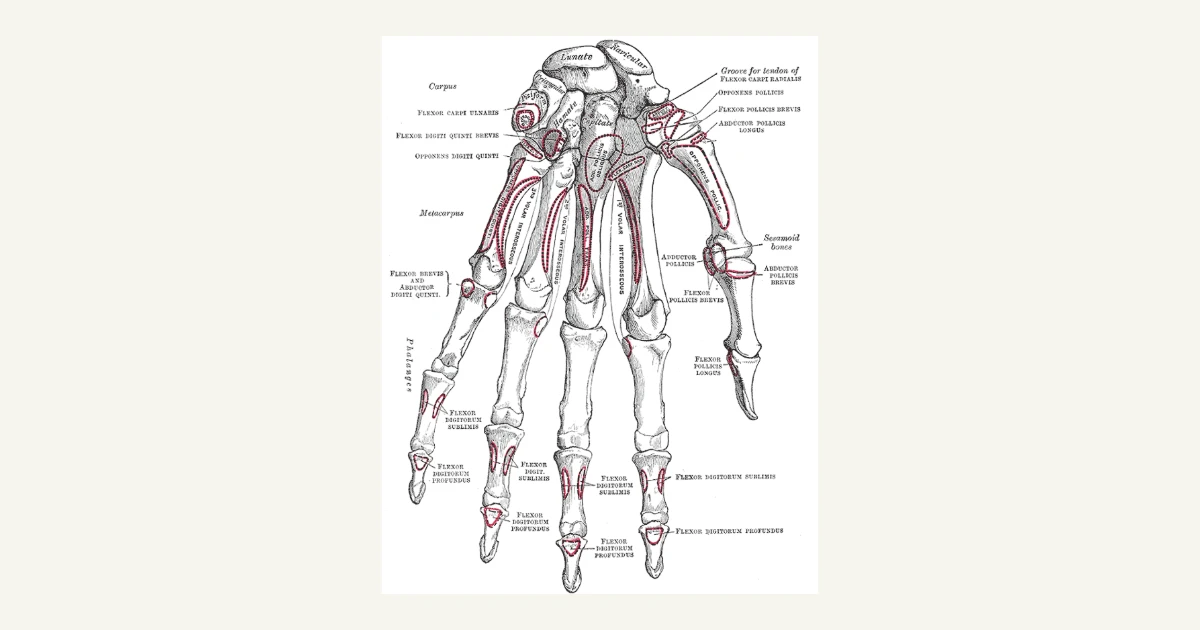
The triangular fibrocartilage complex, or TFCC, sits between the end of the ulna (the forearm bone on the little-finger side) and the small bones of the wrist. It has two jobs. The triangular disc at its centre cushions the load that passes through the little-finger side of the wrist when you grip or lean on your hand. The ligaments around the disc hold the two forearm bones together at the wrist, at the distal radioulnar joint (DRUJ), so your forearm can turn the palm up and down without the bones separating.
Several parts make up the complex: the central disc, the ligaments that join the radius and ulna, and the ligaments to the small wrist bones. It also forms the floor of the sheath for the extensor carpi ulnaris (ECU) tendon. An injury can affect one part or several. When the ulna is longer than the radius, called positive ulnar variance, more of the load through the wrist passes through the disc, and it wears faster.
TFCC sprain vs TFCC tear
A TFCC sprain is a stretch or small tear of the ligaments in the complex. A TFCC tear is a larger break in the disc or its attachments. People use the two terms for the same injury, and an MRI or a wrist arthroscopy grades it. Treatment starts the same way for both.
| Type | What happens | Healing potential |
| Traumatic central tear | A fall or twist punches a hole in the central disc | Poor blood supply; seldom heals back, yet many stop causing pain once the wrist is strong |
| Traumatic peripheral tear | The rim pulls away from the ulna, sometimes with a chip of bone from the ulnar styloid | Good blood supply; can heal, or a surgeon can repair it |
| Foveal tear | The deep ligament attachment to the ulna tears, and the forearm joint can become unstable | Often needs a hand surgeon’s opinion |
| Degenerative tear | Gradual wear and thinning of the disc, usually over 40 and often linked to ulnar impaction | Often needs a hand surgeon’s opinion |
Surgeons describe these tears with the Palmer classification: type 1 for traumatic tears and type 2 for degenerative ones.
TFCC tear symptoms
- Pain on the little-finger side of the wrist. Clinicians call it ulnar-sided wrist pain.
- Pain when you twist. Turning a door handle or key, opening a bottle, wringing a towel or using a screwdriver.
- Pain when you push up. Pushing up from a chair, push-ups, planks and downward dog all load the TFCC.
- Pain with sideways bending. Tilting the wrist toward the little finger, as in a badminton smash, a golf swing or hammering.
- Clicking, popping or catching as you turn the forearm.
- A weak grip, or a wrist that gives way when you carry something palm-up.
- Swelling on the little-finger side of the wrist.
- A loose or prominent ulna head, the bony bump on the back of the wrist, if the forearm joint is unstable.
TFCC injuries tend to feel better with rest and flare as soon as you twist or bear weight again. That pattern is the reason they linger when people return to sport too soon.
What causes a TFCC tear
- A fall on an outstretched hand, landing with the palm down and the wrist bent back.
- A twisting injury. A drill that jams, a racquet or club that catches, or a heavy object that twists the wrist.
- Repeated rotation and sideways loading. Badminton, tennis, pickleball, golf, gymnastics, boxing, rowing and climbing. Striking a hard driving-range mat with a golf club sends a jolt up the little-finger side of the wrist.
- Weight-bearing training. Push-ups, bench press, handstands, front rack positions and yoga on flat palms.
- A wrist fracture, often with a break of the ulnar styloid, the tip of the ulna.
- Age-related wear. The disc thins with age, and a longer ulna raises the load on it.
In Singapore, we see TFCC injuries in badminton and golf players, gym-goers, yoga practitioners and climbers. We also see them in F&B workers who toss woks and carry heavy pots, cleaners who wring mops, and new parents lifting car seats.
Is it the TFCC, or something else on that side of the wrist?
| Condition | Where it hurts | Clues |
| TFCC tear or sprain | Little-finger side, in the soft spot beside the ulna head | Pain with twisting and pushing up; clicking |
| ECU tendinopathy or subluxation | Back of the wrist, little-finger side | Pain or a snap along the tendon as the forearm turns |
| Ulnar impaction syndrome | Little-finger side | Gradual onset; a longer ulna on X-ray; pain with grip and sideways bending |
| Lunotriquetral ligament injury | A little further toward the hand, between two small wrist bones | Clicking and weakness after a fall |
| DRUJ instability or arthritis | The joint between the two forearm bones | A clunk, a loose ulna head, pain when turning the forearm |
| Hook of hamate fracture | Palm side, near the base of the little finger | Golf or badminton grip; pain when gripping |
| Ulnar nerve irritation at the wrist | Palm side, little-finger side | Tingling in the ring and little fingers |
| De Quervain’s tenosynovitis | Thumb side of the wrist | The opposite side; pain with thumb movement |
| Wrist fracture | End of the radius or the tip of the ulna | After a fall; needs an X-ray |
Pain deep in the palm below the little finger, after a club, bat or racquet handle was driven into it, is covered in hook of hamate fracture.
How a TFCC tear is diagnosed
A TFCC tear is diagnosed from the story of the injury, a hands-on examination of the little-finger side of the wrist, and imaging when the result would change the plan. No single test settles it, so clinicians read the pattern across several.
- Ulnar fovea sign. Pressing into the soft hollow between the tip of the ulna and the tendon on the palm side of it. Tenderness there points at the deep attachment of the TFCC to the ulna.
- Press test. Pushing up from a chair with the palms flat. Sharp pain on the little-finger side fits a TFCC tear.
- Ulnocarpal stress test. The wrist is tilted toward the little finger and turned while it is gently compressed. Pain fits a TFCC tear, and also ulnar impaction.
- Piano key and forearm joint tests. The head of the ulna is pressed down and released, and the two forearm bones are moved against each other, to see whether the joint between them is loose.
- Table lift. Lifting the underside of a desk with the palm facing up loads the TFCC. Pain on the little-finger side fits a tear at the rim.
An X-ray comes first after a fall, to rule out a fracture and to show whether the ulna is longer than the radius. An MRI shows many TFCC tears, and some are only seen when contrast is placed in the joint first. Wrist arthroscopy, a small camera passed into the joint by a hand surgeon, is the most accurate way to see a tear, and the surgeon can treat it in the same operation. Hand therapists examine and refer; a doctor orders the scans.
TFCC tear treatment options
| Option | Who provides it | What it does | When it fits |
| Load changes | Hand therapist | Reduces flare-ups while the tissue settles | From day one |
| Wrist splint, or a splint that stops forearm rotation | Hand therapist | Rests the TFCC; the first step for most TFCC injuries | 4 to 6 weeks (or longer) |
| Hand therapy strengthening and proprioception | Hand therapist | Builds the muscles that steady the little-finger side and the forearm joint | After the splint stage, often from week 4 to 6 (or longer) |
| Ulnar-sided wrist band | Hand therapist | Supports the joint during return to activity | Sport and heavy tasks |
| Pain relief | Pharmacist or doctor | Short-term comfort | The first weeks |
| Steroid injection | Doctor | Sometimes used for degenerative tears and ulnar impaction. Whether it suits you is a question for your doctor | Your doctor decides |
| Arthroscopic debridement (trimming) | Orthopedic or Hand surgeon | Relieves pain from central tears that do not settle | After 3 to 6 months of good conservative care |
| TFCC repair | Hand surgeon | Rebuilds stability for peripheral and foveal tears | An unstable forearm joint, or peripheral tears that do not settle |
| Ulnar shortening osteotomy | Hand surgeon | Shortens the ulna to take load off the TFCC | Ulnar impaction syndrome |
- Splinting comes first. For most TFCC injuries, a splint rests the tissue for 4 to 6 weeks. A wrist splint suits many sprains. If the forearm joint is irritated or unstable, your therapist may use a splint that also stops the forearm turning, because rotation loads the TFCC. Your therapist can mold a custom splint for either purpose.
- Change the load. Avoid twisting under load, bearing weight on a bent-back wrist, and tilting the wrist toward the little finger. Carry bags with your palm facing your body, lift with two hands, and use thicker grips on tools.
- Hand therapy builds a stable wrist. Two muscles steady the little-finger side of the wrist: extensor carpi ulnaris (ECU) along the back and flexor carpi ulnaris (FCU) along the front. The pronator quadratus, a small muscle across the front of the forearm near the wrist, holds the forearm bones together. Your therapist trains these muscles first, then your grip, joint position sense and weight-bearing, in stages.
- Injections. A doctor sometimes injects a steroid into the wrist, most often for degenerative tears and ulnar impaction. Whether one suits you is a question for your doctor. Hand therapists do not give injections; we work alongside your doctor’s plan.
- Surgery. Surgeons trim central tears that stay painful (arthroscopic debridement), stitch peripheral and foveal tears back to the bone (repair), and shorten a long ulna to take load off the TFCC (ulnar shortening osteotomy). After a repair, expect 4 to 6 weeks in a cast or splint that limits forearm rotation, then 3 to 6 months of hand therapy. What the weeks after the operation look like is set out in hand therapy after surgery.
Hand therapy for a TFCC injury at Phoenix
TFCC injuries sit with our five hand therapists, all AHPC-registered, at Orchard, Serangoon, Tampines, Tanjong Pagar and Jurong East. Every appointment is one-to-one with your therapist for the full 45 minutes.
At your first appointment, you can expect:
- The story of the injury. We ask about the fall or twist, your sport, your work and the movements that hurt.
- A focused wrist examination. We run the fovea sign, press test and DRUJ tests, and measure your grip with a calibrated gauge.
- A referral when needed. If a fracture, an unstable forearm joint or a large tear is likely, we refer you to a doctor for imaging and share our findings.
- A custom splint. We make a wrist splint, or a splint that limits forearm rotation, in the same appointment.
- A load plan for work, home and sport.
- A starter exercise plan that keeps the fingers, elbow and shoulder moving while the wrist rests.
At follow-up appointments, we wean you off the splint, build strength and joint control, and plan your return to sport. The TFCC program is set at 12 appointments across Stages 1 to 4, and your therapist confirms your plan at your first visit. After TFCC surgery, we follow your surgeon’s protocol.
Contact us for a TFCC assessment. WhatsApp us.
TFCC recovery time
| Situation | What happens | Typical timeframe |
| TFCC sprain or mild injury | Splint, then strength work | 4 to 8 weeks |
| Stable tear, treated without surgery | Splint for 4 to 6 weeks, then a strength program | 6 to 12 weeks; return to sport around 3 months |
| Degenerative tear | Load changes and strength work; flares with heavy use | 6 to 12 weeks to settle |
| After arthroscopic debridement | Early movement, then progressive controlled strengthening | Light use from 2 to 4 weeks; sport from 8 to 12 weeks |
| After TFCC repair | Cast or splint that limits forearm rotation, then graded movement | 4 to 6 weeks protected; full activity at 4 to 6 months |
| After ulnar shortening osteotomy | The bone heals, then strengthening | Bone healing 8 to 12 weeks; full recovery 4 to 6 months or longer |
You are on track if twisting hurts less week by week, pushing up from a chair stops hurting, and your grip gets stronger. Contact your therapist if the wrist starts to clunk, pain rises despite the splint, or tingling appears in the ring and little fingers.
Braces, bands and taping for a TFCC injury
- Splints for the protection stage. A rigid wrist splint, or a splint that limits forearm rotation, rests the TFCC in the first 4 to 6 weeks.
- Ulnar-sided wrist bands for return to activity. A band that wraps the wrist above the wrist bones presses the two forearm bones together and supports the forearm joint during gripping and weight-bearing. Several ready-made designs exist, including the WristWidget, which a hand therapist designed. Wear the band for sport, gym and heavy tasks rather than all day.
- Standard wrist braces. A brace that holds the wrist straight helps in the early weeks. It does not stop the forearm turning, which matters for tears that involve the forearm joint.
- Taping. Kinesiology tape and rigid tape have limited evidence for TFCC injuries. Some athletes find tape helpful when they return to sport, and your therapist can show you a method.
Exercises for a TFCC injury
Start these once your hand therapist or doctor has checked the wrist and ruled out a fracture or an unstable forearm joint.
Stage 1: protect (splint stage)
- Finger tendon glides. Move through a straight hand, hook fist, full fist and flat fist. 10 rounds, 3 times a day.
- Elbow and shoulder movement. Bend and straighten the elbow and lift the arm overhead. 10 repeats, 3 times a day.
- Wrist bends out of the splint, if your therapist allows. Bend the wrist up and down within comfort, without turning the forearm. 10 repeats, 3 times a day.
Stage 2: activate (after the splint stage)
- Forearm turn holds. With your elbow at your side and your thumb pointing up, try to turn your palm down against your other hand without moving. This works the pronator quadratus. Hold 5 to 10 seconds, 5 times.
- Wrist lift holds. Rest your forearm on a table, palm down, and lift the back of your hand against your other hand without moving. This works the ECU. Hold 5 to 10 seconds, 5 times.
- Dart thrower’s motion. Move the wrist on a diagonal, from back and toward the thumb to forward and toward the little finger. 10 to 15 repeats, twice a day.
- Grip with therapy putty. 2 to 3 sets of 10.
Stage 3: strengthen and load
- Wrist curls and extensions with a light weight, lowering over 3 seconds. 3 sets of 12.
- Forearm rotation with a light hammer, within a pain-free range. 3 sets of 10.
- Weight-bearing progression. Lean on a table, then do a wall push-up, a knee push-up on fists or push-up handles, and a full push-up. Move on once the current step is pain-free for 3 sets of 10.
- Ball circles on a wall for joint control. 30 seconds, 3 times.
- Sport drills, such as shadow swings and light hitting.
Stop or scale back if pain on the little-finger side goes above 3 out of 10, a new click comes with pain, or pain is higher the next morning.
One habit to drop: stretching the wrist into twisting or sideways bending to “loosen” it. Those stretches load the TFCC and keep it irritated.
Returning to badminton, golf and the gym
Return to full sport once twisting is pain-free, your grip is within about 10% of your other hand, and the press test and a push-up are pain-free.
- Badminton, tennis and pickleball. Start with drives and clears, and add smashes last. Check your grip size, because a thin grip makes you squeeze harder. Wear an ulnar-sided band for play at first.
- Golf. Start with half swings and short irons, and hit off grass or a good mat. Build range appointments in steps, because hard mat strikes jar the little-finger side of the wrist.
- Gym. Use push-up handles or fists, choose dumbbells and neutral grips for pressing, and bring back front rack positions last.
- Yoga. Use fists, blocks or a wedge under the heel of the hand, or forearm variations, until weight-bearing is pain-free.
- Climbing. Start with larger holds and static moves until your grip is close to the other side.
Mistakes that slow TFCC recovery
- Going back to flat-palm push-ups and yoga too soon. Weight-bearing on a bent-back wrist puts a heavy load on the TFCC.
- Stretching into twisting or sideways bending. It irritates the tear.
- Wearing a brace that lets the forearm turn when your tear involves the forearm joint.
- Ignoring a clunk or a loose ulna head. Instability needs a hand surgeon’s opinion.
- Carrying heavy bags palm-up. It loads the forearm joint. Carry with the palm facing your body.
- Waiting months without an assessment. Pain that persists after 6 weeks of good care deserves imaging and a surgeon’s view.
When to see a doctor
See a doctor on the same day if:
- after a fall, the wrist looks deformed or swells fast
- the hollow at the base of the thumb is tender after a fall (possible scaphoid fracture)
- the ulna head clunks out of place, or the forearm bones feel loose
- your fingers are numb, pale or cold
- the wrist is hot, red and swollen, or you have a fever
Make an appointment with a doctor soon if:
- you have tingling in the ring and little fingers
- pain has not started to ease after 2 weeks
- the wrist clicks with weakness
- pain persists after 6 weeks of splinting and therapy
Questions people ask about TFCC tears
Will a TFCC tear heal on its own?
Many TFCC sprains and stable tears settle without surgery, with 4 to 6 weeks in a splint and a hand therapy program over 6 to 12 weeks. Tears in the outer rim have a blood supply and can heal. Central tears seldom heal back, yet many stop causing pain once the wrist is strong. A hand surgeon reviews tears that stay painful after 3 to 6 months of good care, or that leave the forearm joint unstable.
How can you tell if you have a TFCC tear?
A TFCC tear causes pain on the little-finger side of the wrist when you twist, grip or push up from a chair, often with clicking and a weak grip. A clinician checks for tenderness in the soft spot beside the ulna (the fovea sign), pain when you push up from a chair (the press test), and a loose forearm joint. A doctor confirms the tear with an MRI or a wrist arthroscopy.
Is TFCC a serious injury?
Most TFCC injuries are not serious and settle with a splint and hand therapy. A TFCC tear becomes more serious if the forearm joint is unstable, if it comes with a wrist fracture, or if pain persists for months, and these need a hand surgeon’s opinion. Getting the diagnosis right early matters, because a scaphoid fracture or ligament tear can look like a TFCC injury.
What happens if you leave a TFCC tear untreated?
Many mild TFCC injuries settle with rest from the movements that hurt. Tears that keep getting loaded can leave lasting pain on the little-finger side, a weak grip, clicking, and in some cases an unstable forearm joint or arthritis over time. Pain that persists after 6 weeks, a clunk, or a loose ulna head needs an assessment and imaging.
What does a TFCC injury feel like?
A TFCC injury feels like pain on the little-finger side of the wrist. It sharpens when you twist, such as turning a door handle, opening a bottle or wringing a towel, and when you push up from a chair. Many people feel a click or pop as the forearm turns, a weak grip, or a wrist that gives way when carrying something palm-up. Tingling in the ring and little fingers points to a nerve problem instead.
How long does a TFCC injury take to heal?
A TFCC sprain often settles in 4 to 6 weeks. A stable tear treated without surgery takes 6 to 12 weeks, with a return to sport around 3 months. After arthroscopic trimming, light use returns in 2 to 4 weeks and sport in 8 to 12 weeks. After a TFCC repair, expect 4 to 6 weeks of protection and 4 to 6 months to full activity.
What is the difference between a TFCC sprain and a TFCC tear?
A TFCC sprain is a stretch or small tear of the ligaments in the complex, and a TFCC tear is a larger break in the disc or its attachments. People often use the two terms for the same injury. An MRI or a wrist arthroscopy grades the damage. Treatment starts the same way for both: a splint, changes to the movements that hurt, and a hand therapy program.
Should I wear a brace or band for a TFCC tear?
In the first 4 to 6 weeks, a rigid splint rests the TFCC better than a soft brace, and some tears need a splint that also stops the forearm turning. For the return to sport and heavy tasks, an ulnar-sided wrist band supports the forearm joint during gripping and weight-bearing. A hand therapist can choose and fit the right support for your tear.
Do I need surgery for a TFCC tear?
Most people with a TFCC injury do not need surgery. A hand surgeon considers an operation when pain persists after 3 to 6 months of good conservative care, when the forearm joint is unstable, or when a long ulna overloads the TFCC. Options include trimming a central tear, repairing a peripheral or foveal tear, and shortening the ulna. Hand therapy after surgery improves movement and strength.
Do I need a referral to see a hand therapist for a TFCC injury in Singapore?
No. You can see a hand therapist at Phoenix Rehab Group without a doctor’s referral. If your wrist needs an X-ray, MRI or a surgeon’s opinion, we refer you to a doctor and share our findings. Some insurers ask for a doctor’s referral before they reimburse therapy, so check your policy first.
Booking a TFCC assessment
If the little-finger side of your wrist hurts when you twist, grip or push up, a hand therapist can find the cause, fit a splint and start your rehab in the first appointment.
- WhatsApp: Message us. Your message opens with “Hi, I’d like to schedule a hand therapy assessment for a TFCC injury.”
- Clinics: Orchard, Serangoon, Tampines, Tanjong Pagar at International Plaza and Jurong East at Vision Exchange, opening 25 October 2026.
- Referral: not required. Some insurers need one for claims, so check your policy.
- Insurance: we provide itemised invoices, and a clinical report if your insurer asks for one.
Numbness in the ring and little fingers, worse with the elbow bent, points at the ulnar nerve at the elbow rather than the wrist. See the Cubital Tunnel Recovery Program, which sets out the four stages and what moves you up.
A sore hollow at the base of the thumb after a fall is the classic missed scaphoid fracture. See the Scaphoid Fracture Recovery Program, which sets out the four stages and what moves you up.
Where are you with this right now?
1. It is settling on its own
Many hand problems settle with a well fitted splint, changes to what provokes them, and tendon gliding. A tender scar and weak grip for a few weeks after surgery are usual. If it is easing week on week, and grip is improving month on month, it is behaving as expected. You do not need us for this, and we would rather say so.
2. It has stopped improving
You hand the jar to someone else. You button the shirt one-handed. You have stopped using that hand for anything that matters and barely noticed when it started.
The hand is the part of the body where stiffness sets in fastest, because a hand that hurts gets used less within days rather than weeks. That is the gap worth measuring, and it is not measured by how you feel on the day.
The Stalled Recovery Review is three appointments over three weeks with the same therapist, because what a joint does under load cannot be read in one visit. The first finds what is limiting it. The next two measure how it responds. $690, nett, no GST, which is three appointments at $230.
3. You have had surgery, or you have a date
Recovery after an operation has a shape, and knowing which stage you are in tells you whether you are on it. See the recovery programs, or hand therapy after surgery if you are not sure which applies to you.
All of it runs on the same four stages. The Phoenix Recovery Protocol explains what each stage works on and what you have to meet to move up. No referral needed to start.
Next step
Find out which stage you are in
Pain is the first thing to leave. Movement and strength are the last things trained back, and most people stop before that part is done. One Assessment and Treatment is a single 45-minute appointment at $230, nett, no GST. Your therapist finds what is actually limiting you, treats it in the same appointment, and you leave with your current stage and a written plan.
Prefer to phone? Each of our five clinics has its own number on the clinics page. No referral needed to book.
Related reading
- hand therapy after surgery
- carpal tunnel
- Custom Made Finger, Hand & Elbow Splints Singapore
- Hand Occupational Therapist Singapore | Phoenix Rehab Group
- Wrist Fracture Recovery Program | Hand Therapy Singapore
- The Phoenix Recovery Protocol, and the four stages
- All recovery programs, hand and physio
- Hook of hamate fracture
- De Quervain’s tenosynovitis
Where we are
Clinics across Singapore
ORCHARD
400 Orchard Road #12-12
Orchard Towers, S238875
NS22 Orchard MRT
Physiotherapy and hand therapy in Orchard →
WhatsApp 8800 1830TAMPINES
9 Tampines Grande #01-20
Asia Green, S528735
EW2DT32 Tampines MRT
Physiotherapy and hand therapy in Tampines →
WhatsApp 8780 9608SERANGOON
265 Serangoon Central Drive #04-269
S550265 · Lift C only
NE12CC13 Serangoon MRT
Physiotherapy and hand therapy in Serangoon →
WhatsApp 8892 4121TANJONG PAGAR
10 Anson Road #02-77A
International Plaza, S079903
EW15 Tanjong Pagar MRT
Physiotherapy and hand therapy in Tanjong Pagar →
WhatsApp 8227 7074JURONG EAST
2 Venture Drive #02-02
Vision Exchange, S608526
NS1EW24 Jurong East MRT
Opening 25 October 2026
Physiotherapy and hand therapy in Jurong East →
WhatsApp 8242 7340What our patients say
Google reviews from our clinics in Singapore.



