
Written by Mavis Tham, Shamaine Soh and Yuna Zhuang, Principal Hand Occupational Therapists at Phoenix Rehab.Clinically reviewed by Nigel Chua, Principal Hand Occupational Therapist & Director, AHPC A1300362Z.Last reviewed 2 October 2026.
A wrist sprain is a stretch or tear of the ligaments that hold your wrist bones together. It happens when you fall on an outstretched hand, twist your wrist or take a knock at sport. Most wrist sprains heal in a few weeks with early care, a brace for comfort and the right exercises.
The risk lies in what a “sprain” can hide. The same fall can break the scaphoid, a small wrist bone, or tear the scapholunate ligament, which holds two wrist bones together. Both can pass for a mild sprain on the day, and neither shows up on every first X-ray. Missed, either one can lead to wrist arthritis. This page explains when a sprain needs an X-ray or a hand surgeon, then gives you the full rehab plan.
At Phoenix Rehab Group, our hand therapists examine your wrist for the signs of both injuries and refer you to a doctor for imaging when you need it. We then guide your rehab back to work and sport. You do not need a doctor’s referral. If your wrist is still sore a week after the injury, or you want a clear plan from the start, WhatsApp us to Get Assessed & Treated.
Wrist sprain at a glance
| What it is | A stretch or tear of one or more wrist ligaments, the tough bands that join the wrist bones |
| Common causes | A fall on an outstretched hand, a twist, or a knock at sport |
| Grades | Grade 1 stretch, grade 2 partial tear, grade 3 complete tear |
| Two injuries to rule out | Scaphoid fracture and scapholunate ligament tear; both can look like a mild sprain and both can look normal on the first X-ray |
| First-line care | Protect, ice, compress and raise the wrist for 48 to 72 hours; a brace for comfort; graded exercise |
| Typical recovery | About 1 to 3 weeks (grade 1), 3 to 6 weeks (grade 2), 8 to 12 weeks or longer (grade 3) |
| See a doctor first if | You fell and the hollow at the base of your thumb is tender, the wrist looks deformed, or your fingers are numb, pale or cold |
What is a wrist sprain?
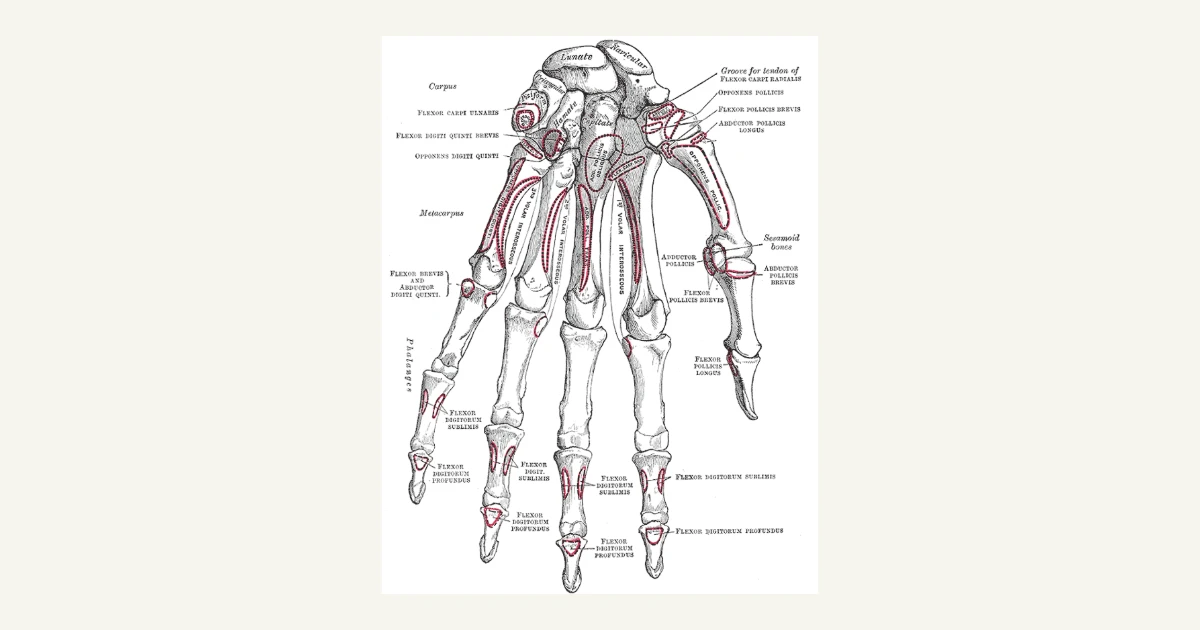
Your wrist is a cluster of eight small bones, the carpal bones, between your two forearm bones and the long bones of your hand. Dozens of ligaments, short bands of tough tissue, tie these bones to each other and to the forearm. A wrist sprain is a stretch or tear in one or more of those ligaments.
The ligament that matters most after a fall is the scapholunate ligament. It joins the scaphoid, the bone at the thumb side of the wrist, to the lunate, the bone beside it in the middle of the wrist. Tears of this ligament are the most common cause of an unstable wrist.
You may also see a wrist sprain called a sprained wrist, a wrist ligament injury or, for severe cases, a wrist ligament tear.
Wrist pain…from a wrist sprain or strain? What’s the difference?
A sprain injures a ligament, which joins bone to bone.
A strain injures a muscle or tendon, which joins muscle to bone. Falls and twists cause most wrist sprains. Wrist strains come from a heavy lift, a sudden pull or overuse. First aid is much the same for both, and a sprain from a fall also needs the fracture checks further down this page.
Wrist sprain grades
| Grade | What happens to the ligament | What you notice |
| Grade 1 (mild) | Stretched, with tiny tears in its fibers | Pain and mild swelling; the wrist feels stable |
| Grade 2 (moderate) | Torn in part | More swelling and bruising, a weaker grip; the wrist may feel loose |
| Grade 3 (severe) | Torn through (complete) | Marked pain and weakness; the wrist can feel unstable or clunk; some need surgery |
How to tell if your wrist is sprained
Wrist sprain symptoms start at the moment of injury and build over the first day:
- Pain when you move the wrist, grip or lean on your hand.
- Swelling within a few hours, and sometimes bruising over the next day or two.
- Tenderness when you press over the injured ligament.
- Stiffness and a weaker grip. Turning a key, opening a jar or pushing up from a chair hurts.
- A pop or tearing feeling at the moment of injury, in some grade 2 and 3 sprains.
- Clicking or clunking with weakness. This points to a ligament tear and needs a hand surgeon’s review.
Moving the wrist does not rule out a break. Most people with a sprain can still move the wrist, though it hurts. So can many people with a broken scaphoid, and that is one reason this fracture gets missed.
Little swelling does not rule out a serious injury. Mild sprains can swell very little. So can a scaphoid fracture or a scapholunate tear. After a fall, the spot that hurts tells you more than the amount of swelling.
Conditions that look like a sprained wrist
Several injuries feel like a sprain in the first days. The first two in this table are the ones people miss.
| Condition | Where it hurts | Clues |
| Scaphoid fracture | The hollow at the base of the thumb (the anatomical snuffbox) | Fall on an outstretched hand; can hide on the first X-ray |
| Scapholunate ligament tear | Back of the wrist, in line with the index and middle finger knuckles | Weak grip; click or clunk; the X-ray can look normal |
| Distal radius fracture | End of the larger forearm bone, above the wrist | Fast swelling, sometimes a visible bend; common in children and adults over 50 |
| TFCC injury | Little-finger side of the wrist | Pain when you turn a key, pour or lean on the hand |
| Sprained thumb | Thumb knuckle nearest the palm, on the side facing the index finger | Thumb forced back or sideways by a ball or a fall |
| De Quervain’s tenosynovitis | Thumb side of the wrist, over the bony bump | No fall; builds over weeks with lifting and gripping |
| Ganglion | Back or front of the wrist | A soft, round lump; aches with pressure or leaning on the hand |
| Other wrist bone fractures | Back of the wrist, or the palm on the little-finger side | A chip off a small bone after a fall; hook of hamate fractures in golf and racquet sports |
Sprain or fracture? How doctors tell them apart
You cannot tell a sprain from a break by feel alone, and in some cases a clinician cannot either without an X-ray. A doctor orders an X-ray after a fall if any of these apply:
- tenderness in the anatomical snuffbox, the hollow at the base of the thumb
- tenderness when a clinician presses on a bone, such as the end of the radius
- a visible bend, bump or change in the shape of the wrist
- swelling that builds fast in the first hour or two
- you cannot take weight through the hand, for example to push up from a chair
- pain that has not started to ease after 3 to 5 days
If the first X-ray looks normal and the snuffbox still hurts, doctors treat it as a possible scaphoid fracture. They put you in a splint or cast and repeat the X-ray at about 10 to 14 days, or order an MRI scan, which shows a hidden fracture sooner. A scaphoid fracture treated as a sprain can fail to heal, and an unhealed scaphoid leads to arthritis over the following years.
If the wrist clicks, clunks or feels weak weeks after the fall, ask about the scapholunate ligament. The standard X-ray can look normal early on. A hand surgeon may order special X-ray views, an MRI or a wrist arthroscopy (a camera inside the joint) to see the tear. Surgeons get better results repairing this ligament within the first few weeks after injury, so a sprain that is not settling as expected deserves an early review
What causes wrist pain from a wrist sprain?
A fall on an outstretched hand causes most wrist sprains. The wrist bends back as your body weight lands on the palm, and the ligaments take the force. Twisting injuries and direct knocks cause the rest. In Singapore, we see wrist sprains most often from:
- Court and ball sports. Badminton lunges and dives, basketball, volleyball, netball, rugby, football goalkeeping and ultimate frisbee. The same sports cause many finger injuries; see finger sprain.
- Wheels and boards. Inline skating and skateboarding at East Coast Park, cycling falls on park connectors, and e-scooter falls.
- Gym and studio training. Push-ups, burpees, handstands, kettlebell cleans and yoga poses that load a bent-back wrist, such as downward dog and crow pose.
- Climbing and bouldering. Falls from the wall and awkward catches on holds.
- Slips. Wet floors, rain-soaked walkways and bathroom falls, more so for older adults.
Other factors raise the risk: a previous sprain on the same wrist, weak grip and forearm muscles, very flexible joints, and skating or boarding without wrist guards.
How is a wrist sprain diagnosed?
A hand therapist or doctor starts with the story of the injury: how you fell, where the hand landed, and whether you felt a pop. The examination maps the tender spots, checks movement and grip strength against your other hand, and tests the ligaments.
- Snuffbox and bone checks look for a scaphoid or radius fracture.
- The scaphoid shift (Watson) test checks the scapholunate ligament. The clinician presses on the scaphoid while moving your wrist, and a painful clunk suggests a tear.
- Grip and weight-bearing tests show how much load the wrist can take.
If the examination suggests a fracture or a ligament tear, your hand therapist refers you to a doctor. The doctor orders the imaging: X-rays first, then an MRI or CT scan if the X-ray is normal and the suspicion stays high.
Wrist pain / sprain treatment in Singapore: your options
Most wrist sprains settle with first aid, a short period of support and a graded exercise plan. Treatment steps up for the injuries that need more.
| Option | Who provides it | What the evidence shows | When it fits |
| First aid: protect, ice, compress, raise | You, from day one | Eases pain and swelling in the first days | First 48 to 72 hours |
| Wrist brace or custom splint | Pharmacy (brace) or hand therapist (custom splint) | Support eases pain; long bracing causes stiffness | Mild sprains 1 to 2 weeks; moderate sprains longer, as advised |
| Graded exercise and proprioception training | Hand therapist | Improves movement, grip and control of the joint | From the first week, within comfort |
| Graded exercise and proprioception training | Pharmacist or doctor | Short-term comfort | First days |
| Cast or rigid splint | Doctor | Protects a suspected or confirmed fracture | Until a doctor clears you |
| Ligament repair or reconstruction | Hand surgeon | Rebuilds stability after a complete tear | Complete scapholunate tears; timing matters |
First aid for the first 48 to 72 hours. Rest the wrist from painful tasks. Apply an ice pack wrapped in a cloth for 15 to 20 minutes, every 2 to 3 hours while awake. Wrap a compression bandage from the knuckles to the forearm, snug enough to support the wrist without causing tingling or color change. Raise the hand above heart level when you sit. Keep the fingers moving, because finger movement helps clear the swelling.
Ice first, heat later. Ice suits the first two to three days, while the wrist is swelling. Heat suits the stiff stage after that, for example a warm pack before your exercises.
Choosing a wrist brace for a sprain. A simple wrist brace with a stiff support along the palm side holds the wrist steady and eases pain. Wear it for heavier tasks and at night in the first 1 to 2 weeks, then wean off it as the pain settles. Weeks of bracing weaken the forearm muscles and stiffen the wrist, which slows your return to sport. If the brace digs in or slips, or your sprain is moderate, a hand therapist can make a custom splint shaped to your wrist.
Exercise starts early. Movement within comfort from the first week keeps the wrist from stiffening. As the pain settles, your therapist adds strength and proprioception training. Proprioception is your sense of where a joint sits without looking at it. The muscles around the wrist help protect its ligaments, and this training teaches them to react on time.
Surgery for complete ligament tears. A complete scapholunate tear does not heal on its own. A hand surgeon may repair it or, for older tears, reconstruct it with a tendon graft. After surgery, expect a period in a cast or splint followed by 3 to 6 months of hand therapy.
Hand therapy for painful and/or clicking wrist sprains at Phoenix Rehab Group
Our hand therapy team is led by Nigel Chua, Principal Hand Occupational Therapist & Director, who has treated hand and wrist conditions since 2005. Our hand therapists are AHPC-registered occupational therapists and physiotherapists with post-graduate training in hand therapy.
At your first appointment, you can expect:
- The story of the injury. We ask how you fell, what you felt, and what you need your wrist for at work and in sport.
- A full wrist examination. We check the snuffbox, the bones and the ligaments, and compare grip strength with your other hand.
- A referral when needed. If anything points to a fracture or a ligament tear, we refer you to a doctor for imaging before we load the wrist.
- Support that fits. Advice on a ready-made brace, or a custom wrist splint made in the same appointment when you need more protection.
- A starter exercise plan. Movement for the wrist, fingers and forearm, plus a plan for work and sleep.
At follow-up appointments, we progress your strength and proprioception work and test your readiness for sport, including grip strength and a pain-free push-up. Most mild to moderate sprains need 2 to 5 appointments over 3 to 6 weeks.
Contact us for a wrist sprain assessment. WhatsApp us.
Wrist sprain recovery time
Recovery depends on the grade of the sprain and on which ligament took the force. These timeframes assume early care and a graded exercise plan. Your therapist or surgeon may give you different targets; use theirs.
| Injury | What happens | Typical timeframe |
| Grade 1 sprain | Pain settles; full movement returns | About 1 to 3 weeks |
| Grade 2 sprain | Short period of support, then strength work | About 3 to 6 weeks |
| Grade 3 sprain or ligament tear | Longer protection; some people need surgery | 8 to 12 weeks or longer |
| After scapholunate ligament surgery | Cast or splint, then movement, then strength | 3 to 6 months or longer |
You are on track if pain eases week by week, you can lift a full kettle without a sharp twinge, and pushing up from a chair stops hurting. Contact our hand occupational therapist if pain rises despite rest, the wrist starts to click or clunk, or swelling returns after activity.
Wrist sprain exercises
Start these once a doctor or hand therapist has ruled out a fracture.
Stage 1: improve movement (first 1 to 2 weeks)
- Finger tendon glides. Move through a straight hand, hook fist, full fist and flat fist. 10 repeats, 3 times a day.
- Wrist bends. Rest your forearm on a table with the hand over the edge. Bend the wrist up and down within comfort. 10 repeats, 3 times a day.
- Forearm turns. With your elbow bent at your side, turn the palm up and down. 10 repeats, 3 times a day.
Stage 2: control and strength (pain settling)
- Dart thrower’s motion. Move the wrist on a diagonal, from back and toward the thumb to forward and toward the little finger, as if throwing a dart. This path puts little stress on the scapholunate ligament. 10 to 15 repeats, twice a day.
- Wrist holds. Press the back of the hand, then the palm, against your other hand without moving. Hold 5 to 10 seconds, 5 times each way.
- Grip with therapy putty. 2 to 3 sets of 10.
- Ball circles on a wall. Hold a small ball against a wall with your arm straight and draw small circles. 30 seconds, 3 times.
Stage 3: load and return to sport
- Weight-bearing progressions. Lean on a table, then do a wall push-up, a knee push-up and a full push-up. Move to the next step once the current one is pain-free for 3 sets of 10.
- Wrist curls with a light weight. Palm up and palm down, lowering over 3 seconds. 3 sets of 12.
- Catch and throw. Catch a light ball with both hands, then one, and build speed.
Stop or scale back if pain during an exercise goes above 3 out of 10, the wrist clicks or clunks, or pain is higher the next morning.
One exercise group to delay: full push-ups, planks and downward dog load a bent-back wrist with your body weight. Leave them until stage 3.
Mistakes that slow wrist pains or wrist sprain recovery
- Skipping the X-ray after a fall. Snuffbox pain needs a doctor, even if the wrist moves.
- Wearing a brace for weeks. Short-term support helps; long-term bracing leaves the wrist stiff and weak.
- Complete rest. Movement within comfort from the first week keeps the wrist from stiffening.
- Heat in the first 48 hours. Heat can increase swelling while the injury is fresh.
- Returning to push-ups and yoga too soon. Body-weight loading on a bent-back wrist belongs at the end of rehab.
- Ignoring a click or clunk. A new click with weakness after a fall needs a hand surgeon’s review.
Returning to badminton, the gym and yoga
Return to full sport once you have full pain-free movement, grip strength within about 10% of your other hand, and a pain-free push-up for gym and yoga work. Your therapist tests these with you.
- Badminton and racquet sports. Start with drives and clears, then add smashes and lunges. Check your grip size; a grip that is too thin makes you squeeze harder.
- Gym. Use push-up handles or dumbbells to keep the wrist straight during push-ups, and build back to barbell front racks and cleans last.
- Yoga. Spread the fingers and press through the knuckles, put a folded mat or wedge under the heel of the hand, or work on the forearms or fists until the wrist tolerates full weight.
- Skating and boarding. Wear wrist guards. They lower the risk of wrist injury in a fall.
When to see a doctor
See a doctor on the same day if:
- the hollow at the base of the thumb is tender after a fall (possible scaphoid fracture)
- the wrist looks bent or deformed, or swelling builds fast
- your fingers are numb, pale, blue or cold
- there is an open wound over the injury
Make an appointment with a doctor soon if:
- pain has not started to ease after 3 to 5 days
- the wrist clicks, clunks or gives way, with a weak grip
- pain persists after 2 weeks of good care
Frequently asked questions about wrist sprains hand therapy management and treatment in singapore
How long does it take to heal a wrist sprain?
A grade 1 wrist sprain heals in about 1 to 3 weeks and a grade 2 sprain in about 3 to 6 weeks. A grade 3 sprain or ligament tear takes 8 to 12 weeks or longer, and some need surgery. Early first aid, a short spell in a brace and graded exercise keep recovery on track. Pain that has not eased after 3 to 5 days, or a wrist that clicks and feels weak, needs a doctor’s review for a hidden fracture or ligament tear.
How do I tell if my wrist is sprained?
A sprained wrist hurts, swells and feels weak after a fall or twist, and it hurts more when you grip or lean on your hand. A sprain and a fracture can feel alike, so tenderness in the hollow at the base of your thumb, a bent shape, fast swelling or numb fingers mean you need an X-ray. A hand therapist can examine the ligaments and refer you to a doctor when imaging is needed.
What can be mistaken for a sprained wrist?
A scaphoid fracture and a scapholunate ligament tear are the two injuries most often mistaken for a sprained wrist. Both follow a fall on an outstretched hand, and both can look normal on the first X-ray. A distal radius fracture, a TFCC injury on the little-finger side, a sprained thumb and De Quervain’s tenosynovitis can also feel like a wrist sprain. Tenderness in the snuffbox after a fall needs a doctor’s review.
Can you still move your wrist if it’s sprained?
Yes. Most people with a sprained wrist can move it, though movement hurts. Movement does not rule out a fracture, because many people with a broken scaphoid can still move the wrist and fingers. After a fall, the location of the pain tells you more than how well the wrist moves. Tenderness at the base of the thumb or over a bone means you need an X-ray before you start exercises.
Should I wear a wrist brace for a sprain?
A wrist brace helps in the first 1 to 2 weeks of a mild sprain. Wear it for heavier tasks and at night, then wean off it as the pain settles. Weeks of bracing stiffen the wrist and weaken the forearm muscles. If a ready-made brace digs in or slips, or your sprain is moderate, a hand therapist can make a custom splint that holds the wrist in the right position.
Should I use heat or ice on a sprained wrist?
Use ice in the first 48 to 72 hours, while the wrist is swelling, for 15 to 20 minutes at a time, wrapped in a cloth. After that, heat helps with stiffness, for example a warm pack before your exercises. Avoid heat on a fresh injury, because it can increase swelling. If the swelling keeps building after three days, see a doctor to rule out a fracture.
Should I see a doctor or a hand therapist for a sprained wrist?
See a doctor first if you fell and have tenderness in the hollow at the base of the thumb, a bent wrist, fast swelling, or numb or cold fingers, because these need an X-ray. For a twist or a mild sprain without those signs, you can see a hand therapist in Singapore without a referral. The therapist examines the ligaments, refers you for imaging when needed and plans your rehab.
Do I need a referral to see a hand therapist for a wrist sprain in Singapore?
No. You can see a hand therapist at Phoenix Rehab Group without a doctor’s referral. If the examination points to a fracture or a ligament tear, we refer you to a doctor for imaging and share our findings. Some insurers ask for a doctor’s referral before they reimburse therapy, so check your policy first.
Contact us for a wrist sprain assessment
If your wrist still hurts days after a fall or twist, or you want a clear plan back to sport, a hand therapist can check for hidden injuries and start your rehab.
- WhatsApp: Message us. Your message opens with “Hi, I’d like to schedule a hand therapy assessment for a wrist sprain.”
- Clinics: Orchard, Serangoon, Tampines, Tanjong Pagar at International Plaza and Jurong East at Vision Exchange, opening 25 October 2026.
- Referral: not required. Some insurers need one for claims, so check your policy.
- Insurance: we provide itemised invoices, and a clinical report if your insurer asks for one.
A sore hollow at the base of the thumb after a fall is the classic missed scaphoid fracture. See the Scaphoid Fracture Recovery Program, which sets out the four stages and what moves you up.
Numbness along one side of a finger after a laceration is a nerve rather than a wrist problem. The Digital Nerve Repair Recovery Program sets out the four stages and the criteria to move up.
For a break in one of the long bones of the palm, the safe splinting position is the thing worth asking about. The Finger and Metacarpal Fracture Recovery Program sets out the four stages and the criteria to move up.
Where are you with this right now?
1. It is settling on its own
Wrist sprains and irritations often settle over six to twelve weeks. Stiffness after a cast comes off is expected and is worked on rather than waited out. If the range is improving week on week and you are using the hand more, that is the normal course. You do not need us for this, and we would rather say so.
2. It has stopped improving
You turn taps with the other hand. Pushing up out of a chair is something you plan. The jar goes to someone else.
The bone heals on a timetable. The wrist does not. Range and grip are trained back afterwards. That is the gap worth measuring, and it is not measured by how you feel on the day.
The Stalled Recovery Review is three appointments over three weeks with the same therapist, because what a joint does under load cannot be read in one visit. The first finds what is limiting it. The next two measure how it responds. $690, nett, no GST, which is three appointments at $230.
3. You have had surgery, or you have a date
Recovery after an operation has a shape, and knowing which stage you are in tells you whether you are on it. See the Wrist Fracture Recovery Program, or hand therapy after surgery if you are not sure which applies to you.
All of it runs on the same four stages. The Phoenix Recovery Protocol explains what each stage works on and what you have to meet to move up. No referral needed to start.
Next step
Find out which stage you are in
Pain is the first thing to leave. Movement and strength are the last things trained back, and most people stop before that part is done. One Assessment and Treatment is a single 45-minute appointment at $230, nett, no GST. Your therapist finds what is actually limiting you, treats it in the same appointment, and you leave with your current stage and a written plan.
Prefer to phone? Each of our five clinics has its own number on the clinics page. No referral needed to book.
Related reading
Where we are
Clinics across Singapore
ORCHARD
400 Orchard Road #12-12
Orchard Towers, S238875
NS22 Orchard MRT
Physiotherapy and hand therapy in Orchard →
WhatsApp 8800 1830TAMPINES
9 Tampines Grande #01-20
Asia Green, S528735
EW2DT32 Tampines MRT
Physiotherapy and hand therapy in Tampines →
WhatsApp 8780 9608SERANGOON
265 Serangoon Central Drive #04-269
S550265 · Lift C only
NE12CC13 Serangoon MRT
Physiotherapy and hand therapy in Serangoon →
WhatsApp 8892 4121TANJONG PAGAR
10 Anson Road #02-77A
International Plaza, S079903
EW15 Tanjong Pagar MRT
Physiotherapy and hand therapy in Tanjong Pagar →
WhatsApp 8227 7074JURONG EAST
2 Venture Drive #02-02
Vision Exchange, S608526
NS1EW24 Jurong East MRT
Opening 25 October 2026
Physiotherapy and hand therapy in Jurong East →
WhatsApp 8242 7340What our patients say
Google reviews from our clinics in Singapore.



