
Written by Mavis Tham, Shamaine Soh and Yuna Zhuang, Principal Hand Occupational Therapists at Phoenix Rehab. Clinically reviewed by Nurul Nadzirah, Principal Hand Occupational Therapist, AHPC A1600378F. Last reviewed 28 September 2026.
Wrist fracture recovery program
Wrist Fracture Recovery Program
The bone heals in six weeks. The wrist does not.
For distal radius fractures, scaphoid fractures and the wrist that came out of a cast stiff. A staged hand therapy program that works to your surgeon’s plan, run by the hand therapy team at five Singapore clinics.
No referral needed to start. Bring your X-ray report, discharge notes or operation note.
Start here
Where are you right now?
A wrist fracture is four different problems depending on when you are reading this. Pick the one that matches.
Just fallen?
Fell on an outstretched hand (FOOSH)? What to do first
A fall onto an outstretched hand, often called a FOOSH injury, is how most wrists break. The first step is a doctor and an X-ray, not therapy. Hand therapy starts once the doctor has decided on a cast, a splint or surgery, and we work to that plan.
- Go to the emergency department now if the wrist looks bent or out of shape, bone has come through the skin, or the hand is cold, pale or numb.
- See a doctor the same day if the end of the forearm is swollen and tender to press, or the hollow at the base of the thumb hurts, even if you can still move the wrist. A scaphoid fracture can hide on the first X-ray.
- See a doctor soon if it is still sore or your grip is still weak after a few days.
A FOOSH can also injure the elbow, the shoulder or the wrist ligaments. If the X-ray was clear and it still hurts, see fracture or sprain below, or TFCC injuries.
How the program runs
4-Stage Structured Recovery
Clinicians know the stages. Patients rarely do, and that gap is where people stop too early. You move up a stage when you meet the criteria for it, not when a number of weeks has passed. That is what Criteria Before Clearance means, and it is why the last appointment is a graduation rather than a discharge.
Most people reach us needing Stages 1 and 2 together, when the cast comes off. Nothing is put down when the next stage starts. The swelling and finger work keeps running underneath the strength work, which is why your therapist still checks your fist at week ten. Coming in earlier is better, because Stage 1 is where finger and shoulder stiffness is prevented rather than treated.
The shape of it
What happens, week by week
The program runs 12 weeks, in four stages, which is the shape the published distal radius protocols use. The weeks below are the standard structure for a straightforward fracture. Your surgeon’s protocol takes precedence over anything on this page, every time.
- Weeks 0 to 2Stage 1 · Calm & ProtectSwelling control and elevation, and the fracture or the repair protected. The joints outside the cast or splint move from the first days or they stiffen: full fist to full stretch, thumb to each fingertip, elbow bend and straighten, arm overhead. Stiff fingers take longer to fix than a stiff wrist.
- Weeks 2 to 6Stage 2 · Move & MobilizeWrist movement and forearm rotation, within what your surgeon allows. After a plate this often starts from week 1 or 2, with a removable splint between exercises. In a cast the wrist waits, and Stage 2 begins when the cast comes off, usually around week 4 to 6.
- Weeks 6 to 8Stage 3 · Rebuild & StrengthenOnce your surgeon allows load. Grip work, wrist curls, weight through the hand, and real tasks: a kettle, a jar, a bag of groceries. Strength measured against the other side rather than estimated.
- Weeks 8 to 12Stage 4 · Return & PerformTested against what you actually need: the tools, the keyboard, the push-up, the racquet, the distance you used to run. You graduate when you meet the Stage 4 criteria for those things, not when week 12 arrives.
Twelve weeks is the program. It is not the whole recovery. Full strength commonly takes 6 to 12 months, and some loss of forearm rotation can remain after a complex fracture. Scaphoid fractures, fractures into the joint, older adults and thinner bone all take longer, and your therapist tells you at the assessment if yours is one of them.
The first two weeks out of the cast
Is this normal?
The first look at your wrist after a cast can be a shock. Most of what you are seeing is expected. Some of it is not, and the difference matters.
Usually expected
- Stiffness. The wrist and fingers feel locked, and bending the wrist back hurts.
- Swelling that is worse in the evening and after activity.
- Dry, flaky skin and more hair on the forearm. It settles within a few weeks.
- A weak grip. Holding a cup or opening a bottle feels hard.
- A wrist that feels fragile. The bone has healed enough for the cast to come off.
- Stretching discomfort during exercises that settles by the next morning.
Contact your doctor
- A&E now, do not drive yourself: fingers pale, blue or cold, fingers you cannot move, or pain in the cast that keeps rising despite elevation and pain relief.
- A&E now, do not drive yourself: numbness or pins and needles in the thumb, index and middle fingers that is getting worse hour by hour, with rising pain. Pressure on the median nerve that is building needs releasing urgently.
- Doctor soon: numbness or tingling in those fingers that is steady or settling. Common after this fracture, and worth telling us about.
- Doctor the same day: fever, or a surgical wound that is red, hot or leaking.
- Surgeon soon: you suddenly cannot lift your thumb. This can mean a ruptured tendon.
- Surgeon soon: pain, swelling or skin color changes out of proportion to the injury, with shiny stiff fingers.
- Review soon: stiffness that has not improved after 4 to 6 weeks of therapy.
We would rather send you back to your surgeon early than be the reason you went late.
If it is not going to plan
Months on, and the wrist still will not turn
The common version: the fracture healed, the surgeon was satisfied, therapy stopped or never started, and the wrist settled at about two thirds of what it used to do. Turning a key. A door handle. A steering wheel. Lifting a frying pan with one hand. Pain has gone, so it feels like the recovery is over.
What happens next is quieter than a setback. People stop noticing the wrist and start arranging around it: the kettle held in the other hand, the jar passed to someone else, the shoulder and elbow quietly taking over the movement the wrist no longer makes. By the time it is obvious, the habit is months old and the compensating joints have complaints of their own.
The belief doing the damage is that it will loosen up on its own. Pain is the first thing to leave. Strength is the last to train and recover. A wrist that has stopped improving on its own does not usually start again on its own, and every week without load is another week the tissue settles into the shorter range.
What the published one-year data says about this fracture: wrist extension typically returns to around 96% of the other side, with forearm rotation close behind. Grip sits at about 80%. Flexion, at about 81%, is the movement that most often does not fully return. Motion comes back first. Force lags it by months, and only if it is trained.
Which is why the first thing a stalled wrist needs is not more exercises. It is measurement: range against the other side, grip in kilograms, and an honest read of what is realistically still available.
The Stalled Recovery Review is built for this. Three appointments, one a week for three weeks, with the same therapist. The first finds what is holding the joint. The next two measure how it responds to being loaded, because a stiff joint’s answer takes weeks to read rather than minutes. $690, nett, no GST, at $230 per 45-minute appointment. You leave the first appointment with the measurements written down.
More on what the three appointments cover: the Stalled Recovery Review.
Logistics
When can I…
Your surgeon decides, based on healing and what your job demands. These are the typical points, not permissions.
| Activity | Typical point | What has to be true first |
|---|---|---|
| Desk work | 1 to 2 weeks | Typing one-handed with the cast raised. Most people manage this early. |
| Typing, two hands | From cast removal | Short spells first. Swelling in the evening means you did too much. |
| Driving | 6 to 10 weeks | A firm grip, full control of the wheel, and an emergency stop. Your surgeon agrees, and check your insurer. |
| Light lifting | 8 to 12 weeks | Your surgeon has cleared load, and Stage 3 has started. |
| Manual work, tools, ladders | 10 to 12 weeks or longer | Grip tested against the other side. We can write to your employer about modified duties. |
| Contact sport, racquet sport, push-ups | 3 to 4 months | Stage 4 criteria met and your surgeon’s clearance. Wrist guards if you skate or board. |
| IPPT (sit-ups, push-ups, 2.4 km run) | Push-ups around 3 to 4 months. Sit-ups and the run earlier, as your doctor allows | Weight through the bent-back wrist in a press-up position is comfortable, and grip is tested against the other hand. Your unit’s medical officer decides your medical status and when you take IPPT. |
| Medical certificate | Your doctor issues it | Hand therapists do not issue MCs. We can write a report on your functional limits for your doctor or employer. |
The program
What it costs and what is in it
Wrist Fracture Recovery Program, Stages 1 to 4
Per 45-minute appointment, nett, no GST. The Wrist Fracture Recovery Program is 12 appointments, $2,760 in all. You pay for each appointment as you attend it. If you need more, your therapist shows you which stage criteria are still open, and each extra appointment is $230.
- An Assessment & Treatment first, at $230: which stage you are in, what is limiting you, and a written plan you walk out holding
- Swelling, scar and wound care
- Staged movement and strength work, progressed on criteria
- A custom thermoplastic splint shaped for you during the appointment, where your surgeon approves one
- Grip and range measured every visit against the other side
- A home program, written down
- A one-page report to your surgeon at weeks 2, 6 and 12 if you were referred
- Your next stage review dated into the diary, with the same therapist
Graduation, Not Discharge. The program ends when you meet the Stage 4 criteria for what you need to get back to, not when a number of appointments runs out.
Does everyone need supervised hand therapy?
No, and it depends mostly on your age.
If you are under 60, the fracture was straightforward and there are no complications, the published evidence does not show that supervised therapy produces a better result than a home program you have been properly taught. What it does show is that a therapist should be the one teaching it.
Over 60 is a different picture. Two trials comparing supervised physiotherapy with a home program in people over 60 found a large advantage for supervised therapy at six weeks, still there at one year, of around 18 points on a 100-point wrist score. By two years the gap had closed.
We tell you which of those you are at the first appointment, including when the answer is that you do not need us for long.
Who you will see
Managed by our hand therapy team
Hand and wrist cases are managed by the hand therapy team. All five of our hand therapists treat wrist fractures, so you can start at the clinic nearest you. You are matched to the therapist whose declared clinical interest fits what happened to you, rather than to whoever is free that week, and you stay with the same one through the twelve weeks.

Principal Hand Occupational Therapist. Wrist fractures, TFCC and wrist ligament injuries, custom splinting. Around 250 wrist fractures since 2018.
Tanjong Pagar

Principal Hand Occupational Therapist. Stiffness and scar tightness after hand or wrist surgery.
Orchard, Sundays

Principal Hand Occupational Therapist. Carpal and cubital tunnel, sports wrist and finger injuries, tennis elbow.
Orchard, Serangoon, Tampines

Principal Hand Occupational Therapist. Finger and wrist fractures, De Quervain’s, wrist ligament injuries.
Orchard

Principal Hand Occupational Therapist. TFCC and wrist ligament injuries, trigger finger, thumb and wrist pain after pregnancy.
Jurong East, from 25 October
Whichever clinic you attend, your plan, your measurements and your surgeon’s protocol move with you. Changing clinic does not mean starting the history again.
Wrist fracture: the clinical detail
A wrist fracture is a break in one of the bones at your wrist. The most common type is a distal radius fracture, a break at the end of the larger forearm bone, after a fall on an outstretched hand. A doctor confirms the fracture on an X-ray, sets the bone if it has shifted, and holds it in a cast or fixes it with surgery.
The doctor fixes the bone. Hand therapy gets the hand working again.
The bones, and the types
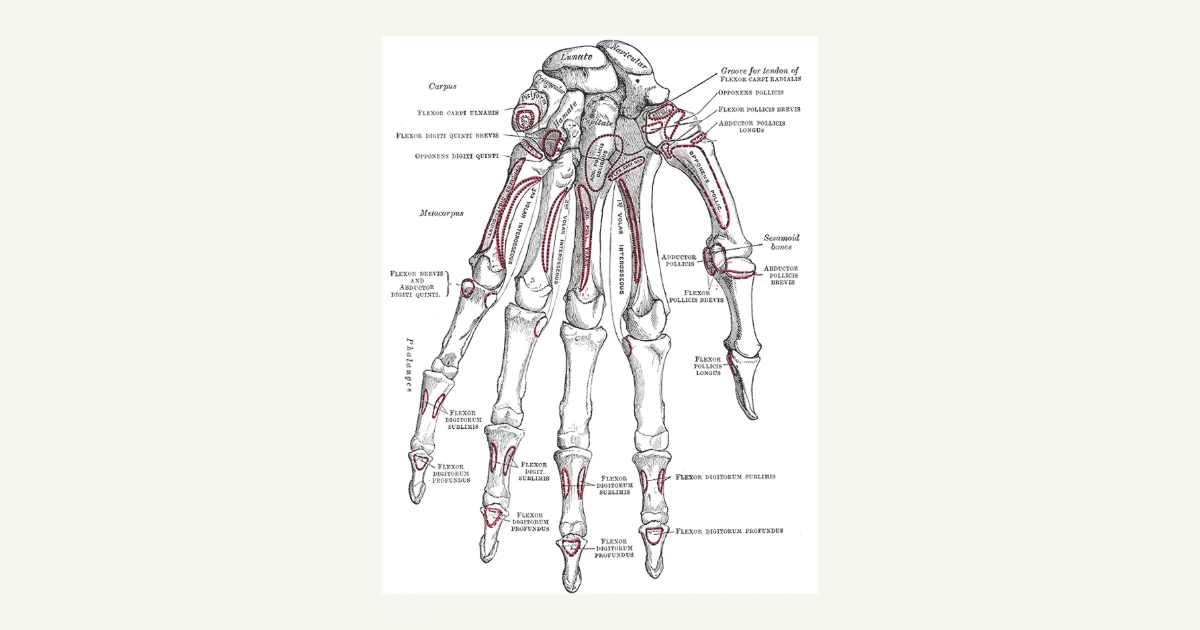
Two forearm bones reach the wrist: the radius on the thumb side and the ulna on the little-finger side. Beyond them sit eight small carpal bones in two rows. A fracture can involve any of these. A fracture and a break are the same thing.
Distal radius fracture. The bone that breaks most often. Doctors describe it by where the broken end has moved. A Colles fracture tilts toward the back of the hand and can give the wrist a curved dinner-fork shape. A Smith fracture tilts toward the palm, often after a fall onto a bent wrist. A fracture into the joint runs into the joint surface, and surgeons aim for a smooth joint surface to lower the risk of arthritis later.
Ulnar styloid fracture. The bony tip of the ulna often breaks at the same time. In most cases it needs no separate treatment.
Scaphoid fracture. A small boat-shaped carpal bone at the base of the thumb, under the hollow that appears when you lift the thumb. It can hide on the first X-ray. Its blood supply enters from the far end, so the near end can be slow to heal or fail to join. Treated with a cast, or fixed with a screw.
Hairline fracture. A crack that has not shifted out of line, which doctors call undisplaced. It still needs an X-ray and a plan, because a crack in the scaphoid heals on a different timeline from a crack in the shaft of the radius.
Buckle fractures in children. Children’s bones bend more than adult bone, and one side crumples without breaking through. Most heal in a removable splint or soft cast over about 3 weeks. Falls from the bars, the beam or a trampoline are a common cause, covered in the gymnastics and trampoline injuries guide.
Signs of a broken wrist
Pain after a fall on the hand, worse when you move the wrist, grip or turn a door handle. Swelling that builds over the first hours, with bruising spreading into the hand and forearm. A wrist that looks bent or bumpy if the fracture has shifted. Tenderness when pressing on the end of the radius, or into the hollow at the base of the thumb. A grip that feels unsafe holding a cup. Numbness or tingling in the thumb, index and middle fingers, which is common after this fracture and worth a doctor’s review soon if it is steady or settling. If that numbness is getting worse hour by hour, with rising pain, go to A&E now and do not drive yourself.
Many people with an undisplaced or scaphoid fracture can still move the wrist and fingers. Movement does not rule out a fracture.
Fracture or sprain?
You cannot tell with certainty without an X-ray. A distal radius fracture hurts at the end of the forearm above the wrist crease, with fast swelling and a bone that is tender to press. A scaphoid fracture hurts in the hollow at the base of the thumb and the wrist may still move. A wrist sprain hurts in the soft tissue around the wrist and eases over days, though a severe one still needs an X-ray. Pain on the little-finger side that lingers can be an ulnar styloid fracture or a TFCC injury.
How doctors diagnose it
A doctor at A&E, a GP clinic or an orthopedic clinic diagnoses a wrist fracture with an examination and an X-ray. Hand therapists do not order X-rays or read them to diagnose a fracture. If you come to us first after a fall and a fracture seems likely, we refer you to a doctor before we start treatment.
Standard X-rays include a front and a side view, with scaphoid views added if the base of the thumb hurts. A scaphoid fracture can hide on the first X-ray, so if the hollow is tender the doctor may splint you and repeat the X-ray after 10 to 14 days, or order an MRI, which shows a hidden fracture sooner. A CT scan helps a surgeon plan a complex break into the joint.
Cast or surgery
An orthopedic or hand surgeon decides, based on the X-ray, your age, which hand you use most, and what you need the wrist for.
Cast, often 4 to 6 weeks. For stable breaks that have not shifted. Closed reduction and cast: the doctor pulls the bone back into line under anesthetic, for displaced breaks that stay in line once set. Plate and screws: a volar locking plate on the palm side, for unstable or displaced breaks and breaks into the joint, and earlier movement is often possible. Pins or an external frame: for selected fractures. Scaphoid screw: for displaced scaphoid fractures, or to shorten time in a cast.
In the cast. The cast protects the bone. The joints outside it need movement from the first days or they stiffen. Full fist then full stretch, ten times every hour while awake. Thumb to each fingertip. Elbow bend and straighten. Arm overhead several times a day. Keep the hand above heart level for the first few days and keep the cast dry.
A custom thermoplastic wrist splint, shaped in the appointment
After the cast. Expect stiffness, swelling, dry skin, a weak grip and a wrist that feels fragile. Your surgeon may want a removable splint for a few more weeks, and a hand therapist can make a custom thermoplastic splint when your surgeon agrees.
After a plate. Many surgeons allow wrist movement earlier, sometimes within the first 1 to 2 weeks, with a removable splint between exercises. Some people later feel the plate irritating a tendon, and a surgeon may remove it. See post-surgery rehabilitation for what to expect more generally.
Exercises
Start wrist exercises when your doctor or surgeon clears you to move the wrist. Selection, timing and dosage below are pending clinician sign-off.
In the cast. Finger fists, ten times every hour while awake. Thumb touches to each fingertip, ten rounds several times a day. Elbow and shoulder, ten repeats three times a day.
Stage 2, movement. Wrist bends with the forearm on a table and the hand over the edge, ten repeats three to four times a day. Forearm turns with the elbow at your side, palm up and palm down, holding a light hammer or wooden spoon once it eases. Table slides on a towel, forward and back then side to side. Tendon glides through straight hand, hook fist, full fist and flat fist.
Stage 3, strength, once your surgeon allows load. Grip with therapy putty, two to three sets of ten. Wrist curls palm up and palm down, lowering over three seconds, three sets of twelve. Weight through the hand on a table with the wrist bent back, adding load over the weeks. Task practice: groceries, jars, a kettle.
Expect a stretching discomfort. Stop or scale back if pain turns sharp, goes above four out of ten, or is still higher the next morning. One thing to avoid: forceful stretching by another person, or hanging weights to force the wrist. That flares pain and swelling and sets you back.
Complications worth catching early
Most wrist fractures heal without trouble. These are less common, and early action changes what happens next.
Acute carpal tunnel syndrome. Swelling presses on the median nerve, causing numbness in the thumb, index and middle fingers. Numbness that is getting worse hour by hour, with rising pain, means A&E now, and do not drive yourself, because building pressure on the nerve needs releasing urgently. Numbness that is steady or settling is common after this fracture and needs a doctor soon rather than tonight. More on carpal tunnel syndrome.
Complex regional pain syndrome. Pain out of proportion to the injury, swelling, changes in skin color, temperature or sweating, and stiff shiny fingers. Early treatment by your doctor and hand therapist matters.
Tendon rupture. A sudden loss of the ability to lift the thumb, weeks after the fracture or surgery. See your surgeon soon.
A tight cast. Pale, blue or cold fingers, severe pain, or fingers you cannot move. Go back to A&E.
Stiffness that stalls. Slow progress turning the palm up or down needs a program review and sometimes a splint to regain range.
A bone that heals out of line. Ongoing pain, a visible bump or poor movement. A surgeon decides whether more treatment helps.
A wrist fracture after 50
A wrist fracture from a fall at standing height, after age 50, can be the first sign of osteoporosis. It often comes years before a hip or spine fracture, which makes it a chance to act. Ask your GP about a bone density scan and a fall-risk check. Balance and strength work, non-slip bathroom mats, grab bars and a review of medicines that cause dizziness all lower the risk of another fall.
What slows recovery
Letting the fingers stiffen in the cast, because stiff fingers take longer to fix than a stiff wrist. Keeping the arm in a sling all day, which stiffens the shoulder and elbow. Forcing the wrist. Skipping swelling care. Exercising through numbness or rising pain. Missing the bone health check after a fall-related fracture past 50.
Questions we get asked
How long does a fractured wrist take to heal?
Most distal radius fractures join in about 6 to 8 weeks, with 4 to 6 weeks in a cast. Daily activities return over 8 to 12 weeks. Full strength for heavy lifting and sport commonly takes 6 to 12 months. Scaphoid fractures, breaks into the joint, older age and thinner bone all lengthen it.
Can you still move your wrist if it is fractured?
Often yes, with pain, and more so with an undisplaced or scaphoid fracture. Movement does not rule out a fracture. After a fall, pain in the hollow at the base of the thumb, fast swelling or a bent shape means you need an X-ray even if the wrist moves.
Do I need a referral?
No. You can book directly. We work within your surgeon’s plan and ask for your X-ray report or discharge notes. Some insurers want a doctor’s referral before they reimburse, so check your policy.
Why is my wrist still stiff after the cast came off?
Weeks without movement stiffen the joints, tighten the soft tissues and weaken the muscles. Most of it improves over 8 to 12 weeks with a daily program, swelling control and graded loading. Stiffness that has not improved after 4 to 6 weeks of therapy needs a review.
Can I claim this on insurance?
Many of our post-surgical patients do, particularly where the claim is tied to the operation. It depends on your policy. Send us your policy details and we will tell you what applies before you book. We provide itemized invoices and a clinical report if your insurer asks for one.
My fracture was months ago. Is it too late?
Later is harder, not automatically too late. Come in and we will measure where you are and be honest about what is realistically recoverable. Bring whatever paperwork you have.
Where we are
Clinics across Singapore
ORCHARD
400 Orchard Road #12-12
Orchard Towers, S238875
NS22 Orchard MRT
Physiotherapy and hand therapy in Orchard →
WhatsApp 8800 1830TAMPINES
9 Tampines Grande #01-20
Asia Green, S528735
EW2DT32 Tampines MRT
Physiotherapy and hand therapy in Tampines →
WhatsApp 8780 9608SERANGOON
265 Serangoon Central Drive #04-269
S550265 · Lift C only
NE12CC13 Serangoon MRT
Physiotherapy and hand therapy in Serangoon →
WhatsApp 8892 4121TANJONG PAGAR
10 Anson Road #02-77A
International Plaza, S079903
EW15 Tanjong Pagar MRT
Physiotherapy and hand therapy in Tanjong Pagar →
WhatsApp 8227 7074JURONG EAST
2 Venture Drive #02-02
Vision Exchange, S608526
NS1EW24 Jurong East MRT
Opening 25 October 2026
Physiotherapy and hand therapy in Jurong East →
WhatsApp 8242 7340Send us the X-ray report
Or the discharge notes, or the operation note, or just the date of the fall and what the doctor did. We will tell you which stage you are in, when therapy should start, and what the program involves.
Every week, range and appointment count on this page is a typical range for a straightforward recovery, not a prediction for you. Your surgeon’s protocol takes precedence over anything written here. Hand therapists assess, splint, exercise, educate and refer; doctors diagnose, inject, prescribe and order imaging. If we see signs of a complication we refer you back to your doctor.
If the tendon that was repaired was a flexor tendon, on the palm side of the finger, the protocol is different again and the first twelve weeks are stricter. See the Flexor Tendon Repair Recovery Program.
A sore hollow at the base of the thumb after a fall is the classic missed scaphoid fracture. See the Scaphoid Fracture Recovery Program, which sets out the four stages and what moves you up.
Also on this site: the page on Muenster and sugar tong splints covers which forearm splint is used when.
Where are you with this right now?
1. It is settling on its own
Many hand problems settle with a well fitted splint, changes to what provokes them, and tendon gliding. A tender scar and weak grip for a few weeks after surgery are usual. If it is easing week on week, and grip is improving month on month, it is behaving as expected. You do not need us for this, and we would rather say so.
2. It has stopped improving
You hand the jar to someone else. You button the shirt one-handed. You have stopped using that hand for anything that matters and barely noticed when it started.
The hand is the part of the body where stiffness sets in fastest, because a hand that hurts gets used less within days rather than weeks. That is the gap worth measuring, and it is not measured by how you feel on the day.
The Stalled Recovery Review is three appointments over three weeks with the same therapist, because what a joint does under load cannot be read in one visit. The first finds what is limiting it. The next two measure how it responds. $690, nett, no GST, which is three appointments at $230.
3. You have had surgery, or you have a date
Recovery after an operation has a shape, and knowing which stage you are in tells you whether you are on it. See the recovery programs, or hand therapy after surgery if you are not sure which applies to you.
All of it runs on the same four stages. The Phoenix Recovery Protocol explains what each stage works on and what you have to meet to move up. No referral needed to start.
Next step
Find out which stage you are in
Pain is the first thing to leave. Movement and strength are the last things trained back, and most people stop before that part is done. One Assessment and Treatment is a single 45-minute appointment at $230, nett, no GST. Your therapist finds what is actually limiting you, treats it in the same appointment, and you leave with your current stage and a written plan.
Prefer to phone? Each of our five clinics has its own number on the clinics page. No referral needed to book.
Related reading
- hand therapy after surgery
- carpal tunnel
- Trigger Finger Hand Therapy Singapore
- Sprained Thumb Physiotherapy: What to Expect
- Your Handy Guide to Eversion of Foot Injuries and Prevention
- The Phoenix Recovery Protocol, and the four stages
- All recovery programs, hand and physio
- Golf wrist injuries and hand physiotherapy
What our patients say
Google reviews from our clinics in Singapore.


