
Written by Zita Sham, Fairuuz Saleh and Shiv Mohan Banka, Principal Physiotherapists at Phoenix Rehab.Clinically reviewed by Louise Yow, Principal Physiotherapist & Director, AHPC A1300363H.Last reviewed 28 September 2026.
An eversion injury is the less common way to hurt an ankle. The foot is forced to turn outward, and the damage is on the inner side, at the deltoid ligament. It deserves more caution than the usual rolled ankle because the force it takes often injures a second structure: the ligament that binds the two leg bones together just above the ankle (a high ankle sprain), or a bone, sometimes as far up as the fibula just below the knee. This guide covers what eversion is, how the injury happens, when it needs an x-ray, and what the rehab involves.
What Is Foot Eversion?
Foot eversion is the natural movement where the sole of your foot everts, or turns outwards, away from the body’s midline. This movement mainly happens at the subtalar joint, located just below the ankle joint. Eversion plays a key role in shock absorption and maintaining balance during walking and standing, particularly during the stance stage of gait.
Difference Between Eversion and Inversion
Eversion is the opposite movement of inversion. In inversion, the sole turns inwards, often leading to the typical ankle sprain. Eversion, on the other hand, shifts the heel bone outward. While inversion sprains affect the lateral ligaments (outside of the ankle), eversion sprains impact the medial ligaments (inner side), which are stronger and less prone to injury. When damaged, it’s usually more severe.
Understanding Eversion Injuries
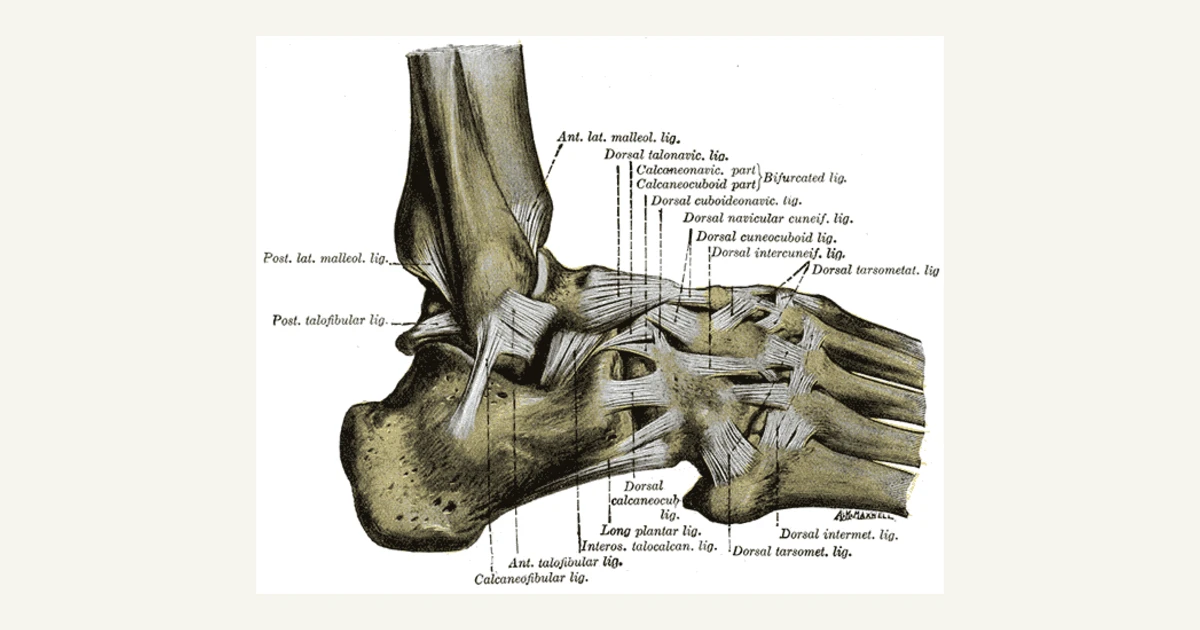
An eversion ankle sprain happens when the ankle rolls inward too far. As a result, it stretches or tears the deltoid ligament complex, a strong group of ligaments on the inner side of the ankle joint. These sprains often occur due to high impact or unusual foot movement, such as landing on uneven ground or a misstep while carrying body weight.
Injury to the Deltoid Ligament Complex
The deltoid ligament provides strong support to the medial side of the ankle. When it tears, the inner ankle swells and hurts, and the joint can feel unstable. It commonly takes weeks to months of protected, graded loading to settle, rather than rest alone.
Eversion Fractures and Severe Cases
In more severe cases, eversion injuries involve fractures of the ankle or lower leg bones, and the tibia and fibula can be pushed apart. Doctors use the Ottawa ankle rules to decide who needs an x-ray: you could not take four steps on the foot straight after the injury or when you are first examined, or the back edge or tip of either ankle bone is tender to press. After an eversion injury, pain high on the outer leg just below the knee also needs an x-ray of the whole leg, not only the ankle, because the fibula can break up there.
How Eversion Injuries Differ from Common Ankle Sprains
Unlike lateral ankle sprains, which are often mild, eversion injuries are usually more serious and less frequent. Because the ankle muscles and ligaments on the inner side are stronger, it takes more force to cause injury. As a result, when an eversion injury does occur, it often signals a higher degree of trauma, sometimes involving multiple joints, tendons, or bones.
Causes and Risk Factors
Common causes of eversion foot injuries include:
Flat feet or collapsed arches, which some people link to overpronation
- High-impact sports like football or basketball
- Wearing shoes with poor arch or heel support
- Running or walking on uneven ground
- Weakness in ankle muscles or poor posture
Risk increases with activities that involve sudden changes in direction or long periods of weight-bearing.
Signs and Symptoms of an Eversion Injury
Typical signs include:
- Inner ankle swelling and pain
- Bruising and tenderness on the medial side of the ankle
- Limited range of movement
- Difficulty bearing body weight
- Ongoing foot pain during walking or standing
Diagnosing an Eversion Injury
A clinician will conduct a physical exam and review your history of injury or discomfort. They may test foot function, gait, and balance, and will ask about how the injury occurred, focusing on the direction of force.
Specific tests like the eversion stress test (applying an outward force to the foot while stabilizing the ankle) can help identify ligament damage. Moreover, X-rays, ultrasound, or MRI may be used to detect fractures, ligament tears, or other soft tissue damage.
Treatment options for eversion injuries
Treatment depends on what was injured, which is why the x-ray question comes first.
- Mild sprain of the deltoid ligament: protect it for the first few days with a brace or taping, control the swelling, and keep walking as much as it allows.
- Moderate sprain: a walking boot for a period your doctor sets, then graded rehab.
- A fracture, a high ankle sprain with the leg bones separating, or a complete ligament tear: these are a surgeon’s decision, and some need an operation.
Early on, the job is to settle the swelling and protect the inner ankle without letting the calf and balance fade from disuse.
What physiotherapy does after an eversion injury
Rehab works through protection, movement, strength and return to sport, and moves on when each is measured rather than when the pain is gone. That includes:
- Ankle range, and calf and foot strength, measured against the other side
- Balance training, standing on the injured leg, progressed to unstable surfaces and eyes closed
- Hop and change-of-direction work before any return to court or field sport
- A plan for bracing or taping during the first months back in sport
The ankle usually stops hurting well before balance and hop control are back to the level of the other side. That gap is where a second sprain comes from, so it is tested, not guessed.
Lowering the risk of another one
Most of the prevention research is on the common rolled-in ankle sprain, but the principles carry across:
- Balance training. A few months of it after the first sprain is the best-supported way to lower the risk of another.
- A brace or tape for the first season back in sport.
- Calf and ankle strength, kept up after the rehab ends.
- Shoes replaced when the heel has worn down or the back of the shoe has collapsed.
If flat feet make your ankles roll inward, an insole may make standing and walking more comfortable. The evidence that insoles prevent sprains is thin, so treat it as comfort rather than protection.
When to see a doctor
Call 995 or go to A&E now if:
- the ankle or foot looks deformed or out of place
- bone is showing, or the skin over the ankle is broken over a possible fracture
- the foot is cold, pale or numb
See a doctor on the same day if:
- you could not take four steps on it after the injury
- the tip or back edge of either ankle bone is tender to press
- you have pain high on the outer leg just below the knee
Make an appointment soon if:
- the ankle still feels unstable or gives way after one to two weeks
- swelling on the inner ankle has not started to settle after two weeks
- this is your second or third sprain of the same ankle. Repeated sprains are the usual route to an ankle that keeps giving way
Conclusion
Eversion injuries are less common than rolled ankles and more often come with a second injury, so the first job is ruling out a fracture or a high ankle sprain. After that, rehab is measured: balance, hop and strength side to side before you go back to sport.
Also on this site: the page on foot drop covers why the foot catches and how it is rehabilitated.
Where are you with this right now?
1. It is settling on its own
Foot and ankle problems are slow but usually very treatable. Months rather than weeks is normal, and improvement is judged over a month, not a day. If the first steps in the morning are easier than they were four weeks ago, you are on the right road. You do not need us for this, and we would rather say so.
2. It has stopped improving
The first ten steps out of bed are still the worst part of the day. You choose shoes by how long you will be standing. You still look at the ground when you walk.
Symptoms settle well before the tissue has rebuilt its capacity, which is why stopping the loading work early is the most common reason this drags on for years. That is the gap worth measuring, and it is not measured by how you feel on the day.
The Stalled Recovery Review is three appointments over three weeks with the same therapist, because what a joint does under load cannot be read in one visit. The first finds what is limiting it. The next two measure how it responds. $690, nett, no GST, which is three appointments at $230.
What our patients say
Google reviews from our clinics in Singapore.



3. You have had surgery, or you have a date
Recovery after an operation has a shape, and knowing which stage you are in tells you whether you are on it. If you had surgery on the ankle, see the Ankle Fracture Surgery Recovery Program or the Ankle Ligament Reconstruction Recovery Program. For any other operation, see all the recovery programs, or ankle physiotherapy if you are not sure which applies to you.
All of it runs on the same four stages. The Phoenix Recovery Protocol explains what each stage works on and what you have to meet to move up. No referral needed to start.
Next step
Find out which stage you are in
Pain is the first thing to leave. Movement and strength are the last things trained back, and most people stop before that part is done. One Assessment and Treatment is a single 45-minute appointment at $230, nett, no GST. Your therapist finds what is actually limiting you, treats it in the same appointment, and you leave with your current stage and a written plan.
Prefer to phone? Each of our five clinics has its own number on the clinics page. No referral needed to book.
Related reading
- physiotherapy after surgery
- ankle physiotherapy
- Ankle Fracture Surgery Recovery Program
- Your Ankle Stopped Hurting. That Is Not the Same as Healed.
- What Causes Heel Pain & Treatment Options
- What Are Shin Splints: Treatment Options for You
- The Phoenix Recovery Protocol, and the four stages
- All recovery programs, hand and physio
Where we are
Clinics across Singapore
ORCHARD
400 Orchard Road #12-12
Orchard Towers, S238875
NS22 Orchard MRT
Physiotherapy and hand therapy in Orchard →
WhatsApp 8800 1830TAMPINES
9 Tampines Grande #01-20
Asia Green, S528735
EW2DT32 Tampines MRT
Physiotherapy and hand therapy in Tampines →
WhatsApp 8780 9608SERANGOON
265 Serangoon Central Drive #04-269
S550265 · Lift C only
NE12CC13 Serangoon MRT
Physiotherapy and hand therapy in Serangoon →
WhatsApp 8892 4121TANJONG PAGAR
10 Anson Road #02-77A
International Plaza, S079903
EW15 Tanjong Pagar MRT
Physiotherapy and hand therapy in Tanjong Pagar →
WhatsApp 8227 7074JURONG EAST
2 Venture Drive #02-02
Vision Exchange, S608526
NS1EW24 Jurong East MRT
Opening 25 October 2026
Physiotherapy and hand therapy in Jurong East →
WhatsApp 8242 7340