
Written by Zita Sham, Fairuuz Saleh and Shiv Mohan Banka, Principal Physiotherapists at Phoenix Rehab.Clinically reviewed by Nigel Chua, Principal Hand Occupational Therapist & Director, AHPC A1300362Z.Last reviewed 2 October 2026.
Olecranon bursitis is swelling of the bursa, a thin, fluid-filled sac under the skin at the point of your elbow. It looks like a soft lump the size of an egg or a golf ball, and it may be painless or tender.
Most olecranon bursitis comes from leaning on the elbow or a knock, and it settles within weeks once you take the pressure off. Infection is the exception. A red, hot, painful elbow, and more so one with a fever, needs a doctor on the same day.
Many people with elbow bursitis need little more than padding, compression and time. Hand therapy helps when the lump keeps coming back, when your job or sport puts pressure on the elbow, or when the elbow stiffens after drainage or surgery.
At Phoenix Rehab Group, our hand therapists check whether the swelling is bursitis or a joint, tendon or bone problem, refer you to a doctor the same day if infection is likely, and set up pressure relief that fits your desk, car and sport.
If self-care is enough, we tell you.
You do not need a doctor’s referral. If a swollen elbow is not settling, WhatsApp us to Get Assessed & Treated.
Olecranon bursitis at a glance
| What it is | Swelling of the bursa at the point of the elbow |
| Also called | Elbow bursitis, student’s elbow, draftsman’s elbow |
| Common causes | Leaning on hard surfaces, a knock or fall, gout, rheumatoid arthritis, infection |
| Main sign | A soft swelling at the point of the elbow, painless or tender |
| First-line care | Take pressure off, padding, compression, ice in the first days |
| Typical recovery | Often 3 to 6 weeks for non-infected bursitis; infected bursitis improves over 1 to 3 weeks of antibiotics |
| See a doctor the same day if | The elbow is red, hot and painful, the skin is broken, or you have a fever |
What is olecranon bursitis?
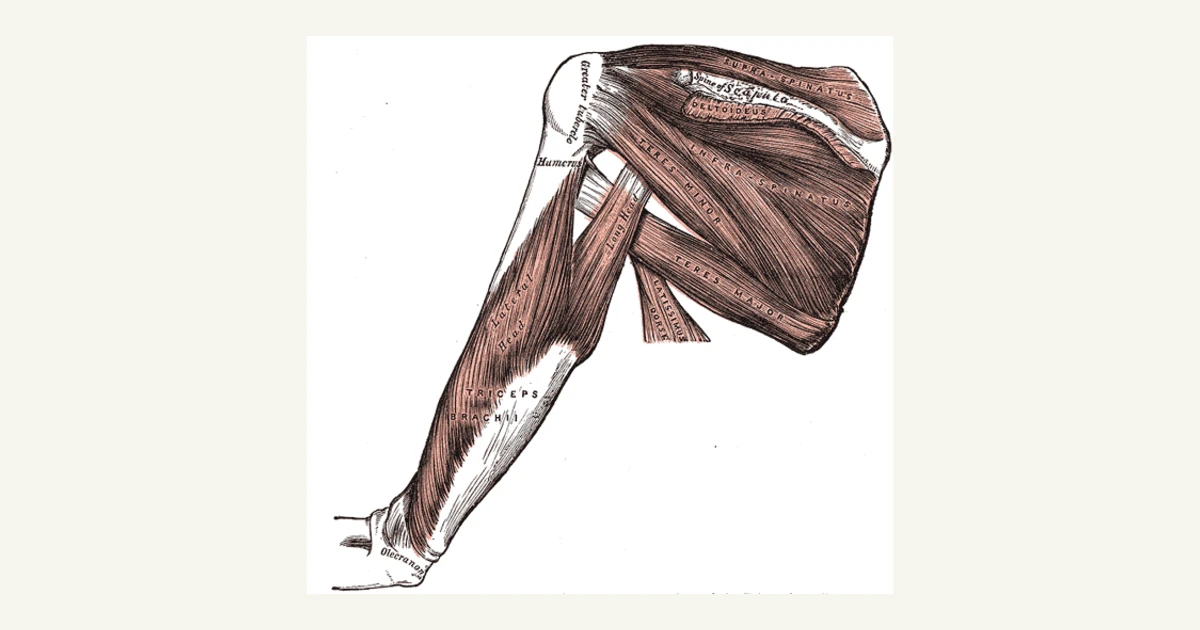
The olecranon is the bony point of your elbow, the end of the ulna bone. A bursa is a slippery sac that lets skin glide over bone. The olecranon bursa sits under the skin at the point of the elbow and holds a small amount of fluid. It lies flat until something irritates it, then it fills with fluid and swells.
Doctors describe two types:
- Non-infected (aseptic) bursitis follows pressure, a knock, gout or rheumatoid arthritis. It is the more common type.
- Infected (septic) bursitis happens when bacteria enter the bursa, often through a graze, scratch or insect bite on the elbow.
You may also see olecranon bursitis called elbow bursitis, student’s elbow, draftsman’s elbow or Popeye elbow.
Symptoms of olecranon bursitis
- Swelling at the point of the elbow, soft and squashy, often painless at first.
- Tenderness when you lean on or knock the elbow.
- Warmth and redness, mild with irritation and marked with infection.
- Stiffness at the end of bending, as the swelling presses on the skin.
- Fever or feeling unwell with infected bursitis.
Is elbow bursitis serious?
Most elbow bursitis is not serious and settles with self-care. Infection is the exception and needs a doctor on the same day, because it can spread into the skin and, in uncommon cases, the blood.
| Non-infected bursitis | Infected bursitis | |
| Onset | Over days, after leaning or a knock | Over hours to a day or two |
| Pain | Mild or none | Marked |
| Skin | Normal or a little pink | Red and hot, with redness that can spread |
| Skin break | None | Often a graze, scratch or bite nearby |
| Fever | No | Sometimes |
| What to do | Self-care, padding, compression | See a doctor on the same day |
What can be mistaken for elbow bursitis?
| Condition | Clues |
| Elbow joint swelling | Swelling around the whole joint, and you cannot straighten the elbow all the way; needs a doctor |
| Triceps tendon injury | Pain above the point of the elbow and weakness straightening the arm |
| Olecranon fracture | After a fall onto the elbow; pain, bruising, and trouble straightening against gravity; needs an X-ray |
| Rheumatoid nodules | Firm lumps on the forearm below the elbow, in people with rheumatoid arthritis |
| Gout tophi | Firm, chalky lumps in people with gout |
| Lipoma | A soft, painless fatty lump that grows over months |
| Cellulitis | Spreading red, hot skin without a fluid-filled lump |
Pain on the outer side of the elbow when you grip is a different problem; see tennis elbow
What causes olecranon bursitis?
- Leaning on hard surfaces. Desk workers, students, drivers who rest an elbow on the armrest or window ledge, gamers, and people who read or scroll on their elbows.
- A blow or a fall. Volleyball dives, futsal and football goalkeeping, rugby, basketball, martial arts and falls onto the elbow.
- Repeated minor pressure at work. Plumbers, air-conditioning technicians and tilers who kneel or crawl on their elbows.
- Medical conditions. Gout and rheumatoid arthritis can inflame the bursa.
- Infection. Bacteria enter through a graze, scratch or insect bite. The risk is higher with diabetes, kidney disease, heavy alcohol use or weakened immunity.
In Singapore, we see bursitis most often in office and student desk workers, drivers, and players of court and contact sports.
How is olecranon bursitis diagnosed?
A hand therapist or doctor recognizes olecranon bursitis from its look and feel.
The clinician checks the skin for redness, warmth and breaks, feels the swelling, and checks elbow movement. Bursitis sits on the point of the elbow and does not stop the elbow straightening all the way; swelling of the joint itself does.
A doctor may draw fluid from the bursa with a needle (aspiration) to check for infection or gout crystals, order blood tests, or arrange an X-ray after a fall.
An ultrasound scan shows the fluid and the bursa wall. If your hand therapist suspects infection, a fracture or joint swelling, we refer you to a doctor the same day.
Olecranon bursitis treatment in Singapore: your options
| Option | Who provides it | What the evidence shows | When it fits |
| Pressure off and padding | You, with our hand therapist | Main treatment for non-infected bursitis | From day one |
| Compression sleeve or bandage | You, with our hand therapist | Helps the fluid settle | The first few weeks |
| Ice and pain relief | You, with our hand therapist | Eases pain and swelling | The first days |
| Aspiration (draining with a needle) | Doctor or surgeon | Quick relief; fluid can return; small risk of infection | Large or painful swellings, or to test the fluid |
| Steroid injection | Doctor or surgeon | Doctors use it with caution, because of infection and skin thinning risks | Selected non-infected cases |
| Antibiotics | Doctor or surgeon | Needed for infected bursitis | Septic bursitis |
| Surgery (bursectomy) | Surgeon | Removes the bursa; wound healing can be slow | Bursitis that keeps coming back or persists for months |
Take the pressure off. Stop leaning on the elbow. The bursa settles once it stops being squeezed against the bone, so desk, car and sport changes do most of the work.
Padding. A foam pad shaped like a ring, with the hole over the swelling, spreads pressure around the lump when you cannot avoid contact. A padded elbow sleeve suits sport.
Compression. A snug elbow sleeve or bandage helps the fluid settle. Loosen it if your hand swells, tingles or changes color.
Ice and pain relief. Ice wrapped in a cloth for 15 to 20 minutes at a time eases pain in the first days. A pharmacist can advise on pain relief.
Drainage. A doctor can drain the fluid with a needle, which brings quick relief. The fluid returns for some people, and each needle carries a small risk of infection. Do not try to drain or pop the swelling yourself.
Infected bursitis. A doctor treats infection with antibiotics, and may drain the bursa. Severe infections sometimes need a hospital stay or surgery.Surgery. A surgeon may remove the bursa (bursectomy) for bursitis that keeps coming back or lasts for months. Wound healing over the elbow point can be slow.
Hand therapy for olecranon bursitis at Phoenix Rehab Group
Our hand therapy team is led by Nigel Chua, Principal Hand Occupational Therapist & Director, who has treated hand and wrist conditions since 2005. Our hand therapists are AHPC-registered occupational therapists and physiotherapists with post-graduate training in hand therapy.
Many people with non-infected bursitis recover with self-care alone. Hand therapy helps if the bursitis keeps coming back, if your work or sport loads the elbow, if you need a protective pad that fits, or if the elbow is stiff after drainage or surgery.
At your first appointment, you can expect:
- An examination. We separate bursitis from joint, tendon and bone problems, and refer you to a doctor the same day if infection is likely.
- A pressure relief plan for your desk, car and sport.
- Padding and compression. A custom protective elbow pad, made in the appointment when you need one, and advice on sleeves.
- Movement and strength work if the elbow is stiff.
- A return-to-work and sport plan.
Most people need 1 to 3 appointments.
Contact us for an elbow bursitis assessment. WhatsApp us.
Stop leaning: desk and car set-up for a sore elbow
- Desk. Raise your chair or lower the desk so your forearms rest on the desk, not the point of the elbow. Pull the keyboard closer, and use a padded armrest or a gel pad on the desk edge.
- Phone and reading. Use a stand or a pillow to hold your phone or book, instead of propping yourself up on your elbows.
- Car. Pad the armrest or door, and keep the elbow off the window ledge.
- Gaming and study. Use forearm supports, and take breaks to shift position.
- Sport. Wear elbow pads for volleyball, futsal and football goalkeeping, martial arts and skating.
- Work. Use knee and elbow pads, or a creeper board, if you work on hard floors.
For more on work set-up, our occupational therapists can review your workplace, and our page on repetitive strain injury covers desk ergonomics.
Olecranon bursitis recovery time
Recovery depends on the cause and on how well you can keep pressure off the elbow. Your doctor or therapist may give you different targets; use theirs.
| Situation | What happens | Typical timeframe |
| Non-infected, with pressure off and compression | Fluid settles and the lump shrinks | Often 3 to 6 weeks |
| After drainage by a doctor | Quick relief; fluid returns for some people | Relief within days |
| Infected, with antibiotics | Redness and pain settle, then the swelling | Improves over 1 to 3 weeks |
| Recurrent or long-standing | Needs a pressure plan; some people need surgery | Months |
| After bursectomy | Wound heals, then movement returns | Wound healing 2 to 3 weeks; full use in 4 to 6 weeks or longer |
You are on track if the swelling shrinks week by week and leaning no longer hurts. Contact your doctor if the elbow turns red or hot, or the swelling grows.
Exercises for olecranon bursitis
Exercises help if the elbow has stiffened, after drainage or surgery. They do not shrink the bursa.
- Elbow bend and straighten. Bend and straighten the elbow within comfort. 10 repeats, 3 times a day.
- Forearm turns. With the elbow bent at your side, turn the palm up and down. 10 repeats, 3 times a day.
- Grip squeezes. Squeeze a soft ball if your grip has weakened. 10 repeats, twice a day.
- Shoulder reach. Lift the arm forward and overhead to keep the shoulder moving. 10 repeats, twice a day.
Stop and contact your doctor if the swelling grows, the skin turns red or hot, or you feel unwell.
Movements to avoid until the bursa settles: forearm planks, push-ups on the elbows, yoga poses on the forearms, and leaning on a desk. Leave the lump alone, without rubbing or massaging it.
Mistakes that slow recovery
- Leaning on the elbow. Each lean squeezes the bursa and keeps it swollen.
- Popping or draining it yourself. It can let bacteria into the bursa.
- Massaging the lump. Rubbing irritates the bursa wall.
- Ignoring redness and heat. These are signs of infection that need a doctor.
- Returning to forearm planks early. They press straight onto the bursa.
- Compression that is too tight. A tight sleeve makes the hand swell.
When to see a doctor
See a doctor on the same day if:
- the elbow is red and hot, with redness spreading up or down the arm
- you have a fever or feel unwell
- there is a graze, cut or bite over the swelling
- the pain is severe
- you fell and cannot straighten the elbow, or it looks deformed
- you have diabetes, kidney disease or weakened immunity and develop a new red swelling
Make an appointment with a doctor soon if:
- the swelling has not settled after 3 to 4 weeks of pressure relief
- the bursitis keeps coming back
- you have lumps elsewhere, or other swollen joints
the whole elbow joint is swollen and you cannot straighten it
Frequently asked questions about olecranon bursitis
How do you heal olecranon bursitis?
For non-infected olecranon bursitis, take the pressure off the elbow, use padding and a compression sleeve, and ice it for 15 to 20 minutes at a time in the first days. Most cases settle in 3 to 6 weeks. A doctor can drain a large or painful swelling. Infected bursitis needs a doctor and antibiotics. Bursitis that keeps coming back may need a surgeon to remove the bursa.
Is elbow bursitis serious?
Most elbow bursitis is not serious and settles with self-care. Infected bursitis is the exception. See a doctor on the same day if the elbow is red, hot and painful, if redness spreads, if there is a cut or graze over the swelling, or if you have a fever. People with diabetes, kidney disease or weakened immunity face a higher risk of infection and should get a new red swelling checked early.
What can be mistaken for elbow bursitis?
Swelling of the elbow joint itself, a triceps tendon injury, a fracture of the elbow point after a fall, rheumatoid nodules, gout tophi, a lipoma and a skin infection can all look like elbow bursitis. A clue: bursitis sits on the point of the elbow and lets you straighten the arm, while joint swelling stops the elbow straightening all the way. A doctor or hand therapist can tell them apart.
What our patients say
Google reviews from our clinics in Singapore.


How long does it take for olecranon bursitis to resolve?
Non-infected olecranon bursitis often settles in 3 to 6 weeks once you stop leaning on the elbow and use compression. Infected bursitis improves over 1 to 3 weeks of antibiotics. Bursitis can take months to settle if pressure continues, and it can return. If the swelling has not settled after 3 to 4 weeks, or keeps coming back, see a doctor.
Can I pop or drain elbow bursitis myself?
No. Popping or draining the swelling yourself can let bacteria into the bursa and turn a harmless lump into an infection. A doctor can drain the fluid with a sterile needle when needed, and may test the fluid for infection or gout. The fluid returns for some people after drainage, so pressure relief and compression still matter afterwards.
Does elbow bursitis need antibiotics?
Only infected bursitis needs antibiotics. Signs of infection include redness, heat, marked pain, a skin break over the swelling, and fever. A doctor confirms infection, sometimes by testing fluid drawn from the bursa, and prescribes antibiotics. Non-infected bursitis, the more common type, does not need antibiotics and settles with pressure relief, padding and compression.
Do I need surgery for olecranon bursitis?
Most people do not. Surgery to remove the bursa (bursectomy) is an option for bursitis that keeps coming back or lasts for months despite pressure relief, compression and drainage. Wound healing over the point of the elbow can be slow, so surgeons keep surgery for persistent cases. Hand therapy after surgery improves movement and protects the healing wound.
Do I need a referral to see a hand therapist for elbow bursitis in Singapore?
No. You can see a hand therapist at Phoenix Rehab Group without a doctor’s referral. If we see signs of infection, a fracture or joint swelling, we refer you to a doctor the same day and share our findings. Some insurers ask for a doctor’s referral before they reimburse therapy, so check your policy first.
Contact us for an elbow bursitis assessment
If a swollen elbow is not settling, keeps coming back, or your work or sport keeps pressing on it, a hand therapist can check the cause and set up pressure relief that fits your day.
- WhatsApp: Message us. Your message opens with “Hi, I’d like to schedule a hand therapy assessment for elbow bursitis.”
- Clinics: Orchard, Serangoon, Tampines, Tanjong Pagar at International Plaza and Jurong East at Vision Exchange, opening 25 October 2026.
- Referral: not required. Some insurers need one for claims, so check your policy.
Insurance: we provide itemised invoices, and a clinical report if your insurer asks for one.
Where are you with this right now?
1. It is settling on its own
Elbow tendon problems settle slowly, over months rather than weeks, and they respond to graded loading rather than to rest alone. If you can grip for longer than you could a month ago, it is responding. You do not need us for this, and we would rather say so.
2. It has stopped improving
You pour the kettle with the other hand. A full mug is a two-handed job. You have stopped carrying the shopping on that side.
A tendon that stops being provoked is not the same as a tendon that got stronger. One is avoidance, the other is capacity. That is the gap worth measuring, and it is not measured by how you feel on the day.
The Stalled Recovery Review is three appointments over three weeks with the same therapist, because what a joint does under load cannot be read in one visit. The first finds what is limiting it. The next two measure how it responds. $690, nett, no GST, which is three appointments at $230.
3. You have had surgery, or you have a date
Recovery after an operation has a shape, and knowing which stage you are in tells you whether you are on it. See the hand and elbow programs, or elbow physiotherapy if you are not sure which applies to you.
All of it runs on the same four stages. The Phoenix Recovery Protocol explains what each stage works on and what you have to meet to move up. No referral needed to start.
Next step
Find out which stage you are in
Pain is the first thing to leave. Movement and strength are the last things trained back, and most people stop before that part is done. One Assessment and Treatment is a single 45-minute appointment at $230, nett, no GST. Your therapist finds what is actually limiting you, treats it in the same appointment, and you leave with your current stage and a written plan.
Prefer to phone? Each of our five clinics has its own number on the clinics page. No referral needed to book.
Related reading
Where we are
Clinics across Singapore
ORCHARD
400 Orchard Road #12-12
Orchard Towers, S238875
NS22 Orchard MRT
Physiotherapy and hand therapy in Orchard →
WhatsApp 8800 1830TAMPINES
9 Tampines Grande #01-20
Asia Green, S528735
EW2DT32 Tampines MRT
Physiotherapy and hand therapy in Tampines →
WhatsApp 8780 9608SERANGOON
265 Serangoon Central Drive #04-269
S550265 · Lift C only
NE12CC13 Serangoon MRT
Physiotherapy and hand therapy in Serangoon →
WhatsApp 8892 4121TANJONG PAGAR
10 Anson Road #02-77A
International Plaza, S079903
EW15 Tanjong Pagar MRT
Physiotherapy and hand therapy in Tanjong Pagar →
WhatsApp 8227 7074JURONG EAST
2 Venture Drive #02-02
Vision Exchange, S608526
NS1EW24 Jurong East MRT
Opening 25 October 2026
Physiotherapy and hand therapy in Jurong East →
WhatsApp 8242 7340