
Written by Mavis Tham, Shamaine Soh and Yuna Zhuang, Principal Hand Occupational Therapists at Phoenix Rehab.Clinically reviewed by Nigel Chua, Principal Hand Occupational Therapist & Director, AHPC A1300362Z.Last reviewed 16 October 2026.
Trigger finger is a tendon catching on the first pulley at the base of a finger or thumb, so the finger clicks, catches or locks bent. Doctors grade it 1 to 4. The earlier grades are usually treated first with a splint, changes to what provokes it and hand therapy, sometimes with a steroid injection from a doctor. A finger that locks or will not straighten often goes to a surgical release.
Key takeaways
- Trigger finger is a swollen tendon catching on a narrowed pulley at the base of the finger or thumb.
- Doctors grade it 1 to 4, from a tender lump to a finger that will not straighten at all.
- A splint that blocks the big knuckle, worn for six to ten weeks, works better at grades 1 and 2 than at grades 3 and 4.
- Squeezing a stress ball or a grip trainer feeds the problem rather than treating it.
- A finger held locked bent for months can leave the middle joint stiff even after the pulley is released.
Most people do not come in when their finger clicks.
They come when it stops moving.
That gap, between the first click and the day the finger will not straighten without help from the other hand, is usually months long. Sometimes a year. And almost every single one of them says the same sentence when they sit down.
“I thought it would go away.”
Here is the thing to understand before anything else. Trigger finger is not a pain problem. It is a mechanical problem. A catching finger can settle with the right splint and a change in what provokes it, but rest on its own does not change the size of the tunnel the tendon has to slide through.
Here is what is actually happening inside your hand.
Hand therapy, with or without surgery
Trigger Finger Program
The catching is the tendon struggling through a pulley that has become too tight for it. The stiffness that follows is the part that outlasts the clicking.
For trigger finger and trigger thumb managed with splinting and hand therapy, after an injection, and after trigger finger release. A staged hand therapy program at five Singapore clinics.
No referral needed to start. Bring your operation note, discharge summary or scan report.
Start here
Where are you right now?
Trigger finger is a different problem depending on where you are with it. Pick the one that matches.
How the program runs
4-Stage Structured Recovery
You move up a stage when you meet the criteria for it, not when a number of weeks has passed. That is Criteria Before Clearance, and it is why the last appointment is a graduation rather than a discharge.
- Stage 1, move up when: the wound has healed after a release, or the catching has settled with the splint without one, and swelling is down.
- Stage 2, move up when: a full fist and full straightening are measured at each joint of the finger, or at the thumb tip joint, and the tendon glides without catching.
- Stage 3, move up when: grip and pinch are rising at each review against the other hand, and the palm is comfortable to load.
- Stage 4, graduate when: grip and pinch meet what your work and hobbies need, tested with the tasks themselves, and there is no catching at two reviews in a row.
Measured at your first appointment and again at graduation: a hand function questionnaire, finger or thumb joint range in degrees, and grip and pinch strength in kilograms, on both hands.
The shape of it
What happens, week by week
Without surgery, a night splint and load changes are usually given six weeks or so before anyone decides they have not worked. The weeks below are the usual shape after a release. Your surgeon’s protocol takes precedence over anything on this page, every time.
- Weeks 0 to 2Stage 1 · Calm & ProtectDressing on, stitches in. The catching stops on the day. Fingers moving from day one, a full fist and a full straighten, little and often.
- Weeks 2 to 4Stage 2 · Move & MobilizeStitches out. Scar work. If the middle joint was held bent before the release, this is when the straightening gets worked hardest.
- Weeks 4 to 6Stage 3 · Rebuild & StrengthenGrip and pinch strength, measured against the other hand.
- Week 6 onwardStage 4 · Return & PerformFull use for tools, sport and work. A tender palm can take a few months to settle completely.
Trigger thumb
Trigger thumb release: what is different about the thumb
A trigger thumb is released through the same small cut at the base of the digit as a finger. Two things differ. The joint that stiffens is the thumb tip joint, not a middle joint, and a small nerve to the thumb runs close to the pulley that is released, so numbness on one side of the thumb tip is checked early.
| After a trigger thumb release | What we do about it |
|---|---|
| A thumb tip that was held bent for months before the operation | Straightening measured in degrees and worked on, with a night splint if the joint has stiffened. |
| Numbness along one side of the thumb tip after the release | Tell your surgeon at your next review, sooner if it is spreading. It is usually swelling, but it is checked rather than assumed. |
| A tender scar exactly where the thumb presses on a phone or a steering wheel | Scar work and graded pressure, so the scar stops deciding how you hold things. |
| Weak pinch | Key pinch measured in kilograms against the other thumb, then loaded in steps from about four to six weeks. |
Stitches usually come out at 10 to 14 days. Light use starts in the first days. Your surgeon’s protocol takes precedence.
After a release
Is this normal?
Usually expected
- A tender lump in the palm for weeks.
- A scar that feels thickened and sore to lean on.
- Grip that is weaker for a month or two.
- Stiffness first thing in the morning that eases as you use the hand.
- Swelling at the base of the finger by evening.
- A middle joint that is slow to straighten fully if it had been bent for a long time.
Contact your doctor
- Doctor the same day: fever, or a wound that is red, hot, opening or leaking.
- Doctor soon: a finger that is locked bent and cannot be straightened even with your other hand.
- Surgeon soon: the catching comes back after a release.
- Surgeon soon: numbness at the tip of the finger after the operation.
- Review soon: no change in straightening over 2 to 3 weeks of therapy.
We would rather send you back to your surgeon early than be the reason you went late.
What does not reverse on its own
What does not come back on its own
A finger that has been held bent for a long period stiffens at the middle joint, and a joint that has been stuck past the remodeling window does not always regain full straightening even after the trigger itself is released. The trigger is the easy part to fix. The stiff joint left behind is the part that lingers.
If the finger is locked bent and you cannot straighten it with your other hand, that warrants your GP or a hand surgeon now rather than a course of exercises. An injection or a release deals with the mechanical block, and therapy works better afterwards than instead.
If it is not going to plan
The click is gone, and the finger still will not straighten
The release worked. The catching stopped on the day. Two months on, the finger still sits slightly bent when you lay your hand flat on the table.
It catches on your trouser pocket. Shaking hands, it curls in before the rest. You type around it.
That is the middle joint, not the trigger. It stiffened while the finger was catching, and it is measured in degrees and worked on specifically, often with a splint at night, while the joint can still change.
The Stalled Recovery Review is three appointments, one a week for three weeks, with the same therapist. The first finds what is holding you back. The next two measure how it responds, because what a joint does under load cannot be read in one visit. $690, nett, no GST.
More on what the three appointments cover: the Stalled Recovery Review.
Logistics
When can I…
Your surgeon decides, based on healing and what your job demands. These are typical points, not permissions.
| Activity | Typical point | What has to be true first |
|---|---|---|
| Typing, light use | From the first days | Comfortable, with the dressing on. |
| Driving | 1 to 2 weeks | A grip on the wheel you trust. Check with your surgeon and insurer. |
| Getting the hand wet | When the wound has healed | Usually once the stitches are out. |
| Heavy grip, tools, gym | 4 to 6 weeks | Grip tested against the other hand, and the palm comfortable to load. |
| Medical certificate | Your doctor issues it | Hand therapists do not issue MCs. We can write a report on your functional limits for your doctor or employer. |
The program
What it costs and what is in it
Trigger Finger Program, Stages 1 to 4
Per 45-minute appointment, nett, no GST. The Trigger Finger Program is 12 appointments, $2,760 in all. You pay for each appointment as you attend it. If you need more, your therapist shows you which stage criteria are still open, and each extra appointment is $230.
- An Assessment & Treatment first, at $230: which stage you are in, what is limiting you, and a written plan you walk out holding
- A night splint shaped during the appointment, where one is needed
- Tendon gliding, scar care and graded strength work
- Finger range in degrees and grip in kilograms, measured against the other hand
- A home program, written down
- A one-page report to your surgeon at weeks 2, 6 and 12 if you were referred
- Your next stage review dated into the diary, with the same therapist
Graduation, Not Discharge. The program ends when you meet the Stage 4 criteria for your work and the tasks you named at the start.
Who you will see
Managed by our hand therapy team
Trigger finger sits with the hand therapy team. All five of our hand therapists treat it, so you can start at the clinic nearest you. You stay with the same therapist through the program, and every appointment is one to one for the whole 45 minutes.

Principal Hand Occupational Therapist. Wrist fractures, TFCC and wrist ligament injuries, custom splinting.
Tanjong Pagar

Principal Hand Occupational Therapist. Stiffness and scar tightness after hand or wrist surgery.
Orchard, Sundays

Principal Hand Occupational Therapist. Carpal and cubital tunnel, sports wrist and finger injuries, tennis elbow.
Orchard, Serangoon, Tampines

Principal Hand Occupational Therapist. Finger and wrist fractures, De Quervain’s, wrist ligament injuries.
Orchard

Principal Hand Occupational Therapist. TFCC and wrist ligament injuries, trigger finger, thumb and wrist pain after pregnancy.
Jurong East, from 25 October
This program runs Stages 1 to 4 of the Phoenix Recovery Protocol. It sits under hand therapy after surgery, alongside the other recovery programs.
Timings on this page are typical ranges, not predictions for any individual recovery, and your surgeon’s protocol takes precedence. Hand therapists assess, splint, exercise, educate and refer; doctors diagnose, inject, prescribe and order imaging. If we find something that needs medical review we refer you back to your doctor.
What Trigger Finger Actually Is
Run your thumb across the base of your palm, right where the finger meets the hand. Press gently. If you feel a small tender lump there, and if that is the same finger that clicks, you have just found the problem.
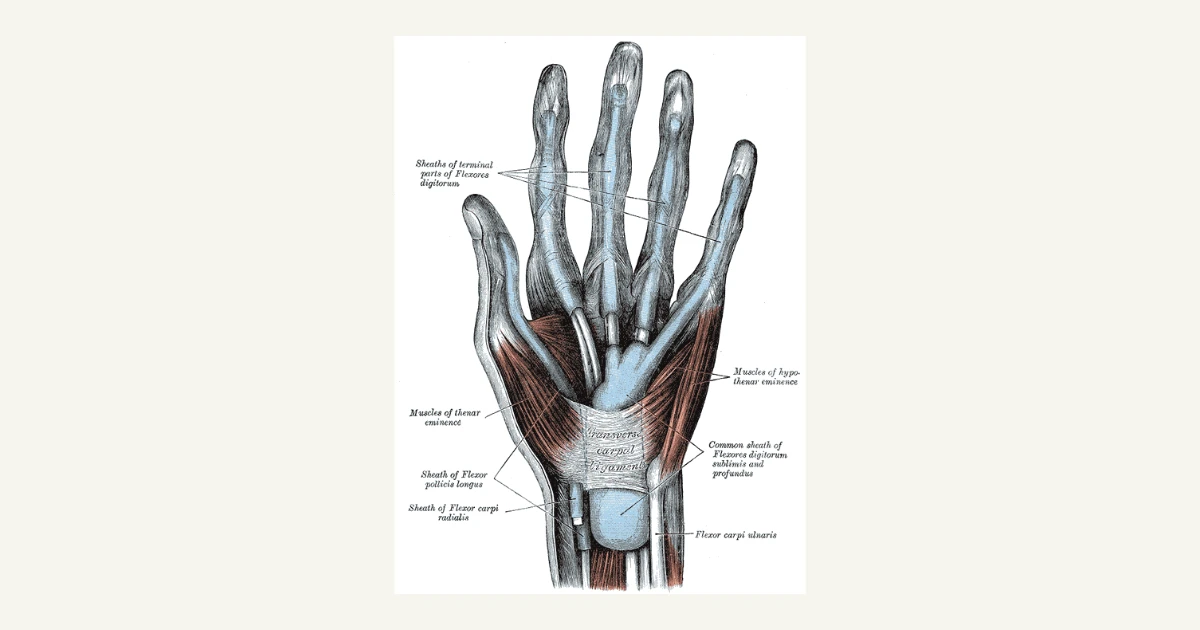
Your finger does not have muscles in it. It is pulled by cords called tendons that run from muscles in your forearm, down through your palm, into the finger. Those tendons slide through a tunnel. Along that tunnel are a series of rings that hold the tendon close to the bone, the way the small metal loops on a fishing rod hold the line in place.
The first of those rings sits at the base of your finger. In trigger finger, two things happen at once. The tendon swells and forms a small nodule. The ring thickens and narrows.
So now you have a bigger rope trying to pass through a smaller hole.
When you bend the finger, the nodule squeezes through. When you try to straighten it, the nodule catches on the edge of the ring. That is the click. That is the catch. And when the nodule can no longer force its way back through, that is the lock.
The medical name is stenosing tenosynovitis. Stenosing means narrowing. That word tells you everything about why this does not fix itself.
Why It Is Called Trigger Finger
Nothing to do with anger or stress.
The name comes from soldiers. Men who spent long stretches with a finger curled around a rifle trigger started turning up with fingers that snapped and locked in that same bent position. Doctors named the condition after what caused it, and the name stuck for over a century.
The cause today is not rifles. It is anything that loads the base of your finger repeatedly. Gripping tools. Steering. Scissors. Carrying grocery bags by the handles. Racquet sports. Gym work with heavy bars and dumbbells. Long hours on a mouse with a curled hand.
The Signs, In The Order They Usually Arrive
It usually progresses in the same order, and hand surgeons grade it 1 to 4 along these steps. Find yourself on this list, because the grade decides which treatments are still open to you.
Grade 1. Soreness and a lump. Tenderness at the base of the finger in the palm. A small firm bump you can feel. No clicking yet, or only occasionally. Most people ignore this grade completely.
Grade 2. Clicking and catching. The finger snaps as you straighten it. It works, but it announces itself. Worse in the morning, better once the hand warms up through the day. This is the moment people start googling at 11pm.
Grade 3. Locking that you can release yourself. The finger sticks bent. You have to use your other hand to pull it straight, and it releases with a painful pop. Many people learn to hide this. They stop shaking hands. They open jars differently.
Grade 4. It will not straighten at all. The finger stays bent. Even the other hand cannot pull it flat.
That last grade is the one worth being honest about, because it carries a consequence most people never get told.
The Part About Locking Trigger Finger Nobody Warns You About
When a finger stays locked bent for months, the middle joint of that finger (the PIP joint) begins to stiffen in the bent position.1 The soft tissue around the joint shortens. It settles into that shape.
Now here is the hard bit.
If it gets that far, releasing the tunnel does not automatically give you a straight finger back. You can have the surgery, the tendon can glide perfectly afterward, and the finger can still refuse to straighten. Because the problem is no longer the tunnel. The problem is now the joint itself, and that is a separate battle that takes a great deal more hand therapy to win. Sometimes it does not fully come back.1
That is the real cost of waiting. Not more pain. A finger that has quietly changed shape while you were hoping it would sort itself out.
So the time to get it looked at is before the finger stops straightening, not after. Your GP, a hand surgeon or a hand therapist can all examine it and tell you which grade it is.
Who Gets This
It is not random, and knowing whether you are in a higher risk group changes how urgently you should act.
Adults between 40 and 60. Most common window.
Women more than men. Consistently across the research.2
People with diabetes. This is the group we watch most closely. Trigger finger is far more common in people with diabetes, often affects more than one finger, tends to respond less well to steroid injection, and comes back more often.1 If you have diabetes and a finger that clicks, do not adopt a wait and see approach. Get it assessed.
Thyroid conditions, rheumatoid arthritis, gout and kidney disease. All associated.
People who already have carpal tunnel syndrome or Dupuytren’s. These conditions travel together more often than chance would explain.
Anyone doing heavy repetitive gripping. Trade work, gym training, racquet sports, gardening, long hours holding tools.
The thumb. Trigger thumb is extremely common and often more disabling than people expect, because you cannot pinch anything without it.
What Makes It Worse (And Most Of These Are Things People Do On Purpose)
This is the section that matters most, because a lot of the damage we see is self inflicted with good intentions.
Squeezing a stress ball. The single most common mistake. The logic feels right. Strengthen the hand, fix the hand. But trigger finger is not a weakness problem. You are forcing a swollen tendon through a narrowed tunnel over and over, and every repetition adds friction and swelling. You are tightening the very thing that needs to loosen.
Grip trainers and hand strengtheners. Same problem. Worse, because the resistance is higher.
Forcing the locked finger straight. Every time you yank it open, you drag the nodule violently through the ring. That is trauma, not treatment.
Working through the click. The click is not a nuisance to be tolerated. It is the sound of a tendon catching.
Generic hand exercise videos. They are written for stiff hands and weak hands. Your hand is neither. It is obstructed.
Cortisone, then straight back to the same activity. The injection can settle the swelling well. If nothing about the load changes, the swelling can return. Whether a second injection into the same finger makes sense is a question for your doctor.
What Actually Works For Trigger Finger or Locked Finger Recovery
Here is the honest picture, in the order we usually work through it.
Splinting the knuckle joint. Not a full finger splint. A small orthosis that stops the big knuckle at the base of the finger from bending, while leaving the rest of the finger free to move. This changes how the tendon travels through the tunnel and takes the drag off the nodule. Worn mostly at night and during aggravating tasks. It is not a quick fix. A proper splinting program runs six to ten weeks, and in published studies a good share of early cases settled without an injection or surgery.3 The catch is that it works far better at grades 1 and 2 than at grades 3 and 4, which is the same theme running through this entire article.
Tendon gliding done correctly. There is a specific sequence of finger positions that moves the tendon through its full range with the least drag. Done properly, it maintains movement without grinding the nodule through the ring. Done as a general “exercise the hand” approach, it makes things worse. This is why we are careful about what we put on the internet. The movement matters less than the dosage and the position, and that part needs eyes on your hand.
Changing the load. We work out exactly which tasks in your day are feeding this. Usually it is two or three specific things, and usually they are not the ones you expect. Adjusting them buys the tissue the quiet it needs to settle.
Corticosteroid injection. Done by a doctor, not by us. In a review of the trials, a steroid injection with local anesthetic settled triggering better than local anesthetic alone in the short term.4 It tends to work less often in people with diabetes and in fingers that have locked for a long time.1 Whether an injection suits you is a question for your doctor. If you have one, the weeks after it are when splinting and changes to load do their work.
Surgical release. A small procedure that opens the tight ring so the tendon can glide freely again. For a finger that has locked for a long time, or has not settled with splinting or an injection, a surgeon may advise it. We will tell you plainly when your finger needs a surgical opinion, rather than string you along with therapy that cannot clear a mechanical block. Whether to operate is your surgeon’s decision.
What it does not do by itself is give you back a joint that has already stiffened. That part is hand therapy work after the surgery, and it is the part patients are least prepared for.
Trigger Thumb Exercises: What Is Worth Doing, And What To Stop
Exercise does not open the tunnel on a trigger thumb. What it can do is keep the thumb moving while a splint and a change in load let the swelling settle. That means a few slow movements, done only in the range that does not click. Anything that squeezes, pinches hard or forces through the catch works against you.
The three we would give most people:
- Bend and straighten the tip, in the quiet range. Rest your forearm on a table, hold the base of the thumb still with your other hand, and slowly bend and straighten the tip joint only as far as it goes without catching. Ten slow repetitions, three or four times a day.
- Thumb to fingertips. Touch the tip of the thumb to the tip of each finger in turn, making an O, slowly. Stop short of the click.
- A gentle straightening stretch. If the tip joint has gone stiff, ease it straight with your other hand and hold for 10 to 15 seconds. It should feel like a stretch, not pain.
The ones to stop:
- Squeezing a ball, putty or a grip trainer. Same reason as the fingers above. A trigger thumb is an obstruction, not a weakness.
- Forcing it through the lock with the other hand, again and again.
- Heavy pinching and long stretches of thumb-typing while it is still catching.
For the thumb, a splint usually does more than any exercise. It is a small orthosis that stops the joint at the base or the tip of the thumb from bending, worn at night and during the tasks that set it off, for six to ten weeks. We shape a custom thumb splint to your hand in the same appointment. If the thumb locks every day, or no longer straightens at all, exercises are not the answer. That is the locking described above, and a doctor’s opinion on injection or release comes first.
After Trigger Finger or Trigger Thumb Surgery
The tunnel is open. The tendon glides. People assume that is the finish line.
The first weeks after release are about three things. Getting the finger moving early so scar tissue does not form around the tendon and tether it. Managing the swelling. And working on the scar itself in the palm, which sits right where you grip and can stay tender and sensitive for longer than most people are told.
If the finger had been locked for months before surgery, there is a fourth job. Regaining the straightening of the middle joint. That takes structured, patient work.
Most people move well again quickly. The ones who struggle are usually the ones whose finger had been locked bent for months before the operation.
When To Get It Looked At
Go to the emergency department now if a finger is red and swollen along its whole length, held slightly bent and very painful to straighten, especially after a cut or with a fever. That can be infection in the tendon sheath, which is not trigger finger.
Otherwise, get your hand looked at properly if any of these are true.
- The finger locks and you need the other hand to release it
- It has been clicking for more than four to six weeks and is not settling
- You have diabetes and any finger that clicks or catches
- More than one finger is doing it
- The finger no longer straightens fully, even passively
- You have tried squeezing a ball or a grip trainer and it got worse
- You have had an injection and it has come back
A single assessment gives you the one thing you cannot get from the internet: what grade it actually is, and therefore which of the paths above is genuinely still open to you.
Getting Your Locked or Clicking Finger Looked At
Trigger finger is a hand therapy condition. Our hand therapists see it every week, across every grade from a first click to a finger that has been locked for a year.
That matters here, because the entire treatment decision comes down to correctly reading how far along you are.
WhatsApp us and tell us which finger and how long it has been doing it. We will tell you honestly whether hand therapy is the right first step, or whether you need a surgical opinion first.
Phoenix Rehab Physio & Hand sees patients one to one, at Orchard, Tampines, Serangoon, Tanjong Pagar, and Jurong East at Vision Exchange, opening 25 October 2026.
Your hands do the work of your whole life. Every jar, every steering wheel, every handshake, every time you hold onto someone. A finger that locks does not just hurt. It quietly starts deciding what you stop doing.
Frequently Asked Questions About Triggering or Catching Fingers
What kind of doctor should I see for trigger finger? A GP can diagnose it and refer you on. A hand surgeon or orthopedic surgeon gives steroid injections and does the release operation. A hand therapist grades it, makes the splint and runs the exercise and load plan, and you can see one without a referral. If the finger locks every day or will not straighten, see a surgeon.
What is the fastest way to heal trigger finger? There is no shortcut through the pulley. At grades 1 and 2, a splint that blocks the big knuckle, worn at night and during the tasks that set it off, together with changes to load, is the usual first step over six to ten weeks. A steroid injection from a doctor can settle it sooner in the short term. A finger that locks or will not straighten needs a surgeon’s opinion.
Can I fix trigger finger myself? Partly. Stopping the squeezing, gripping and forcing that feed it helps, and very early cases sometimes settle. What you cannot do on your own is grade it, fit a splint that blocks the right joint, or change the size of the pulley. A finger that locks daily or will not straighten needs to be examined.
What is stage 4 trigger finger? Doctors grade trigger finger 1 to 4. Grade 4, which some sites call stage 4, is a finger fixed bent that cannot be pulled straight, even with the other hand. By then the middle joint may have stiffened too, so it needs a surgeon’s opinion, and usually hand therapy after any release.
Do I need hand therapy after trigger finger release? Many people recover with a home program after a release. Hand therapy helps most when the finger was locked bent before the operation, when the scar in the palm stays tender, or when the finger has not fully straightened a few weeks after surgery. Your surgeon’s protocol takes precedence.
Can trigger finger go away on its own? Very early cases sometimes settle if the aggravating activity stops completely. Once there is consistent clicking or locking, spontaneous recovery is uncommon, because the narrowing of the tunnel does not reverse simply through rest.
Is trigger finger the same as arthritis? No. Arthritis is a joint surface problem. Trigger finger is a tendon and tunnel problem. They can feel similar in the morning, which is why people self diagnose incorrectly, and they can also exist together in the same hand.
Will squeezing a stress ball help my trigger finger? No, and it commonly makes it worse. Gripping compresses an already inflamed tendon through an already narrowed tunnel. Trigger finger is not caused by weakness, so strengthening does not address it.
How long does trigger finger take to heal? With splinting and load management at the earlier grades, expect a program of roughly six to ten weeks. After surgical release, most people are using the hand normally within a few weeks, though scar sensitivity and full joint straightening can take longer.
Does trigger finger always need surgery? No. Many early and moderate cases settle with splinting, activity change and sometimes a steroid injection. A surgeon is more likely to advise release for fingers that have been locking for a long time, that have not settled after an injection, or that will not straighten.
Why is my trigger finger worse in the morning? Fluid gathers in the tendon sheath overnight while the hand is still, so the nodule is at its largest first thing. As you move through the morning, the swelling disperses and the finger loosens.
I have diabetes. Is my trigger finger different? It tends to be. Trigger finger is more common in people with diabetes, more often affects several fingers, responds less reliably to steroid injection, and recurs more frequently. Earlier assessment is worth more in this group.
Can trigger finger cause permanent damage? It can. A finger left locked in a bent position for long enough can develop stiffness at the middle joint that persists even after the tunnel is released. That is why a finger that no longer straightens fully is worth having examined, by your GP, a hand surgeon or a hand therapist.
Is there a specific splint for trigger finger? Yes. A small orthosis that blocks the knuckle joint at the base of the finger while leaving the other joints free. Off the shelf finger splints that immobilize the whole finger are a different device for a different problem and are not the same thing.
Which finger is most commonly affected? The ring finger and the thumb most often, though any finger can be involved, and more than one at the same time is common.
Can trigger finger come back after treatment? It can. After a steroid injection, the catching returns for some people, more often with diabetes or a finger that had been locking for a long time, which is why the weeks after an injection are the time to change the load. After surgical release, the same finger rarely triggers again, but another finger can start, and the scar and joint work afterwards is still needed.
Sources: 1. Ryzewicz M, Wolf JM. Trigger digits: principles, management, and complications. J Hand Surg Am. 2006;31(1):135-146. 2. Makkouk AH, Oetgen ME, Swigart CR, Dodds SD. Trigger finger: etiology, evaluation, and treatment. Curr Rev Musculoskelet Med. 2008;1(2):92-96. 3. Colbourn J, Heath N, Manary S, Pacifico D. Effectiveness of splinting for the treatment of trigger finger. J Hand Ther. 2008;21(4):336-343. 4. Peters-Veluthamaningal C, van der Windt DA, Winters JC, Meyboom-de Jong B. Corticosteroid injection for trigger finger in adults. Cochrane Database Syst Rev. 2009;(1):CD005617.
Where a finger joint has stopped giving range back, total end range time rather than exercise is what changes it. See the Stiff Finger Joint Recovery Program, which sets out the four stages and what moves you up.
Had an injection?
The injection stopped the click. What happens at week six?
A steroid injection into the tendon sheath settles the swollen tendon so it glides through the pulley again. It does not change the grip that thickened it: the phone held in a claw, the bag hooked over two fingers, the tool squeezed all shift.
The quiet weeks after the injection are when tendon gliding, a night splint where it helps, and changes to grip habits do their work. If the click has already come back, bring the date of the injection to your first appointment.
Also on this site: the page on finger joint pain covers what the spot that hurts tells you, the page on wrist tendonitis covers which tendon it is and how long it usually takes, and the page on rheumatoid arthritis in the hands covers what hand therapy does for it.
Where are you with this right now?
1. It is settling on its own
Many hand problems settle with a well fitted splint, changes to what provokes them, and tendon gliding. A tender scar and weak grip for a few weeks after surgery are usual. If the catching is easing rather than turning into locking, and grip is improving month on month, it is behaving as expected. You do not need us for this, and we would rather say so.
2. It has stopped improving
You hand the jar to someone else. You button the shirt one-handed. You have stopped using that hand for anything that matters and barely noticed when it started.
The hand is the part of the body where stiffness sets in fastest, because a hand that hurts gets used less within days rather than weeks. That is the gap worth measuring, and it is not measured by how you feel on the day.
The Stalled Recovery Review is three appointments over three weeks with the same therapist, because what a joint does under load cannot be read in one visit. The first finds what is limiting it. The next two measure how it responds. $690, nett, no GST, which is three appointments at $230.
3. You have had surgery, or you have a date
Recovery after an operation has a shape, and knowing which stage you are in tells you whether you are on it. The Trigger Finger Program above sets it out, or see hand therapy after surgery if you are not sure which applies to you.
All of it runs on the same four stages. The Phoenix Recovery Protocol explains what each stage works on and what you have to meet to move up. No referral needed to start.
Next step
Find out which stage you are in
Pain is the first thing to leave. Movement and strength are the last things trained back, and most people stop before that part is done. One Assessment and Treatment is a single 45-minute appointment at $230, nett, no GST. Your therapist finds what is actually limiting you, treats it in the same appointment, and you leave with your current stage and a written plan.
Prefer to phone? Each of our five clinics has its own number on the clinics page. No referral needed to book.
Related reading
Where we are
Clinics across Singapore
ORCHARD
400 Orchard Road #12-12
Orchard Towers, S238875
NS22 Orchard MRT
Physiotherapy and hand therapy in Orchard →
WhatsApp 8800 1830TAMPINES
9 Tampines Grande #01-20
Asia Green, S528735
EW2DT32 Tampines MRT
Physiotherapy and hand therapy in Tampines →
WhatsApp 8780 9608SERANGOON
265 Serangoon Central Drive #04-269
S550265 · Lift C only
NE12CC13 Serangoon MRT
Physiotherapy and hand therapy in Serangoon →
WhatsApp 8892 4121TANJONG PAGAR
10 Anson Road #02-77A
International Plaza, S079903
EW15 Tanjong Pagar MRT
Physiotherapy and hand therapy in Tanjong Pagar →
WhatsApp 8227 7074JURONG EAST
2 Venture Drive #02-02
Vision Exchange, S608526
NS1EW24 Jurong East MRT
Opening 25 October 2026
Physiotherapy and hand therapy in Jurong East →
WhatsApp 8242 7340What our patients say
Google reviews from our clinics in Singapore.



