
Written by Zita Sham, Fairuuz Saleh and Shiv Mohan Banka, Principal Physiotherapists at Phoenix Rehab.Clinically reviewed by Louise Yow, Principal Physiotherapist & Director, AHPC A1300363H.Last reviewed 6 October 2026.
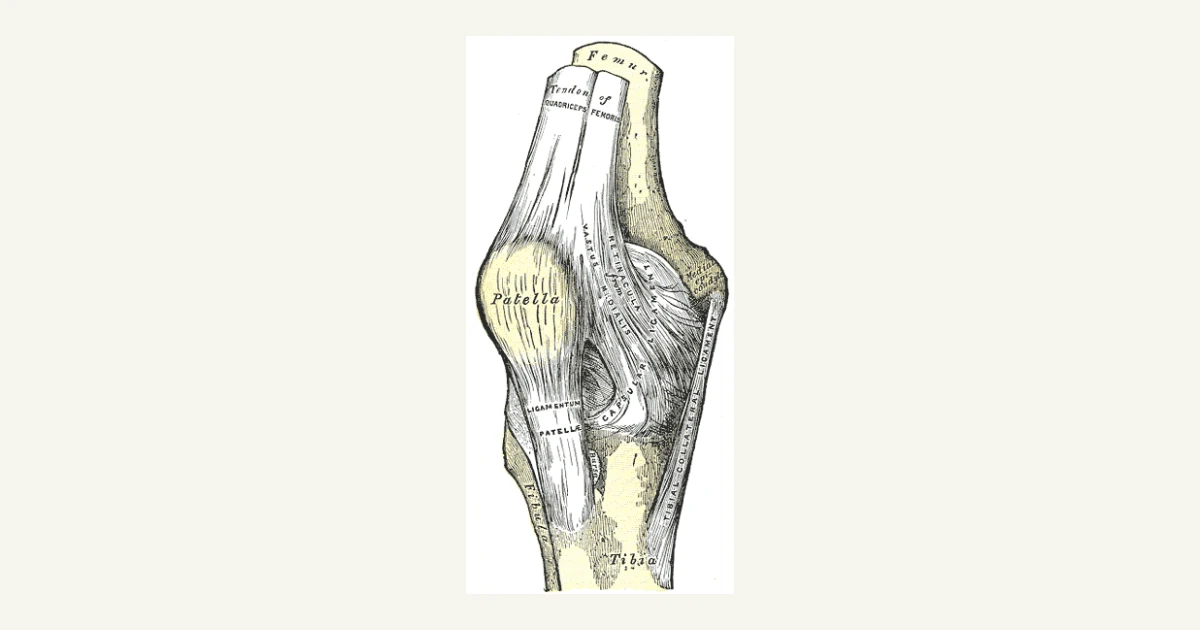
Knee pain when you straighten your leg usually comes from the front of the knee: the joint behind the kneecap, or the tendon just below it. Both work hardest as the knee comes straight under load. Pain at the back of the knee points to the hamstring or calf tendons, or a Baker’s cyst. A knee that will not go fully straight at all, especially after a twist, is a different problem: something may be blocking the joint, and a doctor needs to look at it. Where it hurts tells you most of it.
Key takeaways
- Pain as the knee straightens most often comes from the joint behind the kneecap or the tendon just below it.
- Pain at the back of the knee when it straightens points to the hamstring or calf tendons, or a Baker’s cyst.
- A knee that hurts as it straightens but still gets there is usually a load problem. A knee that stops short and will not go straight is a block, and needs a doctor.
- After knee surgery, getting the knee fully straight is one of the first goals, and it is measured in degrees.
- Not being able to lift the straight leg off the bed after a pop above or below the kneecap needs a doctor the same day.
Where does it hurt when you straighten it?
Put a finger on the spot. That narrows it down more than anything else.
| Where it hurts | Most likely | Usually feels like |
|---|---|---|
| Around or behind the kneecap | Patellofemoral pain, sometimes called runner’s knee | An ache as the knee straightens under load, on stairs, and after sitting with the knee bent. See knee pain on stairs |
| Just below the kneecap | Patellar tendinopathy, sometimes called jumper’s knee | A spot you can press, sore when you start running, jumping or kicking, and stiff the morning after |
| Just above the kneecap | Quadriceps tendon | Pain at the top edge of the kneecap when you straighten against a heavy load |
| Back of the knee | A hamstring or calf tendon where it crosses the knee, or a Baker’s cyst | Pulling or fullness behind the knee at the last few degrees. See back of knee pain |
| Inside or outside, along the joint line | Meniscus | Pain when you twist or turn, sometimes catching, clicking, or the knee getting stuck. See meniscus tears |
| Outside of the knee, above the joint | IT band | A sharp or burning spot on the outside, worse running or cycling. See outer knee pain |
| Deep in the joint, with stiffness | Knee osteoarthritis | Stiff first thing and after sitting, a few steps to get going, usually over 45 |
Hurts to straighten, or cannot straighten?
These are different problems, and the difference decides who you see first. If the knee hurts as it comes straight but still gets there, it is a load problem in most cases, and it is ours to work on. If it stops short and will not go fully straight, even when you press it gently down with your hand, something is in the way. After a twisting injury, the usual cause is a torn piece of meniscus caught in the joint, and a doctor should see it the same day.
One more check. Lie on your back and try to lift the straight leg off the bed. If you felt a pop above or below the kneecap and now cannot lift the leg at all, the tendon that straightens the knee may have torn. See a doctor the same day.
My knee hurts when I bend and straighten it, but there’s no swelling
Pain both ways with no swelling and no injury is most often the joint behind the kneecap or an overloaded tendon, not damage inside the knee. Swelling is the sign that the inside of the joint is irritated. A knee that puffs up after activity, or that swelled within a few hours of an injury, is worth having examined.
Why does it hurt when I straighten it after sitting or sleeping?
After a long time bent, the joint behind the kneecap and the tissues at the back of the knee stiffen, and the first few straightenings load them before they have warmed up. That is typical of patellofemoral pain, and of osteoarthritis, where morning stiffness usually eases within about 30 minutes.3 Stiffness that lasts more than an hour every morning, in several joints, is worth telling a doctor about. It can point to an inflammatory arthritis.
I can’t fully straighten my knee after surgery
After an ACL reconstruction, a knee replacement, meniscus surgery or a tibial plateau fracture, getting the knee fully straight is one of the first goals, ahead of bending. A knee that stays a few degrees bent makes you limp, and loads the front of the knee with every step. In a ten-year follow-up after ACL reconstruction, people who had lost normal knee straightening had more arthritis in that knee on X-ray.1
Your surgeon’s protocol sets the timing. Your therapist measures the straightening in degrees at every visit, against the other knee. See the ACL Reconstruction Recovery Program, the Knee Replacement Recovery Program, the Meniscus Surgery and Knee Arthroscopy Recovery Program or the Tibial Plateau Fracture Recovery Program.
What we measure
- Straightening, in degrees. Lying down with the heel propped, against the other knee.
- Thigh muscle control. Whether you can lift the straight leg without the knee bending on the way up. A bend is called a lag, and it is common after surgery and after swelling.
- Strength. Single-leg strength and a slow step down, watching the knee and the hip.
- Swelling. Measured around the knee with a tape, week to week.
Tested, not dated. The load goes up when the numbers say so.
What you can do this week
- Keep moving it. Walking on the flat, and cycling with low resistance if it is comfortable.
- If the front of the knee hurts, cut deep squats, kneeling and long runs of stairs for two weeks rather than stopping exercise altogether. Exercise for the hip and knee is the first treatment for pain behind the kneecap.2
- Let it straighten gently: sit with the heel on a stool and let the knee settle straight for a minute, a few times a day, as long as it is comfortable. After surgery, follow your surgeon’s protocol instead.
- Tighten the thigh muscle with the leg straight, hold for 5 seconds, 10 times, a few times a day.
- A cold pack for 10 to 15 minutes after activity can ease it. Medication and injections are a doctor’s decision.
See also knee pain when squatting, which follows the same front-of-knee pattern.
When to see a doctor first
- Call 995 if your calf is swollen and painful and you are short of breath or have chest pain.
- Go to the emergency department now if the knee is hot, red and swollen and you have a fever, or if after a fall or injury the knee looks deformed or you cannot take any weight on it.
- See a doctor the same day if you felt a pop above or below the kneecap and now cannot lift the straight leg off the bed, or if the calf is swollen, hot and painful, or if the knee swelled up within a few hours of an injury.
- See a doctor soon if the knee locks or gets stuck and will not straighten, keeps giving way, hurts at night or at rest and is getting worse, or has not improved after six weeks of sensible changes.
Also on this site: the page on stretches for knee pain covers which ones to use and which to leave alone.
Where are you with this right now?
1. It is settling on its own
Most knee pain that started with a specific moment settles over six to twelve weeks. Swelling that comes and goes with activity, and an ache after a long day, are usual in that window. If it is improving month on month and you can walk, take stairs and sleep, it is behaving normally. You do not need us for this, and we would rather say so.
2. It has stopped improving
You go down stairs one leg at a time. You have stopped squatting to pick things up. You test it before you trust it.
Pain settling is the first thing that happens, not the last. Thigh strength is the last thing to come back, and it does not come back on its own. That is the gap worth measuring, and it is not measured by how you feel on the day.
The Stalled Recovery Review is three appointments over three weeks with the same therapist, because what a joint does under load cannot be read in one visit. The first finds what is limiting it. The next two measure how it responds. $690, nett, no GST, which is three appointments at $230.
3. You have had surgery, or you have a date
Recovery after an operation has a shape, and knowing which stage you are in tells you whether you are on it. See the recovery programs, or knee physiotherapy if you are not sure which applies to you.
All of it runs on the same four stages. The Phoenix Recovery Protocol explains what each stage works on and what you have to meet to move up. No referral needed to start.
Next step
Find out which stage you are in
Pain is the first thing to leave. Movement and strength are the last things trained back, and most people stop before that part is done. One Assessment and Treatment is a single 45-minute appointment at $230, nett, no GST. Your therapist finds what is actually limiting you, treats it in the same appointment, and you leave with your current stage and a written plan.
What our patients say
Google reviews from our clinics in Singapore.



Prefer to phone? Each of our five clinics has its own number on the clinics page. No referral needed to book.
Related reading
Sources: 1. Shelbourne KD, Gray T. Minimum 10-year results after anterior cruciate ligament reconstruction: how the loss of normal knee motion compounds other factors related to the development of osteoarthritis after surgery. Am J Sports Med. 2009;37(3):471-480. 2. Crossley KM, van Middelkoop M, Callaghan MJ, et al. 2016 Patellofemoral pain consensus statement from the 4th International Patellofemoral Pain Research Retreat, Manchester. Part 2: recommended physical interventions. Br J Sports Med. 2016;50(14):844-852. 3. National Institute for Health and Care Excellence. Osteoarthritis in over 16s: diagnosis and management (NG226). 2022.
Where we are
Clinics across Singapore
ORCHARD
400 Orchard Road #12-12
Orchard Towers, S238875
NS22 Orchard MRT
Physiotherapy and hand therapy in Orchard →
WhatsApp 8800 1830TAMPINES
9 Tampines Grande #01-20
Asia Green, S528735
EW2DT32 Tampines MRT
Physiotherapy and hand therapy in Tampines →
WhatsApp 8780 9608SERANGOON
265 Serangoon Central Drive #04-269
S550265 · Lift C only
NE12CC13 Serangoon MRT
Physiotherapy and hand therapy in Serangoon →
WhatsApp 8892 4121TANJONG PAGAR
10 Anson Road #02-77A
International Plaza, S079903
EW15 Tanjong Pagar MRT
Physiotherapy and hand therapy in Tanjong Pagar →
WhatsApp 8227 7074JURONG EAST
2 Venture Drive #02-02
Vision Exchange, S608526
NS1EW24 Jurong East MRT
Opening 20 October 2026
Physiotherapy and hand therapy in Jurong East →
WhatsApp 8242 7340