
Written by Zita Sham, Fairuuz Saleh and Shiv Mohan Banka, Principal Physiotherapists at Phoenix Rehab.Clinically reviewed by Louise Yow, Principal Physiotherapist & Director, AHPC A1300363H.Last reviewed 8 October 2026.
Nobody types pain hip into their phone after one bad morning. They type it because of socks.
You sit on the edge of the bed, lift your foot towards your knee the way you have for forty years, and something in the front of your hip says no. Within a month you are putting your shoes on with your foot flat on the floor and calling it a habit.
Then the car door. Then a limp that is not there at 9am but has arrived by 6pm. Then rolling over at 2am and waking because of it.
By then most have read that it is arthritis and nothing can be done, or bursitis and needs an injection. Here is what almost nothing online says plainly. Where the pain sits tells our physios at Phoenix Rehab more than any single test does. Three problems wear the same label and need three different plans. Getting that wrong is how people lose a year.
What hip pain actually is
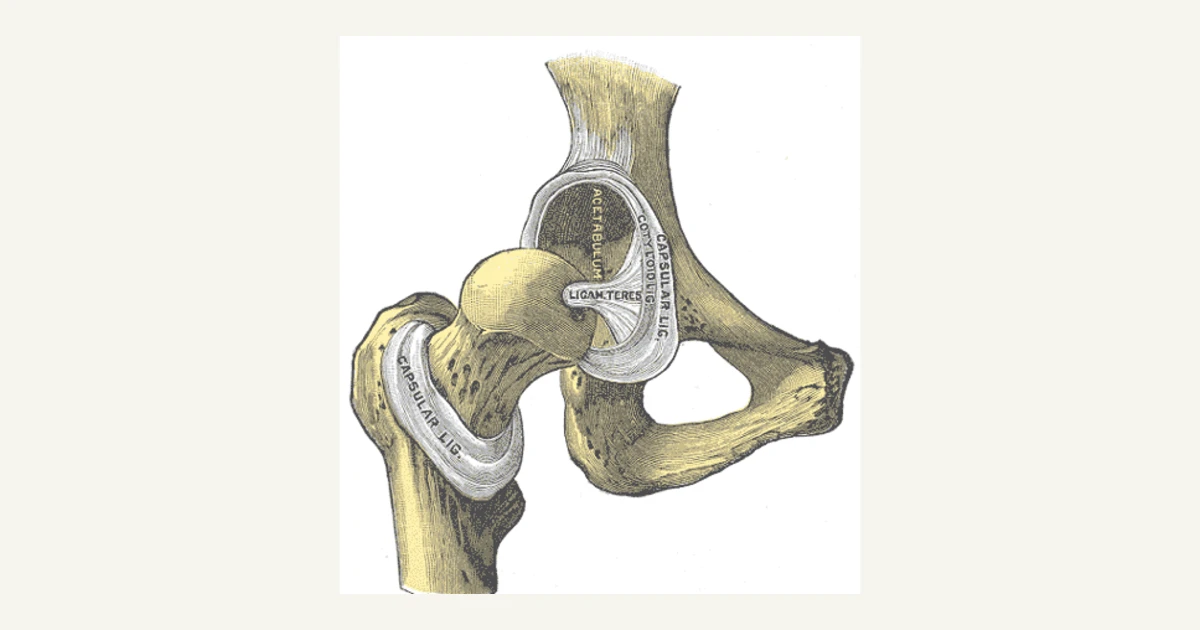
The hip joint is a ball and socket. The top of your thigh bone is the ball, the side of your pelvis is the socket, and both are lined with cartilage, a smooth coating that lets them glide. It sits deep, closer to your groin than to the bony bump on the side of your leg. So when the joint is the problem, you feel it in the groin.
That bump on the outside is the greater trochanter. Tendons attach there from the gluteal muscles, the ones that hold your pelvis level when you stand on one leg. A tendon is the rope tying muscle to bone, and those ropes get sore on their own.
Behind all of it sits your lower back and the sacroiliac joint, where the base of your spine meets your pelvis. Both send pain into the buttock, and anyone feeling that will call it hip pain.
Three regions. Three structures. The map below is the most useful thing here.
How to tell what kind of hip pain you have
Point with one finger at the spot that hurts most. Not the area. The spot.
Groin and front of hip: usually the joint itself
- Pain in the crease of the groin, sometimes wrapping towards the knee
- Morning stiffness that eases after fifteen or twenty minutes of moving
- Trouble with socks, shoes, toenails, and getting into a low car
- A deep ache after a long walk, worse the next morning
- Sometimes a catch or pinch when you turn the leg inwards
Outside of the hip, over the bony point: usually the tendons
- Pain you can press on and reproduce with one finger, right on the bump
- Cannot lie on that side at night, and often not the other either, because the top leg drops across
- Sore going up stairs, sore standing on that leg waiting for the lift
- Sore after long standing, especially if you sink your weight into one hip
- Sitting with legs crossed makes it grumble
If the outside is where you point, the joint is probably not the problem.
Buttock pain: often not the hip at all
Pain sitting squarely in the buttock cheek frequently comes from the lower back or the sacroiliac joint rather than the hip.
- Worse sitting for long stretches, worse in the car, better up and walking
- Sometimes travels down the back of the thigh
- Changes with how you sit rather than how far you walk
- Not usually made worse by putting your socks on
Gluteal tendinopathy: the one that gets called bursitis
If your pain is on the outside of the hip, this section is why the page exists.
Gluteal tendinopathy is an overload problem in the tendons attaching to the outside of the hip bone. It is also called greater trochanteric pain syndrome, which describes where it hurts rather than what is wrong. For years it was labelled bursitis, meaning irritation of a small fluid cushion there. Imaging shifted that, and the tendon is now considered the main source in most cases.
It shows up most in women from the mid forties onwards, and in walkers and runners who recently added distance.
Four things reliably make it worse, and they explain almost every bad night:
- Lying on that side. Body weight presses the tendon against the bone.
- Standing with your weight hanging on one hip. That hip drops, the tendon gets squashed.
- Sitting with legs crossed, or knees together and feet apart. Same squash, different position.
- Stairs and slopes. The tendon works hardest exactly when it is most compressed.
The thread through all four is compression, which tendons tolerate worst.
Which brings us to the advice that gets given constantly and usually makes things worse. Stretching the outside of the hip. Pulling the knee across the body, the figure four stretch. Each takes the leg across the midline, the exact position that presses tendon into bone.
It feels good for ten seconds. It hurts more that night.
What the tendon responds to is load, applied gradually. Isometric holds first, where the muscle works without the joint moving. Then side lying and standing strength work. Then stairs and walking. Alongside that, a pillow between the knees at night and legs uncrossed at your desk.
Progress is measured in weeks and months. But it responds well, and it gets treated properly far less often than it should, because the bursitis label points people towards rest.
Hip osteoarthritis, in plain English
Osteoarthritis means the cartilage lining the joint has thinned and the surfaces have changed shape. Not bone grinding on bone in most cases. Not a joint falling apart. A joint that is stiffer, less tolerant of load, and slower to settle afterwards.
The stiffness pattern is characteristic. Stiff in the morning, loose within half an hour, stiff again after a long meeting. Achy after a long walk rather than sharp during it.
The movement that goes first is rotation, the turning of the thigh bone inside the socket. You will not notice it as lost rotation. You will notice it as socks, shoes, toenails and car doors. Same loss, different clothes.
Now the part worth sitting with. What an x-ray shows and what a person feels do not line up neatly. Some people have marked changes on film and walk four kilometers comfortably. Others have mild changes and struggle with one flight of stairs. The picture is information, not a verdict.
Which leads to what most people with hip arthritis are never told. Exercise therapy, meaning structured strengthening supervised by a physiotherapist, is the primary non surgical treatment. Not an extra alongside painkillers. The first line.
Strong muscles around the hip share load with the joint and reduce the jarring that causes flares. People regain walking distance, stairs and sleep with nothing done to the cartilage. The cartilage was not what limited them. Their capacity was.
Other causes worth knowing about
Hip impingement and labral problems. Mostly in active people in their twenties and thirties. The bones at the edge of the joint make contact earlier than they should when the hip bends and turns in. Deep groin pain with squatting, pivoting and long sitting.
Referred pain from the back. The lower back and the nerves leaving it can produce pain in the buttock, the outside of the hip and down the thigh with nothing wrong at the hip.
A hip that has never been right since a fall. Bone bruising, small fractures and labral tears sit here, and pain that is not improving needs a proper look.
What causes it in Singapore
Stairs are everywhere. Older HDB blocks, overhead bridges, the flight up from the platform when the escalator is down. Each loads the outside of the hip hardest at the moment it is most compressed. Squatting is still built into older premises, and that takes the hip to its end range. Fine for a healthy joint. Provocative for a stiff one.
Standing hours are long in retail, food and beverage, security and nursing. Ten hours on a hard floor, and by hour six almost everybody stands hip out with the weight hanging on one side. That habit drives more outside hip pain than sport does.
Walking distances deceive too. Interchanges like Dhoby Ghaut and Outram Park cover serious ground underground, at pace, often in flat unsupportive shoes.
When you need to get this looked at
Most hip pain is not dangerous. A few presentations are, and they need a doctor, not a physiotherapist. Get medical review promptly if any of these apply:
- You cannot put weight through the leg after a fall, especially if you are older or have thinning bones. Same day assessment.
- Sudden severe groin pain with an inability to move the leg, fall or no fall.
- Fever alongside hip pain, or feeling generally unwell.
- Night pain that is severe and does not change whatever position you try.
- Unexplained weight loss.
- A history of cancer, anywhere in the body, with new deep hip or thigh pain.
- Progressive weakness or numbness in the leg, or any change in bladder or bowel control.
These are not physiotherapy appointments. See a doctor. If you cannot get one quickly, go to an emergency department.
For everything else the signal is trajectory, not intensity. Pain improving week on week is doing what it should. Pain that has been the same for six weeks has stopped being something to wait out, and a message on WhatsApp at 8336 6009 sorts out whether you need an appointment or a plan.
What happens if you leave it
It depends which one you have.
Gluteal tendinopathy does not usually resolve on its own once it has been there a few months. Tendons adapt to what you ask of them, and if the answer is nothing, they do not get stronger. What follows is a slow shrinking of life around it. Stop that walk. Stop that class. Two years later the leg is weaker.
Hip osteoarthritis does progress in many people, though the speed varies enormously and some stay stable for years. More predictable is the muscle around it. Pain makes you move less, moving less makes you weaker, weaker makes the joint hurt more. Break that loop early and people hold function for years.
How it gets treated
Self management first. Take the compression out of your week. Pillow between the knees at night. Both feet loaded when standing. Legs uncrossed. Keep walking, but change the dose instead of stopping.
Physiotherapy. The first job is a diagnosis you can trust, because everything follows from it. Assessment works through how your hip moves, how it loads on one leg, and whether your back is involved. Treatment is built on progressive strengthening, improving the rotation you lost, and rebuilding tolerance for what you stopped doing. Hands on work settles a painful joint. Strength holds the change. More on how physiotherapy works at Phoenix.
Medication and injections. Your doctor may suggest anti inflammatory medication for a flare, or a corticosteroid injection. For outside hip pain an injection can quieten things enough to start loading, though alone it rarely holds, because the tendon has not been made stronger. Some people are offered a PRP injection. That conversation belongs with the doctor offering it.
Surgery. Arthroscopic surgery for impingement and labral tears in selected younger patients. Joint replacement for advanced arthritis. Both are decisions made by a surgeon who has examined you and seen your imaging.
Hip replacement: when it becomes the right conversation
A hip replacement is not the failure of everything else. It is the right operation at the right time for the right person, and for many it is what gives them their life back.
It usually starts when pain stops responding to conservative care, when it wakes you regularly, and when the things you care about have quietly disappeared from your week. Walking distance. Sleep. Travel. Sitting on the floor with grandchildren. It is a quality of life decision, and it belongs to you and your orthopedic surgeon.
Prehabilitation matters more than people expect. Going into surgery stronger tends to mean coming out steadier. The muscles around a painful hip are usually weak long before the operation, and afterwards those same muscles control a joint that has just been rebuilt. Where timing allows, six to eight weeks of strength work beforehand is worth doing.
What recovery actually looks like. A rough shape, and each is a guide rather than a promise.
- First days. Up and walking with a frame or crutches, often on the day of surgery.
- Weeks one to six. Walking aids reduce, swelling settles, and the focus is walking pattern and everyday tasks.
- Weeks six to twelve. Real strengthening begins and stairs normalize. Many are driving and back at desk work before this, depending on the side operated on.
- Three to twelve months. Continued strength gains, and return to hiking, golf and swimming as cleared.
Something that catches people off guard. Recovery after a hip replacement is generally more straightforward than after a knee replacement. Hips tend to feel better sooner, stiffen less, and demand less of a fight to regain range.
The safety line, and it is not negotiable. Surgical approach varies. Anterior, posterior, lateral, and variations within each. What you may do, what you must avoid, and whether there are movement precautions at all comes from the surgeon who operated on you. Not from this page. Not from a friend who had theirs done in 2016. Your surgeon’s instructions override everything here, including the exercises below.
Phoenix does the rehabilitation. Our physios work to the protocol your surgeon sets, and where there is a question, we ask.
Exercises and what to do at home
These are general starting movements, not a substitute for assessment, because the right exercise depends on which pattern you have. If you have had a hip replacement, follow the program your surgeon and treating physiotherapist gave you and ignore this list.
Isometric hip abduction against a wall. For the outside of the hip. Stand side on, a foot from a wall, sore hip outermost. Bend the inside leg and press that knee into the wall so the standing hip holds you level. Hold 30 to 45 seconds. 5 holds.
Glute bridge. On your back, knees bent, feet flat and hip width apart. Lift your hips into a straight line from knee to shoulder. Hold two seconds, then lower slowly. 2 to 3 sets of 10 to 15.
Side lying hip abduction. Lie on the good side, body straight, top leg slightly behind you. Lift it about thirty centimeters, toes pointing forwards rather than up. 2 to 3 sets of 10 to 15 each side.
Standing hip abduction. Hold a chair. Take the leg out to the side without leaning away. Small range, slow, controlled. 2 to 3 sets of 10 to 12 each side.
Sit to stand. From a dining chair, stand without using your hands, then sit under control. 3 sets of 8 to 10. Use a higher chair if it is not smooth.
Step ups. Low step first, around fifteen centimeters. Lead with the sore leg and control the way down. 2 to 3 sets of 8 to 10 each leg. Raise the step over weeks, not days.
The acceptable pain rule. Some discomfort is fine. Up to about four out of ten, settling within half an hour.
The 24 hour rule. Judge it the next morning. Worse than the day before means too much, so drop the sets or range by a third. Same or better means the dose was right.
Get assessed if any of these cause sharp groin pain or a giving way sensation.
What recovery looks like without surgery
Tendon problems on the outside of the hip usually need around three months of consistent loading before people call themselves better, and some take longer. Sleep is often the first thing to improve. Stairs are usually last.
Hip osteoarthritis is managed rather than cured, and managed well it is often quiet. Most notice a change in walking tolerance within six to twelve weeks of proper strengthening.
What makes it slower: two weeks of exercises then stopping, keeping the daily habit that compresses the tendon, and a back that is feeding into it and has not been assessed yet.
Getting assessed at Phoenix Rehab
The first appointment is mostly working out what you actually have. Where you point, what your hip does when it is moved, what happens when you stand on one leg, and what changed in your week over the last six months. That history often tells us more than the examination.
You leave with a name for it, a plan with real numbers, and the specific things to stop doing. If your pattern needs a doctor or surgeon first, we will say so. If you have had surgery, we work to your surgeon’s protocol.
Branches at Orchard, Tampines, Serangoon and Tanjong Pagar, with Jurong East opening on 25 October 2026.
Frequently asked questions
Why does my hip hurt when I put on socks and shoes?
That usually means the hip joint has lost rotation, the turning of the thigh bone inside the socket. It is one of the earliest and most reliable signs of hip osteoarthritis. Reaching for your foot needs the hip to bend and turn at once, so it is the first task to go.
Is pain on the outside of my hip bursitis?
Usually not, or not mainly. Pain over the bony point on the side of the hip is far more often a tendon overload problem, called gluteal tendinopathy. The distinction matters, because a bursitis label sends people towards rest and injections, while the tendon needs graded strengthening to settle.
Should I stretch my hip if it hurts on the outside?
Generally no, and this catches many people out. Stretches that pull your knee across your body press the tendon into the bone, which is exactly what irritates it. They feel good briefly and hurt more that night. Strength work, particularly isometric holds, helps far more.
When is it time to consider a hip replacement?
When pain is no longer responding to physiotherapy and medication, when it wakes you regularly at night, and when the things you value have dropped out of your week. It is a quality of life decision, made by you and your orthopedic surgeon, based on your examination and what matters to you.
Is hip replacement recovery harder than knee replacement?
Generally the opposite. Hip replacement recovery tends to be more straightforward. Hips usually feel better sooner, stiffen less, and need less of a fight to regain movement than knees do. Your own recovery still depends on your surgery, your health and how strong you go in.
Can physiotherapy help before a hip replacement?
Yes, and it is underused. Going into surgery with stronger muscles around the hip generally means a steadier recovery, because those are the muscles you rely on afterwards. Where timing allows, a focused program in the weeks beforehand is worth doing.
You should be able to put your socks on without planning it. Get out of the car without bracing. Sleep on whichever side you feel like.
That is the real point of all this. Not a pain score, but a life with the ordinary things still in it, and a body that still does what you ask of it ten years from now.
If your hip has been sore for more than a few weeks and is not improving, WhatsApp us on 8336 6009. Tell us where you point, and we will tell you what we think it is and what to do about it.
For impingement or a labral repair at the hip, the gluteal muscles were switched down long before the operation. See the Hip Arthroscopy and FAI Recovery Program, which sets out the four stages and what moves you up.
For pain in the groin crease itself, including hernias and when to see a doctor, see groin pain.
Where are you with this right now?
1. It is settling on its own
Hip pain from a specific overload often settles over six to twelve weeks with load management and graded strengthening. If you can walk further this month than last and sleeping on that side is getting easier, it is settling. You do not need us for this, and we would rather say so.
2. It has stopped improving
You put your socks on sitting down. You have stopped sleeping on that side. You take the stairs one at a time without noticing.
The hip stops hurting long before the muscles around it are strong again. That gap is where the limp comes from. That is the gap worth measuring, and it is not measured by how you feel on the day.
The Stalled Recovery Review is three appointments over three weeks with the same therapist, because what a joint does under load cannot be read in one visit. The first finds what is limiting it. The next two measure how it responds. $690, nett, no GST, which is three appointments at $230.
3. You have had surgery, or you have a date
Recovery after an operation has a shape, and knowing which stage you are in tells you whether you are on it. See the Hip Replacement Recovery Program, or hip physiotherapy if you are not sure which applies to you.
All of it runs on the same four stages. The Phoenix Recovery Protocol explains what each stage works on and what you have to meet to move up. No referral needed to start.
Next step
Find out which stage you are in
Pain is the first thing to leave. Movement and strength are the last things trained back, and most people stop before that part is done. One Assessment and Treatment is a single 45-minute appointment at $230, nett, no GST. Your therapist finds what is actually limiting you, treats it in the same appointment, and you leave with your current stage and a written plan.
Prefer to phone? Each of our five clinics has its own number on the clinics page. No referral needed to book.
Related reading
Where we are
Clinics across Singapore
ORCHARD
400 Orchard Road #12-12
Orchard Towers, S238875
NS22 Orchard MRT
Physiotherapy and hand therapy in Orchard →
WhatsApp 8800 1830TAMPINES
9 Tampines Grande #01-20
Asia Green, S528735
EW2DT32 Tampines MRT
Physiotherapy and hand therapy in Tampines →
WhatsApp 8780 9608SERANGOON
265 Serangoon Central Drive #04-269
S550265 · Lift C only
NE12CC13 Serangoon MRT
Physiotherapy and hand therapy in Serangoon →
WhatsApp 8892 4121TANJONG PAGAR
10 Anson Road #02-77A
International Plaza, S079903
EW15 Tanjong Pagar MRT
Physiotherapy and hand therapy in Tanjong Pagar →
WhatsApp 8227 7074JURONG EAST
2 Venture Drive #02-02
Vision Exchange, S608526
NS1EW24 Jurong East MRT
Opening 25 October 2026
Physiotherapy and hand therapy in Jurong East →
WhatsApp 8242 7340What our patients say
Google reviews from our clinics in Singapore.


