
Written by Zita Sham, Principal Physiotherapist at Phoenix Rehab, AHPC A1302159H.Clinically reviewed by Louise Yow, Principal Physiotherapist & Director, AHPC A1300363H.Last reviewed 3 November 2026.
You were told it is hip bursitis. You have rested it, stretched it and had the anti-inflammatories. So why does the outside of the hip still wake you at 3am every time you roll onto that side?
Pain on the outside of the hip, over the bony point you can feel at the side, is usually called bursitis. Most of the time the main problem is the gluteal tendons that attach to that bone, and that changes what helps. This page covers what it usually is, how to tell it from a hip joint problem, when a gluteal tendon tear is the cause, the signs that mean a doctor first, and what to do when it will not settle.
What is hip bursitis?
Hip bursitis, often called trochanteric bursitis, describes pain and tenderness over the greater trochanter, the bony point on the outside of the hip. A bursa is a small fluid sac that sits there. In most people with this pain, the gluteal tendons attaching to that bone are the main source, and the bursa is often not inflamed at all. The current name for the whole picture is greater trochanteric pain syndrome.1,2
Key takeaways
- Pain over the bony point on the outside of the hip is usually called bursitis, but in most people the gluteal tendons attached there are the main source.
- In an ultrasound study of 877 people with this pain, about one in five had bursitis and about half had gluteal tendon changes.
- Lying on that side, crossing the legs and standing on one leg are the usual triggers, because they squash the tendon against the bone.
- Rest settles an irritated bursa. A tendon needs to be loaded back to strength, and that strength is measured against the other side.
- A full gluteal tendon tear can cause a lasting limp and weakness, and a surgeon decides whether it needs repair.
First, the signs that mean a doctor, not this page
- Go to the emergency department now if you fell onto the hip and cannot take weight on the leg, or the leg looks shorter or turned out. In older adults that can be a hip fracture.
- See a doctor the same day if the outside of the hip is hot, red and swollen, or you have a fever with it, or one calf is swollen and tender.
- See a doctor soon if the pain is there at rest and at night no matter how you lie, you are losing weight without trying, you have had cancer, or a new limp has not eased over two to three weeks.
None of these? Then the rest of this page is for you.
Where it hurts tells you what it usually is
| Where | What it usually points to | Who checks it |
|---|---|---|
| The bony point on the outside of the hip, tender to press, worse lying on it | Gluteal tendinopathy, with or without bursitis | A physiotherapist tests it. A doctor orders imaging if needed |
| The same point, with a limp, a dipping hip when you walk, and weakness lifting the leg out to the side | A gluteal tendon tear, most often gluteus medius | A doctor, with an ultrasound or MRI |
| The groin or the front of the hip, stiff putting on socks | The hip joint itself, such as arthritis or a labral tear | A physiotherapist or doctor. An X-ray if arthritis is suspected |
| Down the outside of the thigh past the knee, with tingling or pain from the back | Often referred from the lower back | A physiotherapist or doctor |
More on telling these apart in hip pain: where it hurts tells you what is wrong.
Is it really bursitis?
Often not mainly. In an ultrasound study of 877 people sent for this pain, about one in five had bursitis, about half had changes in the gluteal tendons, and some had neither.2 It is most common in women over 40, and the tendon is irritated by being squashed against the bone as much as by being overworked.1 That is why the label matters: rest settles a bursa, but a tendon needs to be loaded back to strength, and some of the usual advice for bursitis, such as stretching the leg across the body, squashes the tendon further.
What about a gluteus medius tear?
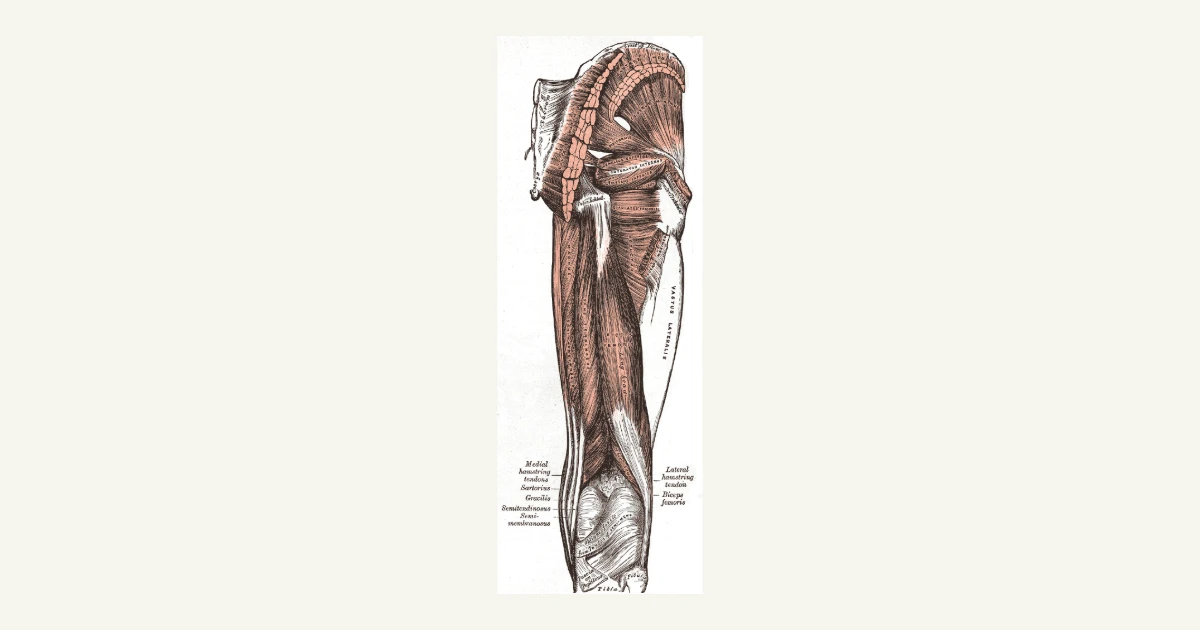
Gluteus medius is the main muscle on the side of the hip that keeps the pelvis level when you stand on one leg. Its tendon can develop partial tears over years of tendinopathy, or tear further after a fall. The signs are pain over the bony point plus weakness: a limp, the opposite hip dropping when you walk, and difficulty lifting the leg out to the side. Partial tears are usually managed with the same loading program as tendinopathy. A full-thickness tear that stays weak and painful despite a good program is a question for an orthopedic surgeon, who decides whether repair is needed. The tear is confirmed by an ultrasound or MRI that a doctor orders.
How long does hip bursitis take to settle?
Gluteal tendinopathy commonly takes weeks to months. In the trial below, most people on an education and exercise program reported improvement by eight weeks, and the gains held at a year.3 Pain that has been there for a year or more usually takes longer, and it still responds to loading.
Should I get an injection?
That decision is between you and your doctor. What a trial found: among 204 people with gluteal tendinopathy, those given education plus a loading exercise program did better on overall improvement than those given a single steroid injection or told to wait and see, both at eight weeks and at a year. At a year, pain levels in the exercise and injection groups were similar.3 If an injection has been offered, that trial is worth asking your doctor about.
Why the rest and the stretching did not work
The thinking goes: it is bursitis, it is inflamed, rest it and stretch it and it will calm down.
At month four you still cannot sleep on that side, and now the other hip aches from taking all the nights. You hold the rail on the stairs up to the flat. You put your pants on sitting down because standing on that leg hurts. The long walk at the Botanic Gardens is out, and so is crossing your legs at work.
Here is the reason. A tendon squashed against bone gets worse with the positions that squash it: lying on that side, crossing the legs, hanging on one hip while you stand, and stretching the leg across the body. Rest takes away the load the tendon needs to get stronger, while the compression carries on every night. So the tendon gets weaker and more sensitive at the same time. In the trial, people who waited and saw did worst at eight weeks.3
Has anyone tested how long you can stand on that leg, how strong the muscles on the side of the hip are against the other side, and which positions set it off? If not, nobody yet knows whether this is a tendon that needs loading, a tear that needs a scan, or the hip joint or the back.
What a physiotherapist does with it
Finding the real problem is half the battle. Treating it is the other half.
At the Assessment & Treatment, a physiotherapist asks when it hurts, in your words, then tests the things a label does not: pressing over the tendon, standing on one leg for 30 seconds, resisted tests for the side hip muscles, strength against the other side, how you walk and climb a step, and whether the hip joint or the back is joining in. If the tests point to a tear, a fracture or a joint problem, we tell you and write to your doctor. Scans are theirs to order.
If it is the tendon, most of the 45 minutes is treatment: hands-on work for the hip and back, the changes that stop squashing the tendon (how to lie, sit and stand), and a loading program for the side hip muscles that starts where they are and is measured up at each review. You leave knowing which stage you are in, what is limiting the hip, and a written plan.
More on physiotherapy for hip pain, the snapping hip that sometimes comes with it, and hip arthritis if the pain is in the groin. Every appointment is one to one with your physiotherapist for the full 45 minutes, at five clinics: Orchard, Tampines, Serangoon, Tanjong Pagar and Jurong East. Bring any scan report you have.
Questions about hip bursitis and gluteal tendons
What does hip bursitis feel like?
Pain and tenderness over the bony point on the outside of the hip, sometimes spreading down the outside of the thigh. It is usually worse lying on that side at night, standing on one leg, climbing stairs, getting up after sitting, and crossing the legs.
Is hip bursitis the same as gluteal tendinopathy?
They overlap. Both cause pain over the bony point on the outside of the hip. In an ultrasound study of people with this pain, about one in five had bursitis and about half had gluteal tendon changes, so the tendons are often the main source. The combined picture is called greater trochanteric pain syndrome.
Will a gluteus medius tear heal on its own?
Partial tears are usually managed with a progressive loading program, and many people regain strength and lose the pain without surgery. A full-thickness tear that stays weak and painful despite a good program is assessed by an orthopedic surgeon, who decides whether it needs repair.
What should I avoid with hip bursitis?
Positions that squash the tendon against the bone: lying on the painful side, crossing the legs, standing with your weight hanging on one hip, sitting in very low chairs, and stretching the leg across the body. A pillow between the knees when lying on the other side often helps sleep.
How long does hip bursitis take to heal?
Commonly weeks to months. In a trial of people with gluteal tendinopathy, most of those on an education and exercise program reported improvement by eight weeks, and the gains held at a year. Pain that has been there longer usually takes longer.
Four months of not sleeping on that side, and the stretches have not helped? Get Assessed & Treated, and leave knowing whether it is the tendon, what it can take today, and what the next stage asks of it.
Sources: 1. Grimaldi A, Mellor R, Hodges P, Bennell K, Wajswelner H, Vicenzino B. Gluteal tendinopathy: a review of mechanisms, assessment and management. Sports Med. 2015;45(8):1107-1119. 2. Long SS, Surrey DE, Nazarian LN. Sonography of greater trochanteric pain syndrome and the rarity of primary bursitis. AJR Am J Roentgenol. 2013;201(5):1083-1086. 3. Mellor R, Bennell K, Grimaldi A, Nicolson P, Kasza J, Hodges P, Wajswelner H, Vicenzino B. Education plus exercise versus corticosteroid injection use versus a wait and see approach on global outcome and pain from gluteal tendinopathy: prospective, single blinded, randomised clinical trial. BMJ. 2018;361:k1662.
Where are you with this right now?
1. It is settling on its own
Most injuries and most flare-ups settle over weeks with sensible load management and a return to normal movement. Improvement is judged over a month, not over a day, and good days and bad days inside that are usual. If you are doing more this month than last, and sleeping better, it is behaving the way it should. You do not need us for this, and we would rather say so.
2. It has stopped improving
You have adapted without noticing. The other side takes the load, you plan movements you used to make without thinking, and you have quietly dropped things you used to do.
Pain is the first thing to leave. Movement and strength are the last things trained back, and most people stop before that part is done. That is the gap worth measuring, and it is not measured by how you feel on the day.
What our patients say
Google reviews from our clinics in Singapore.


The Stalled Recovery Review is three appointments over three weeks with the same therapist, because what a joint does under load cannot be read in one visit. The first finds what is limiting it. The next two measure how it responds. $690, nett, no GST, which is three appointments at $230.
3. You have had surgery, or you have a date
Recovery after an operation has a shape, and knowing which stage you are in tells you whether you are on it. After a gluteal tendon repair, bring your surgeon’s protocol and we work inside it. See physiotherapy after surgery, the Hip Arthroscopy (FAI) Recovery Program, or all the recovery programs, hand and physiotherapy.
All of it runs on the same four stages. The Phoenix Recovery Protocol explains what each stage works on and what you have to meet to move up. No referral needed to start.
Next step
Find out which stage you are in
Pain is the first thing to leave. Movement and strength are the last things trained back, and most people stop before that part is done. One Assessment and Treatment is a single 45-minute appointment at $230, nett, no GST. Your therapist finds what is actually limiting you, treats it in the same appointment, and you leave with your current stage and a written plan.
Prefer to phone? Each of our five clinics has its own number on the clinics page. No referral needed to book.
Related reading
Where we are
Clinics across Singapore
ORCHARD
400 Orchard Road #12-12
Orchard Towers, S238875
NS22 Orchard MRT
Physiotherapy and hand therapy in Orchard →
WhatsApp 8800 1830TAMPINES
9 Tampines Grande #01-20
Asia Green, S528735
EW2DT32 Tampines MRT
Physiotherapy and hand therapy in Tampines →
WhatsApp 8780 9608SERANGOON
265 Serangoon Central Drive #04-269
S550265 · Lift C only
NE12CC13 Serangoon MRT
Physiotherapy and hand therapy in Serangoon →
WhatsApp 8892 4121TANJONG PAGAR
10 Anson Road #02-77A
International Plaza, S079903
EW15 Tanjong Pagar MRT
Physiotherapy and hand therapy in Tanjong Pagar →
WhatsApp 8227 7074JURONG EAST
2 Venture Drive #02-02
Vision Exchange, S608526
NS1EW24 Jurong East MRT
Physiotherapy and hand therapy in Jurong East →
WhatsApp 8242 7340