
Written by Zita Sham, Fairuuz Saleh and Shiv Mohan Banka, Principal Physiotherapists at Phoenix Rehab.Clinically reviewed by Louise Yow, Principal Physiotherapist & Director, AHPC A1300363H.Last reviewed 28 September 2026.
Hip labral tears happens when the labrum, which is a band of cartilage surrounding the hip joint, is injured. Labral injuries can be caused by trauma, such as a fall or a motor-vehicle accident, but most of the time, they are typically caused by repetitive trauma to the hip joint.
Individuals who participate in sports that require extremes of motion, such as
- figure skating
- repetitive twisting
- “cutting” such as in hockey or soccer
- long-distance running
are most often diagnosed with labral tears. To treat the symptoms associated with a labral tear, our senior physiotherapists prescribe a combination of stretching and strengthening activities to decrease irritation in the hip.
WHAT IS A HIP LABRAL TEAR?
A hip labral tear occurs where there is damage to the labrum within our hip joint.
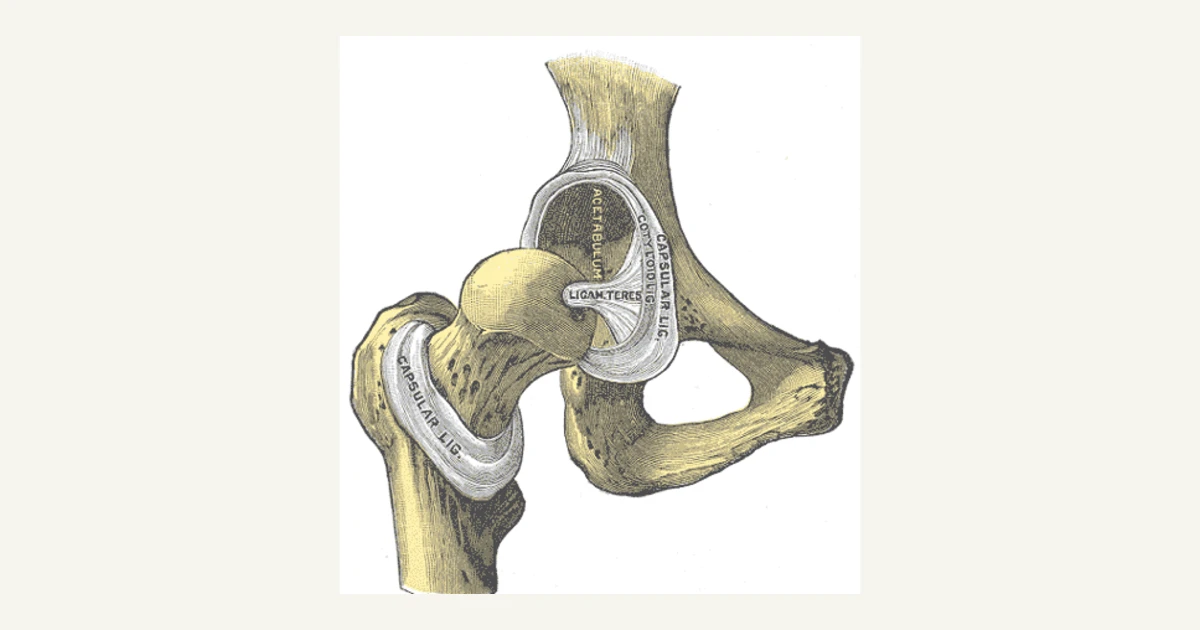
The hip joint is where the thigh bone (femur) meets the pelvis (Ilium). It is described as a ball-and-socket joint, and this particular joint design allows the hip to move in several directions. The bony socket is surrounded by a ring of cartilage called the labrum, which serves to provide extra stability to the hip joint.
A labral tear results when a part of the labrum separates or is pulled away from the socket. Most often, a labral tear is the result of repetitive trauma to the hip, either due to running or repeated twisting and cutting.
The consequences of repetitive stress can be magnified in a hip with bony abnormalities.
Hip impingement is a condition involving abnormal bony contact between the hip’s ball and socket joint. As the hip is moved into specific positions, this bony contact occurs, placing additional stress on the labrum.
Hip labral tears may result from a combination of several different variables, including:
- Bony abnormalities in the hip joint (hip impingement)
- Hip muscle tightness
- Hip muscle weakness
- Improper technique with repetitive activities
- Participation in sports that require distance running, or repetitive twisting and cutting.
Once torn, the labral tissue in the hip does not have the ability to heal on its own. Being a cartilage, it has no direct blood supply to heal quickly, and being a joint, it will tend to reinjure due to movements of the joint.
There are surgical procedures to remove or repair torn labral tissue, however, treatment for a labral tear often begins with a course of hip physiotherapy.
Non-surgical treatment efforts are focused on addressing symptoms by maximizing the strength and mobility of the hip, to minimize the stress placed on the injured area. In certain cases, patients are able to achieve a satisfactory level of activity even without surgery.
Surgical interventions are available to clean out the hip joint, and repair or reconstruct the torn labral tissue. Following surgery, patients will complete several months of physiotherapy to regain function of the hip.
WHAT DOES A HIP LABRAL TEAR FEEL LIKE?
Pain in the hip or groin resulting from a hip labral tear can cause an individual to have a limited ability to stand, walk, climb stairs, squat, or participate in recreational activities.
Patients may experience:
- A deep ache in the front of the hip or groin, often described by the “C sign” (the patient can make a “C” with the thumb and hand, and place it on the fold at the front and side of the hip to locate their pain).
- Painful clicking or “catching” with hip movements. This creates the feeling of something painful stuck in the hip or blocking hip motion.
- Pain that increases with prolonged sitting or walking.
- A sharp pain in the hip or groin when squatting.
- Pain that comes on gradually, rather than with one specific episode.
- Weakness in the muscles surrounding the hip.
- Joint stiffness in the hip joint.
HOW IS IT DIAGNOSED?
Our senior physiotherapists in Phoenix Rehab will review your medical history and complete a thorough examination of your hip, and possibly your lower back and knee.
Remember, the goals of the initial examination are to
- Assess the degree of the injury
- Determine the cause and contributing factors to it.
A hip labral tear may be the result of a single injury, but most likely is a condition that develops as a consequence of repetitive irritation in the hip.
We will assess the mobility and strength of your hip, and may watch you walk, step onto a stair, squat, or balance on one leg. We will also gently touch the front, side, and back of your hip to determine exactly where it is most painful.
We may also ask questions regarding your daily activities – most importantly, activities that aggravate and relieve your symptoms. We will also ask about your exercise regimens and footwear, to identify other possible contributing factors to your pain.
We may also refer you to an orthopedic physician who specializes in hip injuries for diagnostic imaging (i.e., x-ray, MRI). An x-ray helps to identify any bony abnormalities, such as hip impingement that may be contributing to your pain. An MRI will help to identify a labral tear.
WHAT OUR SENIOR PHYSIOTHERAPISTS CAN DO
If you have been diagnosed with a hip labral tear, we will work with you to develop a plan to help achieve your specific goals. To do so, we will select treatment strategies in any or all of the following areas:
Pain management
Many pain-relief physiotherapy strategies may be implemented; the most beneficial with hip pain is to apply ice to the area and decrease or eliminate specific activities for a certain length of time.
We will help to identify specific movements or activities that continue to aggravate the inside of your hip joint.
We then will design an individual treatment plan for you, beginning with a period of rest, and gradually adding a return to certain activities as appropriate.
- Joint restriction/stiffness
Having a tight hip joint will place greater stress on the cartilage and labrum. The best way to improve this is to use distraction techniques to gently open and stretch the joint itself. Combining this with regular deep tissue massage to the surrounding muscles helps blood flow and can increase mobility. - Muscle tightness
Key muscles that pose a problem for the hip joint are the hip flexors, the groin muscles (adductors), the deep hip rotators (piriformis) and the tensor fascia latae (TFL). Trigger point therapy, targeted stretches and self release, active release techniques, sports massage and dry needling are all successful when dealing with muscle tightness. - Pelvis/lumbar spine
Any changes to normal biomechanics in these areas will definitely affect the hip joint. Both structures have many muscles that cross from one to the other, which directly contributes to the way that the hip moves.
A pelvis rotation/twist is best fixed with manual mobilization and manipulation, followed by core stabilization and muscle strengthening. Lumbar spine stiffness will also increase the demands on the hip, so regular massage and stretches can help to offload that demand. - Weak core
A weak core means poor stability. It’s akin to running on sand as compared to firm ground. When you run on sand you have no stability and every inch of muscle has to work harder, and your speed and power will drop significantly as there’s no solid foundation from which to move from.
Studies have shown that weak core muscles are a common factor in patients with hip pain, often related to previous injuries or misfiring muscles. Without these muscles helping to stabilize the area, the hip joint needs to cope with considerably more stress. Specific exercises to target the transverse abdominus, the mulitifdus and the pelvic floor are often recommended by our senior physiotherapists. - Weak glutes
Our buttock muscles, a.k.a. glutes are a fascinating group of muscles, comprising of three muscles in the buttock area. They serve to create power when we walk and run. They create stability at the same time, and prevent a drop of the opposite hip when walking and running.
Single leg squat and running assessments will pick up any issues with weak glutes. When combined with core strengthening, the hip joint and its labrum/cartilage are only going to be healthier from all of the hard work. - Flat feet and ankle stiffness
People with fallen arches are more likely to have hip pain. As the foot rolls in, the hip joint twists inwards slightly, compressing the front of the joint. Added up over the thousands of steps we take each day, an abrasive stress is only going to wear away at the labrum. - Posture, sitting and standing
Sitting compresses the front of the hip labrum and cartilage, and when combined with crossing your legs, a dangerous situation can arise. Fixing any issues ergonomically will help this.
For example, if your chair is too low then the hip joint will be more flexed, and this will need to be corrected. Standing with all of your weight shifted to one side will increase load on that particular hip joint.
At the same time, this coincides with muscle weakness in your core and glutes, and is something that always needs fixing. Too often, this is a problem with young mums who only hold and carry their child on one hip. - Movement re-education
Your back and hip may be moving improperly, causing increased tension at the hip joint. Self-stretching techniques may be applied to the lower body to decrease tension and help improve normal motion in the back, hip and leg.
There are, however, certain hip motions to avoid after an injury to the hip labrum. We will carefully prescribe exercises that improve your range of motion, while protecting the area that has the labral tear. - Manual therapy
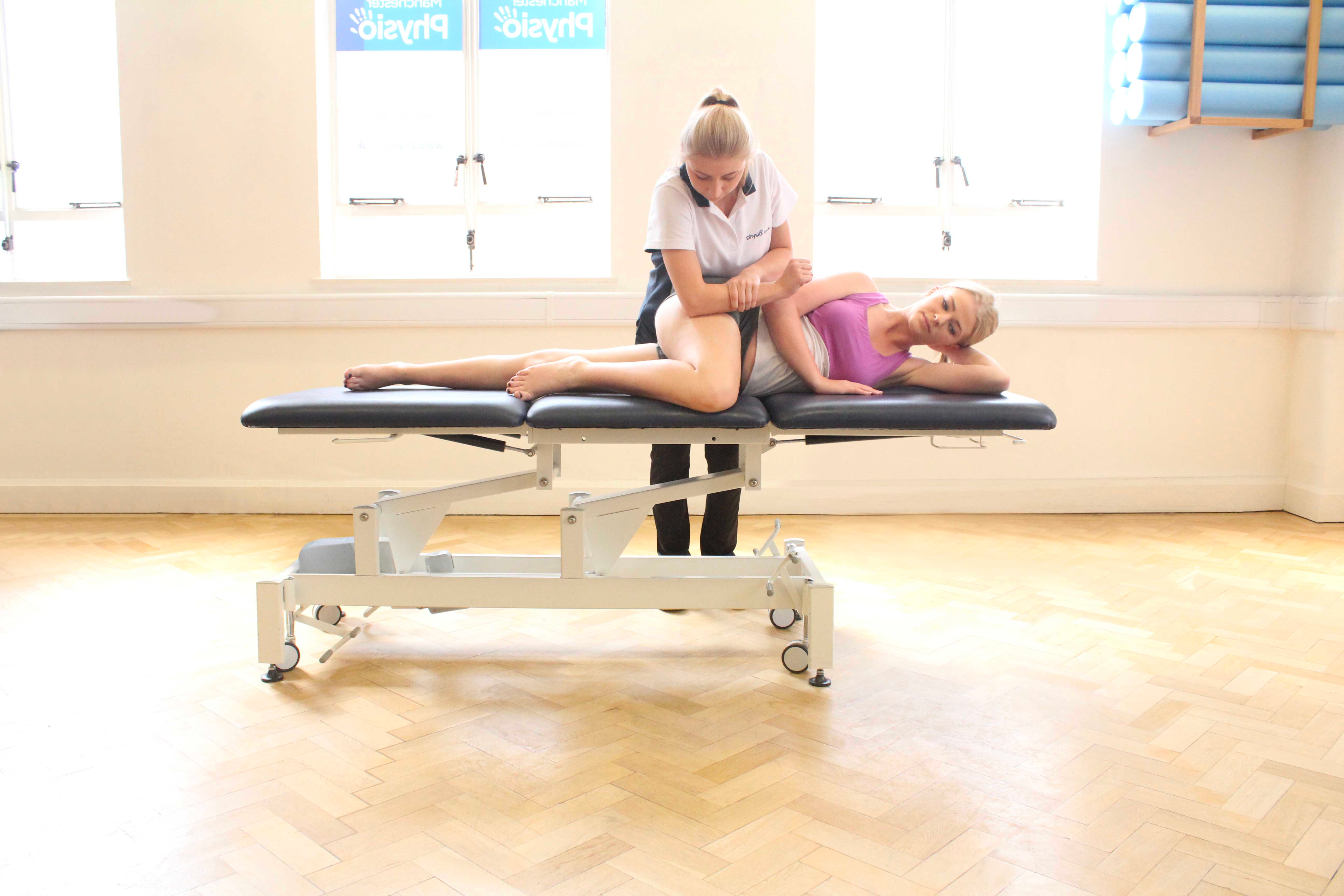
We may apply hands-on manual therapy treatments to gently move your muscles and joints, to decrease your pain and improve motion and strength. These techniques often address areas that are difficult to treat on your own. - Muscle strengthening
Muscular weaknesses or imbalances can be the cause or the result of hip pain. Based on your specific condition, we will design a safe, individualized, progressive resistance program for you, likely including your core (midsection) and lower extremity.
You may begin by performing strengthening exercises lying on a table, for example, lifting your leg up while lying in different positions. You then may advance to doing exercises in a standing position, for example, stepping on and off a raised platform. We will choose what exercises are right for you. - Functional training
Once your pain, strength, and motion improve, you will be able to safely transition back into more demanding activities. To minimize tension on the hip, it is important to teach your body safe, controlled movements.
Based on your own unique movement assessment and goals, we will create a series of activities to help you learn how to use and move your body correctly and safely. We will also discuss specific positions and activities that should be avoided or modified to protect your hip.
Now, it’s also important to note that hip labral injuries do not always heal with conservative treatment. Some tears and degenerative injuries in the hip joint have a limited ability to heal due to poor and limited blood supply, and this may indicate the need to consult with an orthopedic surgeon to understand potential surgery options. Avoiding this need for surgery is the aim of all physiotherapy treatment programs.
Hip joint pain is a debilitating and complex injury, and patients often leave it too long to have it fixed. For hip pain physiotherapy treatment to be as successful as possible, it needs to begin early on in the process.
In the end, we advise patients to listen to their body more. You need to trust what your body is telling you.
For impingement or a labral repair at the hip, the gluteal muscles were switched down long before the operation. See the Hip Arthroscopy and FAI Recovery Program, which sets out the four stages and what moves you up.
Where are you with this right now?
1. It is settling on its own
Many shoulder problems settle over weeks to months. Night pain that slowly becomes less frequent, and reach that slowly returns, are the usual pattern. If you are reaching higher this month than last, and sleeping better, it is on the normal course. You do not need us for this, and we would rather say so.
2. It has stopped improving
You put your shirt on that arm first. The top shelf belongs to someone else now. You have stopped reaching behind you without thinking.
Reach comes back before strength does. A shoulder that goes overhead but cannot hold anything there is halfway, not finished. That is the gap worth measuring, and it is not measured by how you feel on the day.
The Stalled Recovery Review is three appointments over three weeks with the same therapist, because what a joint does under load cannot be read in one visit. The first finds what is limiting it. The next two measure how it responds. $690, nett, no GST, which is three appointments at $230.
3. You have had surgery, or you have a date
Recovery after an operation has a shape, and knowing which stage you are in tells you whether you are on it. See the Rotator Cuff Repair Recovery Program, or shoulder physiotherapy if you are not sure which applies to you.
All of it runs on the same four stages. The Phoenix Recovery Protocol explains what each stage works on and what you have to meet to move up. No referral needed to start.
Next step
Find out which stage you are in
Pain is the first thing to leave. Movement and strength are the last things trained back, and most people stop before that part is done. One Assessment and Treatment is a single 45-minute appointment at $230, nett, no GST. Your therapist finds what is actually limiting you, treats it in the same appointment, and you leave with your current stage and a written plan.
Prefer to phone? Each of our five clinics has its own number on the clinics page. No referral needed to book.
Related reading
- physiotherapy after surgery
- shoulder physiotherapy
- Pain Between Shoulder Blades: Causes and Care Options
- Frozen Shoulder Exercises: What Helps, and When
- How to Sleep With a Frozen Shoulder: Practical Tips
- The Phoenix Recovery Protocol, and the four stages
- All recovery programs, hand and physio
- Comprehensive Guide on Hip Fracture Physiotherapy
Where we are
Clinics across Singapore
ORCHARD
400 Orchard Road #12-12
Orchard Towers, S238875
NS22 Orchard MRT
Physiotherapy and hand therapy in Orchard →
WhatsApp 8800 1830TAMPINES
9 Tampines Grande #01-20
Asia Green, S528735
EW2DT32 Tampines MRT
Physiotherapy and hand therapy in Tampines →
WhatsApp 8780 9608SERANGOON
265 Serangoon Central Drive #04-269
S550265 · Lift C only
NE12CC13 Serangoon MRT
Physiotherapy and hand therapy in Serangoon →
WhatsApp 8892 4121TANJONG PAGAR
10 Anson Road #02-77A
International Plaza, S079903
EW15 Tanjong Pagar MRT
Physiotherapy and hand therapy in Tanjong Pagar →
WhatsApp 8227 7074JURONG EAST
2 Venture Drive #02-02
Vision Exchange, S608526
NS1EW24 Jurong East MRT
Opening 25 October 2026
Physiotherapy and hand therapy in Jurong East →
WhatsApp 8242 7340What our patients say
Google reviews from our clinics in Singapore.



