
Written by Zita Sham, Fairuuz Saleh and Shiv Mohan Banka, Principal Physiotherapists at Phoenix Rehab.Clinically reviewed by Louise Yow, Principal Physiotherapist & Director, AHPC A1300363H.Last reviewed 8 October 2026.
The first two kilometers feel fine. Better than fine. You are warm, the legs are moving, and you start thinking this might be a good one.
Then around four kilometers, something on the outside of your knee speaks up. A warmth at first. Then it turns sharp and specific, right on the bony point, and it stops being a choice. You walk. You feel ridiculous walking, because half an hour ago you were fine.
That predictability is the signature of iliotibial band syndrome. It does not hurt at the start. It arrives at roughly the same distance every time, settles after a day or two of rest, then returns at the same point, as if it had been waiting.
Our physios at Phoenix Rehab see this most in runners who have just added distance, and in people training for a race with a date on it. Downhill makes it worse. Stairs too, and coming down is worse than going up.
Nothing is torn. But the usual response, attacking it with a foam roller, is often what keeps it going.
What iliotibial band syndrome actually is
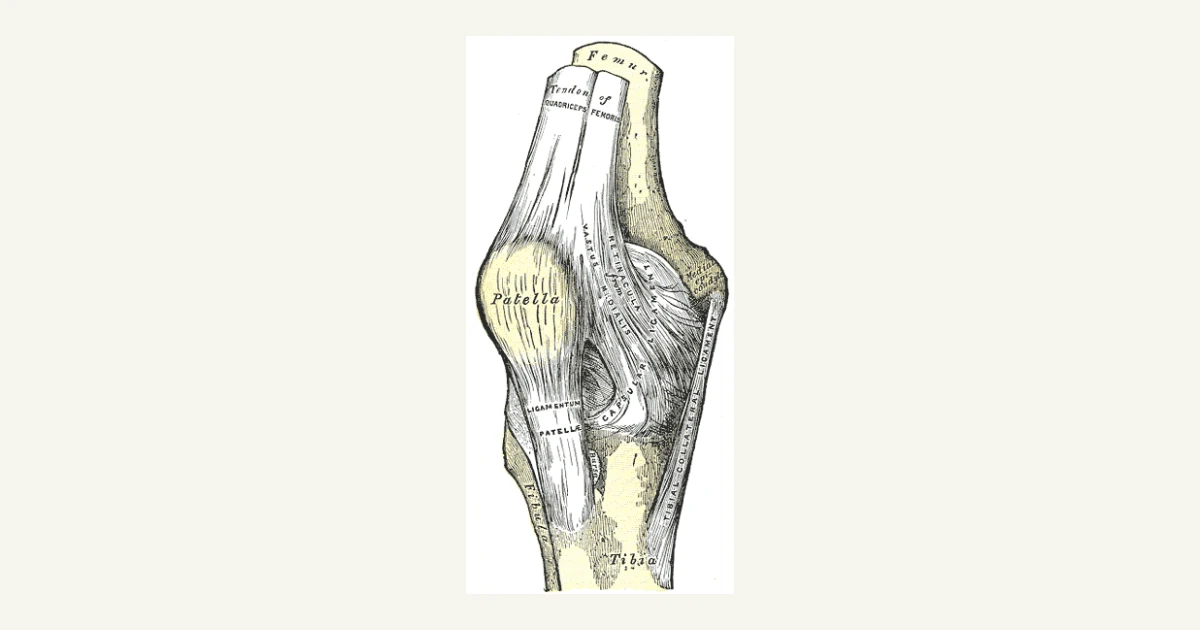
Run your hand down the outside of your thigh, from the point of your hip to just below your knee. Along that line sits a thick, flat sheet of connective tissue. That is the iliotibial band, usually shortened to ITB. It is not a muscle. It is a wide, very strong strap of fibrous tissue linking your hip to your shin bone.
Two muscles feed into the top of it. The tensor fasciae latae at the front of the hip, and the gluteus maximus, the big muscle of your backside. When they contract they pull on the band, and the band helps steady your knee and pelvis every time you land on one leg. At the bottom, the band passes over a bony bump on the outside of the end of your thigh bone. That bump is the lateral femoral epicondyle, the exact spot your finger finds when you press on the sore point.
Here is where most of what you have read online is out of date. The old explanation was that the band slides back and forth over that bump like a rope sawing across a pulley, and the friction wears things raw. Tidy picture. Probably wrong. Current understanding leans towards compression instead. Underneath the band sits a small layer of sensitive tissue, and the band presses that layer into the bone. The pressure peaks at around thirty degrees of knee bend, roughly where your knee sits as your foot takes your weight in a stride.
Why you cannot stretch or roll the band longer
If the problem were a tight rope, lengthening the rope would fix it. So people foam roll the outside of the thigh, hard, gritting their teeth because pain is supposed to mean it is working.
The band will not lengthen. It is not muscle and it does not behave like muscle. It is one of the strongest pieces of soft tissue in the body, anchored top and bottom, and the force needed to lengthen it in any lasting way is far beyond what a roller or a hand can produce. When it feels looser afterwards, what changed is how sensitive the area is for a while.
Worse, rolling on the painful point drives the band harder into tissue that is already irritated, against bone that is already involved. That is a repeat of the exact mechanism causing your pain, applied on purpose.
None of this means you did something stupid. It is the advice almost everyone is given, often by people who want to help. It just does not match what is happening underneath. There is still a place for a roller. Use it on the muscle either side of the band, the quadriceps and the glutes, at moderate pressure. Stay off the sore bony point.
How to tell if this is what you have
The pattern matters more than the pain.
- Pain on the outside of the knee, not the front, not deep inside, not behind
- You can usually put one finger on the exact sore spot
- Nothing at the start of a run. It arrives at a predictable distance or time
- Once it starts it builds fast and becomes sharp enough to stop you
- Downhill is worse than flat. Flat is worse than uphill
- Coming down stairs hurts more than going up
- It settles with a day or two of rest, then returns at a similar point next run
- No real swelling, no locking, no giving way
Two other things get confused with this. An ache under or around the kneecap, worse after sitting and grumbling on stairs both ways, is more typical of pain coming from the kneecap joint itself. It spreads, rather than sitting on one point you can find with a finger.
Outer knee pain after fifty, with morning stiffness, swelling after activity, and discomfort on ordinary walking rather than only at a set distance, points more towards changes in the joint surface. That is covered on our page about knee osteoarthritis.
What causes it
Never one thing. It is load that has outgrown what the tissue can handle, plus a movement pattern that concentrates it in one spot.
Too much, too soon. The most common story by a wide margin. A jump in weekly distance. Back-to-back long runs. Going from three runs a week to five because the Singapore Marathon is fourteen weeks away.
Hip strength that has not kept up. The muscles on the side of your hip control how far your pelvis drops and how far your thigh rolls inward as you land. When they fatigue, your knee drifts inwards and the tissue under the band gets squeezed harder. That is why the pain shows up at four kilometers and not at four hundred meters. A fatigue problem wearing a knee problem’s clothes.
Running form. A narrow stride where each foot lands across the midline, sometimes called a crossover gait, tips the knee inwards on every step.
Surfaces and camber. Running the same direction on a cambered road leaves one leg permanently lower than the other. Park connectors here are mostly flat and kind, though the ramps at overhead bridges add up. Treadmills feel neutral, but a worn belt or a slight tilt shifts your mechanics more than you would think.
Stairs and hills. Stair running at an HDB block is excellent conditioning and brutal on an irritated ITB, particularly the descent. Downhill loading is the most provocative thing you can do to this tissue, which is why flat routes like East Coast Park are tolerated better.
Heat and humidity. Our weather does not cause this. It brings fatigue on earlier, and fatigue is when form falls apart. Someone who holds good hip control for ten kilometers in cool weather may lose it at six here.
When you need to get this looked at
Iliotibial band syndrome is not dangerous. But outer knee pain is not always this, and some things need a doctor rather than a wait and see approach. See one promptly if any of these apply:
- The knee swells noticeably, especially within hours
- It locks, catches, or gives way underneath you
- You cannot put weight on it
- There is real pain at rest, or pain that wakes you at night
- The knee is hot and red, and you feel unwell or feverish
- The pain followed a clear twisting injury or a fall rather than building over weeks
- There is numbness, pins and needles, or weakness in the leg or foot
Outside of those, the signal is not whether it hurts. It is the direction of travel. Pain improving week on week can be given time. Pain that has been the same for three or four weeks, or that arrives earlier in each run rather than later, is telling you that what you are doing is not enough.
If you want to talk it through first, WhatsApp us on 8336 6009 and describe what happens on your runs.
What happens if you leave it
This one usually does not turn into something structural. It does not wear the joint out and it does not tear. What it does is dig in. With training unchanged, the distance at which pain arrives keeps shrinking. Four kilometers becomes three. Three becomes one. Eventually it starts on stairs and on ordinary walking.
The second cost is bigger and less obvious. People stop running. Not by decision, but by slow retreat, one missed appointment at a time, until the shoes stay by the door. Six months later the fitness is gone and the knee still hurts on stairs. The injury was never the serious part. The stopping was.
How it gets treated
This one generally responds well when the plan matches the mechanism. The landscape runs from what you do yourself to what a specialist might offer.
Managing the load instead of stopping. You do not need full rest. Drop below the distance where pain starts and stay active. If pain begins at four kilometers, run two and a half. Take out downhill sections and stair appointments for now, and avoid the same direction on a cambered path. Cross train on a bike or in the pool to hold your fitness.
Building the hip. Almost all of the meaningful work for a knee that hurts on the outside happens at the hip. Those muscles stop your pelvis dropping and your thigh rolling inwards on every landing. Strengthen them properly and compression at the knee falls, because the knee is no longer being put in that position.
Changing how you run. Lifting your step rate slightly, by around five to ten percent, shortens your stride and reduces knee load at the same pace. Widening your stride so your feet stop landing across the midline addresses the crossover pattern. Do not change everything at once on your own, because chasing one number can create a different problem.
What a physiotherapy program does. First job is confirming this is what you have, because outer knee pain has several possible sources and the treatment differs. After that, our physios build the strength the tissue is missing, adjust your running load week by week so it climbs without spiking, and work on your gait. Hands on treatment can settle symptoms and make the strength work more comfortable, but it supports the plan rather than being the plan. There is more on how we work with runners on our physiotherapy page.
Medication and injection. Short courses of anti-inflammatory medication are sometimes used to take the edge off while the real work happens. That is your doctor’s decision, not ours. In stubborn cases, a doctor may discuss a corticosteroid injection, and some specialists also discuss other injection options. Neither replaces the strength and load work. They buy a quieter window in which to do it.
Surgery. Very rarely needed, and reserved for long-standing cases that have not improved with proper rehabilitation.
Stretches for iliotibial band syndrome and what to do at home
These are general. They are not a substitute for being assessed, and if something here sharply increases your pain, stop it and get it looked at.
What stretching can and cannot do
You cannot lengthen the band. You can improve the flexibility of the muscles that pull on it and the hip above it, which lowers resting tension and improves how you move. That is the honest claim.
Tensor fasciae latae stretch. Stand beside a wall, sore side away from it. Cross the sore leg behind the other, push your hip out towards the wall, lean your upper body away. Feel it along the outside of the hip, not the knee. Hold 30 seconds, 3 repetitions, twice daily.
Glute stretch, figure four. On your back, cross the ankle of the sore side over the opposite knee, then pull that thigh towards your chest. Feel it deep in the buttock. Hold 30 seconds, 3 repetitions, twice daily.
Half kneeling hip flexor stretch. Kneel on the sore side, other foot forward. Tuck your tailbone under, shift your weight gently forward. Feel it at the front of the hip. Hold 30 seconds, 3 repetitions, twice daily.
Foam rolling, used sensibly. Roll the quadriceps and glutes, 60 to 90 seconds each, at a pressure you could hold a conversation through. Not the outer thigh over the sore point.
The strength work that changes the outcome
Four to five times a week. The side of your hip should feel worked by the end of a set.
Side lying hip abduction. Lie on your good side, body in a straight line. Lift the top leg up and slightly behind you, toes forward. 3 sets of 15.
Glute bridge, then single leg bridge. Knees bent, lift your hips into a straight line from knee to shoulder. 3 sets of 15. Once easy, one leg, 3 sets of 8 to 10 each side.
Side plank with hip abduction. Side plank from the knees or the feet, then lift the top leg while holding the position. 3 sets of 8 to 10 each side.
Monster walks with a band. Band above the knees or around the ankles, half squat position, step sideways keeping tension on the band. 3 sets of 12 steps each direction.
Step downs. Stand on a low step on the sore leg. Slowly lower the other heel towards the floor, kneecap over your middle toes, pelvis level. 3 sets of 10. The closest thing to what running actually asks of you.
Single leg balance. Stand on the sore leg for 30 seconds, hip level. Progress by closing your eyes or standing on a cushion. 3 sets each side.
The progression rule. When you can finish every set with good form and the last two repetitions still feel controlled, make it harder. Add a repetition, a band, height, or move to the single leg version. Hold there a week before progressing again. If the next morning is worse than before, you went up too fast. Go back one level, not to zero.
What recovery actually looks like
Most people with this do well. Managed properly it usually settles over several weeks to a couple of months, and many runners are back to full training inside that window. Some take longer, particularly those who have been living with it for a year already.
The first stage is calming the tissue, which often happens quickly once the aggravating load comes out. The second is building hip strength, and that takes real time because muscle adapts on its own schedule. The third is returning your distance, and this is where almost everyone gets caught.
The commonest reason this drags on is going back to full mileage too fast. Pain disappears at week three, the plan says twelve kilometers, and the runner does twelve kilometers. The tissue is quiet, but the capacity has not been rebuilt. Two runs later they are back at the start, believing nothing works. A sensible return climbs in small steps, holds flat ground a while, and adds hills and stairs back last.
What our patients say
Google reviews from our clinics in Singapore.



Getting assessed at Phoenix Rehab
The first appointment is about working out what is going on. Our physios will ask about your running in detail, because when the pain arrives tells us more than any single test does. Then we look at how your hip and knee behave under load, check the strength on the side of your hip, watch you move, and rule out the other causes of pain in that part of the knee.
You leave with a plan you understand. What to change in your training this week, which exercises to start, what is safe to keep doing, and what the next few weeks look like.
We see runners at Orchard, Tampines, Serangoon and Tanjong Pagar, with Jurong East opening on 25 October 2026. Details are on our clinic locations page.
Frequently asked questions
Should I foam roll my IT band if it hurts?
Not on the painful point. The band will not lengthen from rolling, and pressing on the sore spot squashes irritated tissue harder against the bone. Roll the quadriceps and glutes instead, at moderate pressure, and put the real effort into hip strengthening.
What are the best stretches for iliotibial band syndrome?
The ones targeting the muscles that pull on the band rather than the band itself. A tensor fasciae latae stretch, a figure four glute stretch, and a half kneeling hip flexor stretch. Hold each 30 seconds, 3 repetitions, twice daily. They lower tension and improve hip mobility. Stretching alone is the most common thing we see people doing for months without progress.
Can I keep running with ITB syndrome?
Usually yes, at a reduced distance. Run below the distance where pain starts, and cut out downhill running, stairs and cambered paths for now. Full rest settles the pain but changes nothing about your capacity, so it returns when you go back.
Why does my knee hurt when the problem is at my hip?
The tissue that gets compressed sits at the knee. What decides how hard it gets compressed sits at the hip. When those hip muscles fatigue, your pelvis drops and your thigh rolls inwards on each landing, squeezing that spot at the knee.
How long does iliotibial band syndrome take to heal?
For most people, several weeks to a couple of months, with load managed properly and hip strengthening done consistently. Some take longer, especially those who have had it for many months. What makes it drag on is returning to full mileage too quickly once the pain quietens.
Do I need a scan for this?
Usually not. The pattern is distinctive enough that a careful assessment is generally sufficient. Your doctor may suggest imaging if the story does not fit, if there is swelling or locking, or if the knee has not responded to proper rehabilitation.
You are not injured in the way you think you are. Nothing in that knee is broken, and the distance you have lost is recoverable.
What you need is someone to work out why the tissue is being squeezed, fix the thing above the knee causing it, and rebuild your load in an order that holds. Our physios do this every week.
WhatsApp us on 8336 6009 and tell us what happens at kilometer four.
The point is not a quiet knee on its own. It is being the person who still runs at fifty, still takes the stairs two at a time, still says yes to the race, and moves through life without quietly planning around a body part.
If running is where this started, running injuries lists every injury we see from it, by body part.
Where are you with this right now?
1. It is settling on its own
Most knee pain that started with a specific moment settles over six to twelve weeks. Swelling that comes and goes with activity, and an ache after a long day, are usual in that window. If it is improving month on month and you can walk, take stairs and sleep, it is behaving normally. You do not need us for this, and we would rather say so.
2. It has stopped improving
You go down stairs one leg at a time. You have stopped squatting to pick things up. You test it before you trust it.
Pain settling is the first thing that happens, not the last. Quadriceps strength is the last thing to come back, and it does not come back on its own. That is the gap worth measuring, and it is not measured by how you feel on the day.
The Stalled Recovery Review is three appointments over three weeks with the same therapist, because what a joint does under load cannot be read in one visit. The first finds what is limiting it. The next two measure how it responds. $690, nett, no GST, which is three appointments at $230.
3. You have had surgery, or you have a date
Recovery after an operation has a shape, and knowing which stage you are in tells you whether you are on it. See the ACL Reconstruction Recovery Program, or knee physiotherapy if you are not sure which applies to you.
All of it runs on the same four stages. The Phoenix Recovery Protocol explains what each stage works on and what you have to meet to move up. No referral needed to start.
Next step
Find out which stage you are in
Pain is the first thing to leave. Movement and strength are the last things trained back, and most people stop before that part is done. One Assessment and Treatment is a single 45-minute appointment at $230, nett, no GST. Your therapist finds what is actually limiting you, treats it in the same appointment, and you leave with your current stage and a written plan.
Prefer to phone? Each of our five clinics has its own number on the clinics page. No referral needed to book.
Related reading
Where we are
Clinics across Singapore
ORCHARD
400 Orchard Road #12-12
Orchard Towers, S238875
NS22 Orchard MRT
Physiotherapy and hand therapy in Orchard →
WhatsApp 8800 1830TAMPINES
9 Tampines Grande #01-20
Asia Green, S528735
EW2DT32 Tampines MRT
Physiotherapy and hand therapy in Tampines →
WhatsApp 8780 9608SERANGOON
265 Serangoon Central Drive #04-269
S550265 · Lift C only
NE12CC13 Serangoon MRT
Physiotherapy and hand therapy in Serangoon →
WhatsApp 8892 4121TANJONG PAGAR
10 Anson Road #02-77A
International Plaza, S079903
EW15 Tanjong Pagar MRT
Physiotherapy and hand therapy in Tanjong Pagar →
WhatsApp 8227 7074JURONG EAST
2 Venture Drive #02-02
Vision Exchange, S608526
NS1EW24 Jurong East MRT
Opening 25 October 2026
Physiotherapy and hand therapy in Jurong East →
WhatsApp 8242 7340