
Written by Zita Sham, Fairuuz Saleh and Shiv Mohan Banka, Principal Physiotherapists at Phoenix Rehab.Clinically reviewed by Louise Yow, Principal Physiotherapist & Director, AHPC A1300363H.Last reviewed 28 September 2026.
Your knees are complex joints that allow you to walk, run, and jump. These activities rely on a network of soft tissues, ligaments, tendons, muscles, and cartilage, susceptible to injury.
Understanding soft tissue knee injuries can help you identify the problem, seek proper treatment, and get back on your feet faster. We’ll dive into those in this article and by the end, we will know exactly what to do (and not to do) after a knee soft tissue injury.
What Is Soft Tissue in the Knees?
The soft tissues in your knees are the various non-bony structures that work together to provide stability, flexibility, and cushioning. These tissues include the following:
- Ligaments: These are tough, fibrous bands of tissue that connect bones together.
- Tendons: These are also tough, fibrous bands of tissue, but they connect muscles to bones. This allows the muscles to move the knee joint.
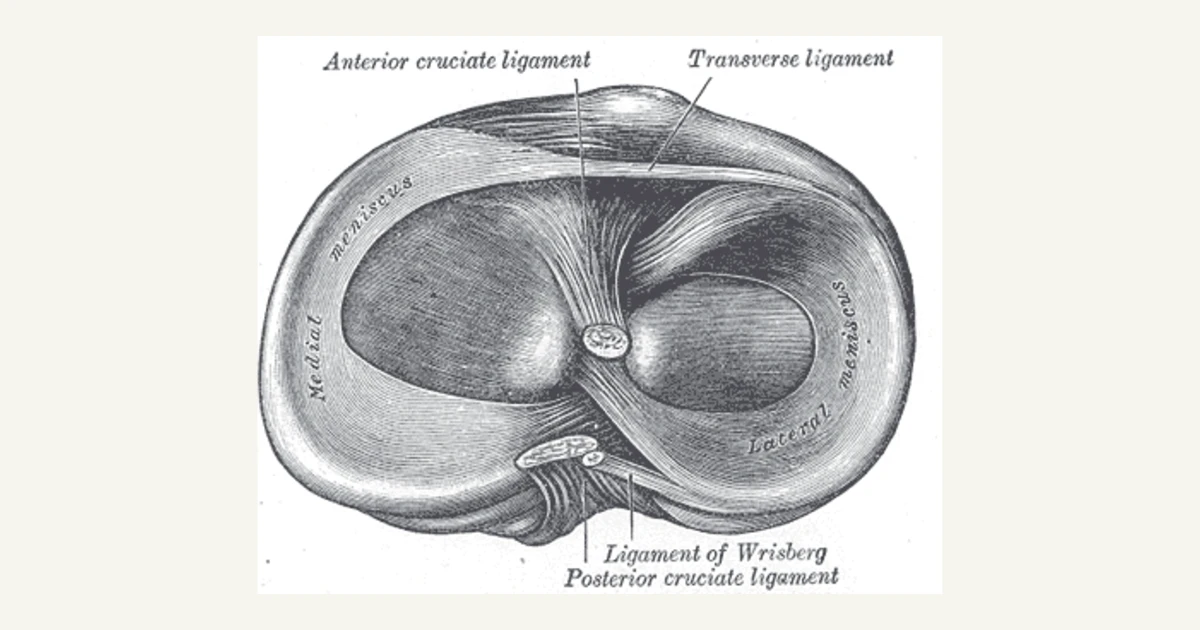
- Menisci: These are two C-shaped pieces of cartilage that sit between the shinbone (tibia) and the thighbone (femur). They act as shock absorbers and help to distribute weight evenly across the knee joint.
- Muscles: Several muscles surround the knee joint and help to move it. The quadriceps muscles in the front of the thigh straighten the knee, while the hamstrings in the back of the thigh bend the knee.
Soft tissue injuries, particularly in the ligaments, are the most common types of knee injuries in Singapore. Let’s further explore the common causes below.
How Does a Soft Tissue Injury Happen?
Soft tissue injuries can happen in various ways. A sudden twist or direct blow to the knee, often during sports or accidents, can cause a sprain (overstretched or torn ligament) or strain (pulled or torn muscle). Overuse and repetitive activities can also lead to soft tissue injuries, particularly in athletes.
There are four main ligaments that stabilize the knee joint. Each ligament has a specific role in keeping the knee joint stable.
- Anterior cruciate ligament (ACL): Controls rotation and forward movement of the shinbone.
- Posterior cruciate ligament (PCL): Prevents the shinbone from moving backward.
- Medial collateral ligament (MCL): Limits outward bending (inner side of the knee).
- Lateral collateral ligament (LCL): Limits inward bending (outer side of the knee).
Other soft tissue structures susceptible to injury include the meniscus (cartilage cushions between the shinbone and thighbone), patellar tendon (connects the kneecap to the shinbone), and quadriceps tendon (connects the quadriceps muscles in the thigh to the kneecap).
Types of Soft Tissue Knee Injuries
The knee joint relies on various soft tissues for stability and movement. Sadly, these are prone to injury. Some of the most common knee injuries involve damage to these soft tissues.
Posterior cruciate ligament tears are one type of soft tissue knee injury that can sideline you from activities. The PCL is a strong ligament located in the back of your knee. Its main job is to prevent your shinbone (tibia) from sliding backward relative to your thighbone (femur).
Below are other types of soft tissue knee injuries.
Ligament Sprains
The medial collateral ligament (MCL) on the inner knee and the ACL are particularly vulnerable to injuries.
This C-shaped cartilage cushioned between your shinbone and thighbone can tear due to sudden twists or repetitive stress.
Tendonitis and Tendon Tears
The patellar tendon connecting the kneecap to the shinbone is a common target in this injury.
Other Knee Injuries
Other soft tissue injuries in the knees might include damage to the articular cartilage or the patellar ligament. In severe cases, a knee dislocation can happen, where the bones briefly pop out of the joint.
Recognizing the Signs: Symptoms of Soft Tissue Knee Injury
Knee pain is the most common symptom of a soft tissue injury. Depending on the severity and location of the injury, you might experience:
- Swelling
- Bruising
- Stiffness
- Difficulty bending or straightening the knee
- Instability or a feeling of giving way
- Popping or snapping sound during the injury
Early diagnosis and treatment can significantly impact your healing process and minimize long-term complications.
Diagnosis: Getting to the Root of the Problem
A knee specialist, such as a sports medicine physician or orthopedic surgeon, will typically diagnose a soft tissue knee injury through a physical examination and may order imaging tests like X-rays or MRIs to confirm the extent of the damage.
Treatment Options for Soft Tissue Knee Injuries
Treatment for soft tissue knee injuries depends on the severity of the injury and the affected structures. Below are some very common approaches.
First Aid (RICE)
In the immediate aftermath of a knee injury, employ the RICE principle (Rest, Ice, Compression, Elevation). Apply an ice pack wrapped in a damp towel to the injured area for 15-20 minutes at a time, several times a day. Rest the affected knee and elevate it above your heart to reduce swelling.
Over-the-Counter Pain Relievers
For mild injuries, your doctor might recommend anti-inflammatory medicines or over-the-counter pain relievers like ibuprofen or acetaminophen for pain relief.
Physical Therapy
This involves regaining strength, flexibility, and range of motion in the injured knee. A physical therapist will design a personalised exercise program specifically tailored to your injury and healing stage.
Surgery
In some cases, particularly for complete ligament tears or complex meniscal tears, surgery might be necessary to repair the damaged tissue and improve knee function.
Physiotherapy for Soft Tissue Knee Injuries: Getting You Back on Track
Soft tissue injuries can be more painful than you think. Knee pain physiotherapy in Singapore usually helps manage soreness and discomfort with the right treatment plan.
Physiotherapy providers for bone, muscle, joint, and tendon pain and injuries like Phoenix Rehab create a personalised treatment program for your needs. This program might include:
- Strengthening exercises for the quadriceps muscles, hamstrings, and calves to support the knee joint.
- Balance exercises to improve stability and proprioception (your body’s awareness of its position in space).
- Stretching exercises to maintain flexibility and prevent stiffness.
- Manual therapy techniques like soft tissue massage to target specific areas of pain and inflammation.
How Long Does It Take to Recover?
The time it takes to recover from a soft tissue knee injury can vary from 3 to 12 weeks, depending on the severity of the injury and other factors. Acute knee injuries like strains and sprains may take 3 to 6 weeks to heal. Meanwhile, more severe and complex injuries involving ligament or meniscus tears may take 6 to 12 weeks. These may even require surgery and physical therapy for a full recovery.
What Not to Do
Refrain from engaging in higher-level activities following a knee injury. Avoid putting any weight on the injured knee until your doctor gives you the green light. This minimizes stress on the joint and facilitates healing.
Additionally, resist the urge to apply heat to the area. While heat might feel comforting, it can actually worsen swelling. Cold therapy, on the other hand, is a better option. Applying ice packs wrapped in a towel can help reduce inflammation and pain.
Furthermore, you should avoid consuming alcohol, massaging the injured area, and smoking.
If there are still signs of pain or swelling after a few days, you should see your doctor in case you are dealing with an underlying condition, infection, or a serious injury.
What our patients say
Google reviews from our clinics in Singapore.



Conclusion
Soft tissue knee injuries are common, but with proper diagnosis, treatment, and rehabilitation, you can return to enjoying your normal activities. Knowing the different types of soft tissue injuries, their causes, and symptoms will equip you with self-management techniques, especially for minor injuries or post-rehabilitation.
Where are you with this right now?
1. It is settling on its own
Most knee pain that started with a specific moment settles over six to twelve weeks. Swelling that comes and goes with activity, and an ache after a long day, are usual in that window. If it is improving month on month and you can walk, take stairs and sleep, it is behaving normally. You do not need us for this, and we would rather say so.
2. It has stopped improving
You go down stairs one leg at a time. You have stopped squatting to pick things up. You test it before you trust it.
Pain settling is the first thing that happens, not the last. Quadriceps strength is the last thing to come back, and it does not come back on its own. That is the gap worth measuring, and it is not measured by how you feel on the day.
The Stalled Recovery Review is three appointments over three weeks with the same therapist, because what a joint does under load cannot be read in one visit. The first finds what is limiting it. The next two measure how it responds. $690, nett, no GST, which is three appointments at $230.
3. You have had surgery, or you have a date
Recovery after an operation has a shape, and knowing which stage you are in tells you whether you are on it. See the ACL Reconstruction Recovery Program, or knee physiotherapy if you are not sure which applies to you.
All of it runs on the same four stages. The Phoenix Recovery Protocol explains what each stage works on and what you have to meet to move up. No referral needed to start.
Next step
Find out which stage you are in
Pain is the first thing to leave. Movement and strength are the last things trained back, and most people stop before that part is done. One Assessment and Treatment is a single 45-minute appointment at $230, nett, no GST. Your therapist finds what is actually limiting you, treats it in the same appointment, and you leave with your current stage and a written plan.
Prefer to phone? Each of our five clinics has its own number on the clinics page. No referral needed to book.
Related reading
- physiotherapy after surgery
- knee physiotherapy
- Knee Osteoarthritis and Total Knee Replacement: What Actually Helps
- Understanding Knee Cap, Patellar, and Patellofemoral Pain: Rehab & Treatment Tips
- Knee Pain When Straightening Leg: Causes and Care Options
- The Phoenix Recovery Protocol, and the four stages
- All recovery programs, hand and physio
- What You Need to Know About Soft Tissue Knee Injuries
Where we are
Clinics across Singapore
ORCHARD
400 Orchard Road #12-12
Orchard Towers, S238875
NS22 Orchard MRT
Physiotherapy and hand therapy in Orchard →
WhatsApp 8800 1830TAMPINES
9 Tampines Grande #01-20
Asia Green, S528735
EW2DT32 Tampines MRT
Physiotherapy and hand therapy in Tampines →
WhatsApp 8780 9608SERANGOON
265 Serangoon Central Drive #04-269
S550265 · Lift C only
NE12CC13 Serangoon MRT
Physiotherapy and hand therapy in Serangoon →
WhatsApp 8892 4121TANJONG PAGAR
10 Anson Road #02-77A
International Plaza, S079903
EW15 Tanjong Pagar MRT
Physiotherapy and hand therapy in Tanjong Pagar →
WhatsApp 8227 7074JURONG EAST
2 Venture Drive #02-02
Vision Exchange, S608526
NS1EW24 Jurong East MRT
Opening 25 October 2026
Physiotherapy and hand therapy in Jurong East →
WhatsApp 8242 7340