
Written by Zita Sham, Fairuuz Saleh and Shiv Mohan Banka, Principal Physiotherapists at Phoenix Rehab.Clinically reviewed by Louise Yow, Principal Physiotherapist & Director, AHPC A1300363H.Last reviewed 8 October 2026.
There is a report in your hand with the words cervical radiculopathy in it.
You have read it four times. Disc. Root. Compression. None of it answered the only question you have, which is whether your arm will be all right.
Or nobody has told you anything yet. You just know there is a line of pain running from your neck, over your shoulder blade, down your arm and into two fingers. It burns at two in the morning. The one thing that helps is putting your hand on top of your head.
Cervical radiculopathy is the medical name for a pinched nerve in the neck. A nerve leaving your neck is squashed or irritated where it exits, and because that nerve runs into your arm, that is where you feel it.
Here is the part that gets said far too late. Most people with this get better without surgery. Not everyone. Most. It takes weeks to months rather than days, but improvement is the default for one irritated nerve root.
What cervical radiculopathy actually is
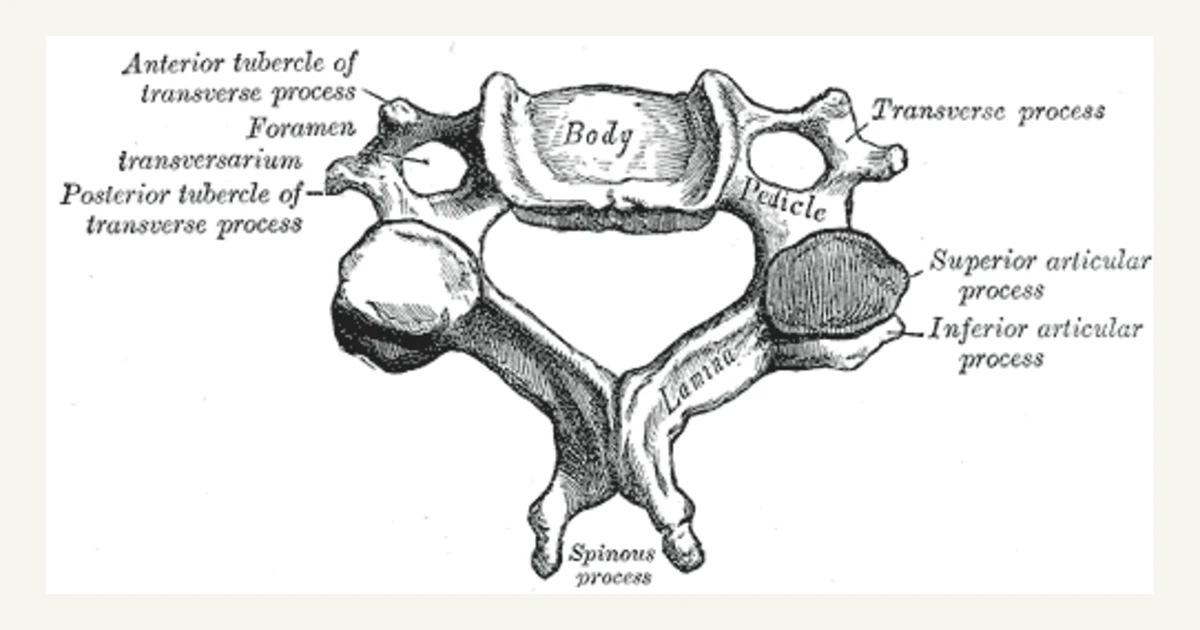
Your neck is seven small bones stacked on each other. Between them at the front sit discs, soft cushions with a tough outer rim. At every level, left and right, a nerve leaves the spinal cord through a small bony tunnel on its way to your arm. That nerve is a nerve root, and the tunnel is about the width of a drinking straw.
Radiculopathy means that root is not happy, and two things cause it most of the time.
A disc bulge. The rim gives way a little and the softer inside presses towards the root. That arrives fast, sometimes over a day or two, and is more common in the thirties and forties.
Or age related narrowing. The disc loses height over decades, the joints at the back thicken, small bony ridges build around the tunnel, and the space shrinks. Symptoms creep in rather than arrive.
Now the part that confuses everybody. Why does a neck problem show up in your hand? Think of the nerve root as a long cable running to your fingertips. The trouble is at the plug, but the complaint arrives at the far end of the wire, so your brain reports the whole territory that nerve serves. Some people have almost no neck pain at all, which is why they spend six weeks convinced the problem is their elbow.
How to tell if this is what you have
The signature of a nerve root problem is that symptoms follow a stripe, not a smudge.
Ordinary neck ache is vague and gets described with a whole hand. Nerve root pain gets traced with one finger, and people can usually tell you exactly which fingers go numb and which do not.
Four things can run along that stripe:
- Pain. Sharp, burning or electric rather than dull.
- Pins and needles. Buzzing, fizzing, an arm waking up.
- Numbness. Skin that feels muffled, like cling film over it.
- Weakness. A specific movement giving way. The arm feels unreliable rather than tired.
It is usually worse at night, and that wears people down faster than the pain. Less distraction, hours in one neck position, and lying flat changes the pressure around an irritated root. People end up sleeping in an armchair in ninety minute blocks, and by week three the exhaustion is doing as much damage as the nerve.
Putting your hand on top of your head often helps. Lifting the arm shortens the distance the nerve has to travel. Less tension on the cable, less complaint from the root. Clinicians call it the shoulder abduction relief sign, and it points strongly at the neck as the source.
Which nerve, roughly
A rough guide to the territories, not a diagnosis.
- C5. Shoulder and outer upper arm. Weakness lifting the arm out to the side.
- C6. Outside of the arm into thumb and index finger. Weakness bending the elbow and pulling the wrist back.
- C7. Back of the arm into the middle finger. Weakness straightening the elbow and the fingers.
- C8. Inner forearm into ring and little finger. Weakness with grip and fine finger work.
C6 and C7 are involved most often.
What it gets mistaken for
The line that matters is the elbow. Neck structures refer ache across the shoulder blade all the time with no nerve involved. Symptoms below the elbow, especially with numbness or weakness, move the conversation to the root.
Carpal tunnel syndrome. Also worse at night, also numb fingers. But it affects thumb, index and middle finger, stops at the wrist, eases when you shake the hand out, and neck movement does nothing to it.
A rotator cuff problem. Pain down the outer arm, but it stops near the elbow, it is triggered by reaching, and it comes without pins and needles. Our page on rotator cuff injury sets out that pattern.
What causes it
For most people over forty, the background is age related change. The tunnel narrows slowly and something eventually tips it over, usually something unremarkable. Reversing out of a carpark. Sleeping badly on a plane. Nothing at all. In younger people it is more often a disc, and it usually arrives with no clean story. People search hard for the moment they hurt themselves and cannot find one. That is normal.
Some loads matter more here. Laptop work with no separate screen keeps your head tipped forward for nine hours, and a root short on space does not tolerate one position that long. Forty minutes on the MRT looking down at a phone, twice a day. Long drives with the head pushed forward to see the road. A bag on the sore shoulder, which is why symptoms spike on the walk from the carpark. Overhead work, which puts the neck in the position that closes those tunnels down.
Smoking appears to affect disc health and nerve recovery. Posture is a load, not a moral failing. Plenty of people with immaculate desk setups still get this.
When you need to get this looked at
A single irritated nerve root is uncomfortable and slow, but not usually dangerous. There is a different picture that is. The spinal cord runs inside your neck bones and the roots branch off it. If something presses on the cord rather than on one branch, the symptoms change character, because the cord carries signals for both arms and both legs.
Get medical review promptly if any of these are present:
- Weakness getting worse over days rather than staying steady.
- Clumsiness with your hands. Fumbling buttons, dropping keys, handwriting changing.
- A change in how you walk, or a feeling of walking on uneven ground.
- Symptoms in both arms, or symptoms appearing in your legs.
- Any change in bladder or bowel control.
- Severe pain after a road accident, fever with neck stiffness, unexplained weight loss, or a history of cancer.
The first five suggest the cord may be involved rather than a single root, and that needs medical assessment quickly rather than a wait and see approach. This is not written to frighten you. The picture is different and the timeline is shorter.
For everything else the rule is trajectory, not intensity. Severe pain that is slowly retreating is behaving as it should. Pain unchanged at six weeks, or arm weakness that is not recovering, is your signal.
What happens if you leave it
Plenty of people leave it and are fine. Arm symptoms from a single root tend to settle over weeks to months. What waiting costs is different from what people fear.
Sleep. Weeks of broken nights change how sensitive your nervous system is, so the same irritation hurts more. By the time people reach us, half the problem is exhaustion.
The arm goes quiet. People stop lifting, reaching and carrying on that side. Within a month the arm has lost real strength, and it does not return by itself once the nerve settles.
If you are in the red flag group above, leaving it is not a neutral choice. That group needs a doctor.
How it gets treated
From least to most invasive. Most people never get past the first two.
Managing position and load
The goal is to stop provoking the root ten times a day without noticing.
Sleeping. Back, or the unaffected side. Pillow height matters more than brand: enough to keep your neck in line with your spine, more for side sleepers, less for back sleepers. Front sleeping keeps the neck turned all night and is the habit worth breaking.
Screens. Top of the screen at eye level. On a laptop, a stand and a separate keyboard will change your day more than any exercise.
Driving. Seat upright and closer, so you are not reaching forward with your head.
Carrying and overhead work. Bag on the other side. Park overhead jobs for a few weeks.
If the arm symptoms are keeping you awake, message us on WhatsApp at 8336 6009 and we will take a look.
Physiotherapy
There is a fair assumption that physiotherapy for a neck means someone rubbing it for half an hour. For this condition it is three other things.
Unloading the root. Working out which head and arm positions ease your symptoms and which provoke them, then using that all day rather than only in the clinic.
Nerve mobility work. Nerves slide within their sheaths as you move. An irritated root gets sticky and sensitive to being pulled on, so the work is gliding, not stretching. Done well it eases symptoms. Done hard it makes everything worse, which is why it should not be copied from a video.
Hands on work and graded loading. The levels above and below an irritated root often lock down protectively, which loads the sore level harder. Improving movement there lets the neck share the work again. Then deep neck muscles, shoulder blade control, the weakened arm muscles, normal strength. Our physios at Phoenix Rehab push this harder than people expect once the nerve calms, because strength is what stops the next episode.
Physiotherapy is not a way to dodge a surgery you need. If the picture points to a surgical problem, the job is to get you in front of the right doctor.
Medication and injections
Medication decisions belong to your doctor, so this is description only. Simple pain relief and anti inflammatories are the usual starting point, and because nerve pain behaves differently from muscle pain, doctors sometimes prescribe medication aimed at it. A short course of oral steroid is used in some cases.
If pain stays severe, a specialist may offer a cervical epidural or a nerve root injection under imaging guidance. The aim is to calm inflammation around the root enough to break the pain and sleep cycle, opening a window where rehabilitation is possible. It is not a repair.
Surgery
A minority of people have surgery. The usual reasons are significant or progressing weakness, signs of cord involvement, or arm pain that has not settled after a reasonable course of non surgical care.
Your surgeon decides whether you need an operation and which one. We complete the recovery afterwards, rebuilding neck movement, shoulder control and arm strength on the timeline your surgeon sets.
Traction and collars, honestly
Traction. Some people get real short term relief from gentle cervical traction and some feel nothing. The evidence for it as a stand alone treatment is not strong. Fine as a comfort measure alongside rehabilitation. Not the treatment.
Collars. A soft collar can take the edge off in the first very painful days. Past that it costs you. Muscles weaken quickly when a collar does their job, the neck stiffens, and coming out of it gets harder the longer you wear it.
Exercises and what to do at home
Get assessed first. These are general movements, the right ones depend on which root is involved, and anyone with the red flag symptoms above should see a doctor rather than exercise.
The rule that matters more than the exercises. Watch where your symptoms sit, not only how much they hurt. Symptoms retreating up the arm towards the neck is a good sign, even if the neck feels grumpier for a day. Symptoms traveling further down means stop.
- Chin nods. Lying on your back, thin pillow or none. Gently nod as if making a small double chin, without lifting your head. Hold five seconds. Ten repetitions, twice daily. It should not produce arm symptoms.
- Nerve gliding. Arm out to the side at shoulder height, elbow bent. Slowly straighten the elbow and open the hand, then bend it back in. Five to ten repetitions, two or three times a day. It should feel like movement, never a stretch. If it fizzes more, the range is too big.
- Band rows. Band anchored in front of you. Pull the elbows back, squeeze the shoulder blades, control the return. Two to three sets of twelve, every other day.
- Comfortable rotation. Turn your head slowly left and right, ten times each way, several times a day.
Progression rule. If symptoms are the same or closer to the neck a day later, add a little. If they have traveled further down the arm, remove whatever you added last.
What our patients say
Google reviews from our clinics in Singapore.



Avoid for now. Hard end range extension, hanging off a doorframe, heavy overhead pressing, and anybody yanking on your neck.
What recovery actually looks like
In stages, because nobody recovers in a straight line.
Weeks one to two. The most irritable stretch, and nights are the worst of it. The work is calming things down, finding your relief positions, protecting sleep and keeping the neck moving. Pain often feels unchanged at the end of it. That is normal.
Weeks two to six. For most people the arm pain starts to withdraw. Watch the geography. Pain that reached the fingers now stops at the forearm, then the elbow. That retreat usually comes before the intensity drops, and it is the thing to track.
Weeks six to twelve. Arm pain is often largely settled and the work moves to strength and normal loading.
Three to six months and beyond. Numbness and patchy tingling are usually the last things to go, and for a small number of people a patch of altered sensation never fully returns. Strength almost always returns before full sensation.
Numbness lagging behind pain is expected. It is not a sign that treatment failed. It is what nerve tissue does.
What makes recovery slower: marked weakness at the start, diabetes, smoking, months of symptoms before doing anything, broken sleep, a very tight tunnel on imaging, and avoiding movement out of fear.
Getting assessed at Phoenix Rehab
The first appointment answers one question properly. Is this coming from a nerve root, and if so, which one and how irritable? That means hearing the story, then testing. We check sensation across the skin each root supplies, test the muscles each root drives, check your reflexes, and gently load the neck in the position that would provoke a root to see whether your arm symptoms appear. We screen for the cord signs listed earlier every time, because that finding changes what happens next.
Bring your scan if you have one. It is read alongside the examination rather than instead of it, because neck scans show age related change in plenty of people with no symptoms. If you need a doctor first, we will say so and help you get there.
Louise, who works with backs and necks, sees a lot of this, and you can be assessed at any of our clinics in Orchard, Tampines, Serangoon or Tanjong Pagar, with Jurong East opening on 25 October 2026.
Frequently asked questions
How long does cervical radiculopathy take to heal? For most people the arm pain improves over six to twelve weeks, though some settle faster and some take much longer. Tingling and numbness usually trail the pain by weeks or months. The sign of progress worth tracking is symptoms retreating up the arm towards the neck.
Will I need surgery for a pinched nerve in my neck? Most people do not. Surgery is considered when there is significant or worsening weakness, signs the spinal cord is involved, or arm pain that has not settled after a proper course of non surgical treatment. That decision belongs to a surgeon who has examined you and seen your imaging.
Why is my arm numb when my neck does not even hurt? Because the nerve is compressed at your neck but reports along its whole length. Your brain cannot locate where the problem started, so it flags the whole territory that nerve serves. Quite a few people with this have little neck pain, which is why it gets mistaken for an elbow problem first.
Is cervical radiculopathy the same as a slipped disc? Not quite. A disc problem in the spine is one cause. Cervical radiculopathy describes the result, an irritated nerve root, which can also come from age related narrowing of the tunnel the nerve passes through. You can have a disc bulge with no radiculopathy, and the reverse.
Can I still go to the gym with cervical radiculopathy? Usually yes, with changes. Lower body work is fine. What flares it is heavy overhead pressing, shrugs, upright rows and anything that jams the neck backwards. Keep load lower, keep the neck neutral, and let symptoms guide you rather than the program.
My scan says C5 C6 disc bulge. Is that serious? On its own that phrase says less than people assume. Degenerative change and disc bulges appear on neck scans in plenty of people with no symptoms. What matters is whether the examination findings match the level on the scan, and whether you have weakness or cord signs. It is information, not a verdict.
Get it looked at properly
If there is a line of pain down your arm, if your fingers have gone numb, or if you are holding a report with cervical radiculopathy on it that nobody has explained, come and have it assessed. WhatsApp us on 8336 6009 and we will find a time.
You are not chasing a pain score. You are chasing what sits underneath it. Turning your head to reverse the car without bracing. Sleeping through the night on your own pillow. Lifting your kid, reaching the top shelf, typing all afternoon without your hand going dead.
That is what this work is for. Not getting through today. Having an arm you can rely on for the next thirty years.
Also on this site: the page on a herniated disc in the neck covers the arm symptoms it can cause, the page on neck pain after waking up covers why the neck is stiffest first thing, and the page on pain at the front of the neck covers the muscle and joint causes and the ones for a doctor.
Where are you with this right now?
1. It is settling on its own
Most neck pain settles within a few weeks. Stiffness in the morning that eases as you move is usual, and so is pain that flares after a long day at a desk. If the range is coming back and the headaches are less frequent, it is settling the way it should. You do not need us for this, and we would rather say so.
2. It has stopped improving
You reverse the car using the mirrors. You reset your shoulders every twenty minutes and it lasts twenty minutes.
A neck that stops hurting is not the same as a neck that holds up. The deep neck and shoulder blade muscles are trained back, not waited back. That is the gap worth measuring, and it is not measured by how you feel on the day.
The Stalled Recovery Review is three appointments over three weeks with the same therapist, because what a joint does under load cannot be read in one visit. The first finds what is limiting it. The next two measure how it responds. $690, nett, no GST, which is three appointments at $230.
3. You have had surgery, or you have a date
Recovery after an operation has a shape, and knowing which stage you are in tells you whether you are on it. See the recovery programs, or neck physiotherapy if you are not sure which applies to you.
All of it runs on the same four stages. The Phoenix Recovery Protocol explains what each stage works on and what you have to meet to move up. No referral needed to start.
Next step
Find out which stage you are in
Pain is the first thing to leave. Movement and strength are the last things trained back, and most people stop before that part is done. One Assessment and Treatment is a single 45-minute appointment at $230, nett, no GST. Your therapist finds what is actually limiting you, treats it in the same appointment, and you leave with your current stage and a written plan.
Prefer to phone? Each of our five clinics has its own number on the clinics page. No referral needed to book.
Related reading
Where we are
Clinics across Singapore
ORCHARD
400 Orchard Road #12-12
Orchard Towers, S238875
NS22 Orchard MRT
Physiotherapy and hand therapy in Orchard →
WhatsApp 8800 1830TAMPINES
9 Tampines Grande #01-20
Asia Green, S528735
EW2DT32 Tampines MRT
Physiotherapy and hand therapy in Tampines →
WhatsApp 8780 9608SERANGOON
265 Serangoon Central Drive #04-269
S550265 · Lift C only
NE12CC13 Serangoon MRT
Physiotherapy and hand therapy in Serangoon →
WhatsApp 8892 4121TANJONG PAGAR
10 Anson Road #02-77A
International Plaza, S079903
EW15 Tanjong Pagar MRT
Physiotherapy and hand therapy in Tanjong Pagar →
WhatsApp 8227 7074JURONG EAST
2 Venture Drive #02-02
Vision Exchange, S608526
NS1EW24 Jurong East MRT
Opening 25 October 2026
Physiotherapy and hand therapy in Jurong East →
WhatsApp 8242 7340