
Written by Zita Sham, Fairuuz Saleh and Shiv Mohan Banka, Principal Physiotherapists at Phoenix Rehab.Clinically reviewed by Louise Yow, Principal Physiotherapist & Director, AHPC A1300363H.Last reviewed 8 October 2026.
It usually starts in the leg, not the back.
A dull ache deep in the buttock. Then a line of pain running down the back of the thigh, past the knee, into the calf. Sitting makes it worse. Coughing sends a jolt through it. You stand up after a long meeting and the first few steps feel like your leg belongs to somebody else.
Then somebody says the words. Slipped disc. Maybe a doctor, maybe a scan report full of terms you had to search one by one. And a quiet question settles in that you have probably not said out loud. Does this mean surgery. Does this mean my back is damaged now. Do I not get to run, or lift my kid, ever again.
Here is the part most people searching for a slipped disc remedy never get told clearly, so we will say it first. Most disc herniations settle without an operation. The material pressing on the nerve is not permanent. Your body breaks it down and clears it.
That is not wishful thinking. It is what the tissue does, and once you understand the mechanism, almost everything about how you handle this changes.
What a slipped disc actually is
Nothing slips. The name is old and it stuck, but it describes something that never happens.
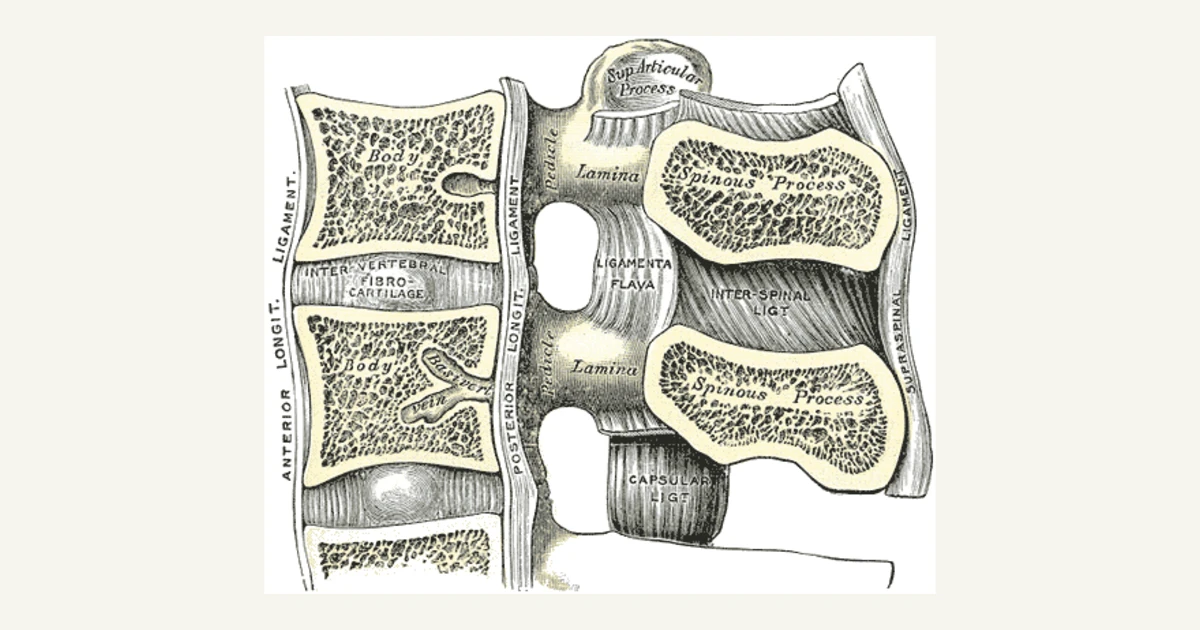
Between each pair of bones in your spine sits a disc. A small, firm cushion with a tough fibrous outer ring and a softer jelly-like centre. The ring holds the centre in, and the whole thing is bonded to the bone above and below, which is why it cannot slide anywhere.
What can happen is that the ring develops a weak point. Under load the soft centre pushes into that spot and bulges outward, and if the ring tears, some of that inner material squeezes through. Picture pressing your thumb into one side of a jam doughnut. The jam does not leave. It moves to the side that gave way. That is a disc herniation, called a lumbar disc herniation in the lower back.
So why does your leg hurt more than your back. Because of where the bulge lands. The nerves supplying your leg leave the spinal canal through small gaps right beside the discs. Disc material pushing into that space presses on the nerve and leaks inflammatory chemicals onto it. The chemistry is often the bigger problem of the two.
An irritated nerve does not report trouble where the trouble is. It reports along the whole line it serves. The nerve is bothered at waist level, and the message you get is a burning stripe down your leg and pins and needles in your foot. That pattern has a name. Sciatica. A description of an upset nerve, not a diagnosis.
Size is not the point either, which is why a disc bulge and a herniated disc can feel identical or feel nothing alike. What matters is whether the material touches a nerve and how angry that nerve has become. The same happens higher up, where a disc in the neck sends pain down the arm instead, called cervical radiculopathy.
How to tell if this is what you have
Slipped disc symptoms follow a shape our physios at Phoenix Rehab see several times a week. See how many match your last two weeks.
- The leg is worse than the back. Sometimes the back barely hurts at all. The most telling feature.
- The pain follows a line. Not a vague achy region. A stripe. Buttock to hamstring to calf, or down the outside of the thigh to the top of the foot.
- Sitting is the enemy. Long meetings, a taxi ride, a cinema seat. Standing up afterwards is the worst moment of the day.
- Bending forward to put on socks or shoes reproduces it.
- Coughing, sneezing or straining sends a spike down the leg. Close to a signature.
- Walking or lying down often eases it.
- Numbness or pins and needles in one specific patch. The outer calf. The top of the foot. The big toe. A patch, not the whole leg.
- Usually one side. Both legs at once is less typical and worth telling a doctor about.
What it gets confused with
Ordinary mechanical back pain. Back hurts, leg does not. Broad and central, eases with movement, no numbness. Our page on lower back pain covers that pattern.
Gluteal or deep hip muscle irritation. Buttock pain that can spread down the thigh but usually stops at the knee, with no numbness and no reaction to coughing.
Hip joint problems. Pain in the groin rather than behind, worse on weight bearing and twisting, often with stiffness putting on shoes. We cover that on our hip pain page.
Spinal stenosis. More common with age. Leg pain brought on by walking that eases when you sit down. Almost the opposite of the disc pattern.
Nobody should diagnose themselves from a list. But if four or five landed, get it assessed.
What causes it
Discs rarely fail from one dramatic moment, even when it feels that way. The bend that did it is the last straw, not the whole story. The outer ring wears at a weak point over years, then one loaded, twisted movement finishes the job.
What loads it up in Singapore:
Desk hours and the commute. Nine hours of sitting with the lower back rounded pushes the disc contents backwards. Then a car seat holds you in the same position, and standing braced on the MRT adds to it.
Lifting children. Almost nobody lifts a toddler well. You bend from the waist, twist, and haul thirteen squirming kilograms out of a cot. Our physios hear this history constantly.
Moving house or a renovation weekend. A year of lifting compressed into two days.
Heavy gym work with a rounded lower back. Not the deadlift’s fault. The position’s fault, usually when fatigue creeps in on the last set.
Sudden returns to sport. Six weeks off, then a full badminton appointment at the old intensity.
Age plays a part, though not the way most people assume. The peak years for a symptomatic lumbar disc herniation are the thirties, forties and fifties, not old age.
When you need to get this looked at
Most disc pain, even severe disc pain, is not an emergency. A small number are, and you need to know them.
Go to a hospital emergency department the same day if any of these appear:
- Loss of control of your bladder or bowels, or being unable to pass urine when you need to
- Numbness in the saddle area, meaning the inner thighs, buttocks, genitals, the area you sit on
- Numbness or weakness developing in both legs
- Weakness that is clearly getting worse, especially a foot that drags or slaps when you walk
These can point to heavy pressure on the bundle of nerves at the base of the spinal cord. That is time critical, and it is handled by a doctor, not a physiotherapist. Do not book a physio appointment for it. Do not wait until morning. Go.
Everything else is about trajectory rather than intensity. Disc pain can be brutal in the first fortnight and still be settling normally. The direction of travel is what matters.
Get assessed within a week or two if:
- The leg pain has not budged after two or three weeks
- You cannot sleep, sit or work despite pain relief from your doctor
- Numbness is spreading rather than shrinking
- You have noticed real weakness, like a heel you cannot push off from
What happens if you leave it
This one has good news attached.
Left alone, a large proportion of disc herniations improve on their own. Not only the pain. The herniation itself. Follow-up scans on people who had no surgery often show the bulge shrunk or gone.
Here is the mechanism. The jelly-like material inside the disc is not normally exposed to your bloodstream. When it pushes out through the torn ring, your immune system meets it for the first time and treats it as foreign material that needs clearing. Immune cells move in, break it down and carry it away. It loses water as it sits there, so it shrinks.
One detail surprises people. The bigger, more dramatic looking herniations often reabsorb better than small contained bulges, because there is more exposed surface for the immune system to work on. A frightening scan report does not predict a frightening outcome.
So what is the honest downside of waiting. Pain left unmanaged for months changes how you move and how you think about moving. People stop bending. They brace everything. They stop training. Twelve months later the disc has quietly healed and the person is stiff, deconditioned and afraid of their own back. That fear takes longer to undo than the disc did.
Persistent nerve compression can also leave lasting numbness or weakness in a small number of cases, which is what the red flag list catches early. And you lose months you did not need to lose.
How it gets treated
The word remedy suggests one thing fixes this. Slipped disc treatment in Singapore runs as a sequence instead, least invasive to most, and most people never get far down it.
Staying active, and managing position and load
Bed rest was standard advice decades ago. It is not any more. People who keep moving within their tolerance generally do better than people who lie still and wait.
That does not mean pushing through agony. It means walking ten to fifteen minutes twice a day, changing position often, and getting up from your desk every half hour, not every three. Movement helps the disc exchange fluid and keeps the nerve gliding instead of sticking down in inflamed tissue.
Some positions settle the nerve and some wind it up. Most people find slumped sitting aggravates it and lying down eases it. Working out your own pattern, then building your day around it, is high value early on.
Physiotherapy
Most people assume this means a sheet of stretches. Here is what actually happens.
Finding your directional preference. Some backs settle with repeated gentle extension. Some prefer flexion. Some need a side glide first. Loading the spine in each direction and watching which way the leg pain travels gives a specific answer for the next two weeks. Pain retreating from the calf up towards the buttock usually means the nerve is being decompressed, and that is the signal our physios watch for.
Nerve mobility work. An irritated nerve gets sensitive and loses its ability to slide freely as you bend and straighten your leg. Graded nerve gliding improves that movement without flaring things, a matter of dosage rather than force.
Graded loading. Once the leg pain retreats, the work shifts to rebuilding what the back can tolerate. Hips, glutes, trunk, then the movements you have been avoiding. Getting out of pain and getting back to lifting a child are two different destinations.
Bending and lifting again without fear. This decides whether you are still thinking about your back in a year. Reintroducing bending once the tissue is ready is treatment. Avoiding it forever is not.
If you want to talk this through before deciding anything, WhatsApp 8336 6009 and ask.
Medication and injections
Pain relief is a doctor’s decision, not ours. Ordinary painkillers work for some people. Nerve pain often responds better to medication designed for nerve pain specifically, worth raising if standard painkillers are not touching it.
An epidural steroid injection puts anti-inflammatory medication near the irritated nerve root. It does not fix the disc. What it can do is settle the inflammation enough that you sleep, move and take part in rehabilitation while reabsorption does its work. For someone stuck at a pain level that blocks progress, that window matters.
Surgery
For a specific group of people, surgery is the right answer, and it is a good operation. The common procedure is a microdiscectomy, where the surgeon removes the fragment of disc material pressing on the nerve through a small incision. For the right patient it can settle leg pain quickly.
The right patient is a minority. Usually someone whose leg pain matches their scan exactly, who has not improved over a reasonable period of proper care, or who has neurological signs needing attention without delay. That decision belongs to a spine surgeon who has examined you and read your imaging. Nothing here is a reason to turn down an operation somebody has recommended to you.
What we do is the recovery afterwards, the same structured work whether the disc reabsorbed on its own or a surgeon removed it.
Exercises and what to do at home
General starting points, not a program. Disc presentations differ and the wrong direction can aggravate a nerve, so get assessed first. Stop anything that pushes pain further down your leg. That rule matters most.
Prone lying, then prone on elbows. Lie face down for two to three minutes. If that settles things, prop onto your forearms for up to two minutes, two or three times daily. Many acute disc presentations ease here. Some do not, which itself tells us something useful.
Gentle extension in lying. From face down, press your upper body up with your arms while the hips stay heavy on the floor. Ten repetitions, several times a day, only as far as comfortable. Watch where the pain goes. Up the leg is good. Down is a stop signal.
Nerve gliding. Sit tall, straighten one knee until you feel a gentle pull down the leg, then bend it back. Ten slow repetitions, twice daily. A light stretch that fades at once, never a lasting flare.
Hip hinge practice. Once the acute pain settles, stand with a broom handle along your spine and learn to bend from the hips with a neutral back. Ten repetitions daily. This is the movement you need for life.
In the first few days of severe leg pain with fresh numbness, get assessed before experimenting.
What recovery actually looks like
Timelines vary, so treat these as stages rather than dates.
The first two weeks. Usually the worst of it. Settling the nerve, protecting sleep, finding the positions that help. Pain can be severe here and still be behaving normally.
Weeks two to six. For most people the leg pain starts retreating up towards the back and sitting tolerance improves. Graded loading begins, and this is where people often do too much on a good day and pay for it on the next three.
Six weeks to three months. Function returns faster than the scan changes. Most people are back at work, walking normally, progressing through strength work. A patch of numbness can outlast the pain, which is common.
Three to twelve months. The disc keeps reabsorbing quietly in the background while strength and confidence rebuild. Running, lifting and sport come back in stages.
Some people take longer. What slows things down: heavy manual work that cannot be modified, very long uninterrupted sitting, diabetes and smoking, both of which affect nerve healing, poor sleep, and fear of movement. Fear of bending is not a personality trait. It is a treatable part of the problem.
Recurrence is real. One disc episode makes another more likely, and what reduces that risk is not avoidance. It is strength through the hips and trunk, a competent hip hinge, and staying loaded rather than staying careful.
Getting assessed at Phoenix Rehab
The first appointment is mostly conversation and testing. Our physios want to know exactly where the pain runs, what you were doing when it began, what makes it better and worse, and how it has behaved over the past fortnight. Then an examination, checking strength, reflexes and sensation in your leg, and how your spine responds to load in each direction.
You should leave with an explanation you can repeat to somebody else, a clear answer on whether this needs a doctor’s review, and a plan for the next fortnight built around your back. Louise leads our back and neck work, and the physiotherapy approach is the same at each branch.
We see people at Orchard, Tampines, Serangoon and Tanjong Pagar, with Jurong East opening on 25 October 2026. Bring a scan report if you have one. If not, the examination tells us most of it.
Frequently asked questions
Is there any real slipped disc remedy, or do I just wait it out? Both, in a sense. The disc material clears itself over time, and that is what resolves the compression. Treatment manages the pain, keeps the nerve moving, protects your sleep and work, and rebuilds strength so it does not return. Waiting passively and recovering actively lead to very different twelve month outcomes.
Do I need an MRI? Not usually at the start. Scans matter when red flags are present, when surgery is being considered, or when things are not improving as expected. Early scanning often finds bulges in people with no symptoms, which causes more worry than it resolves.
Will I need surgery for a slipped disc? Most people do not. Surgery is for a defined group with persistent matching leg pain or neurological signs. If a surgeon has recommended it, that comes from your examination and imaging, and this page is no reason to reconsider it.
How long does a slipped disc take to heal? Most people improve substantially over six to twelve weeks, with the disc continuing to reabsorb for months afterwards. Some settle faster. Some take longer, particularly with heavy physical work or when nerve pain has been intense throughout.
My scan says a large herniation. Is that bad? Not necessarily. Scan severity matches symptoms poorly. Large extruded fragments often reabsorb more readily than small contained bulges, and plenty of people with alarming scans recover fully without an operation.
Can I still exercise with a slipped disc? Usually yes, with modification. Walking helps from the start and loading returns in stages. What pauses temporarily is heavy bent-over lifting and anything that drives pain further down the leg. Total rest is not the answer.
Is my spine damaged permanently, and will the numbness go? No, and usually yes. A disc herniation is an injury that heals, not permanent damage. Bending over will not paralyse you. Most sensory changes recover as the nerve settles, though a patch of altered feeling can outlast the pain by months. Worsening weakness, rather than stable numbness, needs prompt medical review.
You are not going to be managing this forever. That is worth holding on to tonight.
The nerve settles. The disc clears itself. What decides how the next year looks is not the picture on the scan. It is whether you rebuild a back that can bend, lift and carry without you thinking about it. Picking up your child without doing the mental calculation first. Getting back on court. Being strong enough that in twenty years your back is not the reason you say no to something.
If you want someone to look at yours properly, WhatsApp 8336 6009 or find us at any of our clinics. We will tell you what we see, including if you need a doctor first.
If a disc has been operated on, decompressing the nerve and rehabilitating the spine are two different jobs. See the Lumbar Microdiscectomy Recovery Program, which sets out the four stages and what moves you up.
Where are you with this right now?
1. It is settling on its own
Most episodes of back pain settle substantially within six weeks, and staying active beats resting. Scans early on tend to find changes that are common in people with no pain at all. If it is easing week on week and you are moving more rather than less, that is the normal course. You do not need us for this, and we would rather say so.
2. It has stopped improving
You think about how you will get out of the car before you park. You brace before you sneeze. You have stopped lifting anything off the floor without planning it.
The pain leaving is not the same as the capacity coming back. If nothing was loaded again, the back returns to daily life with less than it had. That is the gap worth measuring, and it is not measured by how you feel on the day.
The Stalled Recovery Review is three appointments over three weeks with the same therapist, because what a joint does under load cannot be read in one visit. The first finds what is limiting it. The next two measure how it responds. $690, nett, no GST, which is three appointments at $230.
3. You have had surgery, or you have a date
Recovery after an operation has a shape, and knowing which stage you are in tells you whether you are on it. See the recovery programs, or lower back physiotherapy if you are not sure which applies to you.
All of it runs on the same four stages. The Phoenix Recovery Protocol explains what each stage works on and what you have to meet to move up. No referral needed to start.
Next step
Find out which stage you are in
Pain is the first thing to leave. Movement and strength are the last things trained back, and most people stop before that part is done. One Assessment and Treatment is a single 45-minute appointment at $230, nett, no GST. Your therapist finds what is actually limiting you, treats it in the same appointment, and you leave with your current stage and a written plan.
Prefer to phone? Each of our five clinics has its own number on the clinics page. No referral needed to book.
Related reading
- physiotherapy after surgery
- lower back physiotherapy
- Middle Back Pain Left Side: Causes and What to Do
- Female Lower Back Pain: Causes and Care Options
- Lower Back Pain After Sleeping: Causes and What Helps
- The Phoenix Recovery Protocol, and the four stages
- All recovery programs, hand and physio
- Causes and Solutions for Back Pain When Breathing In
- Addressing Lower Back Pain While Walking
Where we are
Clinics across Singapore
ORCHARD
400 Orchard Road #12-12
Orchard Towers, S238875
NS22 Orchard MRT
Physiotherapy and hand therapy in Orchard →
WhatsApp 8800 1830TAMPINES
9 Tampines Grande #01-20
Asia Green, S528735
EW2DT32 Tampines MRT
Physiotherapy and hand therapy in Tampines →
WhatsApp 8780 9608SERANGOON
265 Serangoon Central Drive #04-269
S550265 · Lift C only
NE12CC13 Serangoon MRT
Physiotherapy and hand therapy in Serangoon →
WhatsApp 8892 4121TANJONG PAGAR
10 Anson Road #02-77A
International Plaza, S079903
EW15 Tanjong Pagar MRT
Physiotherapy and hand therapy in Tanjong Pagar →
WhatsApp 8227 7074JURONG EAST
2 Venture Drive #02-02
Vision Exchange, S608526
NS1EW24 Jurong East MRT
Opening 25 October 2026
Physiotherapy and hand therapy in Jurong East →
WhatsApp 8242 7340What our patients say
Google reviews from our clinics in Singapore.



