
Written by Zita Sham, Principal Physiotherapist at Phoenix Rehab, AHPC A1302159H.Clinically reviewed by Louise Yow, Principal Physiotherapist & Director, AHPC A1300363H.Last reviewed 3 November 2026.
The injection into the buttock helped for three weeks. Now the deep ache is back twenty minutes into the office chair, and the drive home ends with the leg buzzing down to the knee. So what did the injection actually treat?
Piriformis syndrome is deep buttock pain, sometimes running down the back of the leg, put down to a small hip muscle irritating the sciatic nerve as it passes. This page covers what it is, what a piriformis injection does and does not change, how to tell it from sciatica coming from the spine, the signs that mean a doctor first, and what to do when it keeps coming back.
What is piriformis syndrome?
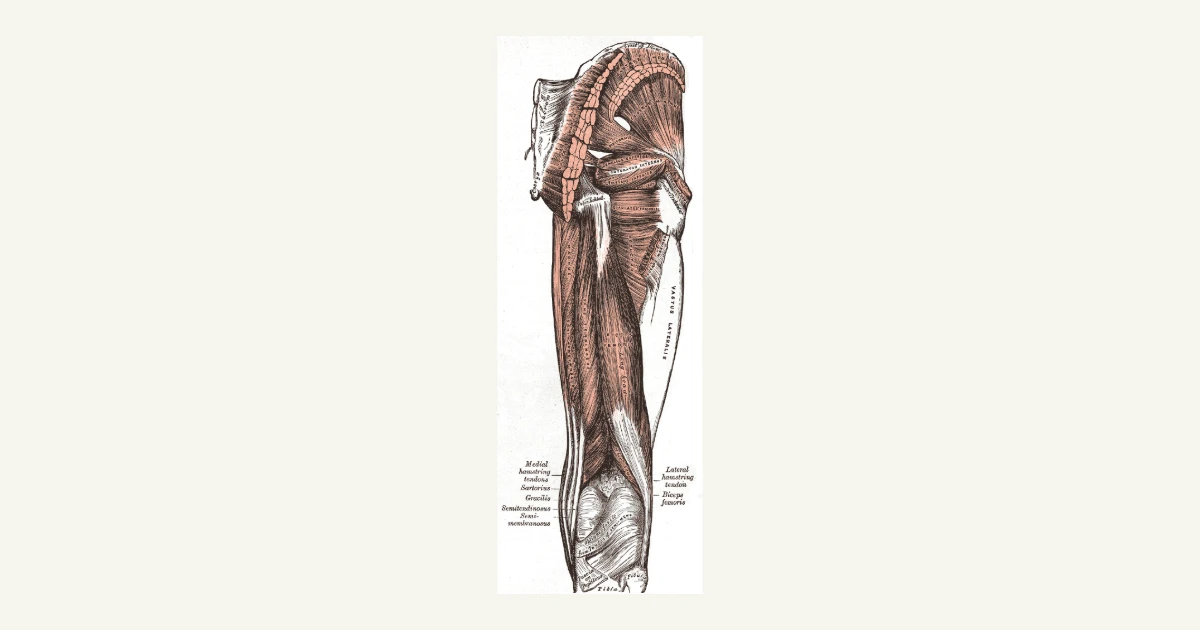
Piriformis syndrome is pain deep in the buttock, often running down the back of the thigh, caused by the piriformis muscle irritating or compressing the sciatic nerve where the nerve passes beside or through it. It is typically worse sitting. Because a disc or joint in the lower back can cause the same pattern, those are ruled out first.1
Key takeaways
- Piriformis syndrome is deep buttock pain, sometimes down the back of the leg, from a hip muscle irritating the sciatic nerve.
- It is typically worse sitting, driving and climbing stairs.
- A disc or joint in the lower back can cause the same pattern, so those are ruled out first. Scans are a doctor’s decision.
- Steroid and botulinum toxin injections into the muscle are done by a doctor, usually when exercise-based care has not settled it.
- A physiotherapist tests the back, the hip and the nerve to find which one is driving the pain.
First, the signs that mean a doctor, not this page
- Go to the emergency department now if you have new numbness between the legs or around the back passage, new trouble passing or holding urine or stool, or weakness in both legs.
- See a doctor the same day if the foot has started to drag or slap, the leg is getting weaker, or the back and buttock pain comes with a fever.
- See a doctor soon if the pain is there at night no matter how you lie, you are losing weight without trying, you have had cancer, or symptoms are spreading to both legs.
None of these? Then the rest of this page is for you.
Had a piriformis injection?
A doctor may inject the piriformis muscle with a steroid or with botulinum toxin, usually guided by ultrasound or another scan, when exercise-based care has not settled the pain. In a controlled trial of people with piriformis syndrome, botulinum toxin added to physical therapy relieved pain more than a steroid with local anesthetic, or a placebo, added to the same physical therapy.2 A 2021 review described steroid and botulinum injections as options when conservative care fails, with few adverse effects.3 Whether an injection suits you, and which one, are questions for your doctor.
In that trial the injection was an addition to physical therapy, not a replacement for it. The injection quietens the muscle. It does not change how long you sit, how the hip muscles share the load, or whether the back is joining in. That is the part a physiotherapist works on after the injection. More on physiotherapy after an injection.
When injections and a full program have not helped, a surgeon may release the muscle around the nerve, often through an endoscope.3 After that, your surgeon’s protocol sets the timeline. See physiotherapy after surgery.
Piriformis or sciatica from the back?
| What you notice | Points toward the piriformis | Points toward the lower back |
|---|---|---|
| Where it starts | Deep in the middle of the buttock, tender to press | The lower back, then into the buttock and leg |
| What sets it off | Sitting, especially on a hard seat or a wallet; crossing the leg over | Bending, lifting, coughing or sneezing |
| Below the knee | Usually buttock and back of the thigh | Often below the knee into the foot, with numbness in a strip |
| Who confirms it | A physiotherapist or doctor tests it. A doctor decides whether a scan is needed. | |
Sciatica from the spine is covered in sciatica and slipped disc.
How do you sit with piriformis syndrome?
Take the wallet out of the back pocket, sit on a seat firm enough not to sink into, keep both feet flat rather than crossing the leg over, and stand up every 20 to 30 minutes. In the car, take a break on longer drives. These ease the pressure on the nerve while the cause is worked on.
How long does piriformis syndrome take to settle?
Many people settle over weeks with exercise-based care and changes to sitting. Pain that has been there for months, or keeps returning after an injection, usually means the load on the hip or the back has not changed.1
Why the stretch helps for an hour and then it is back
The thinking goes: the muscle is tight, so stretch it, and get it injected if stretching does not work.
Three months in, you stretch on the office floor at lunch, and by three o’clock the buttock aches again. You sit on the edge of the chair in meetings. The drive to your parents’ place on Sunday needs a stop halfway. The injection bought three good weeks, and you are already counting the days to the next review.
A stretch changes how the muscle feels for an hour. It does not change why the muscle is irritated: hours of sitting on it, hip muscles that let it do too much of the work, or a lower back passing its pain down the same nerve. Has anyone tested your back, your hip strength against the other side, and whether the nerve itself is sensitive along its length? If not, nobody yet knows which of the three you are treating.
What a physiotherapist does with it
Finding the real problem is half the battle. Treating it is the other half.
At the Assessment & Treatment, a physiotherapist asks what sets it off, in your words, then tests what a label does not: the lower back and its movements, the hip joint, the strength of the hip muscles against the other side, the piriformis provocation tests, the nerve along its length, and how you sit. If anything points to a disc, a joint or a nerve problem that needs a doctor, we tell you and write to your doctor. Scans and injections are theirs.
Most of the 45 minutes is treatment: hands-on work for the buttock, hip and back, nerve mobility work, changes to how you sit and drive, and a strengthening program for the hip that is measured up at each review. You leave knowing which stage you are in, what is limiting you, and a written plan.
More on SI joint pain, another source of buttock pain, and physiotherapy for hip pain. Every appointment is one to one with your physiotherapist for the full 45 minutes, at five clinics: Orchard, Tampines, Serangoon, Tanjong Pagar and Jurong East. Bring any scan report, and the date and type of any injection.
Questions about piriformis syndrome
What does piriformis syndrome feel like?
A deep ache or burning in the middle of the buttock, sometimes running down the back of the thigh with tingling. It is usually worse sitting, driving, climbing stairs or crossing the leg over, and tender when the middle of the buttock is pressed.
What is piriformis sciatica?
It describes sciatica-like pain caused by the piriformis muscle irritating the sciatic nerve in the buttock, rather than by a disc or joint in the lower back. Because the back can cause the same pattern, the back is checked first.
How do you sit with piriformis syndrome?
Take the wallet out of the back pocket, use a firm seat, keep both feet flat instead of crossing the leg, and stand up every 20 to 30 minutes. Break up long drives.
Do piriformis injections work?
A doctor may inject the muscle with a steroid or botulinum toxin when exercise-based care has not helped. In one controlled trial, botulinum toxin added to physical therapy relieved pain more than a steroid injection or placebo with the same therapy. Whether it suits you is a question for your doctor.
How long does piriformis syndrome last?
Many people settle over weeks with exercise-based care and changes to sitting. Pain that has lasted months, or returns after an injection, usually means the load on the hip or back has not changed yet.
Three weeks of relief from the injection, and the chair is winning again? Get Assessed & Treated, and leave knowing whether it is the muscle, the hip or the back, which stage you are in, and what the next stage asks of it.
Sources: 1. Piriformis syndrome. In: StatPearls. Treasure Island (FL): StatPearls Publishing; updated January 2026. NCBI Bookshelf NBK448172. 2. Fishman LM, Anderson C, Rosner B. BOTOX and physical therapy in the treatment of piriformis syndrome. Am J Phys Med Rehabil. 2002;81(12):936-942. 3. Surgical and non-surgical treatment options for piriformis syndrome: a literature review. Anesth Pain Med. 2021;11(1):e112825.
Where are you with this right now?
1. It is settling on its own
Most injuries and most flare-ups settle over weeks with sensible load management and a return to normal movement. Improvement is judged over a month, not over a day, and good days and bad days inside that are usual. If you are doing more this month than last, and sleeping better, it is behaving the way it should. You do not need us for this, and we would rather say so.
2. It has stopped improving
You have adapted without noticing. The other side takes the load, you plan movements you used to make without thinking, and you have quietly dropped things you used to do.
Pain is the first thing to leave. Movement and strength are the last things trained back, and most people stop before that part is done. That is the gap worth measuring, and it is not measured by how you feel on the day.
What our patients say
Google reviews from our clinics in Singapore.


The Stalled Recovery Review is three appointments over three weeks with the same therapist, because what a joint does under load cannot be read in one visit. The first finds what is limiting it. The next two measure how it responds. $690, nett, no GST, which is three appointments at $230.
3. You have had surgery, or you have a date
Recovery after an operation has a shape, and knowing which stage you are in tells you whether you are on it. After a piriformis release or back surgery, bring your surgeon’s protocol and we work inside it. See physiotherapy after surgery, or the Lumbar Microdiscectomy Recovery Program.
All of it runs on the same four stages. The Phoenix Recovery Protocol explains what each stage works on and what you have to meet to move up. No referral needed to start.
Next step
Find out which stage you are in
Pain is the first thing to leave. Movement and strength are the last things trained back, and most people stop before that part is done. One Assessment and Treatment is a single 45-minute appointment at $230, nett, no GST. Your therapist finds what is actually limiting you, treats it in the same appointment, and you leave with your current stage and a written plan.
Prefer to phone? Each of our five clinics has its own number on the clinics page. No referral needed to book.
Related reading
Where we are
Clinics across Singapore
ORCHARD
400 Orchard Road #12-12
Orchard Towers, S238875
NS22 Orchard MRT
Physiotherapy and hand therapy in Orchard →
WhatsApp 8800 1830TAMPINES
9 Tampines Grande #01-20
Asia Green, S528735
EW2DT32 Tampines MRT
Physiotherapy and hand therapy in Tampines →
WhatsApp 8780 9608SERANGOON
265 Serangoon Central Drive #04-269
S550265 · Lift C only
NE12CC13 Serangoon MRT
Physiotherapy and hand therapy in Serangoon →
WhatsApp 8892 4121TANJONG PAGAR
10 Anson Road #02-77A
International Plaza, S079903
EW15 Tanjong Pagar MRT
Physiotherapy and hand therapy in Tanjong Pagar →
WhatsApp 8227 7074JURONG EAST
2 Venture Drive #02-02
Vision Exchange, S608526
NS1EW24 Jurong East MRT
Physiotherapy and hand therapy in Jurong East →
WhatsApp 8242 7340