
Written by Mavis Tham, Shamaine Soh and Yuna Zhuang, Principal Hand Occupational Therapists at Phoenix Rehab.Clinically reviewed by Nigel Chua, Principal Hand Occupational Therapist & Director, AHPC A1300362Z.Last reviewed 2 October 2026.
The wrist injury that ends golf seasons is usually on the lead hand, on the little finger side, and it is usually the tendon that runs behind the wrist bone there rather than the joint itself. The other common one is a bruised or broken hook of hamate, from the club butt driving into the palm on a fat shot.
Both get called a sore wrist and they are treated very differently, which is the reason this page exists.
The lead wrist, little finger side
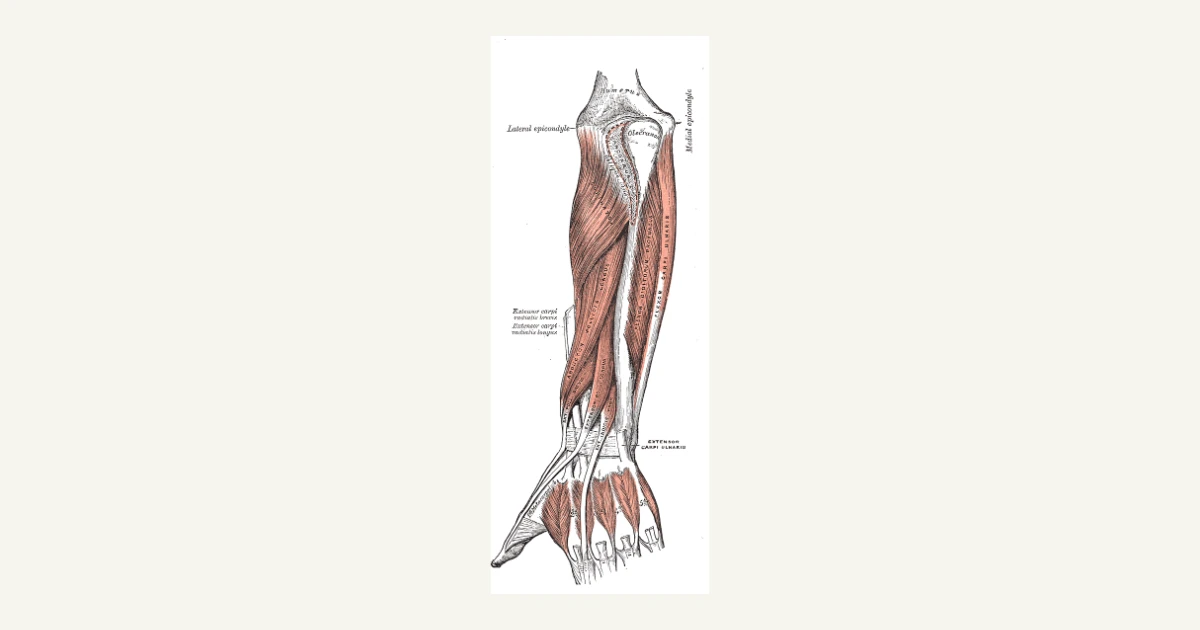
Pain at the back of the wrist on the little finger side, worse at impact and worse out of the rough, points at the extensor carpi ulnaris tendon or at the triangular fibrocartilage complex underneath it. The tendon can inflame or, less commonly, its sheath tears and the tendon starts subluxing, which some people can feel as a snap on rotating the forearm.
The TFCC is the cartilage and ligament pad that lets the forearm rotate. Injured, it hurts on rotation under load and on pushing up from a chair, and it clicks. Our TFCC page covers that one in full.
Pain in the palm below the little finger
This is the one to take seriously. A hook of hamate fracture happens when the club is driven into the ground and the butt of the grip transmits the force into the palm. It is tender to press deep in the base of the palm below the little finger, it hurts to grip hard, and it commonly does not show on a standard x ray.
It matters because the hook sits next to the ulnar nerve and the flexor tendons of the little and ring fingers, and a missed one can go on to rupture a tendon or irritate the nerve. If you have palm pain after a fat shot and the first x ray was clear, ask your doctor specifically about the hook of hamate and about a CT. That is a medical route, not a therapy one.
Why grip changes and shaft length matter
A grip that is too small makes you squeeze, and squeezing loads the tendons on both sides of the wrist for the whole round. A club that catches turf heavily transmits that force somewhere. And a lead wrist that cups at the top of the backswing puts the little finger side of the wrist in the position it is least able to absorb impact in.
These are not equipment sales points. They are the load side of a load problem, and a tendon that keeps flaring is usually being asked to absorb something that has not changed.
What actually settles it
Relative rest rather than complete rest, which means changing what the wrist does rather than stopping. A custom splint that blocks forearm rotation, because a shop bought wrist brace does not, and rotation is what loads this. Then graded loading of the wrist and forearm, measured with grip in kilograms, and a return to hitting balls that starts with chipping rather than with a driver.
Hand and wrist cases are managed by our hand therapy team. See why a rotation blocking splint is different from an off the shelf brace.
Four months of rest and it hurts on the first bucket
That is the signature of a tendon that was rested rather than rebuilt. Rest removes the symptom and does nothing to the capacity, so the first return to volume finds exactly the same ceiling.
Grip strength and pain free rotation under load are numbers. The Stalled Recovery Review is three appointments over three weeks with the same hand therapist, $690 nett, no GST, and the first one is where those get taken. Appointments are 45 minutes, one to one, $230 nett, no GST.
Numbness in the ring and little fingers, worse with the elbow bent, points at the ulnar nerve at the elbow rather than the wrist. See the Cubital Tunnel Recovery Program, which sets out the four stages and what moves you up.
Golf: what we focus on
The swing still works. The lead wrist does not like it.
The ache on the little-finger side of the lead wrist at impact. The inner elbow after an hour at the driving range. The lower back that stiffens by the back nine. Golfers play through it for months, because nothing stops the swing until something does.
- Lead wrist. The ulnar side of the wrist (TFCC) takes the impact, and is assessed and splinted by our hand therapy team.
- Trail wrist and thumb. De Quervain’s and thumb sprains from the grip.
- Elbow. Golfer’s elbow and tennis elbow: progressive tendon loading, not just rest.
- Back and hips. Rotation that the lower back is being asked to make up for.
Tested, not dated. You go back when the measures say so: grip strength in kilograms against your other hand, and the range of rotation your swing actually needs. Pain is the first thing to leave. Strength is the last to train and recover.
WhatsApp us · Get Assessed & Treated · One 45-minute appointment, $230, nett, no GST.
Where are you with this right now?
1. It is settling on its own
Wrist sprains and irritations often settle over six to twelve weeks. Stiffness after a cast comes off is expected and is worked on rather than waited out. If the range is improving week on week and you are using the hand more, that is the normal course. You do not need us for this, and we would rather say so.
2. It has stopped improving
You turn taps with the other hand. Pushing up out of a chair is something you plan. The jar goes to someone else.
The bone heals on a timetable. The wrist does not. Range and grip are trained back afterwards. That is the gap worth measuring, and it is not measured by how you feel on the day.
The Stalled Recovery Review is three appointments over three weeks with the same therapist, because what a joint does under load cannot be read in one visit. The first finds what is limiting it. The next two measure how it responds. $690, nett, no GST, which is three appointments at $230.
3. You have had surgery, or you have a date
Recovery after an operation has a shape, and knowing which stage you are in tells you whether you are on it. See the Wrist Fracture Recovery Program, or hand therapy after surgery if you are not sure which applies to you.
All of it runs on the same four stages. The Phoenix Recovery Protocol explains what each stage works on and what you have to meet to move up. No referral needed to start.
Next step
Find out which stage you are in
Pain is the first thing to leave. Movement and strength are the last things trained back, and most people stop before that part is done. One Assessment and Treatment is a single 45-minute appointment at $230, nett, no GST. Your therapist finds what is actually limiting you, treats it in the same appointment, and you leave with your current stage and a written plan.
Prefer to phone? Each of our five clinics has its own number on the clinics page. No referral needed to book.
Related reading
Where we are
Clinics across Singapore
ORCHARD
400 Orchard Road #12-12
Orchard Towers, S238875
NS22 Orchard MRT
Physiotherapy and hand therapy in Orchard →
WhatsApp 8800 1830TAMPINES
9 Tampines Grande #01-20
Asia Green, S528735
EW2DT32 Tampines MRT
Physiotherapy and hand therapy in Tampines →
WhatsApp 8780 9608SERANGOON
265 Serangoon Central Drive #04-269
S550265 · Lift C only
NE12CC13 Serangoon MRT
Physiotherapy and hand therapy in Serangoon →
WhatsApp 8892 4121TANJONG PAGAR
10 Anson Road #02-77A
International Plaza, S079903
EW15 Tanjong Pagar MRT
Physiotherapy and hand therapy in Tanjong Pagar →
WhatsApp 8227 7074JURONG EAST
2 Venture Drive #02-02
Vision Exchange, S608526
NS1EW24 Jurong East MRT
Opening 20 October 2026
Physiotherapy and hand therapy in Jurong East →
WhatsApp 8242 7340What our patients say
Google reviews from our clinics in Singapore.



