
Written by Zita Sham, Fairuuz Saleh and Shiv Mohan Banka, Principal Physiotherapists at Phoenix Rehab.Clinically reviewed by Nigel Chua, Principal Hand Occupational Therapist & Director, AHPC A1300362Z.Last reviewed 2 October 2026.
An injury or sprain in the annular ligament of your elbow can lead to complications in the joint function. This particular painful elbow condition is typically characterized by:
- Pain
- Swelling
- Numbness
- Skin discoloration
- A feeling of weakness in the lateral side of the elbow
Younger adults and children are generally more prone to annular ligament damage. Although rare, the condition can also occur in adults, especially seniors who have experienced an elbow injury before.
Other names given to this type of injury include:
- Annular ligament displacement
- Pulled elbow
- Radial head subluxation
- Nursemaid’s elbow (for children only)
Here, we provide a detailed overview of what the annular ligament is, how it can be damaged, and the treatment options available.
The article also discusses other painful elbow conditions that can be confused with annular ligament tears and how physiotherapy can help you recover from the sprain.
WHAT IS THE ANNULAR LIGAMENT AND WHAT DOES IT DO?
As is the case with virtually all painful hand and elbow conditions, recovering from an annular ligament injury requires you to first understand the basic function and position of the damaged part.
Ligaments are bands of tough elastic tissue that surround a joint. They serve to connect two bones together, support movement, and protect your joints from forces and impact.
Our elbow joint is primarily stabilized by three ligaments:
- The annular ligament
- The lateral collateral ligament
- The medial collateral ligament
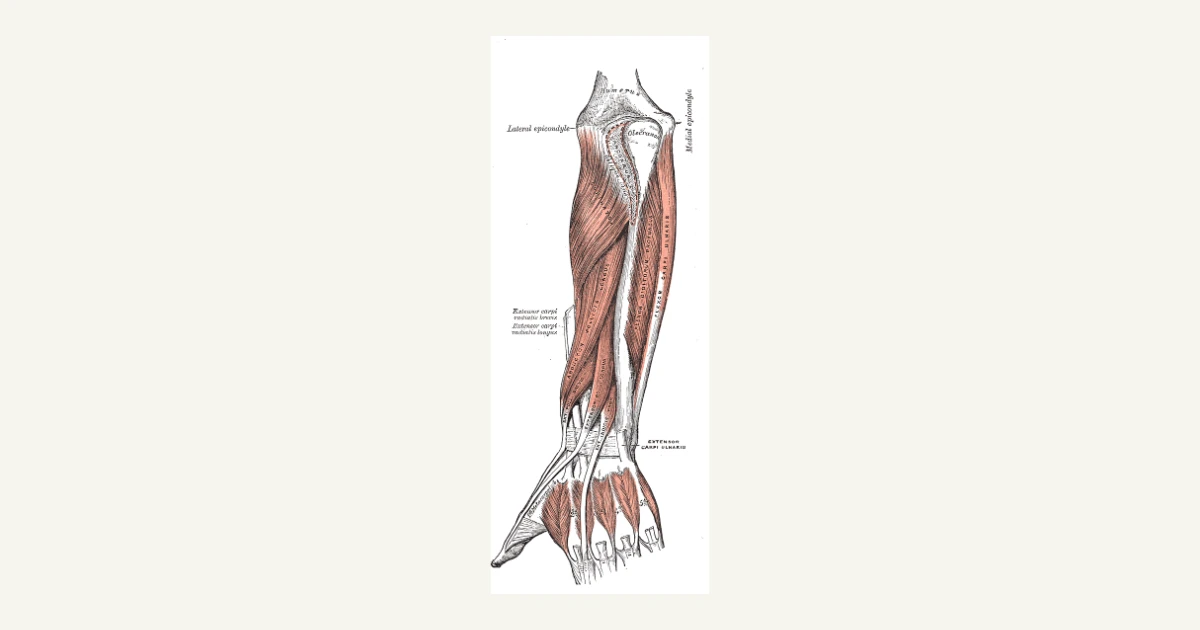
The annular ligament wraps around the radial head within the radial notch and attaches it to the ulna. This allows for the rotation of the two bones during the supination and pronation of the forearm.
Simply put, the annular ligament supports the rotation motion of your hand. For instance, every time you turn a key, use a screwdriver, or drink tea in a cup, you do so with the help of this tissue.
Given the way it’s naturally sandwiched between the two main bones of your arm, the annular ligament is highly susceptible to damage. It can be easily injured by elbow overuse or direct trauma to the joint.
This type of soft tissue injury is extremely common in children because in the early stages of bone formation, bones can easily slip out of place or the ligament can be easily injured. A common cause of an annular ligament sprain in children is when someone pulls a child by the arm. Fortunately these types of injuries in children are mild with almost no residual issues, and usually resolve entirely.
WHAT CAUSES ANNULAR LIGAMENT PAIN?
In most cases, it can be hard to identify the exact cause of adult annular ligament sprains. This is especially true when the onset of pain is the result of gradual damage over time.
However, generally speaking, there are several factors that physicians identify as major causes of this ligament sprain. These include:
- Repetitive Strain Injuries (RSI) that overload your annular ligament
- Medical conditions like osteoarthritis that create instability in the elbow joint
- Any former injury that resulted in the dislocation of the elbow
- Traumatic injuries like avulsion fractures
- Overstretching that loosens the ligament at the bone
- Regular participation in activities that involve heavy use of the elbow and forearm muscles
- Falling on an outstretched arm.
SYMPTOMS OF ANNULAR LIGAMENT SPRAIN
The main symptoms of elbow annular ligament sprain or injury include the following:
- Sharp, shooting pain when you rotate your elbow or flex your arm
- Persistent pain along the outer side of the elbow
- Throbbing pain near the elbow joint
- Difficulty with a throwing motion
- A tingling sensation that spreads down the forearm to the hand
- Loss of strength in the arm and elbow joint
Note that the symptoms of an annular ligament sprain differ from person to person, depending on the extent of tissue damage.
A direct trauma to the ligament is likely to cause more damage than that caused by daily muscle overuse.
Generally, an annular ligament injury can be classified into three grades:
- Grade 1. When the ligament is only slightly overstretched or very mildly torn. Typically, there is no effect on the joint function. While there may be little to no pain, a mild sprain can increase the risk of a more severe re-injury.
- Grade 2. When there is significant damage or a relatively large tear in the ligament. This can partially hinder arm movement and result in swelling and bruising. Continued use of Grade 2 sprained ligaments can develop into bigger problems.
- Grade 3. Refers to the complete rupture of the ligament. Intense pain, bruising, and heavy swelling are typically present in such injuries. Grade 3 ligament sprains require immediate medical attention. Failing to do so can have prolonged effects, including permanent immobilization of the joint.
OTHER CONDITIONS SIMILAR TO ANNULAR LIGAMENT SPRAIN
Pain due to annular ligament sprain is most commonly confused with Tennis Elbow.
Tennis Elbow is a condition of the lateral epicondylar region of the elbow that causes pain around the outside of the joint. It usually occurs due to overuse of the muscle and tendons in the forearm. While the symptoms of Tennis Elbow tend to overlap with those of annular ligament sprain, the two conditions are very different from each other. As such, they require different treatments.
Symptoms of adult annular ligament sprain can also be confused with Golfer’s Elbow.
Golfer’s Elbow, also known as medial epicondylitis, is a condition that causes pain, inflammation, and tenderness in the tendons that connect the forearm to the elbow. The most common cause of this injury is an overload of the connecting tissues.
WHO IS MOST AT RISK OF EXPERIENCING ANNULAR LIGAMENT PAIN?
- People who have previously suffered from elbow dislocation, avulsion fractures, or any similar kind of joint or muscle damage are at high risk of this injury.
- Baseball players, especially pitchers, are likely to suffer from annular ligament pain.
- People who frequently participate in sports activities that involve repetitive overhead motion, such as throwing, are prone to damaging their annular ligament.
- Athletes like tennis players and volleyball players have a high chance of experiencing annular ligament pain.
- Shoveling, hammering, or gardening for extensive hours can lead to annular pain due to excessive strain on the ligaments.
- Elderly men and women with a history of muscle or joint problems, such as arthritis or bursitis, are more susceptible to this type of soft tissue injury.
WHAT ARE THE TREATMENTS FOR ANNULAR LIGAMENT SPRAIN?
Treatment for an annular ligament sprain begins with an acute diagnosis of the injury.
This is vital for identifying the extent of damage to the annular ligament and also helps rule out other possibilities.
Your doctor and our principal physiotherapists will ask for your full medical history and perform a thorough examination to come to a sound conclusion. Typically, patients are asked to perform different types of elbow movements, along with other tests.
This often includes what is known as valgus and varus stress tests. The doctor might put gentle pressure on specific trigger points to check the severity of the sprain.
At times, patients might be referred to get an x-ray or an MRI scan done to confirm the diagnosis. However, the need to obtain radiographs of the affected area arises only in rare cases where the symptoms are too severe to be considered a probable fracture. The results of the scan allow your physician to see precisely where the ligaments have been stretched or torn.
Pain relief and anti-inflammatory medication are a decision for your doctor or pharmacist. If the pain is too intense, patients may also be prescribed a mild narcotic or corticosteroid injection.
HOW DO OUR PRINCIPAL PHYSIOTHERAPISTS HELP PEOPLE WITH ANNULAR LIGAMENT STRAIN?
If the injury is not too serious to require surgical treatment, conservative pain management techniques and physiotherapy are usually sufficient to help patients recover.
When patients undergo a surgical procedure, physiotherapy is also generally required as a follow up plan to improve the normal function of the tissues.
Our elbow and hand physiotherapists have vast experience helping people with different kinds of pain problems successfully get on the road to recovery.
To control pain and ensure the healthy function of the elbow joint, following an annular ligament injury, we generally start with a customized treatment plan.
This includes specific exercises that promote natural healing of the torn ligaments by enhancing blood flow and improving the flexibility of the joint. For example, elbow mobility exercises are effective in increasing the range of motion, whereas strength and resistance exercise will provide greater stability in the joint.
Stretching and loading exercise is of prime importance in treating damaged ligaments as there is an increased risk of atrophy otherwise.
What our patients say
Google reviews from our clinics in Singapore.



Our experienced physiotherapists for elbow and hand conditions in Phoenix Rehab Singapore will carefully examine the degree of damage to determine which exercises will work best for you. We focus on exercises that not only help repair torn or damaged tissues, but also reduce the chances of re-injury at the same time.
We may also use ice, heat, soft tissue massage, tape or a brace alongside the exercise program.
Although painful, annular ligament sprain can be easily treated in as little as a few weeks. The key is to visit our principal physiotherapists and seek medical help as soon as you possibly can.
Where are you with this right now?
1. It is settling on its own
Elbow tendon problems settle slowly, over months rather than weeks, and they respond to graded loading rather than to rest alone. If you can grip for longer than you could a month ago, it is responding. You do not need us for this, and we would rather say so.
2. It has stopped improving
You pour the kettle with the other hand. A full mug is a two-handed job. You have stopped carrying the shopping on that side.
A tendon that stops being provoked is not the same as a tendon that got stronger. One is avoidance, the other is capacity. That is the gap worth measuring, and it is not measured by how you feel on the day.
The Stalled Recovery Review is three appointments over three weeks with the same therapist, because what a joint does under load cannot be read in one visit. The first finds what is limiting it. The next two measure how it responds. $690, nett, no GST, which is three appointments at $230.
3. You have had surgery, or you have a date
Recovery after an operation has a shape, and knowing which stage you are in tells you whether you are on it. See the hand and elbow programs, or elbow physiotherapy if you are not sure which applies to you.
All of it runs on the same four stages. The Phoenix Recovery Protocol explains what each stage works on and what you have to meet to move up. No referral needed to start.
Next step
Find out which stage you are in
Pain is the first thing to leave. Movement and strength are the last things trained back, and most people stop before that part is done. One Assessment and Treatment is a single 45-minute appointment at $230, nett, no GST. Your therapist finds what is actually limiting you, treats it in the same appointment, and you leave with your current stage and a written plan.
Prefer to phone? Each of our five clinics has its own number on the clinics page. No referral needed to book.
Related reading
Where we are
Clinics across Singapore
ORCHARD
400 Orchard Road #12-12
Orchard Towers, S238875
NS22 Orchard MRT
Physiotherapy and hand therapy in Orchard →
WhatsApp 8800 1830TAMPINES
9 Tampines Grande #01-20
Asia Green, S528735
EW2DT32 Tampines MRT
Physiotherapy and hand therapy in Tampines →
WhatsApp 8780 9608SERANGOON
265 Serangoon Central Drive #04-269
S550265 · Lift C only
NE12CC13 Serangoon MRT
Physiotherapy and hand therapy in Serangoon →
WhatsApp 8892 4121TANJONG PAGAR
10 Anson Road #02-77A
International Plaza, S079903
EW15 Tanjong Pagar MRT
Physiotherapy and hand therapy in Tanjong Pagar →
WhatsApp 8227 7074JURONG EAST
2 Venture Drive #02-02
Vision Exchange, S608526
NS1EW24 Jurong East MRT
Opening 25 October 2026
Physiotherapy and hand therapy in Jurong East →
WhatsApp 8242 7340