
Written by the Phoenix Rehab physiotherapy team. Clinically reviewed by Louise Yow, Principal Physiotherapist & Director, AHPC A1300363H. Last reviewed 6 October 2026.
Most swimming injuries are shoulder injuries, and most of them are load problems rather than a single bad stroke. A swimmer can take tens of thousands of arm strokes in a week, so a small weakness in the rotator cuff or the shoulder blade muscles adds up quickly. The knee, the lower back and the neck make up most of the rest. Rest settles the pain. It does not change the load, which is why it comes back when the distance does.
Every swimming injury, by body part
Start from where it hurts. Each linked row goes to the page that covers that injury in full. Rows marked “see a doctor first” are not ours to treat first.
| Where | Injury | How swimming usually causes it |
|---|---|---|
| Hand and finger | Finger fracture | Hitting the wall or the lane rope |
| Shoulder | Rotator cuff tendon pain | High-volume freestyle and butterfly (swimmer’s shoulder) |
| Shoulder | Shoulder impingement | Hand entry and the catch |
| Shoulder | Shoulder dislocation or instability | Loose shoulders plus high training volume |
| Shoulder | Shoulder blade control (scapular dyskinesis) | Fatigue late in a set |
| Shoulder | Biceps tendon pain, front of the shoulder | Catch and pull |
| Neck | Neck strain | Rotating to breathe |
| Lower back | Low back strain | Arching in butterfly and breaststroke |
| Lower back | Spondylolysis (low back stress fracture) | Junior butterfly swimmers |
| Hip and groin | Groin strain | Breaststroke kick |
| Knee | MCL sprain | Breaststroke whip kick (breaststroker’s knee) |
| Knee | Kneecap pain | Wall push-offs |
| Foot | Top-of-foot tendon pain | Toes pointed through hours of flutter kick |
The injuries we see most from swimming
Swimmer’s shoulder
Pain at the front or top of the shoulder that builds through a set, worst on the catch and the pull. Usually the rotator cuff tendons are irritated by more load than they are currently strong enough for. The work is cuff and shoulder blade strength, then stroke volume built back in stages. More on the rotator cuff. Dragon boat and kayak paddlers load the same cuff on every stroke, covered in the dragon boat and paddling injuries guide.
A shoulder that feels loose
Many swimmers have naturally mobile shoulders, which is part of what makes them good at the stroke. Some feel the shoulder slip or catch at the end of the reach. That is a control problem first, and it is trained. If it has come fully out of the joint, see the Shoulder Dislocation and Labral Repair Recovery Program.
Breaststroker’s knee
Pain on the inside of the knee from the whip kick, which puts the ligament on that side under repeated strain. Hip control, kick technique and graded volume are the work, rather than rest alone.
Lower back and neck
Butterfly and breaststroke ask the lower back to extend hard and often. Freestyle asks the neck to rotate to the same breathing side for kilometers. Both respond to strength and to changing what the joint is asked to do. More on lower back and neck physiotherapy.
Swimming: what we focus on
Fine in the first 500 meters. Not by the last.
The shoulder that is fine in warm-up and aching by the main set. The extra rest at the wall that has become a habit. The stroke you have quietly shortened on one side so it hurts less. You took two weeks off, it settled, and the first proper set brought it straight back.
- Shoulder. Rotator cuff and shoulder blade strength measured against the other side, in the overhead position the stroke uses.
- Control. For loose shoulders, control at the end of the reach, trained before volume goes back up.
- Volume. Distance built back in stages, with the measures deciding the next step rather than how it feels on the day.
- After surgery. Stabilization and cuff repairs: the Shoulder Dislocation and Labral Repair Recovery Program and the Rotator Cuff Repair Recovery Program.
Tested, not dated. You go back when the measures say so: shoulder rotation strength against your other side, and a graded return to distance. Pain is the first thing to leave. Strength is the last to train and recover.
WhatsApp us · Get Assessed & Treated · One 45-minute appointment, $230, nett, no GST.
When to see a doctor first
Go to the emergency department now if your shoulder has come out of the joint and has not gone back, or your arm turns pale, cold or numb. See a doctor soon if neck pain comes with pins and needles, numbness or weakness down the arm, or if shoulder pain wakes you every night and does not change with position.
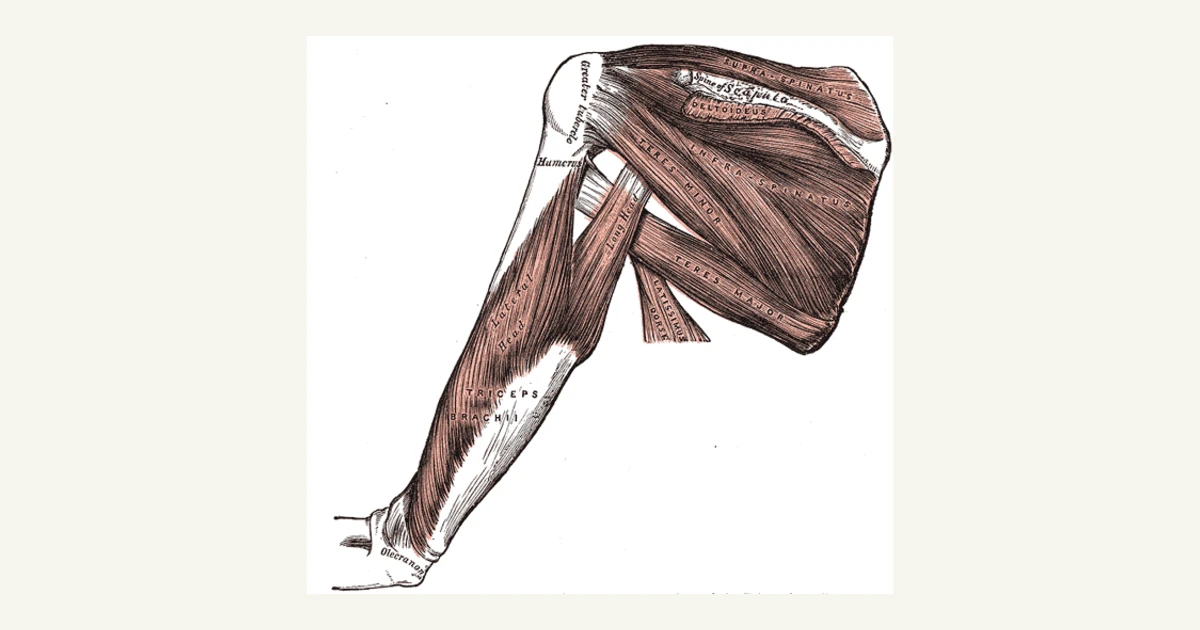
Swimmers also get pain at the back of the armpit from teres major on the catch, and a shoulder blade that lifts when tired, covered in winged scapula.
Where are you with this right now?
1. It is settling on its own
If the shoulder is easing week by week as you cut back the distance, and the first lengths of a set no longer hurt, you are on the right road. Build the distance back in steps of a few hundred meters a week. You do not need us for this, and we would rather say so.
2. It has stopped improving
It settles every time you rest and comes back every time you train. You have shortened the stroke, changed the breathing side or dropped butterfly altogether. That is a strength and load problem that rest will not fix, and it is worth measuring. Every first visit is one 45-minute Assessment & Treatment, $230, nett, no GST. If it has been months, the Stalled Recovery Review is three appointments over three weeks with the same therapist, $690.
3. You have had surgery, or you have a date
Shoulder stabilization and rotator cuff repair have a shape, with protected weeks before the stroke comes back. See the Shoulder Dislocation and Labral Repair Recovery Program or physiotherapy after surgery. All of it runs on the four stages of the Phoenix Recovery Protocol.
Related reading
Where we are
Clinics across Singapore
ORCHARD
400 Orchard Road #12-12
Orchard Towers, S238875
What our patients say
Google reviews from our clinics in Singapore.


NS22 Orchard MRT
Physiotherapy and hand therapy in Orchard →
WhatsApp 8800 1830TAMPINES
9 Tampines Grande #01-20
Asia Green, S528735
EW2DT32 Tampines MRT
Physiotherapy and hand therapy in Tampines →
WhatsApp 8780 9608SERANGOON
265 Serangoon Central Drive #04-269
S550265 · Lift C only
NE12CC13 Serangoon MRT
Physiotherapy and hand therapy in Serangoon →
WhatsApp 8892 4121TANJONG PAGAR
10 Anson Road #02-77A
International Plaza, S079903
EW15 Tanjong Pagar MRT
Physiotherapy and hand therapy in Tanjong Pagar →
WhatsApp 8227 7074JURONG EAST
2 Venture Drive #02-02
Vision Exchange, S608526
NS1EW24 Jurong East MRT
Opening 25 October 2026
Physiotherapy and hand therapy in Jurong East →
WhatsApp 8242 7340