

Written by Zita Sham, Fairuuz Saleh and Shiv Mohan Banka, Principal Physiotherapists at Phoenix Rehab.Clinically reviewed by Louise Yow, Principal Physiotherapist & Director, AHPC A1300363H.Last reviewed 12 October 2026.
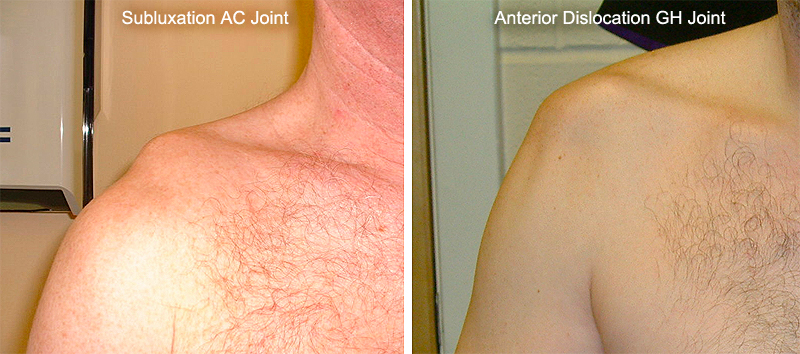
Shoulder dislocation and subluxation injuries refers to injuries where the humeral bone (the single long bone of your arm) dislocates or subluxes out of its socket.
There are three types of dislocations and subluxations by movement
- forward (anterior) shoulder dislocations
- backwards (posterior) shoulder dislocations
- downwards (inferior) shoulder dislocations.
In some cases, it can be a combination of two or three types, but patients most commonly experience the anterior (forward) type.
In most cases, shoulder dislocations are either:
- very painful, especially if it’s the first time. Some patients report numbness in the arm/hands.
- not painful, especially when adrenaline is high (in sports events) or “dislocation is a regular event”.
Subluxation, on the other hand, refers to a lesser degree of dislocation, and most times, the joint pops right back together usually on its own or when the patient pushes the joint together again. That being said, it is usually as painful as shoulder dislocations when it occurs.
Shoulder dislocation and labral repair recovery program
Shoulder Dislocation and Labral Repair Recovery Program
The shoulder goes back in within minutes. Whether it stays in is decided over the next few months.
For a first or repeat shoulder dislocation, and for rehabilitation after a labral repair or other stabilization surgery. Staged physiotherapy run to your surgeon’s protocol, at five Singapore clinics.
No referral needed to start. Bring your X-ray or MRI report, or your operation note.
Start here
Where are you right now?
How the program runs
4-Stage Structured Recovery
You move up a stage when you meet the criteria for it, not when a number of weeks has passed. That is Criteria Before Clearance, and for a shoulder that has dislocated it is the whole point: going back to sport on a date rather than a test is how a second dislocation happens.
The shape of it
What happens, week by week
The weeks below are the usual shape after stabilization surgery. Without surgery the protected weeks are shorter. Your surgeon’s protocol takes precedence over anything on this page, every time.
- Weeks 0 to 4Stage 1 · Calm & ProtectA sling for around four to six weeks after surgery, often less without it. The elbow, wrist and hand move daily. The arm is kept away from the position that took it out: out to the side and turned back, as when throwing or reaching behind.
- Weeks 4 to 12Stage 2 · Move & MobilizeRange regained in the safe directions first, with turning the arm outward limited to what your surgeon allows while the repair heals. Shoulder blade control trained from the start.
- Months 3 to 4Stage 3 · Rebuild & StrengthenRotator cuff and shoulder blade strength, then strength and control with the arm out to the side and overhead, the positions that matter.
- Months 4 to 6Stage 4 · Return & PerformReturn to contact, throwing and overhead sport commonly falls between four and six months after surgery, once strength and control are tested against the other side and your surgeon agrees.
What does not come back
Why a repeat dislocation is not just a repeat
Each time the shoulder comes out, the ball can chip the rim of the socket and the socket can dent the back of the ball. Bone lost from the rim of the socket does not grow back, and once enough of it is gone, the operation surgeons offer changes from a soft-tissue repair to a bone procedure.
Age matters too. In a 25-year follow-up of first-time dislocations treated without surgery, younger patients were the most likely to dislocate again (Hovelius and colleagues, Journal of Bone and Joint Surgery, 2008).
None of that is a reason to rush into surgery, and it is not our decision. If your shoulder has come out more than once, ask your doctor or an orthopedic surgeon whether you need imaging of the socket. That conversation is the right next step, whichever clinic you rehabilitate at.
The early weeks
Is this normal?
Usually expected
- Aching that is worse at night, and difficulty finding a comfortable sleeping position.
- Bruising down the upper arm in the first week or two.
- A shoulder that feels stiff and weak when the sling comes off.
- Apprehension: the feeling that it might come out when the arm goes out to the side.
- Clicking without pain as movement returns.
Contact your doctor
- Emergency department now: the shoulder comes out again. Do not let anyone without training pull it back in.
- Emergency department now: the hand or arm turns pale, cold or blue.
- Call 995 now: chest pain or sudden shortness of breath.
- Doctor the same day: fever, or a wound that is red, hot or leaking.
- Doctor soon: a numb patch on the outer side of the upper arm, or the arm will not lift away from your side. The nerve to the deltoid can be stretched in a dislocation.
- Review soon: pain and range that have not changed over 3 to 4 weeks of therapy.
We would rather send you back to your surgeon early than be the reason you went late.
If it is not going to plan
It does not hurt. You just do not trust it.
You stopped swimming. You let someone else reach for the top shelf. On the MRT you hold the pole low instead of the bar overhead. You reach back for the seatbelt with the other hand and sleep on the other side, every night, without thinking about it anymore.
That is not recovery. That is a shoulder you have arranged your life around. Pain is the first thing to leave. Strength and control in the positions that matter are the last to train and recover, and they do not come back by avoiding those positions.
What a shoulder you do not trust needs first is measurement: rotation strength against the other side, control with the arm out and turned back, and an honest read of where the apprehension starts. The Stalled Recovery Review is three appointments, one a week for three weeks, with the same physiotherapist. The first finds what is limiting the shoulder. The next two measure how it responds to load. $690, nett, no GST.
More on what the three appointments cover: the Stalled Recovery Review.
Logistics
When can I…
Your surgeon decides. These are typical points after stabilization surgery, not permissions.
| Activity | Typical point | What has to be true first |
|---|---|---|
| Desk work | 1 to 2 weeks | Typing with the arm supported in the sling. |
| Driving | 6 to 8 weeks | Out of the sling, full control of the wheel. Your surgeon agrees, and check your insurer. |
| Gym, pressing and pulling | 3 to 4 months | Range and rotation strength tested. Overhead and behind-the-neck positions last. |
| Swimming | Breaststroke around 3 months, freestyle later | Full overhead range and control in the turned-out position. |
| Badminton, tennis, throwing | 4 to 6 months | Stage 4 criteria met and your surgeon’s clearance. |
| Contact sport, rugby, martial arts | 5 to 6 months | Stage 4 criteria met and your surgeon’s clearance. |
| IPPT (sit-ups, push-ups, 2.4 km run) | Push-ups around 4 to 6 months after stabilization surgery. Sit-ups and the run earlier, as your surgeon allows | Strength and control tested against the other side, a push-up without apprehension, and your surgeon agrees. Your unit’s medical officer decides your medical status and when you take IPPT. |
| Medical certificate | Your doctor issues it | Physiotherapists do not issue MCs. We can write a report on your functional limits for your doctor or employer. |
The program
What it costs and what is in it
Shoulder Dislocation and Labral Repair Recovery Program, Stages 1 to 4
Per 45-minute appointment, nett, no GST. The Shoulder Dislocation and Labral Repair Recovery Program is 12 appointments, $2,760 in all. You pay for each appointment as you attend it. If you need more, your physiotherapist shows you which stage criteria are still open, and each extra appointment is $230.
- An Assessment & Treatment first, at $230: which stage you are in, what is limiting you, and a written plan you walk out holding
- Range progressed inside your surgeon’s limits, measured in degrees
- Rotator cuff and shoulder blade strength measured against the other side
- Return-to-sport testing before clearance, not a date
- A home program, written down
- A one-page report to your surgeon at weeks 2, 6 and 12 if you were referred
- Your next stage review dated into the diary, with the same physiotherapist
Graduation, Not Discharge. The program ends when you meet the Stage 4 criteria for what you need to get back to.
Who you will see
One physiotherapist, one room, 45 minutes
You stay with the same physiotherapist through the program, because rotation strength measured by two different people is two different numbers. Every appointment is one to one for the whole 45 minutes.
Zita Sham
Principal Physiotherapist. Rotator cuff injury and repair, and shoulder stiffness. Orchard and Tampines, and Jurong East from 25 October 2026.
Shiv Mohan Banka
Principal Physiotherapist. Shoulder and knee problems and sports injury. Orchard and Tampines.
This program runs Stages 1 to 4 of the Phoenix Recovery Protocol. It sits under physiotherapy after surgery, alongside the other recovery programs. For shoulder pain without a dislocation, see shoulder pain physiotherapy.
Timings and appointment numbers on this page are typical ranges, not predictions for any individual recovery, and your surgeon’s protocol takes precedence. Physiotherapists assess, treat, exercise, educate and refer; doctors diagnose, inject, prescribe and order imaging. If we find something that needs medical review we refer you back to your doctor.
COMMON CAUSES OF SHOULDER DISLOCATIONS AND SUBLUXATIONS
Usually dislocations and subluxations injuries happen due to direct physical/traumatic injuries such as:
- contact sports like rugby, soccer, basketball, boxing, taekwando, jujitsu
- car or motor vehicle accidents
- falling forwards, backwards or sidewards and trying to break the fall with the hand
- the hand/arm getting caught in machinery or a door etc
The most common cause of dislocations and subluxations is falling onto an outstretched hand, as falling can happen anywhere, anytime, and to anyone.
SYMPTOMS OF SHOULDER DISLOCATIONS AND SUBLUXATIONS
Patients who have a dislocated or subluxed shoulder may experience one or more of the following conditions:
- very sharp pain in the shoulder
- shoulder seems “loose and unstable”
- shoulder seems warm and swollen
- shoulder seems tender and painful to touch
- shoulder on one side seems heavier and weaker
- numbness or abnormal sensation on one side of the shoulder/hand.
PHYSIOTHERAPY DIAGNOSES AND TREATMENT
If you know someone who recently
- dislocated their shoulder
- experienced subluxation in their shoulder
- experienced pain and an inability to move their shoulder normally
they will need to see a doctor or shoulder physiotherapist immediately.
The main focus will be to ensure that the joint is re-attached back to the normal location, because if this is not done, there may be further complications (over-stretched nerves, ligaments, tendons, muscles etc). This may sometimes be done with the help of anesthesia, and sometimes without, depending on the environment and timing.
If you’re unsure who to see, you can see us first and we can refer you to an orthopedic doctor who manages shoulders.
After that you will more than likely need to do an x-ray, because:
- We want to ensure that the alignment of the shoulder joint is normal
- We want to ensure that there are no fractures or anything that has potentially been missed.
PHYSIOTHERAPY FOR SHOULDER DISLOCATION AND SUBLUXATION
Patients who have injured their shoulders, and especially patients who have dislocated their shoulders (with or without surgical intervention), will need shoulder physiotherapy to
- Strengthen the shoulder muscles
- Increase the stability of the shoulder joint
- Improve the range of motion of the shoulder
- Normalize shoulder use and function
- Prevent further dislocations.
Good shoulder physiotherapy management has a very positive impact on protecting the shoulder complex and preventing other shoulder issues from arising in the mid to long term.
Your Shoulder Physiotherapy
Your physiotherapist will perform a thorough and in-depth assessment to understand your shoulder condition, injury and pain history before creating a customized shoulder rehab program for you.
Physiotherapy treatments may include the following:
- transcuteneous electrical nerve stimulation to stimulate the weakened shoulder muscles
- ultrasound therapy to accelerate soft tissue healing
- heat therapy to increase flexibility of the shoulder joint (if post op, this cannot be done so quickly)
- shoulder ranging exercises (protected, assisted, active, resisted) to ensure your shoulder movement range is normal
- as the shoulder joint and muscles increase in strength and stability, your physiotherapist will start to add more strengthening into the regime to further strengthen your shoulder to increase stability.
Also on this site: the page on a Bankart lesion covers the labral tear left by a shoulder dislocation, and the page on a proximal humerus fracture covers the break at the top of the arm bone.
Where are you with this right now?
1. It is settling on its own
Many shoulder problems settle over weeks to months. Night pain that slowly becomes less frequent, and reach that slowly returns, are the usual pattern. If you are reaching higher this month than last, and sleeping better, it is on the normal course. You do not need us for this, and we would rather say so.
2. It has stopped improving
You put your shirt on that arm first. The top shelf belongs to someone else now. You have stopped reaching behind you without thinking.
Reach comes back before strength does. A shoulder that goes overhead but cannot hold anything there is halfway, not finished. That is the gap worth measuring, and it is not measured by how you feel on the day.
The Stalled Recovery Review is three appointments over three weeks with the same therapist, because what a joint does under load cannot be read in one visit. The first finds what is limiting it. The next two measure how it responds. $690, nett, no GST, which is three appointments at $230.
3. You have had surgery, or you have a date
Recovery after an operation has a shape, and knowing which stage you are in tells you whether you are on it. See the Rotator Cuff Repair Recovery Program, or shoulder physiotherapy if you are not sure which applies to you.
All of it runs on the same four stages. The Phoenix Recovery Protocol explains what each stage works on and what you have to meet to move up. No referral needed to start.
Next step
Find out which stage you are in
Pain is the first thing to leave. Movement and strength are the last things trained back, and most people stop before that part is done. One Assessment and Treatment is a single 45-minute appointment at $230, nett, no GST. Your therapist finds what is actually limiting you, treats it in the same appointment, and you leave with your current stage and a written plan.
Prefer to phone? Each of our five clinics has its own number on the clinics page. No referral needed to book.
Related reading
- Rugby injuries
- Swimming injuries
- physiotherapy after surgery
- shoulder physiotherapy
- How to Sleep With a Frozen Shoulder: Practical Tips
- Neck and Shoulder Pain on Left Side: Causes and Care
- Right Side Neck and Shoulder Pain: Causes and Care
- The Phoenix Recovery Protocol, and the four stages
- All recovery programs, hand and physio
- Shoulder Discomfort Post-Sleep: Causes and Solutions
Where we are
Clinics across Singapore
ORCHARD
400 Orchard Road #12-12
Orchard Towers, S238875
NS22 Orchard MRT
Physiotherapy and hand therapy in Orchard →
WhatsApp 8800 1830TAMPINES
9 Tampines Grande #01-20
Asia Green, S528735
EW2DT32 Tampines MRT
Physiotherapy and hand therapy in Tampines →
WhatsApp 8780 9608SERANGOON
265 Serangoon Central Drive #04-269
S550265 · Lift C only
NE12CC13 Serangoon MRT
Physiotherapy and hand therapy in Serangoon →
WhatsApp 8892 4121TANJONG PAGAR
10 Anson Road #02-77A
International Plaza, S079903
EW15 Tanjong Pagar MRT
Physiotherapy and hand therapy in Tanjong Pagar →
WhatsApp 8227 7074JURONG EAST
2 Venture Drive #02-02
Vision Exchange, S608526
NS1EW24 Jurong East MRT
Opening 25 October 2026
Physiotherapy and hand therapy in Jurong East →
WhatsApp 8242 7340What our patients say
Google reviews from our clinics in Singapore.



