
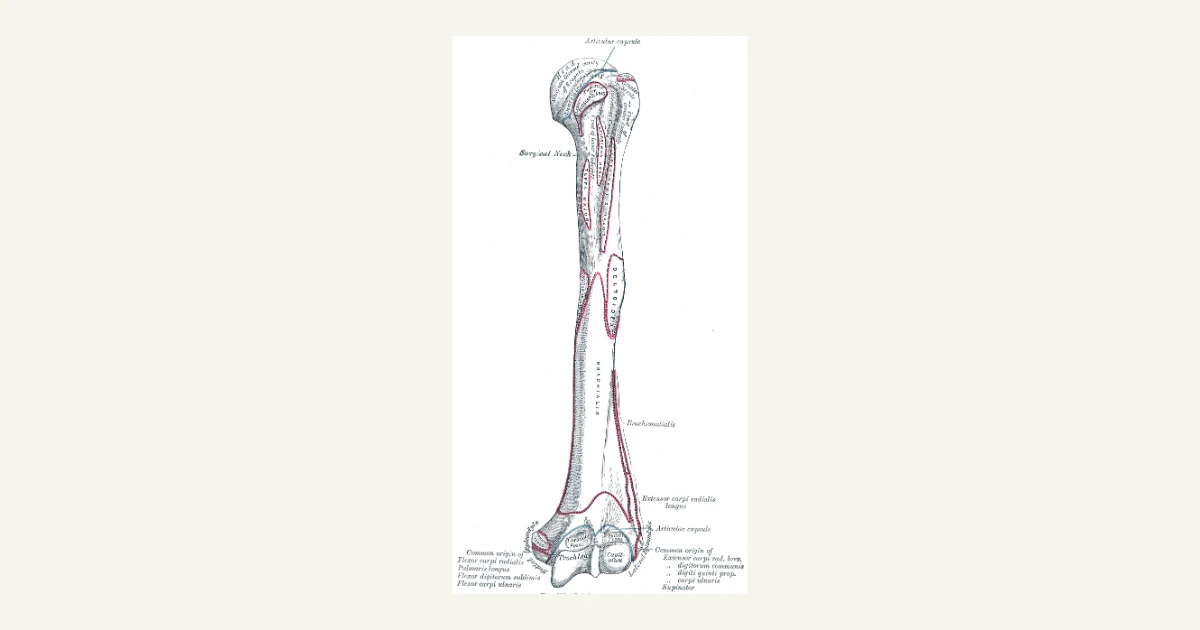
Written by Zita Sham, Fairuuz Saleh and Shiv Mohan Banka, Principal Physiotherapists at Phoenix Rehab.Clinically reviewed by Louise Yow, Principal Physiotherapist & Director, AHPC A1300363H.Last reviewed 9 October 2026.
A proximal humerus fracture is a break at the top of the upper arm bone, just below the shoulder joint, usually from a fall onto an outstretched hand. Most are treated in a sling without surgery. The bone usually knits in about six to eight weeks, and movement and strength keep improving for months after that.
Breaks that have shifted out of place, or split into several pieces, may be fixed with a plate, a nail or a new shoulder joint. Either way, the job afterwards is the same: getting a shoulder that has been held still for weeks to lift, turn and carry again. Below is the program our physiotherapy team runs for it, then the detail on how these fractures are classified and treated.
Physiotherapy after a broken shoulder · Singapore
Proximal Humerus Fracture Recovery Program
The bone knits in six to eight weeks. The shoulder does not wait that long to stiffen.
For stable two-part fractures, a randomized trial found that starting physiotherapy within the first week led to less pain and better function than waiting three weeks in a sling (Hodgson and colleagues, Journal of Bone and Joint Surgery, 2003). Your surgeon decides when it is safe for your fracture. Ask the question at the first review rather than the third.
No referral needed. Every first visit is one 45-minute Assessment & Treatment, $230, nett, no GST. Bring your X-ray report or operation note.
Where are you right now?
- Just broken, and in the sling. The elbow, wrist and hand are the work you can do today, and they stiffen faster than people expect. Most people sleep better propped up for the first weeks. Showering with the arm hanging forward and relaxed is usually allowed; ask your surgeon, and your therapist shows you how at the first appointment.
- It was fixed with a plate, a nail or a new joint. Your surgeon’s protocol sets what moves and when. If you had a shoulder replacement, the Shoulder Replacement Recovery Program is the closer match, because the type of joint decides the first six weeks.
- The sling is off and the arm will not lift. That is expected at first. The question is whether range is coming back week on week, measured in degrees, not whether it feels better.
- Months on, and the arm still stops at shoulder height. Read if it is not going to plan below.
What happens, week by week
| Stage | Typical time | What it works on |
|---|---|---|
| 1. Calm & Protect | Weeks 0 to 2 | Sling, pain and swelling settled. Elbow, wrist and hand moving daily. Gentle pendulum movement when your surgeon allows. |
| 2. Move & Mobilize | Weeks 2 to 8 | Assisted, then active lifting and turning of the arm. Measured in degrees. |
| 3. Rebuild & Strengthen | Weeks 8 to 16 | Rotator cuff and shoulder blade strength once the bone has united. |
| 4. Return & Perform | Month 4 onward | Reaching overhead, carrying, dressing, sleeping on that side, work and sport. |
The weeks are typical ranges, not a promise. You move up a stage when you meet its criteria, and your surgeon’s protocol takes precedence over anything on this page.
Is this normal after a broken shoulder?
Usually expected
- Bruising that spreads down the arm to the elbow in the first two weeks, sometimes onto the chest.
- Night pain, and sleeping better propped up than lying flat.
- Puffy fingers from the sling, which ease with daily hand and wrist movement.
- A shoulder that will not lift past chest height when the sling comes off.
Contact your doctor
- Call 995 for chest pain or sudden breathlessness.
- Go to the emergency department now if the hand turns pale, cold or blue, or pain is severe and getting worse despite painkillers.
- See a doctor the same day for fever, a surgical wound that is red, hot, opening or leaking, or a painful, swollen arm or calf.
- See a doctor soon if a patch on the outer upper arm stays numb or the arm will not lift away from your side at all, because the nerve to the deltoid runs close to this fracture.
Four months after a broken shoulder and the arm still stops at shoulder height? What that usually means
The other hand does your hair now. You hang the washing one-handed and leave the top shelf to someone else. The surgeon says the X-ray looks healed, and it does.
The usual plan at this point is to keep using the arm and wait for the last part to come back. Most of a normal day happens below shoulder height, so daily life never asks the shoulder for the range it lost in the sling. Healed bone and a shoulder that lifts are two different findings. Has anyone measured how high the arm goes, in degrees, against the other one?
Range in degrees and rotator cuff strength against your other arm show where it stalled. A shoulder that only lifts by hitching the shoulder blade has a stiffness and strength problem, and that gets trained, not waited out. Take those numbers to your next surgeon review. If pain is getting worse months on rather than better, or the arm is losing movement it had, that is your surgeon’s question first.
The Stalled Recovery Review is three appointments over three weeks with the same therapist, because how a stiff shoulder responds to load cannot be read in one visit. $690, nett, no GST.
When can I…
Your surgeon decides, based on the fracture and how it was treated. These are typical points, not permissions.
| Activity | Typical point | What has to be true first |
|---|---|---|
| Type and use a phone | About 1 week | Pain controlled, and the sling on as instructed. |
| Come out of the sling | 2 to 6 weeks, weaned as your surgeon instructs | Your surgeon’s go-ahead at a review. |
| Drive | 6 to 8 weeks or later | Out of the sling, your surgeon’s clearance, and able to turn the wheel hard with both hands. Check your insurer. |
| Reach a cupboard, hang the washing | Around 12 weeks | The bone united on X-ray, and the arm lifting without hitching the shoulder blade. |
| Lift and carry without limits | 3 to 6 months | Stage 3 criteria met. |
| Swimming, racquet sport, overhead gym work | 4 to 6 months or later | Stage 4 criteria met, and your surgeon’s clearance. |
| Medical certificate | Your doctor issues it | Physiotherapists do not issue MCs. We can write a report on your functional limits for your doctor or employer. |
The four stages, and what moves you up
- Stage 1, Calm & Protect. The fracture protected exactly as your surgeon instructed, pain and swelling settled, and every joint that is allowed to move kept moving.
Move up when: your surgeon allows assisted shoulder movement, swelling is settling, and elbow, wrist and hand range are full. - Stage 2, Move & Mobilize. Assisted, then active lifting and turning, measured in degrees at every review.
Move up when: the X-ray shows the bone uniting, your surgeon allows active use, and range is recorded against the other arm with the arm lifting to shoulder height without a hitch. - Stage 3, Rebuild & Strengthen. Rotator cuff and shoulder blade strength, loaded in small steps and counted.
Move up when: rotation strength, measured on both arms, is approaching the other side, and you can hold the arm overhead without pain or a hitch. - Stage 4, Return & Perform. The reaching, carrying, dressing, work and sport you named at the first appointment, rehearsed and tested.
Graduate when: those tasks are tested and done, and a home program is in place to keep the range and strength.
Measured at your first appointment and again at graduation: shoulder range in degrees on both arms, rotation strength on both arms with a handheld dynamometer once the bone has united, and a shoulder pain and function questionnaire (SPADI).
The physiotherapy team that runs this program
You are matched to the therapist whose declared clinical interest fits your shoulder and the clinic that suits you, and you stay with the same therapist through the program. Every appointment is one to one with your therapist for the full 45 minutes. All are registered with the Allied Health Professions Council.

Principal Physiotherapist. Achilles tendinopathy, rotator cuff injury and repair, shoulder stiffness.
Orchard, Tampines, Jurong East

Principal Physiotherapist. Shoulder and knee problems, spinal dysfunction, sports injury.
Orchard, Tampines

Principal Physiotherapist. Knee and hip replacement recovery, neck and shoulder pain, dry needling.
Tanjong Pagar, Jurong East

The program belongs to Phoenix, not to one therapist. Your plan, your measurements and your surgeon’s protocol move with you if you change clinic.
$230 per 45-minute appointment, nett, no GST
One to one with your therapist for the whole 45 minutes. Same price for your first appointment and your last. The Proximal Humerus Fracture Recovery Program is set at 12 appointments across Stages 1 to 4, $2,760 in all. Your therapist confirms your plan at your first visit, and you pay for each appointment as you attend it.
This program runs Stages 1 to 4 of the Phoenix Recovery Protocol, and sits under physiotherapy after surgery alongside the rest of our recovery programs.
Eight weeks on and the arm still stops at chest height? Get Assessed & Treated, and leave knowing which stage you are in.
Phoebe, our WhatsApp assistant, replies with a clinic and two appointment times. Bring your X-ray report or operation note, your surgeon’s instructions if you were given any, and your sling.
Timeframes in this program are typical ranges, not promises. Where your surgeon has given you a protocol, that protocol takes precedence over anything written here.
HUMERUS BONE REVIEW
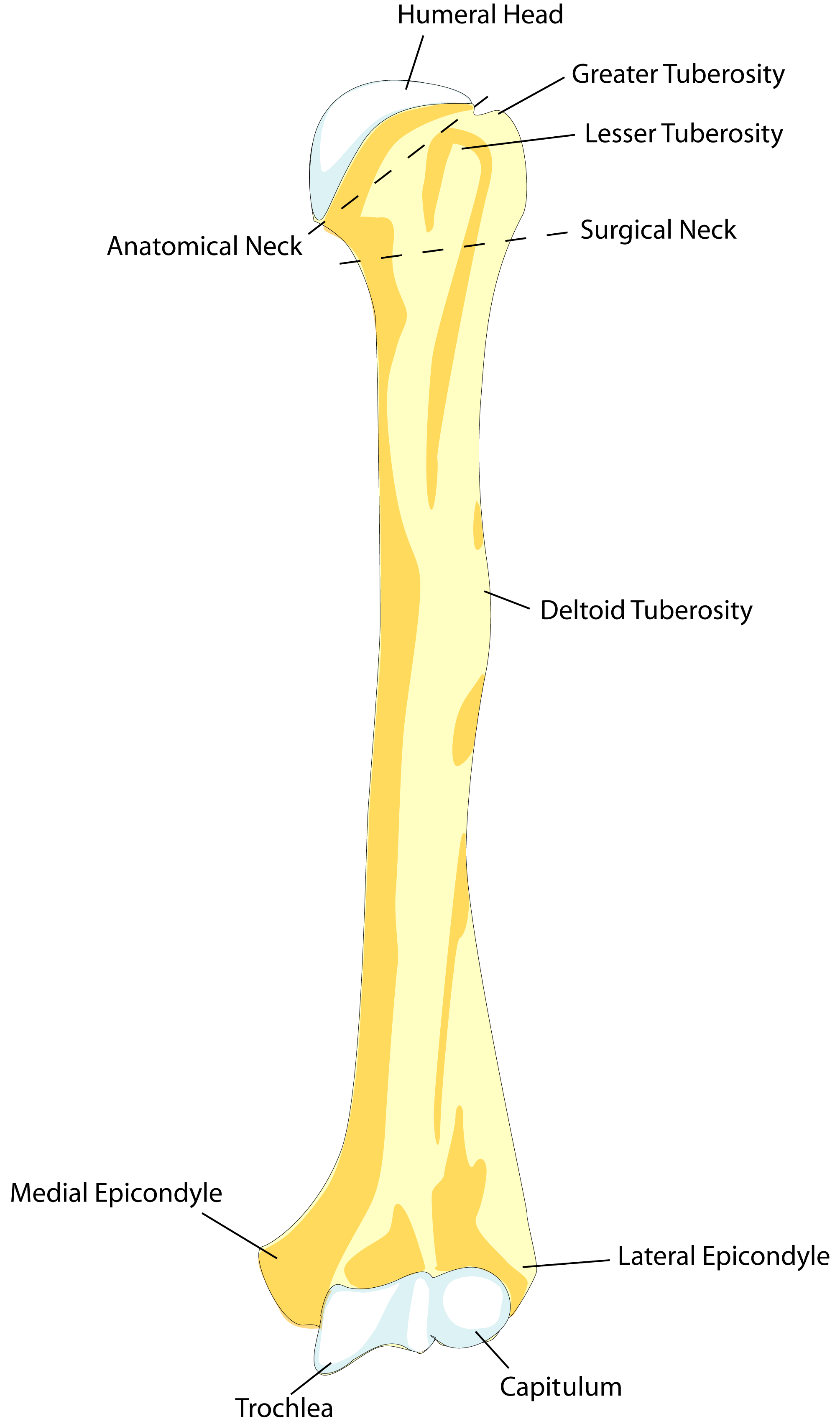
Our humerus/humeral bone refers to the long bone in our upper arm that sits between our shoulder and elbow, and the very top part of it is called the proximal humerus.
Proximal is a medical and anatomical term meaning “nearer to midline” – so in this case, the proximal humerus means the part of humerus that is closest to our midline, which is essentially the humeral head.
We have four rotator cuff muscles which attach to the humerus head, and they are the main muscles responsible for shoulder movement, stability and strength. Whenever our rotator cuff muscles or tendons are injured, it leads to difficulties and pain.
Here are the most important components to our proximal humeral bone:
Humeral Head
The top of the humerus is shaped like a ball (if you make a fist with your hand and then flex your wrist – that’s very similar to how it looks and feels) and it is known as the head of humerus or humeral head.
Our humeral head rests in a fairly shallow socket that is formed by part of the shoulder blade, known as the glenoid fossa, to form the glenohumeral joint which is our shoulder joint.
Greater Tubercle/Tuberosity
Our greater tubercle refers to a large nodule (pure mass of bone) found on the outward facing side of the proximal humerus. Three of the four rotator cuff attach to the greater tubercle:
- supraspinatus
- infraspinatus
- teres minor.
Lesser Tubercle/Tuberosity
The lesser tubercle of the humerus refers to a smaller nodule which is found on the front side of the proximal humerus. The fourth rotator cuff muscle, called the subscapularis, attaches here.
Anatomical Neck
The anatomical neck of the humerus is a diagonal groove that is located between the head of humerus and the greater and lesser tubercles. The articular capsule of the shoulder joint attaches here.
Surgical Neck
The surgical neck of our humeral bone runs horizontally (straight across), just below the greater and lesser tubercles at the bottom of the humeral head. Most proximal humerus fractures typically happen at the surgical neck.
WHAT ARE THE TYPICAL CAUSES OF PROXIMAL HUMERUS FRACTURES?
Proximal humerus fractures account for a large majority of fractures of the upper arm, and account for 5% of all fractures.
The most common causes of a proximal humerus fracture include:
Falls
As mentioned earlier, the most common cause of a proximal humerus fracture is falling over onto an outstretched hand (this is often abbreviated to “FOOSH”).

In fact, what patients need to know is that the force or fall doesn’t need to be from any great height; falling from a standing height can be enough to break the proximal humeral bone.
A Direct Blow
A high-energy blow to the shoulder, such as
- a sports injury, e.g. a sporting tackle or collision
- a road traffic accident/motor vehicle accident
can also cause a proximal humerus fracture. Often in these high speed or power circumstances our shoulder joint can also dislocate, meaning that the head of humerus slips out of the glenoid socket.
Older Age
Approximately 75% of proximal humerus fractures occur in people over the age of 60 because our bones get weaker and more brittle with age, making them more likely to break and fracture.
Fractures of the proximal humerus are the third most common type of broken bone in the 65s age group, after hip fractures and wrist fractures.
Osteoporosis
With osteoporosis the bone becomes increasingly brittle and weakens, making it more likely to break. A milder version of this is low bone mineral density (osteopenia) which also increases fracture risks.
Gender
Women are three times more likely to experience a proximal humeral fracture than men – this could be due to variable factors such as:
- muscle strength and size to absorb force
- higher risk of osteoporosis or osteopenia
- balance issues.
CLASSIFICATION OF HUMERUS FRACTURES
A proximal humerus fracture is typically categorised using the Neer System which takes into consideration
- the number of fracture parts
- the level of “displacement” of these fractured humeral parts.
Neer divides the proximal humerus into four parts:
- The anatomical neck
- The greater tuberosity
- The lesser tuberosity
- The surgical neck
Neer then looks at the level of displacement of the parts – if there is more than 1cm of separation or the angulation is greater than 45 degrees, it is considered a displaced fracture.
One-Part Fractures
A one-part proximal humerus fracture means that there is no displacement.
Any one or more of the four parts may be fractured, but there is less than 1cm separation between the two fractured ends and less than 45 degree angulation.
For example there could be a fracture of the surgical neck and the greater tuberosity, but as long as neither of the parts are displaced, it is still classed as a one-part fracture.
Fortunately, most (up to 75%) of proximal humerus fractures are one-part fractures.
Two-Part Fractures
Two-part fractures occur when one part is displaced more than 1 cm or rotated more than 45 degrees. Again, there may be multiple fractures in multiple parts, but we’re referring to at least one part being displaced.
Approximately 20% of proximal humerus fractures are two-part fractures.
Three-Part Fractures
Three-part fractures occur when two parts are displaced.
There will most likely be displacement of the surgical neck and one of the tuberosities (most of the time it involves the greater tubercle), while the other humeral tuberosity remains attached.
Approximately 5% are three-part fractures.
Four-Part Fractures
This occurs when all four parts are fractured, with three of them displaced in relation to the fourth.
Fortunately, a four-part fracture is very rare (less than 1% chance) but when it happens, it is classified as a very severe injury and almost always will require corrective shoulder surgery – patients are highly recommended for surgery unless medically not able to.
Fracture Dislocation
Fracture dislocations happen when the shoulder is dislocated with a proximal humeral fracture, meaning it has come out of its socket.
A proximal humerus fracture dislocation may be a two, three or four part fracture.
SYMPTOMS OF A PROXIMAL HUMERUS FRACTURE
Proximal humerus fractures don’t just happen without a form of external force, and most patients will be able to recall and connect the bone fracture to a specific event, date and place.
A proximal humerus fracture will typically cause:
- Pain: The pain from the shoulder injury and bone fracture will be near instant, severe and ongoing. Patients will know for sure that it is injured and possibly fractured.
- Limited Shoulder and Arm Movement: Patients will experience pain with any upper arm and shoulder movement (it will be extremely painful), so movement will be very restricted.
- Swelling and Bruising: There will be significant swelling and bruising in the upper arm which may extend all the way down to the hand within a couple of days of injury.
- Bony Sounds (Crepitus): Patients may be alarmed when they experience a grinding or grating noise or sensation when moving their broken humeral arm. These sounds and sensations are caused by the broken pieces of bone fragments rubbing against each other when moved.
- Obvious Fracture Deformity: If the patient’s shoulder fracture is a displaced fracture, the arm may appear deformed or abnormal. If there is a fracture dislocation, the deformity will be obviously visible.
- Bleeding: If the fractured part has pierced or punctured the skin (termed as an open fracture) there will be bleeding.
- Altered Sensation: In some situations, the sharp bony fragments may injure the nerves around the shoulder and that may result in altered sensation, such as pins and needles or numbness below the fracture site. Less than half of all proximal humerus fractures have associated nerve damage, but it tends to be the axillary nerve that is most often affected.
DIAGNOSING HUMERAL FRACTURES
If your doctor or physiotherapist suspects a proximal humerus fracture, you will be referred and sent for at least one type of imaging scan to evaluate the severity of the fracture, where exactly it is and how many parts, and if there is any dislocation or movement of the fractured parts.
Typically, taking x-rays with different angles of the shoulder and upper arm are enough to diagnose and categorize a humerus fracture.
X-rays are usually taken in three perpendicular planes:
- The front (true AP view)
- The side (lateral scapula Y view)
- Through the armpit (axillary view)
In some cases, you may also be sent for a CT or MRI scan if the x-ray imaging results aren’t clear enough. If the greater tuberosity is fractured, an ultrasound scan will be performed to check for rotator cuff muscle and/or tendon damage.
TREATMENT OF A PROXIMAL HUMERUS FRACTURE
Conservative / Non-Operative Approach
The good news is that in most cases, a proximal humerus fracture will not require surgery. Nearly 80% of proximal humeral fractures are undisplaced or only minimal displaced fractures and therefore non-operative treatment is appropriate. Non-operative treatment for a proximal humerus fracture consists of:
1) Immobilization
For the first few weeks after a proximal humerus fracture, patients are required to keep their affected arm in a sling to hold the fracture still and to allow the swelling and pain to subside.
The shoulder fracture needs to be completely immobilized for at least 10-14 days to allow time for the bones to start slowly joining back together and heal, so the sling must be worn at all times.
After this, you can gradually reduce how much you wear the sling, and by around 12 weeks you shouldn’t need it at all.
Most of the time, patients are prescribed a shoulder immobilizer or sling and swath. These are good because they provide support to the elbow and forearm and counteract the weight of the arm. The extra strap around the body helps to keep the upper arm immobilized.
In some cases, patients may be issued a collar and cuff instead. These provide less support but allow the weight of the arm to provide gentle traction which can help improve the alignment of the fracture.
2) Medication
Pain relief and anti-inflammatory medication are a decision for your doctor or pharmacist.
If you have an open fracture or surgery you will also be given antibiotics to reduce the risk of infection.
3) Exercises
For the first couple of weeks after a proximal humerus fracture, the shoulder should be immobilized in the sling, but please note that it is very important to do your elbow, wrist and finger exercises to prevent any stiffness or weakness.
It’s extra painful to have stiffness in the elbows, wrists and fingers, as well as the shoulder stiffness post-fracture.
Typically, you’re allowed to take your arm out of the sling to do these exercises.
These exercises should be started as soon as possible and be done at least 3 – 5 times a day, if not more. It is important to move the elbow, wrist and fingers through their full range of motion. Hand grips and balls are a great way to maintain strength.
After about two weeks, you should be able to start gentle exercises to get the shoulder moving, and your physiotherapist will set a shoulder program with you.
Pendulum exercises are the best place to start for regaining mobility. These are exercises where you use gravity to move the arm so your muscles don’t have to do anything, so as to ensure that your muscles don’t catch onto or pull on the fracture site.
After around three weeks, you can start active assisted exercises (AAROM) where you use your good arm or a bar/stick to support and move the broken arm. You may also be prescribed a shoulder pulley system to use.
In terms of strengthening, you will start with isometric exercises.
These are exercises where you push against resistance but without any arm or muscle movement – this is so you don’t aggravate the fracture site. You may be allowed to start these as soon as pain allows, or you may need to wait until the fracture has fully healed, you will have to check with your doctor or physiotherapist.
After about 6 – 10 weeks the fracture parts should have united and you can move on to active mobility exercises and progressive strengthening exercises, which may include resistance band exercises to regain rotator cuff strength.
Shoulder physiotherapy will continue until you have regained full
- movement
- strength
- stability
in the shoulder and elbow.
You may need to keep doing exercises for up to 12 months to achieve this. Please note that unfortunately not everyone regains full range of movement after a proximal humerus fracture, and some people will have ongoing difficulty lifting their arm above head height .
It is very important to rigorously follow your shoulder physiotherapy exercise program and do your shoulder exercises daily to ensure you regain as much range of motion, flexibility and strength as possible.
Your shoulder doctor will see you regularly and x-ray the shoulder periodically to check on the healing process. Everyone heals at different rates, so follow the guidance of your doctor or physiotherapist on when you can progress to the next stage of rehab.
Surgical Approach
Unfortunately around 15% of proximal humerus fractures tend to be displaced and require surgery.
In most cases, metalwork is used to realign and fix the bones. This is a temporary measure to hold things together to allow the bone time to heal, and these are not meant to be a permanent support structure. The metal work may be removed at a later date if it comes loose or causes any problems. If the bone fails to unite, then further surgery will be required.
There are a few different types of surgery for a proximal humerus fracture depending on the type of fracture and the individual’s functional needs.
Closed Reduction
A closed reduction is where a proximal humerus fracture is realigned under anesthesia without having to open up the shoulder with a scalpel (typically termed as MUA = manipulation under anesthesia).
This may be all that is needed, but if the MUA realignment proves to be unstable, then the surgeon may use percutaneous pins or K-wires to hold the bone in position. These are inserted through the skin and into the bone at various angles to hold the fracture still.
In some cases, the ends of the pins or K-wires are left slightly exposed so they can easily be removed once callus formation has begun, however there are increased risks of infection and pin movement (termed as migration or displacement), so buried pins may be safer to be used instead.
A closed reduction is most commonly done for two-part surgical neck fractures.
ORIF (Open Reduction Internal Fixator)
ORIF is the abbreviation for open reduction internal fixation and is where the fracture is stabilized and fixed using a metal plate and screws.
The orthopedic surgeon will make an incision at the front or side of your shoulder. If there is any fracture displacement, then the fracture will be reduced (brought together and realigned).
A metal plate is then inserted and held in place by surgical screws above and below the fracture site to keep it stable and secure. After that, the incision is then closed with staples or sutures.
An ORIF is most commonly done on younger patients for two, three or four part fractures or when there is displacement of the greater tuberosity.
Intramedullary (IM) Nailing
A small anterolateral (front and side) incision is made through the skin and through all underlying soft tissues.
The orthopedist will then insert a rod-shaped nail into the hollow centre of the humerus bone, known as the medullary canal and held in place with surgical screws. This splints the fracture from the inside to hold it steady.
Intramedullary nails are typically selected for a two part or three part proximal humerus fracture, or if there is also damage to the humeral shaft below.
Shoulder Hemiarthroplasty
A shoulder hemiarthroplasty (partial shoulder replacement), involves removing the humeral head and replacing it with a metal implant.
The stem of the implant is inserted into the medullary canal (the hollow middle of the upper arm bone) and will either be wedged tightly in place or secured with special bone glue cement.
The shoulder head “ball” is then attached to the top of the stem.
Most of the time, a shoulder hemiarthroplasty is done where the fracture is especially complex or if other treatment methods have failed. This may occur with an anatomical neck fracture, a four-part fracture, a fracture dislocation, or if the rotator cuff has also been damaged.
If the blood supply to the humeral head has been compromised and there is a high risk of osteonecrosis (where the bone dies), your shoulder surgeon will likely refer a hemiarthroplasty to be the treatment of choice.
Total Shoulder Arthroplasty
A total shoulder arthroplasty is when both parts of the shoulder joint are replaced (the arm, and the body part where the arm attaches).
The ball-shaped humeral head is removed and replaced with a metal implant. The implant is shaped like a half moon and has a stem which runs down the middle of the humerus bone.
The socket part of the joint on the shoulder blade is shaved down and a plastic socket is positioned and held in place with special cement.
Shoulder replacement is not always the first option – it will be done only if there is damage to the shoulder blade socket (the glenoid) together with the proximal humerus fracture.
The glenoid fossa/process may have been damaged at the time of injury or there may be significant arthritis (wear-and-tear, degeneration) in the joint that would make a partial shoulder replacement unsuitable.
The rotator cuff muscles and tendons must be intact for a total shoulder arthroplasty, if not there is a high risk of loosening of the prosthesis.
Reverse Shoulder Replacement
If the patient’s rotator cuff tendons have been damaged (partially torn or completely ruptured) with the proximal humerus fracture, then the shoulder surgeon may recommend a reverse shoulder replacement.
It is most suitable for people over the age of 70 who have low shoulder movement and strength needs.
One requirement is that the deltoid muscle of the shoulder must be functioning well, strong and in good working order.
In a reverse shoulder replacement,
- the ball part of the implant is placed on the shoulder blade
- the socket is placed on the humerus.
This is the opposite way round to normal – that’s why it’s called “reverse”.
This may sound like a strange thing to do, but what it does is allow the deltoid muscle to make up for the deficiency in the rotator cuff to allow greater shoulder movement than would otherwise be possible.
Smoking and bone healing
Nicotine narrows blood vessels, and smokers have more trouble with fractures that are slow to join. If you smoke, tell your surgeon. It can change the plan.
POTENTIAL COMPLICATIONS RELATED TO PROXIMAL HUMERUS FRACTURES
The most common complications that a patient may experience with a proximal humerus fracture injury include:
Decreased Shoulder Movement and Function
Full strength and mobility may never be achieved after a proximal humerus fracture, particularly in elderly patients or those who do not follow their shoulder physiotherapy exercise program.
Patients may take up to 12 months to regain their full shoulder movement and strength with shoulder physiotherapy.
Also known as adhesive capsulitis, frozen shoulder happens when our shoulder joint capsule thickens and tightens which can cause:
- shoulder pain
- very limited shoulder movement.
Most of the time, this can happen when the shoulder is not moved (immobilized or protected) for a long period of time. Starting a shoulder physiotherapy exercise program as early as possible helps to reduce the risk of developing a frozen shoulder.
Avascular Necrosis (AVN)
A proximal humerus fracture can disturb the blood supply to the humeral head, resulting in avascular necrosis aka osteonecrosis. Because of the impaired blood flow and supply to and from the humeral head, the bone cells die.
The humeral head gradually collapses resulting in pain and reduced movement.
Blood flow to the humeral head comes from vessels that branch off the axillary artery and travel upwards from the armpit region. Anatomical neck fractures and four-part fractures are the most likely to impede blood flow and cause avascular necrosis.
Arthritis
Damage to the shoulder joint increases the risk of developing early shoulder osteoarthritis, which can be very painful and affects daily function.
Surgical Risks
Any surgery has the risk of
- infection
- nerve damage
- poor bone healing (e.g. non union, mal union)
- wound healing problems
- loosening of the prosthesis.
Sources
- Neer CS. Displaced proximal humeral fractures. Part I: Classification and evaluation. Journal of Bone and Joint Surgery (American), 1970.
- Court-Brown CM, Garg A, McQueen MM. The epidemiology of proximal humeral fractures. Acta Orthopaedica Scandinavica, 2001.
- Hodgson SA, Mawson SJ, Stanley D. Rehabilitation after two-part fractures of the neck of the humerus. Journal of Bone and Joint Surgery (British), 2003.
Anatomic and reverse shoulder replacements rehabilitate almost oppositely, and which one you had decides the first six weeks. See the Shoulder Replacement Recovery Program, which sets out the four stages and what moves you up.
If the break was further down the arm, in the shaft or near the elbow, see humerus fracture, which sorts the recovery by where the bone broke.
Where are you with this right now?
1. It is settling on its own
Most of these fractures heal in a sling. If the arm lifts a little higher each week and the nights are getting easier, it is on the usual course. You do not need us for this, and we would rather say so.
2. It has stopped improving
You hitch the shoulder to get a shirt on. The seatbelt and the top shelf go to the other hand.
Pain is the first thing to leave. Movement and strength are the last things trained back, and most people stop before that part is done. That is the gap worth measuring, and it is not measured by how you feel on the day.
The Stalled Recovery Review is three appointments over three weeks with the same therapist, because what a joint does under load cannot be read in one visit. The first finds what is limiting it. The next two measure how it responds. $690, nett, no GST, which is three appointments at $230.
3. You have had surgery, or you have a date
Recovery after an operation has a shape, and knowing which stage you are in tells you whether you are on it. See the Proximal Humerus Fracture Recovery Program above, or the Shoulder Replacement Recovery Program if the shoulder was replaced.
All of it runs on the same four stages. The Phoenix Recovery Protocol explains what each stage works on and what you have to meet to move up. No referral needed to start.
Next step
Find out which stage you are in
Pain is the first thing to leave. Movement and strength are the last things trained back, and most people stop before that part is done. One Assessment and Treatment is a single 45-minute appointment at $230, nett, no GST. Your therapist finds what is actually limiting you, treats it in the same appointment, and you leave with your current stage and a written plan.
Prefer to phone? Each of our five clinics has its own number on the clinics page. No referral needed to book.
Related reading
- Shoulder Replacement Recovery Program
- Humerus fracture: shaft and elbow-end breaks
- Frozen shoulder
- Rotator cuff injury and the Rotator Cuff Repair Recovery Program
- Hip Fracture Recovery Program, after a fall
- Physiotherapy after surgery
- The Phoenix Recovery Protocol, and the four stages
- All recovery programs, hand and physio
Where we are
Clinics across Singapore
ORCHARD
400 Orchard Road #12-12
Orchard Towers, S238875
NS22 Orchard MRT
Physiotherapy and hand therapy in Orchard →
WhatsApp 8800 1830TAMPINES
9 Tampines Grande #01-20
Asia Green, S528735
EW2DT32 Tampines MRT
Physiotherapy and hand therapy in Tampines →
WhatsApp 8780 9608SERANGOON
265 Serangoon Central Drive #04-269
S550265 · Lift C only
NE12CC13 Serangoon MRT
Physiotherapy and hand therapy in Serangoon →
WhatsApp 8892 4121TANJONG PAGAR
10 Anson Road #02-77A
International Plaza, S079903
EW15 Tanjong Pagar MRT
Physiotherapy and hand therapy in Tanjong Pagar →
WhatsApp 8227 7074JURONG EAST
2 Venture Drive #02-02
Vision Exchange, S608526
NS1EW24 Jurong East MRT
Opening 25 October 2026
Physiotherapy and hand therapy in Jurong East →
WhatsApp 8242 7340What our patients say
Google reviews from our clinics in Singapore.


