
Hand therapy after a fracture · Singapore
Elbow Fracture Recovery Program
Written by Shamaine Soh and Mavis Tham, Principal Hand Occupational Therapists at Phoenix Rehab.Clinically reviewed by Nigel Chua, Principal Hand Occupational Therapist & Director, AHPC A1300362Z.Last reviewed 5 October 2026.
The bone usually knits in six to eight weeks. Whether the arm straightens again is decided much earlier than that.
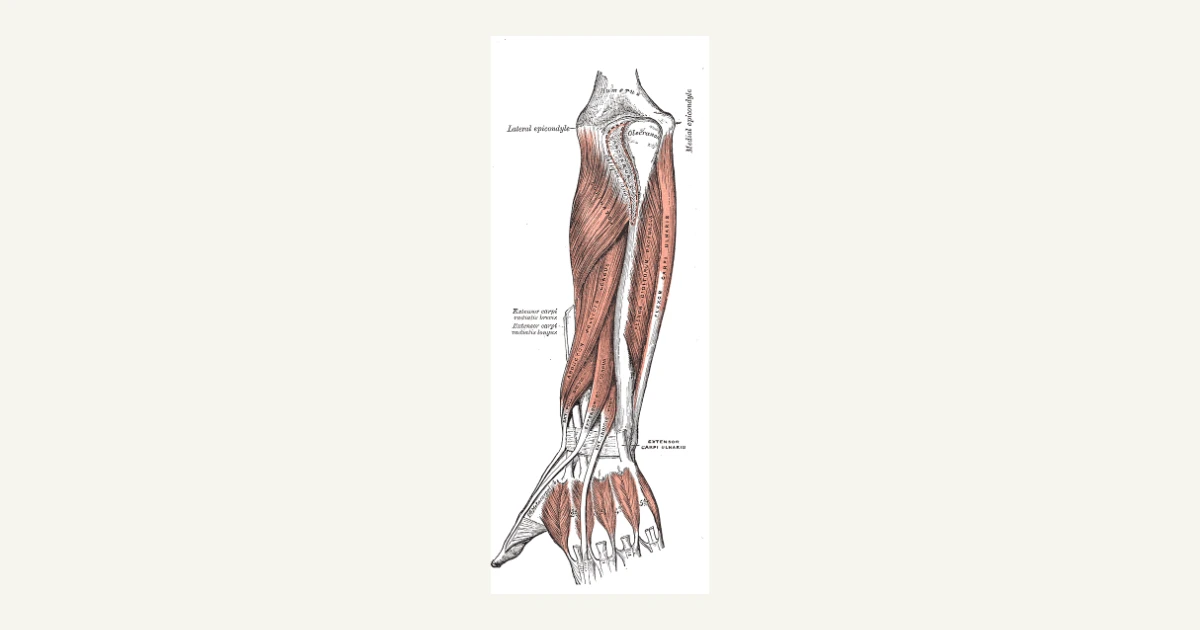
The most common adult elbow fracture is a break at the top of the forearm bone, the radial head, usually from a fall onto an outstretched hand. Many are treated without surgery. Some are fixed with screws or a plate, and a few have the radial head replaced. Whichever it was, the problem that follows is the same one: an elbow that will not fully straighten, and a forearm that will not fully turn. This program is run by our hand therapy team.
No referral needed. Every first visit is one 45-minute Assessment & Treatment, $230, nett, no GST. Bring your X-ray report or operation note.
Where are you right now?
Four situations we see
- You were told it is a small crack and to move it as pain allows. That instruction is the treatment. The work now is making sure “as pain allows” does not quietly become “not at all”.
- You are in a sling or splint after surgery. The surgeon’s protocol sets what moves and when. Shoulder, wrist and fingers are the work you can do today, and they stiffen faster than people expect.
- It has been eight weeks and you still cannot straighten it. This is the most common reason people find us. It is measurable in degrees, and it is usually soft tissue, not bone.
- You cannot turn your palm up to take change, or carry a bag on that side. Forearm rotation and grip are tested separately from bending, and they recover on their own schedule.
Why the elbow is different
“Why can’t I straighten my arm?”
Short answer: after a fracture, the elbow’s joint capsule and the muscles in front of it tighten quickly when the arm is held bent, and the elbow is one of the joints most prone to stiffness after injury. A loss of the last 10 to 30 degrees of straightening is common in the first months. Most of it is soft tissue, which is what therapy works on. A hard, bony block is different, and is your surgeon’s question.
A sling holds the elbow at a right angle, which is comfortable and exactly the position it then wants to stay in. The arm feels fine for daily life at first, because most of what you do happens with the elbow bent. Then you reach across a table, or try to carry a bag with a straight arm, and find out what is missing.
Range is measured in degrees with a goniometer, both ways and for forearm rotation. For context, most daily tasks need roughly 30 to 130 degrees of bending and about 50 degrees of rotation each way (Morrey and colleagues, Journal of Bone and Joint Surgery, 1981, volume 63, page 872). Your own other arm is the comparison that matters, and the number tells you more than how it feels on the day.
Usually expected, and what is not
Is this normal after an elbow fracture?
Usually expected
- Swelling and bruising that track down the forearm toward the wrist in the first two weeks.
- An elbow that will not fully straighten when the sling comes off.
- Aching at the end of the day, and stiffness first thing in the morning.
- A clicking sensation as range comes back, without pain or locking.
Go to the emergency department now if pain is severe and getting worse despite painkillers, it hurts to have the fingers gently straightened, the forearm feels tight and swollen, or the hand turns pale, cold or numb, particularly in the first days after the injury, surgery or a cast. Pressure building inside the forearm is an emergency. Go now too if the elbow looks out of shape after a clunk.
See a doctor the same day
- Wound discharge, spreading redness or fever after surgery.
- A new inability to move the fingers or thumb properly.
See a doctor soon
- Range that was improving and has stopped, with a hard end to the movement rather than a stretchy one.
- Tingling or numbness in the ring and little fingers. The ulnar nerve runs right behind the elbow.
- A clunk or a feeling that the elbow is giving way.
- Pain at the wrist on the little-finger side, especially when turning the forearm.
If it is not going to plan
Eight weeks after an elbow fracture and still bent? What that usually means
You were told the bone has healed. You still push open doors with the other arm. Your palm will not turn up flat to take change at the counter, so you take it with the other hand and hope no one notices.
Healed bone and a working elbow are two separate findings. Waiting for the arm to loosen up on its own is the common plan, and a stiff elbow does not reliably do that. It is treated with sustained, measured stretch: the right exercises, and where needed a splint your therapist makes that holds the elbow at the end of its range for longer than you can.
The Stalled Recovery Review is three appointments over three weeks with the same therapist, because what a stiff joint does under sustained load cannot be read in one visit. The first measures range and finds what is limiting it. The next two measure how it responds. $690, nett, no GST.
The shape of it
What happens, week by week
Small, undisplaced radial head fractures usually start moving within days. Fractures fixed with surgery follow the surgeon’s protocol, which may protect the elbow for longer. The weeks below are the common shape. Your surgeon’s protocol takes precedence.
- Weeks 0 to 2Stage 1 · Calm & ProtectSling for comfort or protection, swelling controlled, shoulder, wrist and fingers kept moving, and gentle elbow movement as your doctor allows.
- Weeks 2 to 6Stage 2 · Move & MobilizeOut of the sling for most tasks, bending, straightening and forearm rotation worked several times a day, and a splint where range is not moving.
- Weeks 6 to 12Stage 3 · Rebuild & StrengthenGrip, forearm and upper arm strength once your surgeon confirms healing, and the last degrees of straightening.
- Months 3 to 6Stage 4 · Return & PerformLifting, carrying, pushing up from a chair, work tasks and sport.
The weeks are typical ranges, not a promise. You move up a stage when you meet its criteria, and your surgeon’s protocol takes precedence over anything on this page.
The program
The four stages, and what moves you up
- Stage 1, Calm & Protect. The fracture protected exactly as your doctor instructed, swelling controlled, and every joint that is allowed to move kept moving.
Move up when: your doctor allows active elbow movement, swelling is settling, and shoulder, wrist and finger range are full. - Stage 2, Move & Mobilize. Bending, straightening and rotation, measured in degrees at every review. Splinting where range has stopped moving.
Move up when: range is measured against the other arm and is at least the functional arc, about 30 to 130 degrees of bending and 50 degrees of rotation each way, or your therapist records why your target differs, and your surgeon has confirmed healing. - Stage 3, Rebuild & Strengthen. Grip and arm strength, loaded progressively once healing is confirmed.
Move up when: grip strength is measured on both hands and is approaching the other side, and you can carry a full kettle with a straight arm without pain. - Stage 4, Return & Perform. The demands of your work, home and sport, rehearsed and tested.
Graduate when: the tasks you named at your first appointment are tested and done, and range and grip are recorded against the other arm.
Measured at your first appointment and again at graduation: a short arm function questionnaire (QuickDASH), elbow and forearm range in degrees on both arms, and grip strength in kilograms on both hands once healing allows.
Logistics
When can I…
Your surgeon or doctor decides, based on the fracture and what your job demands. These are typical points, not permissions.
| Activity | Typical point | What has to be true first |
|---|---|---|
| Type and use a mouse | 1 to 2 weeks | Swelling settling, and your doctor has not asked you to keep the elbow still. |
| Drive | 4 to 8 weeks | Out of the sling, able to grip the wheel and turn it fully with both hands in an emergency. Check your insurer. |
| Carry shopping on that side | 6 to 10 weeks | Healing confirmed, and Stage 3 has started. |
| Push-ups, gym and racquet sport | 3 months or later | Stage 4 criteria met, and your surgeon’s clearance. |
| Medical certificate | Your doctor issues it | Therapists do not issue MCs. We can write a report on your functional limits for your doctor or employer. |
Who you will see
The hand therapy team that runs this program
Hand, wrist and elbow cases are managed by the hand therapy team. You are matched to the therapist whose declared clinical interest fits what happened to you and the clinic that suits you, and you stay with the same therapist through the program. Every appointment is one to one with your therapist for the full 45 minutes. All are registered with the Allied Health Professions Council.
Principal Hand Occupational Therapist. Wrist fractures, TFCC and wrist ligament injuries, custom splinting.
Tanjong Pagar

Principal Hand Occupational Therapist. Stiffness and scar tightness after hand or wrist surgery.
Orchard, Sundays

Principal Hand Occupational Therapist. Carpal and cubital tunnel, sports wrist and finger injuries, tennis elbow.
What our patients say
Google reviews from our clinics in Singapore.


Orchard, Serangoon, Tampines

Principal Hand Occupational Therapist. Finger and wrist fractures, De Quervain’s, wrist ligament injuries.
Orchard

Principal Hand Occupational Therapist. TFCC and wrist ligament injuries, trigger finger, thumb and wrist pain after pregnancy.
Jurong East, from 20 October
The program belongs to Phoenix, not to one therapist. Your plan, your measurements and your surgeon’s protocol move with you if you change clinic.
What it costs
$230 per 45-minute appointment, nett, no GST
One to one with your therapist for the whole 45 minutes. Nett, no GST. Same price for your first appointment and your last. The Elbow Fracture Recovery Program is set at 12 appointments across Stages 1 to 4, $2,760 in all. Your therapist confirms your plan at your first visit, and you pay for each appointment as you attend it. Splints are charged separately.
This program runs Stages 1 to 4 of the Phoenix Recovery Protocol, and sits under hand therapy after surgery alongside the rest of our recovery programs.
Prefer to phone? Each of our five clinics has its own number on the clinics page. No referral needed to book.
Related reading
- Elbow dislocation
- Humerus fracture, if the break was higher up the arm
- Wrist Fracture Recovery Program, the same fall often breaks the wrist
- Elbow physiotherapy
- The Phoenix Recovery Protocol, and the four stages
Timeframes on this page are typical ranges, not promises. Where your surgeon has given you a protocol, that protocol takes precedence over anything written here.
Where we are
Clinics across Singapore
ORCHARD
400 Orchard Road #12-12
Orchard Towers, S238875
NS22 Orchard MRT
Physiotherapy and hand therapy in Orchard →
WhatsApp 8800 1830TAMPINES
9 Tampines Grande #01-20
Asia Green, S528735
EW2DT32 Tampines MRT
Physiotherapy and hand therapy in Tampines →
WhatsApp 8780 9608SERANGOON
265 Serangoon Central Drive #04-269
S550265 · Lift C only
NE12CC13 Serangoon MRT
Physiotherapy and hand therapy in Serangoon →
WhatsApp 8892 4121TANJONG PAGAR
10 Anson Road #02-77A
International Plaza, S079903
EW15 Tanjong Pagar MRT
Physiotherapy and hand therapy in Tanjong Pagar →
WhatsApp 8227 7074JURONG EAST
2 Venture Drive #02-02
Vision Exchange, S608526
NS1EW24 Jurong East MRT
Opening 20 October 2026
Physiotherapy and hand therapy in Jurong East →
WhatsApp 8242 7340