
Written by Zita Sham, Fairuuz Saleh and Shiv Mohan Banka, Principal Physiotherapists at Phoenix Rehab.Clinically reviewed by Louise Yow, Principal Physiotherapist & Director, AHPC A1300363H.Last reviewed 28 September 2026.
Multiple ankle sprains or injuries usually cause ankle instability. It can eventually lead to other issues, from a wobbly feeling in the ankle to difficulty walking on uneven terrain.
Before you can determine the cause of ankle instability, you’ll need to discuss your symptoms. Some describe it as “looseness” or as if your ankles are “giving out.” This can point out the root cause. For example, a recurrent ankle sprain may suggest chronic instability, while swelling and pain after an acute injury could indicate a damaged ligament or partial tearing of the lateral ankle ligaments.
In this guide, we’ll understand these patterns, diagnoses, and treatment options, including conservative and non-conservative procedures. We’ll also explore ways to manage this condition and learn more about recovery.

What Is Ankle Instability?
Ankle instability occurs when the ankle joint becomes unstable, making it prone to giving way, especially when walking or running. This instability is often caused by damaged ligaments that fail to provide adequate support. The condition can lead to difficulty with balance, increasing the risk of recurrent ankle sprains and further injuries.
Some people can experience this “looseness” in multiple joints due to genetics. This makes them prone to injuries, joint pain, and conditions like osteoarthritis due to the added strain on their joints and ligaments.
What Is Chronic Ankle Instability?
Chronic ankle instability refers to ongoing ankle instability, typically following multiple ankle sprains. Around 3 in 10 acute ankle sprain patients develop lateral ankle instability, while patients with postural imbalance or higher-grade sprains develop chronic ankle instability.
Over time, repeated injuries weaken the ligaments around the ankle joint, leading to chronic problems. People with chronic ankle instability may feel like their ankle is constantly at risk of rolling, especially during physical activities.
What Structures Are Involved in Ankle Instability?
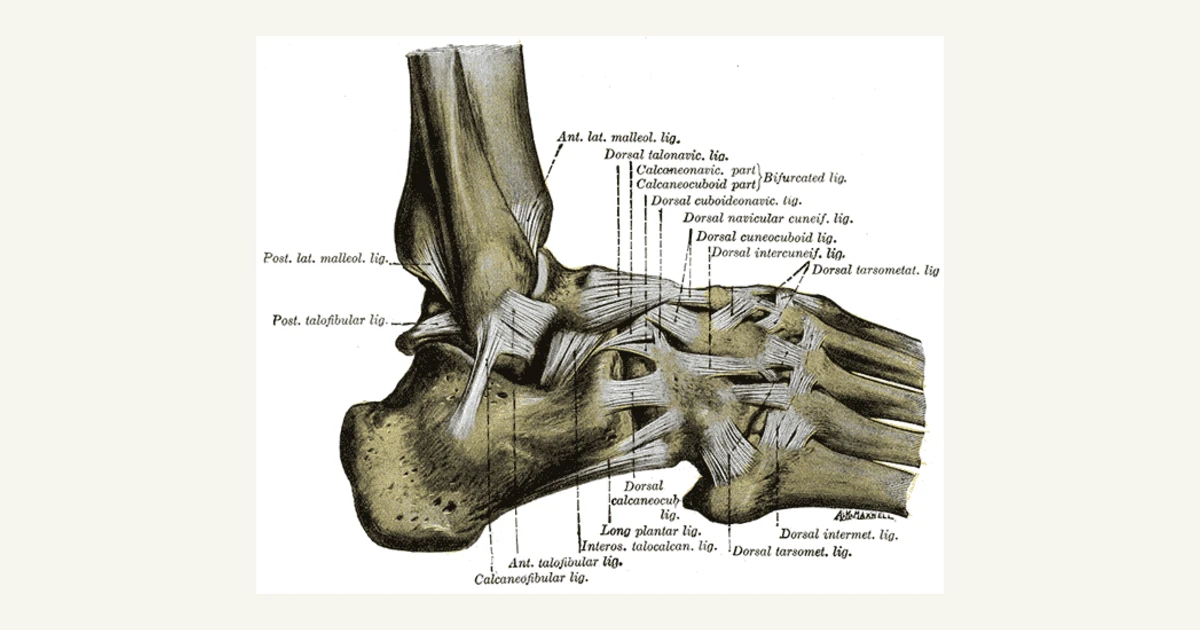
Several key structures in the ankle contribute to stability. These lateral ligaments include the following:
- Anterior talofibular ligament (ATFL). The weakest ligament in the lateral ankle complex, and is the most commonly injured ligament in ankle sprains.
- Calcaneofibular ligament (CFL). The primary ligament that stabilizes the ankle against forced inversion. It’s more commonly injured in dorsiflexion and inversion mechanisms.
- Posterior talofibular ligament (PTFL). The least commonly injured ligament in the lateral ankle complex.
They work together to prevent excessive movement, resist inversion (rolling outward), and support the foot during weight-bearing activities. Damage to these ligaments, especially after ankle sprains, can lead to lateral ankle instability.
Ankle sprains are one of the most common musculoskeletal and sports-related injuries. About 40 to 50% of ankle sprains have long-term residual symptoms, and almost 20% develop chronic ankle instability.
Who Is More Likely To Develop Ankle Instability?
Certain groups of people are more likely to experience ankle instability. These include athletes, individuals with a history of repetitive ankle sprains, and those with ligamentous laxity (loose ligaments).
The following group also manifests an increased risk of developing ankle instability:
- People with high arches (because it’s easier to turn their ankles)
- Women who wear high heels
- Males between the ages of 15 and 24
- Females between the ages of 30 and 99
Ankle Instability Causes
Weakened ligaments around the ankle bones largely cause ankle instability. This is usually the result of one or more ankle sprains that didn’t heal properly. It can also stem from ligament damage following acute ankle sprains.
When the ligaments supporting the ankle joint become overstretched or torn, they may not heal properly, leading to a weakened and unstable ankle. Recurrent ankle sprains worsen the condition, as each injury causes further ligament damage. Over time, this leads to mechanical instability, where the ankle joint loses its structural support.
Other contributing factors include:
- Proprioceptive deficits: The body’s inability to sense the position of the ankle in space can lead to functional ankle instability.
- Cartilage damage: Repeated injuries can lead to joint wear and tear, sometimes progressing to ankle arthritis.
- Lower leg muscle weakness: Weak muscles around the ankle fail to stabilize the joint during movement.
Ankle Instability Symptoms
As the ankle ligaments become chronically damaged, the ankle bones may move excessively with daily activities. Downhill walking can be especially painful. Other symptoms of ankle instability include:
- A sensation of the ankle giving way or rolling inwards
- Recurrent ankle sprains involve minimal provocation
- Pain, tenderness, or swelling on the outside of the ankle
- Limited range of motion and difficulty walking on uneven ground
- A feeling of wobbliness or weakness in the ankle
- Weakness, stiffness, or discomfort in the ankle joint
How Is Ankle Instability Diagnosed?
Diagnosing ankle instability requires a thorough clinical exam by a healthcare professional, often an orthopedic specialist or physical therapist.
During the physical exam, tests like the anterior drawer and talar tilt may be performed to assess ligament laxity. Gait and hindfoot assessment is usually a starter. If the assessor finds an increased inversion laxity or chronic pain localised by palpation, it is likely that there is damage to either the ATFL or CFL.
Imaging studies, including stress radiographs, magnetic resonance imaging (MRI), and stress X-rays, help to visualise ligament damage, joint alignment, and any potential cartilage issues.
A clinical diagnosis based on patient history and these assessments confirm ankle instability. MRIs alone do not diagnose ankle instability.
Treatment for Ankle Instability
The most obvious presentation of ankle instability is a history of multiple ankle sprains. Treatment for this condition, especially for chronic ankle instability, may be addressed more seriously. However, if you sprained or hurt your ankle recently due to certain activities, treatment may be more conservative such as physiotherapy for ankle sprain.
Non-Surgical Treatment
Most patients with ankle instability benefit from nonsurgical treatment. Methodologies focus on improving the strength, stability, and function of the ankle.
Physical therapy is a key component in managing ankle instability. A physical therapist will guide you through exercises that focus on strengthening the muscles surrounding the ankle joint and improving proprioception (the body’s sense of joint position). Some of the main exercises include:
- Balance training (improve stability and ankle control)
- Range of motion exercises (improve flexibility and reduce stiffness in the ankle joint)
- Strengthening exercises (build muscles of the lower leg, which provide support to the ankle and help resist inversion)
How Physiotherapy Helps
Physiotherapy can indeed treat ankle instability. It helps to rebuild strength, mobility, and stability to the injured ankle. A structured physiotherapy program targets the underlying causes of the instability, such as muscle weakness, ligament laxity, and proprioceptive deficits, while also working to prevent further injuries.
In Singapore, Phoenix Rehab tailors a personalised plan for treating bone, muscle, joint, and tendon pain and injuries. One of the primary goals of physiotherapy is to strengthen the muscles surrounding the ankle joint, especially those in the lower leg. The end goal is to gradually return the patient to their pre-injury level of function with improved ankle strength and stability.
Surgical Treatment
Surgical intervention may be necessary for patients who do not respond to non-surgical treatment. Surgical procedures typically involve repairing or reconstructing the damaged ligaments, such as the anterior talofibular ligament or calcaneofibular ligament.
Ankle surgeons may perform ligament repair or reconstruction, depending on the extent of the injury. Stress radiographs and MRIs are often used before surgery to assess the need for surgical repair.
Recovery Period for Ankle Instability Surgery
The recovery period for ankle instability surgery varies based on the procedure performed. Most patients will require several weeks of immobilization in a cast or brace, followed by gradual weight-bearing and rehabilitation. Full recovery can take anywhere from 2 to 3 months, with the initial few weeks involving non-weight bearing in a cast or boot.
This stage is then followed by the physical therapy stage (after initial immobilization) to regain range of motion and strength, and gradual return to normal activities over several more weeks.
Full recovery and return to high-impact sports may take up to a year depending on the severity of the injury and individual healing process.
How Can You Manage Ankle Instability?
Managing ankle instability involves a combination of preventive strategies and proper treatment. Management techniques and initiatives include:
- Resting the ankle and keeping weight off it
- Icing the ankle for 15 to 20 minutes, three times a day
- Wearing supportive shoes or footwear
- Using an ankle brace during activities
- Pain relief and anti-inflammatory medication are a decision for your doctor or pharmacist.
Physical therapy and proprioceptive training are key components in preventing further injuries and improving ankle stability.
What our patients say
Google reviews from our clinics in Singapore.


Conclusion
Ankle instability is a condition that often results from repeated ankle sprains and damaged ligaments. It can lead to significant discomfort and impaired mobility if left untreated. Recognizing the causes, symptoms, and treatment options, whether non-surgical or surgical, is essential for regaining ankle stability. With proper treatment and preventive measures, most people can manage ankle instability effectively and avoid further injuries.
Where are you with this right now?
1. It is settling on its own
Foot and ankle problems are slow but usually very treatable. Months rather than weeks is normal, and improvement is judged over a month, not a day. If the first steps in the morning are easier than they were four weeks ago, you are on the right road. You do not need us for this, and we would rather say so.
2. It has stopped improving
The first ten steps out of bed are still the worst part of the day. You choose shoes by how long you will be standing. You still look at the ground when you walk.
Symptoms settle well before the tissue has rebuilt its capacity, which is why stopping the loading work early is the most common reason this drags on for years. That is the gap worth measuring, and it is not measured by how you feel on the day.
The Stalled Recovery Review is three appointments over three weeks with the same therapist, because what a joint does under load cannot be read in one visit. The first finds what is limiting it. The next two measure how it responds. $690, nett, no GST, which is three appointments at $230.
3. You have had surgery, or you have a date
Recovery after an operation has a shape, and knowing which stage you are in tells you whether you are on it. See the recovery programs, or ankle physiotherapy if you are not sure which applies to you.
All of it runs on the same four stages. The Phoenix Recovery Protocol explains what each stage works on and what you have to meet to move up. No referral needed to start.
Next step
Find out which stage you are in
Pain is the first thing to leave. Movement and strength are the last things trained back, and most people stop before that part is done. One Assessment and Treatment is a single 45-minute appointment at $230, nett, no GST. Your therapist finds what is actually limiting you, treats it in the same appointment, and you leave with your current stage and a written plan.
Prefer to phone? Each of our five clinics has its own number on the clinics page. No referral needed to book.
Related reading
Where we are
Clinics across Singapore
ORCHARD
400 Orchard Road #12-12
Orchard Towers, S238875
NS22 Orchard MRT
Physiotherapy and hand therapy in Orchard →
WhatsApp 8800 1830TAMPINES
9 Tampines Grande #01-20
Asia Green, S528735
EW2DT32 Tampines MRT
Physiotherapy and hand therapy in Tampines →
WhatsApp 8780 9608SERANGOON
265 Serangoon Central Drive #04-269
S550265 · Lift C only
NE12CC13 Serangoon MRT
Physiotherapy and hand therapy in Serangoon →
WhatsApp 8892 4121TANJONG PAGAR
10 Anson Road #02-77A
International Plaza, S079903
EW15 Tanjong Pagar MRT
Physiotherapy and hand therapy in Tanjong Pagar →
WhatsApp 8227 7074JURONG EAST
2 Venture Drive #02-02
Vision Exchange, S608526
NS1EW24 Jurong East MRT
Opening 20 October 2026
Physiotherapy and hand therapy in Jurong East →
WhatsApp 8242 7340