
Written by Zita Sham, Fairuuz Saleh and Shiv Mohan Banka, Principal Physiotherapists at Phoenix Rehab.Clinically reviewed by Louise Yow, Principal Physiotherapist & Director, AHPC A1300363H.Last reviewed 28 September 2026.
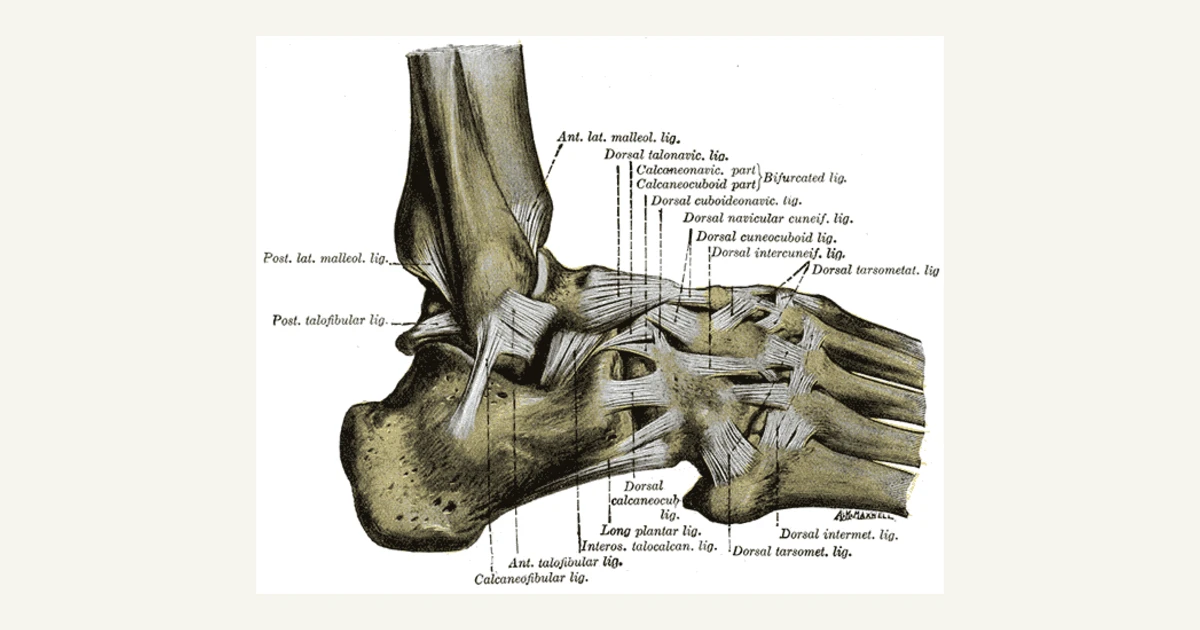
Ankle tenosynovitis is the sheath around a tendon becoming irritated, not the ankle joint itself. That distinction matters, because it changes where it hurts, what makes it worse, and what fixes it. Joint problems hurt on weight bearing. Sheath problems hurt when the tendon slides.
Almost every case we see follows a change in load rather than an injury. New shoes, a new route, more distance, a return after a break, a job that suddenly involves more standing. The tendon was coping with what it was asked to do, and then it was asked for more.
Which tendon, and why it matters
Four groups run past the ankle in their own sheaths, and each produces a different pattern.
| Tendon | Where it hurts | What makes it worse |
|---|---|---|
| Posterior tibial, inner ankle behind the bony bump | Inside of the ankle, sometimes tracking into the arch | Standing, walking on uneven ground, a single-leg heel raise |
| Peroneal, outer ankle behind the bony bump | Outside of the ankle, sometimes down towards the little toe side of the foot | Turning the foot outwards against resistance, walking on slopes |
| Extensor, front of the ankle | Across the front, under where laces sit | Tight laces, uphill walking, pulling the toes up |
| Flexor hallucis longus, deep and inner | Behind the inner ankle, sometimes with a big toe that catches | Pushing off, rising onto the toes. Common in dancers |
If you can point to one line of tenderness that follows the tendon rather than one spot on a bone, that is the sheath. If it creaks or squeaks under your fingers as you move the foot, that is close to diagnostic.
What it is not
Three things get called ankle tenosynovitis and are not.
- A stress fracture. Pain over one small spot on a bone, worse with each run, sore at night, in someone who recently increased mileage. That needs imaging, not loading. See a doctor.
- Tarsal tunnel syndrome. Burning, pins and needles or numbness into the sole rather than aching along a tendon. Nerve, not sheath.
- Inflammatory arthritis. Several joints involved, morning stiffness lasting more than an hour, swelling without a load change, or a family history. That needs a doctor and blood tests, and tenosynovitis at the ankle is sometimes its first sign.
Is this normal?
Usually expected
- Worse at the start of activity, easing as you warm up, then sore again afterwards.
- Some swelling along the line of the tendon that settles overnight.
- Stiffness first thing in the morning that loosens within ten or fifteen minutes.
- Aching for a few hours after a appointment that has gone up in load, settling by the next morning.
See a doctor
- An ankle that becomes hot, red and increasingly painful, with or without a fever.
- A sudden pop with an inability to push off or rise onto the toes, which raises a rupture.
- Numbness, burning or pins and needles into the foot.
- Pain that is worse at rest and at night rather than with activity.
- Swelling with no change in activity, in several joints, or with morning stiffness lasting over an hour.
What actually settles it
Not rest. Complete rest removes the symptom and reduces what the tendon can carry, so the first return to normal activity finds exactly the same ceiling. What changes it is a temporary reduction in the aggravating load, then a progressive increase past where it was before.
- Change the load, do not remove it. Reduce the specific thing that provokes it, keep everything else.
- Isometric holds first. A tendon sheath tolerates a held contraction long before it tolerates repeated movement, so this is where loading starts.
- Then progressive strength through range, aimed at the specific tendon. Posterior tibial work is not peroneal work.
- Calf capacity. Counted single-leg heel raises are the number that tracks progress in most ankles. Most people with chronic ankle pain manage a fraction of what they should on the sore side and have never been told.
- Fix the input. Lacing, shoe drop, the surface, the volume step-up. An insole may help distribute load while the strength is built, but it does not build the strength.
Tips for when you are at home
- Loosen your laces over a sore extensor tendon, and skip the eyelet that sits over the painful spot entirely.
- Elevate at the end of the day if it swells. Above the level of your heart, not just up on a stool.
- Judge every increase by the next morning, not by how it feels during. Sore during and settled by morning is progress. Still sore the next day means the step was too big.
- Keep walking. A foot that stops moving stiffens, and stiffness is a second problem on top of the first.
Four months on and it still flares every time you go back
This is the common arrival point and it is almost always a capacity problem rather than a stubborn inflammation. The tendon was rested, the symptom went, nothing was loaded, and the return was to the same volume that caused it.
Heel raise count, side to side, and strength in the specific direction the tendon works, are numbers. Until someone has taken them, plateaued is an impression. The Stalled Recovery Review is three appointments over three weeks with the same physiotherapist, $690 nett, no GST, and the first one is where those numbers get taken.
An Assessment and Treatment is one 45 minute appointment at $230 nett, no GST, one to one with your physiotherapist for the whole time. See ankle pain physiotherapy for the wider picture, posterior tibial tendon dysfunction if the inside of the ankle is the problem, and peroneal tendon injury if it is the outside.
Where are you with this right now?
1. It is settling on its own
Foot and ankle problems are slow but usually very treatable. Months rather than weeks is normal, and improvement is judged over a month, not a day. If the first steps in the morning are easier than they were four weeks ago, you are on the right road. You do not need us for this, and we would rather say so.
2. It has stopped improving
The first ten steps out of bed are still the worst part of the day. You choose shoes by how long you will be standing. You still look at the ground when you walk.
Symptoms settle well before the tissue has rebuilt its capacity, which is why stopping the loading work early is the most common reason this drags on for years. That is the gap worth measuring, and it is not measured by how you feel on the day.
The Stalled Recovery Review is three appointments over three weeks with the same therapist, because what a joint does under load cannot be read in one visit. The first finds what is limiting it. The next two measure how it responds. $690, nett, no GST, which is three appointments at $230.
3. You have had surgery, or you have a date
Recovery after an operation has a shape, and knowing which stage you are in tells you whether you are on it. See the recovery programs, or ankle physiotherapy if you are not sure which applies to you.
All of it runs on the same four stages. The Phoenix Recovery Protocol explains what each stage works on and what you have to meet to move up. No referral needed to start.
Next step
Find out which stage you are in
Pain is the first thing to leave. Movement and strength are the last things trained back, and most people stop before that part is done. One Assessment and Treatment is a single 45-minute appointment at $230, nett, no GST. Your therapist finds what is actually limiting you, treats it in the same appointment, and you leave with your current stage and a written plan.
What our patients say
Google reviews from our clinics in Singapore.



Prefer to phone? Each of our five clinics has its own number on the clinics page. No referral needed to book.
Related reading
Where we are
Clinics across Singapore
ORCHARD
400 Orchard Road #12-12
Orchard Towers, S238875
NS22 Orchard MRT
Physiotherapy and hand therapy in Orchard →
WhatsApp 8800 1830TAMPINES
9 Tampines Grande #01-20
Asia Green, S528735
EW2DT32 Tampines MRT
Physiotherapy and hand therapy in Tampines →
WhatsApp 8780 9608SERANGOON
265 Serangoon Central Drive #04-269
S550265 · Lift C only
NE12CC13 Serangoon MRT
Physiotherapy and hand therapy in Serangoon →
WhatsApp 8892 4121TANJONG PAGAR
10 Anson Road #02-77A
International Plaza, S079903
EW15 Tanjong Pagar MRT
Physiotherapy and hand therapy in Tanjong Pagar →
WhatsApp 8227 7074JURONG EAST
2 Venture Drive #02-02
Vision Exchange, S608526
NS1EW24 Jurong East MRT
Opening 25 October 2026
Physiotherapy and hand therapy in Jurong East →
WhatsApp 8242 7340