
Hand therapy after surgery · Singapore
Dupuytren’s Contracture Recovery Program
Written by Mavis Tham, Shamaine Soh and Yuna Zhuang, Principal Hand Occupational Therapists at Phoenix Rehab.Clinically reviewed by Nigel Chua, Principal Hand Occupational Therapist & Director, AHPC A1300362Z.Last reviewed 3 October 2026.
The cord is removed in an hour. The skin and the joint it has been pulling on for years take considerably longer to agree.
Dupuytren’s is a thickening of the tissue in the palm that gradually pulls a finger down. Surgery or a needle procedure releases the cord. What happens in the weeks after decides how much of the straightening you keep. Hand and wrist cases are managed by our hand therapy team.
No referral needed. Every first visit is one 45-minute Assessment & Treatment, $230, nett, no GST. Bring your operation note or scan report.
Where are you right now?
Four situations we see
- You have a cord and you are deciding. The table top test is the usual marker, which is whether you can lay the hand flat on a table. Therapy does not dissolve a cord, and anyone telling you otherwise is selling something.
- Surgery or needle release is booked. A splint is usually made within days of the procedure, and knowing that in advance saves a week.
- You are in the first six weeks after release. Wound, swelling, splint and range, in that order, and the night splint is the part people quietly stop wearing.
- The finger is drifting back down. Some loss of correction is common. How much, and whether it is skin, joint or recurrence, is measurable.
What the surgery can and cannot give back
A joint that has been bent for years does not straighten just because the cord is gone
The cord is only one of the things holding the finger down. When a finger, particularly the little finger, has been held bent for a long time, the joint capsule, the skin and the structures either side of the joint shorten to match. Releasing the cord removes the pull. It does not lengthen everything that has adapted to it.
This is why the middle joint of the finger, the PIP, is the one that disappoints people. The knuckle usually corrects well. The PIP often does not correct fully, and the longer and more severely it was bent before surgery, the less of it comes back. That is a fact about the joint, not about the surgeon and not about how hard you work afterwards.
It is also why the night splint matters more than it seems to. The correction achieved in theatre is held by the splint while the tissue accepts the new length, and the tissue is at its most willing in the first weeks.
Usually expected, and what is not
Is this normal after release?
The hand looks worse before it looks better, and most of that is expected.
Usually expected
- A palm that is swollen, bruised and tender for two to three weeks.
- Open areas left deliberately to heal from the base, if you had an open palm technique. They are slow and they are supposed to be.
- Numbness along the side of the finger that settles over weeks.
- A firm, ridged scar that softens over months with scar work.
Contact your surgeon or doctor
- A finger that is white, dusky or cold after the dressing is applied.
- Spreading redness, discharge or fever.
- Pain that is escalating rather than settling after the first few days.
- Complete numbness of the whole finger that is not improving at all.
If you have sudden severe pain with a hand or arm that is cold, white or losing sensation, or you are unwell with fever and a hot swollen wound, that is an emergency department today, not a therapy appointment.
If it is not going to plan
Eight weeks on and the finger is curling again
There are three different things that look identical from the outside. Skin and scar tightening across the palm. A stiff PIP joint that never fully corrected. And actual recurrence of the disease, which is a different conversation and belongs with your surgeon.
Telling them apart takes a measurement of passive and active range at each joint and a look at what the scar does when the finger is straightened. It is the difference between a splinting and scar problem, which is ours, and a surgical one, which is not.
The Stalled Recovery Review is three appointments over three weeks with the same therapist, because what tissue does under graded work cannot be read in one visit. $690, nett, no GST.
The shape of it
What happens, week by week
The release takes about an hour. The finger takes around three months to settle into its new position, and night splinting often goes on longer. The weeks below are the common shape after a fasciectomy; a needle release usually moves faster. Your surgeon’s protocol takes precedence.
- Weeks 0 to 2Stage 1 · Calm & ProtectDressing and wound care, swelling managed, and a night splint made to hold the finger straight. Gentle bending and straightening as your surgeon allows.
- Weeks 2 to 6Stage 2 · Move & MobilizeScar work once the wound has closed, active straightening and a full fist, and the splint adjusted as the finger straightens.
- Weeks 6 to 12Stage 3 · Rebuild & StrengthenGrip and hand use built up. The night splint usually continues.
- Months 3 to 6Stage 4 · Return & PerformFull use, with the splint weaned as your therapist advises. Reviews spaced out to check that the straightening is holding.
The weeks are typical ranges, not a promise. You move up a stage when you meet its criteria, and your surgeon’s protocol takes precedence over anything on this page.
The program
The four stages, and what moves you up
- Stage 1, Calm & Protect. Wound care alongside your surgical team, swelling management, and a custom splint made to hold the correction you were given. Night splinting starts here.
Move up when: the wound has closed or nearly closed, the splint fits without pressure marks, and swelling is settling. - Stage 2, Move & Mobilize. Range at each joint separately, scar mobilization once the wound allows, and tendon glide. Criteria to move up are about passive and active range matching, not about the scar looking neat.
Move up when: the straightening measured at the knuckle and the middle joint holds from one review to the next, and the fingertip reaches the palm. - Stage 3, Rebuild & Strengthen. Grip returned, and the hand asked to hold, carry and grasp objects of different sizes rather than just to close.
Move up when: grip is measured and rising, and the straightening has not slipped back after daytime use. - Stage 4, Return & Perform. Tools, keyboard, steering wheel, golf club. Night splinting often continues past this point, and your therapist will say for how long.
Graduate when: the straightening, in degrees, is the same at two reviews with the night splint reduced, and grip meets what your tasks need.
Measured at your first appointment and again at graduation: a hand function questionnaire, how far the finger straightens at each joint in degrees, and how close the fingertip comes to the palm in a fist, in centimeters.
Logistics
When can I…
Your surgeon decides, based on healing and what your job demands. These are typical points, not permissions.
| Activity | Typical point | What has to be true first |
|---|---|---|
| Desk work | 1 to 2 weeks | Wound comfortable. After a needle release, often within days. |
| Driving | 2 to 3 weeks | A grip on the wheel you trust. Check with your surgeon and insurer. |
| Getting the hand wet | When the wound has healed | Usually once the stitches are out. |
| Heavy grip, tools | 4 to 6 weeks | The wound has healed and the finger is holding its straightening. |
| Night splint | Often 3 to 6 months | Worn for as long as the finger tends to pull back down overnight. |
| Medical certificate | Your doctor issues it | Hand therapists do not issue MCs. We can write a report on your functional limits for your doctor or employer. |
Who you will see
The hand therapy team that runs this program
Hand, wrist and elbow cases are managed by the hand therapy team. You are matched to the therapist whose declared clinical interest fits what happened to you and the clinic that suits you, and you stay with the same therapist through the program. Every appointment is one to one with your therapist for the full 45 minutes. All are registered with the Allied Health Professions Council.
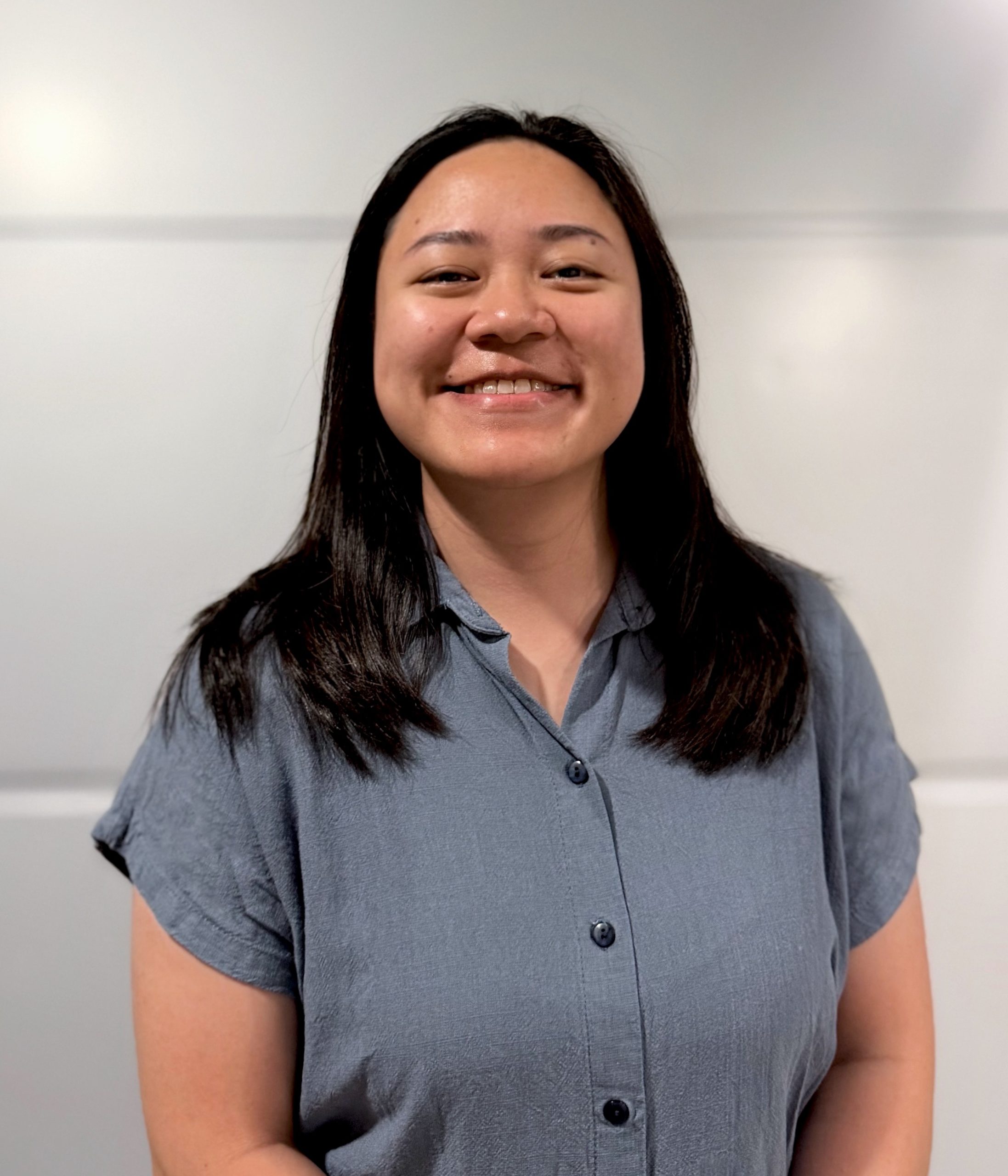
Principal Hand Occupational Therapist. Wrist fractures, TFCC and wrist ligament injuries, custom splinting.
Tanjong Pagar

Principal Hand Occupational Therapist. Stiffness and scar tightness after hand or wrist surgery.
Orchard, Sundays

Principal Hand Occupational Therapist. Carpal and cubital tunnel, sports wrist and finger injuries, tennis elbow.
What our patients say
Google reviews from our clinics in Singapore.


Orchard, Serangoon, Tampines

Principal Hand Occupational Therapist. Finger and wrist fractures, De Quervain’s, wrist ligament injuries.
Orchard

Principal Hand Occupational Therapist. TFCC and wrist ligament injuries, trigger finger, thumb and wrist pain after pregnancy.
Jurong East, from 25 October
The program belongs to Phoenix, not to one therapist. Your plan, your measurements and your surgeon’s protocol move with you if you change clinic.
What it costs
$230 per 45 minute appointment
One to one with your therapist for the whole 45 minutes. Nett, no GST. Same price for your first appointment and your last. The program is usually weighted towards the first two stages, because that is where the correction is either held or lost. The Dupuytren’s Contracture Recovery Program is 12 appointments, $2,760 in all. You pay for each appointment as you attend it. If you need more, your therapist shows you which stage criteria are still open, and each extra appointment is $230.
This program runs Stages 1 to 4 of the Phoenix Recovery Protocol, and sits under hand therapy after surgery alongside the rest of our recovery programs.
Prefer to phone? Each of our five clinics has its own number on the clinics page. No referral needed to book.
Timeframes on this page are typical ranges, not promises. Where your surgeon has given you a protocol, that protocol takes precedence over anything written here.
Where we are
Clinics across Singapore
ORCHARD
400 Orchard Road #12-12
Orchard Towers, S238875
NS22 Orchard MRT
Physiotherapy and hand therapy in Orchard →
WhatsApp 8800 1830TAMPINES
9 Tampines Grande #01-20
Asia Green, S528735
EW2DT32 Tampines MRT
Physiotherapy and hand therapy in Tampines →
WhatsApp 8780 9608SERANGOON
265 Serangoon Central Drive #04-269
S550265 · Lift C only
NE12CC13 Serangoon MRT
Physiotherapy and hand therapy in Serangoon →
WhatsApp 8892 4121TANJONG PAGAR
10 Anson Road #02-77A
International Plaza, S079903
EW15 Tanjong Pagar MRT
Physiotherapy and hand therapy in Tanjong Pagar →
WhatsApp 8227 7074JURONG EAST
2 Venture Drive #02-02
Vision Exchange, S608526
NS1EW24 Jurong East MRT
Opening 25 October 2026
Physiotherapy and hand therapy in Jurong East →
WhatsApp 8242 7340