
Written by Zita Sham, Fairuuz Saleh and Shiv Mohan Banka, Principal Physiotherapists at Phoenix Rehab.Clinically reviewed by Louise Yow, Principal Physiotherapist & Director, AHPC A1300363H.Last reviewed 28 September 2026.
Someone said the words cartilage damage to you, and the rest of the appointment went a bit blurry.
Then you got home, typed chondromalacia patella into your phone, and found pictures of knees that looked destroyed. Now you are awake at midnight counting how many years of running and stairs you have left.
Take a breath. That word is scarier than the thing it describes.
Here is what our physios at Phoenix Rehab say in the clinic room, usually in the first five minutes. The label describes a finding on the underside of your kneecap. It says nothing about how bad your knee is or what your future looks like. For most people with this diagnosis, the knee is irritated and under-prepared for what is being asked of it. It is not falling apart.
The pain is real. The fear attached to the word is usually bigger. This page separates the two.
What chondromalacia patella actually is
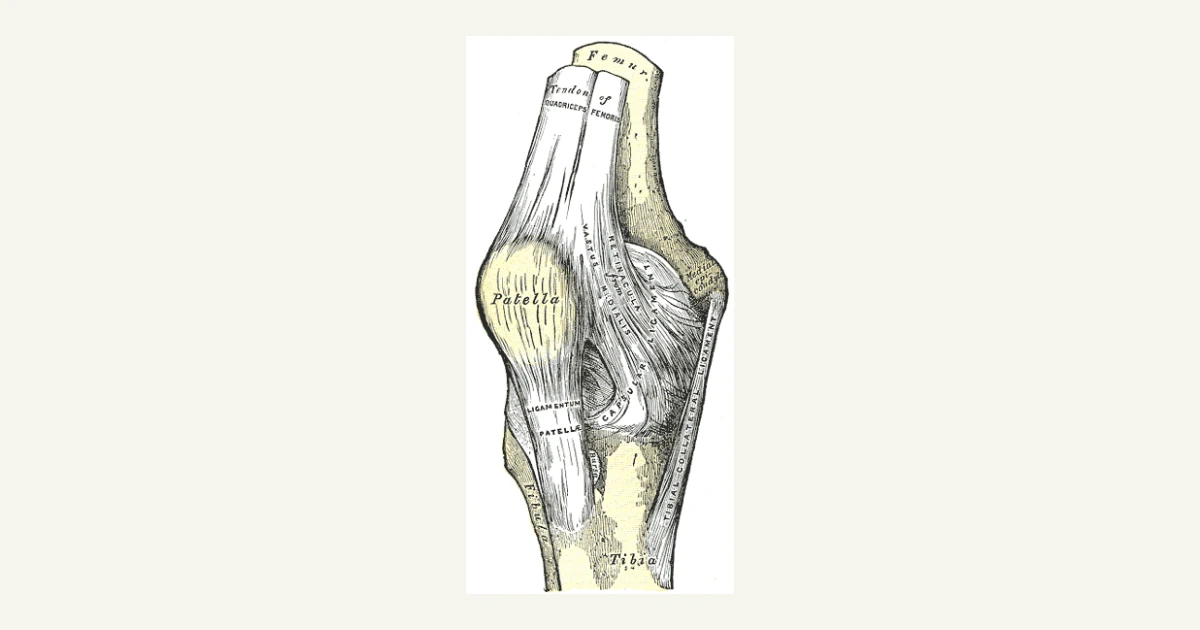
Your kneecap, the patella, sits at the front of your knee inside the tendon of your thigh muscle. Underneath it is a layer of cartilage, the smooth white coating that lets the kneecap glide against the thigh bone as you bend and straighten.
Chondromalacia means softening of that cartilage. So the term means that coating has gone soft or roughened rather than glassy. That is all. It describes a surface, usually seen on a scan.
The kneecap does not float. It runs in a shallow groove at the end of the thigh bone, like a train in a track. Bend the knee under load and it presses into that groove. Go up a step and pressure rises. Go down a step and it rises more, because your thigh muscle works hard while lengthening to lower your body weight.
The front of the knee lives under compression by design. When that compression changes faster than the tissue can adapt, the area gets irritated. That is behind most kneecap pain.
Why the label and the pain often do not match
Cartilage softening under the kneecap is common in people with no knee pain at all. Plenty carry a rough surface and never notice, while people with severe front of knee pain often have a normal-looking scan. The finding and the symptom are only loosely related.
Which is why most clinicians now use a different working term. Patellofemoral pain means pain where the kneecap meets the thigh bone. Patello for kneecap, femoral for thigh bone. It says where it hurts without claiming to know what the cartilage looks like.
Chondromalacia patella is a statement about tissue. Patellofemoral pain is a statement about you. The plan that gets you better is built around the second, because the treatment is identical either way and it is not aimed at cartilage.
How to tell if this is what you have
Look for the shape of your week, not your worst moment.
- Pain at the front of the knee, around or behind the kneecap. Most people cup a hand over the whole kneecap rather than pressing one spot.
- Worse going down stairs than up. The most telling sign of all. Down escalators and overhead bridges bother people more than going up.
- The cinema sign. Sit with the knee bent through a film, a flight or a long meeting and it aches and stiffens. Standing up is the worst moment.
- Worse squatting, kneeling, lunging and running downhill.
- A grinding or creaking feeling under the kneecap.
- Little or no swelling, and pain that builds through activity rather than arriving with one sharp snap.
The noises your knee makes
Almost everyone asks about the grinding. The word for it is crepitus, any crunching or creaking from a joint.
Noise on its own is not damage. Some of the healthiest knees our physios assess sound like a gravel path. Noise without pain is not a problem. Noise with pain means the pain is worth looking at, not the noise.
What it gets confused with
Patellar tendinopathy, or jumper’s knee. Pain sits just below the kneecap on the tendon, with one tender spot you can press. It hates jumping more than stairs and sitting.
Early knee osteoarthritis. More likely from the mid forties, with morning stiffness that lingers, often felt on the inner side rather than the front. Kneecap pain and early wear in the knee joint can overlap.
Iliotibial band syndrome. Pain on the outer side, sharp and predictable at a certain distance into a run. People call both this and patellofemoral pain runner’s knee, which adds to the confusion.
What causes it
Load, most of the time. Not a fault in how you were built.
The old explanation was that the kneecap tracked badly because of a structural problem needing correction. That idea has softened. Some people do have a shallower groove or an off-centre kneecap, and it matters for a minority. For most, the knee was asked to do more than it was ready for.
The usual routes in:
- Running volume climbing too fast. New distance, new pace, new hills, or all three.
- A new gym program. Squats and lunges added quickly after months of nothing.
- Coming back after a break, straight to the old numbers.
- An adolescent growth spurt. Bones lengthen faster than muscles adapt.
- Hip and thigh muscles not keeping up with demand. Not weak. Just not strong enough yet.
- Long hours seated, then a sudden burst of weekend activity.
It shows up slightly more often in women than men, usually put down to hip width and the angle of pull on the kneecap.
The Singapore angle
This city is built on stairs. MRT exits, overhead bridges, HDB blocks, office towers where the lift queue is long enough that you take the stairs anyway. A knee that hates descending gets tested twenty times a day.
Then the heat. Running in this humidity means most people run slower, so more time on their feet and more repetitions through the front of the knee. Add a marathon block that appears in August for a December race and the jump in mileage is enormous.
And the desk. Nine hours with knees bent under a table, the exact position that loads the back of the kneecap, then a spin class at 7pm.
When you need to get this looked at
Most front of knee pain does not need urgent attention. These do. See a doctor promptly if you have:
- A knee that swelled up quickly, within a few hours of an injury
- A knee that gives way, or locks and catches so you cannot straighten it
- Pain after a direct blow, a fall onto the knee, or a twisting injury
- Redness, heat and fever with a painful swollen knee, which needs same day review
- Pain that wakes you every night, or is severe and constant rather than activity-related
- Night pain with unexplained weight loss or feeling generally unwell
Beyond those, use the trajectory rule. Pain being present is not the alarm. Pain not improving is. Six weeks of sensible load management with nothing shifting is the signal to get assessed.
What happens if you leave it
The good news first. Patellofemoral pain is not a progressive destruction of the joint. Leaving it a few months does not mean a knee replacement in your fifties.
The less comfortable news. It rarely settles by itself while the load that caused it is still there. Rest takes the pain away. Going back to the same volume brings it straight back, because rest builds none of the capacity you were short of.
What actually happens is quieter than a disaster. People stop running. They take the escalator. They skip leg day. A year later the pain is mostly gone, but so is a chunk of their activity, and the knee is weaker than it was. That is the real cost. Not damage. Shrinkage of a life.
How it gets treated
The evidence here is unusually clear. Getting stronger, in a specific way, over months. That is what a physiotherapy program for this is built around.
Strengthening the hip and the quadriceps
This is the core of chondromalacia patella treatment. Not a supplement to something else. The treatment.
The quadriceps part makes sense. That thigh muscle controls your kneecap directly, and building its capacity to absorb load takes pressure off the irritated surface.
The hip part surprises everyone. The pain is at the knee, so why train the buttock. Your thigh bone is a long lever, and your hip muscles control which way it points. When the muscles on the outside and back of the hip fatigue, the thigh drops inward as you land. The groove then rotates under the kneecap and load concentrates on a small patch instead of spreading across it.
You do not feel the hip give way. You feel the knee complain.
Load management and training modification
Not stopping. Adjusting. Fewer stairs for a fortnight while the strength work starts. Flatter routes before hills come back. A shallower squat while the deep one hurts. The aim is to keep you doing as much as you can without stirring it up, then widen that window deliberately rather than testing it by accident on a Saturday.
Footwear, orthotics, taping and bracing
Honest answer. Shoe inserts help some people, usually in the short term, buying comfort while strength work does the real job. They rarely fix this alone. If orthotics are offered as the solution, ask what the strengthening plan alongside them looks like.
Taping the kneecap or wearing a sleeve works the same way. It can reduce pain enough to let you train or get through a match. Useful. Not a cure.
Medication, injections and surgery
A short course of anti-inflammatory medication sometimes settles a flare enough to get you moving. That is a conversation for your doctor or pharmacist.
Injections have a limited role, because this is not typically an inflammatory joint problem. Options such as an injection into the knee are considered by a specialist for specific presentations, not as a routine step.
Keyhole surgery for straightforward patellofemoral pain is generally not supported. Smoothing the cartilage under the kneecap has not been shown to beat a well-run exercise program.
There are exceptions a surgeon will identify, such as a kneecap that repeatedly dislocates or a loose fragment in the joint. That decision belongs with an orthopedic surgeon.
The myth that keeps people stuck
The belief runs like this. The cartilage is damaged, so every squat and every flight of stairs grinds it away, and anyone who wants a working knee at sixty should stop now.
Understandable. Also backwards.
Cartilage responds to load the way muscle does. Progressive loading makes a joint more tolerant. Offloading does the opposite. The knee needs to be loaded better, not loaded less. Most people get back to full activity. Full, not a reduced version.
Exercises and what to do at home
These are general starting points, not a personal program. An assessment first is worth it, because which of these you need most depends on what your hip and thigh are doing. If a movement causes sharp pain, or the knee swells afterwards, stop and get it looked at.
The acceptable pain rule. Some discomfort is fine. Up to about 3 or 4 out of 10. Sharp pain is not.
The 24 hour rule. Whatever you feel should be back to baseline within 24 hours. If the knee is angrier the next morning, you did too much. Drop back a level.
- Isometric wall sit. Back against a wall, slide down to a knee angle that feels comfortable rather than deep. Hold 30 to 45 seconds, 5 rounds, once daily. Start shallow, deepen over weeks.
- Straight leg raise. On your back, one knee bent, the other straight. Tighten the thigh, lift the straight leg to the height of the opposite knee, lower slowly. 3 sets of 12, daily.
- Side lying hip abduction. On your side, bottom knee bent, top leg straight and slightly behind you. Lift towards the ceiling without rolling backwards. 3 sets of 12 to 15 each side, every other day.
- Glute bridge. On your back, feet flat, lift your hips until your body makes a straight line from shoulder to knee. 3 sets of 12 to 15. Progress to one leg when 15 feels easy.
- Step down. Stand on a low step, lower the other foot towards the floor over a count of 3, tap, come back up. Keep the kneecap over the middle toes. 3 sets of 8 each side, every other day. Start around 10cm and raise the height over time.
- Split squat. One foot forward, one back, lower straight down within the range that stays under your pain rule. 3 sets of 8 each side, twice weekly.
- Spanish squat. Loop a strong resistance band behind both knees and anchor it to something solid in front of you at knee height. Lean back into the band and sit into a squat with your shins upright. The band takes the load instead of the knee traveling forward. Hold 30 seconds, 5 rounds.
Progression rule. Once you complete all sets and reps with a clean 24 hour response for two workouts running, add either repetitions or resistance. Not both.
What recovery actually looks like
This responds well. It responds slowly. The second part is where people come unstuck.
Weeks 1 to 4. Pain settles before strength changes. Stairs feel more predictable. That early relief is the trap, because the capacity that caused the problem has barely moved.
Weeks 4 to 12. The strength work shows. Longer walks, deeper squats, first return to easy running. Flares still happen after a big day and settle within days.
Months 3 to 6. Full activity for most people. Hills, court sports, heavier lifting. The program continues after the pain has gone, because stopping at the point of comfort is how it comes back.
What our patients say
Google reviews from our clinics in Singapore.


The single biggest reason this lingers is that people stop at week six. The knee feels fine, life gets busy, the exercises disappear, and three months later the same pain arrives on the same descent.
It runs slower if the pain has been there over a year, or if the old volume returns all at once. If you want a quick view on whether your knee is on track, message our team on WhatsApp at 8336 6009.
Getting assessed at Phoenix Rehab
The first appointment is mostly about working out which knee problem you actually have, because chondromalacia patella and patellofemoral pain syndrome get used interchangeably and neither tells us how your knee behaves under load.
Our physios will watch you walk, squat, step down and balance on one leg. They will test the strength of your hip and thigh rather than assume it, and press around the kneecap and the tendon below it to separate structures that all produce front of knee pain.
You leave with a plan that has numbers in it. Which exercises, how many, how often, what is allowed this week, what comes next. You can be seen at our Orchard, Tampines, Serangoon or Tanjong Pagar clinics, with Jurong East opening on 25 October 2026.
Frequently asked questions
Is chondromalacia patella permanent?
The cartilage finding may persist. The pain usually does not. Those are separate things, and it is the most useful idea on this page. Most people with this diagnosis get back to full activity through strengthening, without the cartilage appearance changing.
Can I still run with chondromalacia patella?
Usually yes, with adjustments. Flatter routes, shorter runs, more recovery days while the strength work builds. Complete rest is rarely the answer, because it does nothing for the capacity you are short of. Run within the range your knee tolerates, then widen it steadily.
What is the difference between chondromalacia patella and patellofemoral pain syndrome?
Chondromalacia patella describes softened cartilage under the kneecap, a tissue finding. Patellofemoral pain syndrome describes pain where the kneecap meets the thigh bone, a symptom pattern. Many people have one without the other. Treatment is the same either way, which is why most clinicians use the second term.
Do I need an MRI for kneecap pain?
Usually not. Front of knee pain is diagnosed by how it behaves, not by how it looks on a scan, and scans of pain-free knees often show changes that mean little. Your doctor may order imaging if the knee locks, gives way, swelled rapidly, or is not responding to proper treatment.
Will I need surgery for chondromalacia patella?
For the great majority of people, no. Keyhole surgery to smooth the cartilage has not been shown to beat a well-run exercise program for this presentation. Surgery is considered by an orthopedic surgeon in specific cases such as recurrent kneecap dislocation or a loose fragment in the joint.
How long do chondromalacia patella exercises take to work?
Pain often eases within three to four weeks. Real strength change takes longer, usually three to six months of consistent work. People who stop when the pain goes tend to see it return. The exercises continue past the point of feeling better, because that is when capacity is actually built.
Your knee is not being destroyed. It is being asked to do something it has not been built up for yet, and that is a problem with a known answer.
The people who do well here stop treating the knee as fragile and start treating it as trainable. Six months from now you could be back on the hills, back under the bar, taking the overhead bridge without thinking about it. Or you could be a year into quietly avoiding things, with a knee weaker than it was and a life narrowed by a few degrees.
If you want someone to work out which knee problem you actually have and hand you a plan with numbers in it, message our team on WhatsApp at 8336 6009 . Bring the scan if you have one. Come without it if you do not.
Moving well at sixty is built in your thirties and forties, one properly loaded knee at a time.
Where are you with this right now?
1. It is settling on its own
Most knee pain that started with a specific moment settles over six to twelve weeks. Swelling that comes and goes with activity, and an ache after a long day, are usual in that window. If it is improving month on month and you can walk, take stairs and sleep, it is behaving normally. You do not need us for this, and we would rather say so.
2. It has stopped improving
You go down stairs one leg at a time. You have stopped squatting to pick things up. You test it before you trust it.
Pain settling is the first thing that happens, not the last. Quadriceps strength is the last thing to come back, and it does not come back on its own. That is the gap worth measuring, and it is not measured by how you feel on the day.
The Stalled Recovery Review is three appointments over three weeks with the same therapist, because what a joint does under load cannot be read in one visit. The first finds what is limiting it. The next two measure how it responds. $690, nett, no GST, which is three appointments at $230.
3. You have had surgery, or you have a date
Recovery after an operation has a shape, and knowing which stage you are in tells you whether you are on it. See the ACL Reconstruction Recovery Program, or knee physiotherapy if you are not sure which applies to you.
All of it runs on the same four stages. The Phoenix Recovery Protocol explains what each stage works on and what you have to meet to move up. No referral needed to start.
Next step
Find out which stage you are in
Pain is the first thing to leave. Movement and strength are the last things trained back, and most people stop before that part is done. One Assessment and Treatment is a single 45-minute appointment at $230, nett, no GST. Your therapist finds what is actually limiting you, treats it in the same appointment, and you leave with your current stage and a written plan.
Prefer to phone? Each of our five clinics has its own number on the clinics page. No referral needed to book.
Related reading
- physiotherapy after surgery
- knee physiotherapy
- Straight Talk: Solutions for Knee Pain When Straightening
- Knee Pain When Climbing Stairs: Causes and What Helps
- Knee Pain Location Chart: Understanding Discomfort Sources
- The Phoenix Recovery Protocol, and the four stages
- All recovery programs, hand and physio
Where we are
Clinics across Singapore
ORCHARD
400 Orchard Road #12-12
Orchard Towers, S238875
NS22 Orchard MRT
Physiotherapy and hand therapy in Orchard →
WhatsApp 8800 1830TAMPINES
9 Tampines Grande #01-20
Asia Green, S528735
EW2DT32 Tampines MRT
Physiotherapy and hand therapy in Tampines →
WhatsApp 8780 9608SERANGOON
265 Serangoon Central Drive #04-269
S550265 · Lift C only
NE12CC13 Serangoon MRT
Physiotherapy and hand therapy in Serangoon →
WhatsApp 8892 4121TANJONG PAGAR
10 Anson Road #02-77A
International Plaza, S079903
EW15 Tanjong Pagar MRT
Physiotherapy and hand therapy in Tanjong Pagar →
WhatsApp 8227 7074JURONG EAST
2 Venture Drive #02-02
Vision Exchange, S608526
NS1EW24 Jurong East MRT
Opening 25 October 2026
Physiotherapy and hand therapy in Jurong East →
WhatsApp 8242 7340