
Physiotherapy after surgery · Singapore
Patellar and Quadriceps Tendon Repair Recovery Program
Written by Fairuuz Saleh and Zita Sham, Principal Physiotherapists at Phoenix Rehab.Clinically reviewed by Louise Yow, Principal Physiotherapist & Director, AHPC A1300363H.Last reviewed 3 November 2026.
The surgeon reattaches the tendon in one operation. Getting the thigh to straighten the knee again takes months.
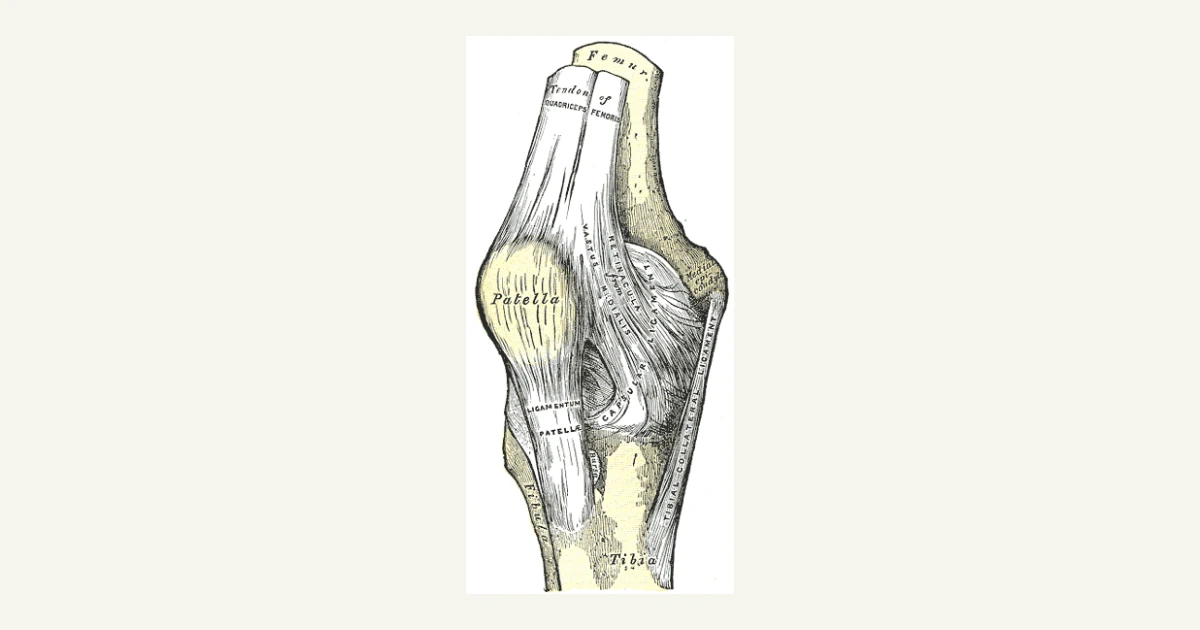
A ruptured patellar tendon (below the kneecap) or quadriceps tendon (above it) is usually stitched back to bone within days or weeks of the injury. The repair is then protected in a brace held straight, and the bend allowed is increased in steps your surgeon sets. During those weeks the thigh muscle wastes and the knee stiffens. Those are what the program works on, inside your surgeon’s protocol. What the injury is and how it is diagnosed is covered in patellar and quadriceps tendon rupture. This program is run by our physiotherapy team.
No referral needed. Every first visit is one 45-minute Assessment & Treatment, $230, nett, no GST. Bring your surgeon’s protocol, the operation note and your brace.
Where are you right now?
Four situations we see
- Just ruptured, surgery booked or not yet decided. Before the operation, the work is keeping the hip and the other leg strong and learning the crutches, so the weeks after start from a better place. The decision to operate is your surgeon’s.
- In a brace locked straight, weeks 0 to 6. Switching the thigh muscle on without bending the knee, and bending only as far as your surgeon has allowed, are the work now.
- Brace opened or off, still limping, and the leg sags when you lift it. That sag is called an extensor lag. It is measured in degrees, and it closes with the right loading.
- Months on, stairs and squatting are still hard. That is a thigh strength question, and it is a number on each leg.
What the weeks in a brace cost
The tendon heals first. The thigh comes back last.
Short answer: thigh strength and knee bend. While the knee is held straight to protect the repair, the thigh muscle carries little load and wastes quickly, and the knee stiffens. The tendon can be well healed while the thigh is still far weaker than the other side. Reviews of these repairs report that a third to a half of people are left with measurable thigh weakness, and many take up to a year to reach their goals.1
A weak thigh is why the knee gives on the last step down, why getting up from a low stool takes both hands, and why the good leg leads on every stair. Range is measured with a goniometer, the extensor lag in degrees, and thigh strength against your other leg.
Usually expected, and what is not
Is this normal after a patellar or quadriceps tendon repair?
Usually expected
- Swelling and bruising that track down to the ankle in the first two weeks.
- A patch of numb skin beside the scar.
- A visibly thinner thigh on the operated side.
- The leg sagging a little when you lift it straight in the first weeks out of the locked brace.
Call 995 for sudden breathlessness or chest pain.
Go to the emergency department now if you feel a new pop or give at the front of the knee and suddenly cannot straighten it again, or the foot becomes numb, pale or cold.
See a doctor the same day
- A painful, swollen or hot calf. This is a blood clot question.
- Wound discharge, spreading redness or fever.
See a doctor soon
- A bend that has stopped improving for two to three weeks despite doing the exercises.
If it is not going to plan
Four months after a patellar tendon repair and the knee still gives on the stairs? What that usually means
You can walk on the flat. You hold the rail on the MRT escalator and wait for the step to flatten. You go down stairs one at a time, good leg last. You cannot kneel, and getting up from the low stool at the hawker centre takes both hands on the table. The return-to-work date is set, and the job has stairs in it.
The usual thinking is that the surgeon fixed it, so it will come back with walking. Walking on the flat asks very little of the thigh, so it rarely gives back what stairs and squats need. Your knee may no longer hurt much. Has anyone measured how much weaker that thigh is than the other one, or how many degrees the leg sags at the top of a straight leg raise? If the knee still bends less than about 90 degrees at three months, tell your surgeon. Some stiff knees need their review as well as ours.
The Stalled Recovery Review is three appointments over three weeks with the same therapist, because how a weak thigh responds to loading cannot be read in one visit. $690, nett, no GST.
The shape of it
What happens, week by week
Every surgeon has their own protocol for these repairs, and theirs takes precedence over this page. The weeks below are the common shape.1,2
- Weeks 0 to 6Stage 1 · Calm & ProtectBrace locked straight, crutches, weight through the leg as your surgeon allows, swelling and wound care, the thigh switched on without bending, and the bend increased only as allowed, often toward 90 degrees by week six.
- Weeks 6 to 12Stage 2 · Move & MobilizeBrace opened then removed, crutches weaned, more bend, the leg lifted straight without sagging, and a normal walking pattern.
- Months 3 to 6Stage 3 · Rebuild & StrengthenThigh and hip strength loaded progressively, stairs step over step, squats and single-leg work.
- Months 4 to 12Stage 4 · Return & PerformRunning, jumping, kneeling and the demands of work and sport, tested side to side.
The weeks are typical ranges, not a promise. You move up a stage when you meet its criteria, and your surgeon’s protocol takes precedence over anything on this page.
The program
The four stages, and what moves you up
- Stage 1, Calm & Protect. The repair protected exactly as your surgeon set, swelling controlled, the thigh muscle kept working, and the bend worked within the limit you were given.
Move up when: the wound has healed, your surgeon allows the brace to open, you can tighten the thigh and lift the straight leg in the brace, and the knee bends to the limit your surgeon set for this point, often 90 degrees. - Stage 2, Move & Mobilize. Knee range in degrees, the extensor lag closed, and walking without crutches or a brace.
Move up when: the knee straightens fully, bends to at least 110 degrees, you lift the straight leg with no sag, and you walk without crutches, a brace or a limp, as your surgeon allows. - Stage 3, Rebuild & Strengthen. Thigh strength, loaded progressively and compared with the other leg.
Move up when: thigh strength measures at least 80 percent of the other leg, you manage stairs step over step, and you control a single-leg squat to a chair. - Stage 4, Return & Perform. The demands of your work and sport, rehearsed and tested.
Graduate when: the tasks you named at your first appointment are tested and done, and, where running or sport applies, thigh strength is at least 90 percent of the other leg and hop tests are recorded against the other side.2
Measured at your first appointment and again at graduation: a knee function questionnaire (KOOS), knee range and extensor lag in degrees, and thigh strength on both legs once your surgeon allows it to be tested.
Logistics
When can I…
Your surgeon decides, based on the repair and what your job demands. These are typical points, not permissions.
| Activity | Typical point | What has to be true first |
|---|---|---|
| Desk work | 2 to 6 weeks | Swelling controlled, safe on crutches, the leg up when you can, and a safe way to get to work. |
| Drive | Left knee, automatic: often sooner. Right knee: usually after 8 to 12 weeks | The brace is off and you can brake hard. Check your insurer. |
| Walk without crutches | 6 to 10 weeks | Your surgeon allows full weight, and you walk without a limp. |
| Stairs step over step | 3 to 4 months | Stage 2 criteria met. |
| Run | 4 to 6 months | Stage 3 criteria met, and your surgeon’s clearance. |
| Jumping and cutting sports | 6 to 12 months | Stage 4 criteria met, and your surgeon’s clearance. |
| Medical certificate | Your doctor issues it | Physiotherapists do not issue MCs. We can write a report on your functional limits for your doctor or employer. |
Who you will see
The physiotherapy team that runs this program
This program is run by the physiotherapy team. You are matched to the therapist whose declared clinical interest fits what happened to you and the clinic that suits you, and you stay with the same therapist through the program. Every appointment is one to one with your therapist for the full 45 minutes. All are registered with the Allied Health Professions Council.


Principal Physiotherapist. Shoulder and knee problems, spinal dysfunction, sports injury.
Orchard, Tampines
Principal Physiotherapist. ACL reconstruction and return to sport, hip and knee rehabilitation.
What our patients say
Google reviews from our clinics in Singapore.


Tampines

Principal Physiotherapist. Achilles tendinopathy, rotator cuff injury and repair, shoulder stiffness.
Orchard, Tampines, Jurong East
Principal Physiotherapist. Knee and hip replacement recovery, neck and shoulder pain, dry needling.
Tanjong Pagar, Jurong East
The program belongs to Phoenix, not to one therapist. Your plan, your measurements and your surgeon’s protocol move with you if you change clinic.
What it costs
$230 per 45-minute appointment, nett, no GST
One to one with your therapist for the whole 45 minutes. Nett, no GST. Same price for your first appointment and your last. The Patellar and Quadriceps Tendon Repair Recovery Program is set at 12 appointments across Stages 1 to 4, $2,760 in all. Your therapist confirms your plan at your first visit, and you pay for each appointment as you attend it. If you meet the Stage 4 criteria sooner, you finish sooner. You can stop at any appointment.
This program runs Stages 1 to 4 of the Phoenix Recovery Protocol, and sits under physiotherapy after surgery alongside the rest of our recovery programs.
Fourteen weeks after the repair and the good leg still leads on the stairs? Get Assessed & Treated, and leave knowing how strong that thigh is against the other one, which stage you are in, and what the next stage asks of it. Phoebe replies with a clinic and two times. Bring your surgeon’s protocol, the operation note and your brace.
Prefer to phone? Each of our five clinics has its own number on the clinics page. No referral needed to book.
Related reading
Sources: 1. Pope JD, El Bitar Y, Mabrouk A, Plexousakis MP. Quadriceps tendon rupture. In: StatPearls. Treasure Island (FL): StatPearls Publishing; updated 2023. 2. Patellar tendon rupture. In: StatPearls. Treasure Island (FL): StatPearls Publishing; updated February 2026. NCBI Bookshelf NBK513275.
Timeframes on this page are typical ranges, not promises. Where your surgeon has given you a protocol, that protocol takes precedence over anything written here.
Where we are
Clinics across Singapore
ORCHARD
400 Orchard Road #12-12
Orchard Towers, S238875
NS22 Orchard MRT
Physiotherapy and hand therapy in Orchard →
WhatsApp 8800 1830TAMPINES
9 Tampines Grande #01-20
Asia Green, S528735
EW2DT32 Tampines MRT
Physiotherapy and hand therapy in Tampines →
WhatsApp 8780 9608SERANGOON
265 Serangoon Central Drive #04-269
S550265 · Lift C only
NE12CC13 Serangoon MRT
Physiotherapy and hand therapy in Serangoon →
WhatsApp 8892 4121TANJONG PAGAR
10 Anson Road #02-77A
International Plaza, S079903
EW15 Tanjong Pagar MRT
Physiotherapy and hand therapy in Tanjong Pagar →
WhatsApp 8227 7074JURONG EAST
2 Venture Drive #02-02
Vision Exchange, S608526
NS1EW24 Jurong East MRT
Physiotherapy and hand therapy in Jurong East →
WhatsApp 8242 7340