
Written by Zita Sham, Fairuuz Saleh and Shiv Mohan Banka, Principal Physiotherapists at Phoenix Rehab.Clinically reviewed by Louise Yow, Principal Physiotherapist & Director, AHPC A1300363H.Last reviewed 28 September 2026.
Neuropathic pain is a type of chronic pain that is caused by damage or dysfunction to the nervous system. This can occur due to various reasons such as nerve injuries or compression, infections, diseases (like diabetes or multiple sclerosis), or as a side effect of certain medications.
In patients with non-traumatic shoulder pain, such as frozen shoulders, for instance, neuropathic pain is a common occurrence and is said to worsen the pain that these patients experience.
In this article, we will provide you with valuable information about shoulder nerve pain, how to recognize its signs, and what you can do to find relief.
Understanding the Signs and Symptoms of a Pinched Nerve
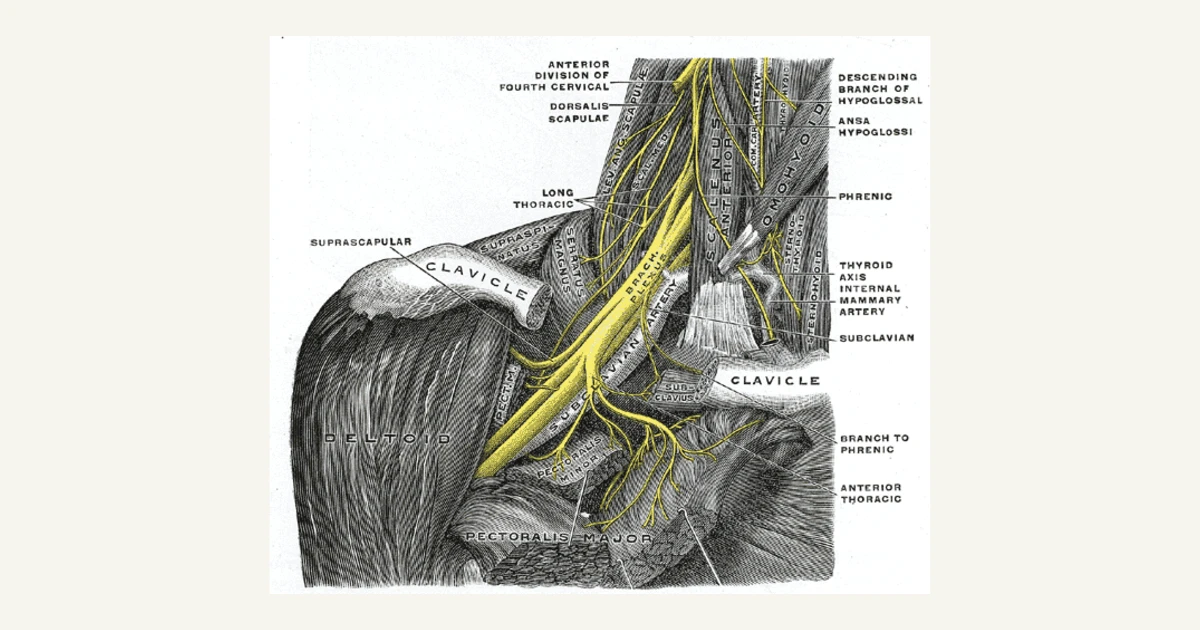
Shoulder pain can often be associated with nerve-related issues stemming from the complex network of nerves in the shoulder region, including the brachial plexus and cervical nerve roots. One example of this is a pinched nerve, which occurs when a nerve in the shoulder region is compressed or compacted by surrounding tissues, such as muscles, tendons, ligaments, or bones.
Compression of the brachial plexus or cervical nerve roots can lead to a condition known as shoulder nerve pain. This can occur due to factors such as trauma, repetitive strain, or anatomical abnormalities, which may be characterised by sharp, shooting pain accompanied by a burning or tingling sensation, muscle weakness, numbness, or pins and needles sensation in the shoulder, arm, or hand.
Compressed or pinched nerves in the shoulder region can also cause referred pain, leading to discomfort in the neck and upper back.
Depending on the specific nerve affected within the brachial plexus or cervical nerve roots, the symptoms of shoulder nerve pain can vary. For example:
Compression of the C5 nerve root can cause pain and weakness in the shoulder and upper arm.
Injury to the long thoracic nerve may lead to difficulty raising the arm.
If you’re experiencing any of these symptoms, it is crucial to consult with a healthcare professional for an accurate diagnosis.
Comparing Pinched Nerve With Other Possible Causes of Shoulder Pain
Shoulder pain can be caused by various conditions, and it’s essential to differentiate between a pinched nerve and other possible causes. Let’s take a closer look at some of these conditions that can be confused with one another:
Pinched Nerve (Cervical Radiculopathy)
Cervical radiculopathy, commonly known as a pinched nerve, occurs when a nerve in the neck becomes compressed or irritated. This can result in pain, numbness, and weakness that radiates down the shoulder and arm. It’s often caused by a herniated disc, bone spurs, or spinal stenosis.
Shoulder Impingement
Shoulder impingement is a common source of shoulder pain and functional limitation, often related to overuse or anatomical factors, such as when the space between the acromion (a bony projection on the shoulder blade) and the rotator cuff tendons can become narrowed, leading to compression of the tendons and the bursa. This can cause pain in the shoulder that may radiate down the arm. Unlike a pinched nerve, shoulder impingement usually does not cause numbness or tingling sensations.
Frozen Shoulder
Frozen shoulder, also known as adhesive capsulitis, is a condition characterised by stiffness and pain in the shoulder joint. It typically develops gradually and progresses in three stages: freezing, frozen, and thawing. While a frozen shoulder can cause significant discomfort, it does not typically involve nerve compression.
Rotator Cuff Tears
A rotator cuff tear is a common injury that can cause shoulder pain and limited range of motion. It occurs when one or more tendons in the rotator cuff become torn or damaged. While a rotator cuff tear can be painful, it’s not necessarily associated with nerve compression.
Shoulder Arthritis
Shoulder arthritis is a degenerative condition that causes the cartilage in the shoulder joint to wear down over time. This can result in chronic pain, stiffness, and limited range of motion. While shoulder arthritis can cause similar symptoms to a pinched nerve, it’s not directly related to nerve compression.
How to Diagnose a Pinched Nerve
If you suspect that you may have nerve pain caused by shoulder nerve compression, it’s important to seek medical attention for an accurate diagnosis. Your healthcare provider will typically perform a thorough physical examination and may order additional tests such as blood tests or imaging tests such as X-rays, MRI scans, or electromyography (EMG) to assess the functioning of the affected nerve.
Ways to Relieve Shoulder Pain
Finding relief from shoulder nerve pain is a priority for those who suffer from this condition. Here are some common treatment options that may help alleviate your symptoms:
Taking Nonsteroidal Anti-Inflammatory Drugs and Other Pain Relievers
Pain relief and anti-inflammatory medication are a decision for your doctor or pharmacist. Here are some examples:
They are often effective in managing mild to moderate pain and reducing inflammation in the affected area.
Acetaminophen:
They may offer relief for localised shoulder pain and can be used as an adjunct to oral medications.
If you find that you need to use pain relievers for an extended period, it’s important to consult with a healthcare professional to address the underlying cause of the shoulder nerve pain and explore alternative treatment options.
Moreover, if your shoulder nerve pain worsens despite taking pain relievers, it’s crucial to seek medical advice for further evaluation and management.
Cold and Heat Therapy
Applying cold or heat packs to the affected area can provide temporary relief from shoulder pain. Cold therapy helps reduce inflammation, while heat therapy promotes blood circulation and relaxes tense muscles. Alternating between cold and heat therapy can be beneficial in managing pain and promoting healing.
Oral Corticosteroids
In some cases, oral corticosteroids may be prescribed to reduce signs of inflammation like pain and swelling associated with a pinched nerve. These medications can have side effects, so it’s important to discuss the risks and benefits with your healthcare provider before starting any treatment.
Steroid Injections
For more severe cases of shoulder nerve pain, corticosteroid injections directly into the affected area may be recommended. These injections can provide targeted relief by reducing inflammation and alleviating pain. However, they are not a long-term solution and should be used in conjunction with other treatment modalities.
Cervical Collar
Wearing a soft cervical collar, also known as a neck brace, can help immobilize the neck and relieve pressure on the pinched nerve. This can provide temporary relief and assist in the healing process. However, it is important to follow your healthcare provider’s instructions regarding the duration and proper use of a cervical collar.
Physiotherapy
Physiotherapy is a valuable approach for managing shoulder nerve pain and addressing other associated symptoms by employing a combination of targeted exercises, manual techniques, modalities, and education.
Physiotherapy for shoulder pain aims to not only alleviate pain but also improve overall shoulder function, mobility, and quality of life for individuals experiencing shoulder nerve pain and its associated symptoms.
If you have shoulder nerve pain or other associated symptoms, consulting a physiotherapist at Phoenix Rehab can be beneficial in developing a personalised treatment plan to address your specific needs.
When to See a Doctor
If you’re experiencing persistent shoulder pain or suspect a pinched nerve, it’s essential to consult with a healthcare professional. They can offer various interventions and strategies tailored to the specific needs of the individual to alleviate pain, improve function, and address the underlying causes of shoulder nerve pain.
Similarly, it’s highly advisable to seek immediate medical attention if your symptoms include severe pain, loss of bladder or bowel control, or progressive weakness in your arm.
What our patients say
Google reviews from our clinics in Singapore.


Final Words
Shoulder nerve pain can significantly impact your daily life, but with proper diagnosis and treatment, relief is possible. By understanding the signs of a pinched nerve, differentiating it from other possible causes, and exploring various treatment options, you can take proactive steps towards managing your shoulder pain. Remember, always consult with a healthcare professional for an accurate diagnosis and personalised treatment plan. Don’t let shoulder nerve pain hold you back from enjoying life to the fullest.
Where are you with this right now?
1. It is settling on its own
Many shoulder problems settle over weeks to months. Night pain that slowly becomes less frequent, and reach that slowly returns, are the usual pattern. If you are reaching higher this month than last, and sleeping better, it is on the normal course. You do not need us for this, and we would rather say so.
2. It has stopped improving
You put your shirt on that arm first. The top shelf belongs to someone else now. You have stopped reaching behind you without thinking.
Reach comes back before strength does. A shoulder that goes overhead but cannot hold anything there is halfway, not finished. That is the gap worth measuring, and it is not measured by how you feel on the day.
The Stalled Recovery Review is three appointments over three weeks with the same therapist, because what a joint does under load cannot be read in one visit. The first finds what is limiting it. The next two measure how it responds. $690, nett, no GST, which is three appointments at $230.
3. You have had surgery, or you have a date
Recovery after an operation has a shape, and knowing which stage you are in tells you whether you are on it. See the Rotator Cuff Repair Recovery Program, or shoulder physiotherapy if you are not sure which applies to you.
All of it runs on the same four stages. The Phoenix Recovery Protocol explains what each stage works on and what you have to meet to move up. No referral needed to start.
Next step
Find out which stage you are in
Pain is the first thing to leave. Movement and strength are the last things trained back, and most people stop before that part is done. One Assessment and Treatment is a single 45-minute appointment at $230, nett, no GST. Your therapist finds what is actually limiting you, treats it in the same appointment, and you leave with your current stage and a written plan.
Prefer to phone? Each of our five clinics has its own number on the clinics page. No referral needed to book.
Related reading
Where we are
Clinics across Singapore
ORCHARD
400 Orchard Road #12-12
Orchard Towers, S238875
NS22 Orchard MRT
Physiotherapy and hand therapy in Orchard →
WhatsApp 8800 1830TAMPINES
9 Tampines Grande #01-20
Asia Green, S528735
EW2DT32 Tampines MRT
Physiotherapy and hand therapy in Tampines →
WhatsApp 8780 9608SERANGOON
265 Serangoon Central Drive #04-269
S550265 · Lift C only
NE12CC13 Serangoon MRT
Physiotherapy and hand therapy in Serangoon →
WhatsApp 8892 4121TANJONG PAGAR
10 Anson Road #02-77A
International Plaza, S079903
EW15 Tanjong Pagar MRT
Physiotherapy and hand therapy in Tanjong Pagar →
WhatsApp 8227 7074JURONG EAST
2 Venture Drive #02-02
Vision Exchange, S608526
NS1EW24 Jurong East MRT
Opening 25 October 2026
Physiotherapy and hand therapy in Jurong East →
WhatsApp 8242 7340