
Written by Zita Sham, Fairuuz Saleh and Shiv Mohan Banka, Principal Physiotherapists at Phoenix Rehab.Clinically reviewed by Louise Yow, Principal Physiotherapist & Director, AHPC A1300363H.Last reviewed 28 September 2026.
Brachial neuritis refers to a rare condition where there is inflammation of the group of nerves that control our shoulder, arm and hand, collectively known as the brachial plexus.
Often patients with this condition find it very frustrating because it is difficult to diagnose accurately, and causes severe shoulder pain followed by weakness. Its symptoms tend to develop quickly without any obvious reasons. Symptoms often start at night and can be very uncomfortable and unpleasant.
Brachial neuritis is also known as
- Brachial plexopathy
- Parsonage Turner Syndrome
- Neuralgic amyotrophy.
In this article we will discuss
- What happens with brachial neuritis
- The different types and what causes it
- Common symptoms
- Treatment options
- Recovery process.
WHAT IS BRACHIAL NEURITIS?
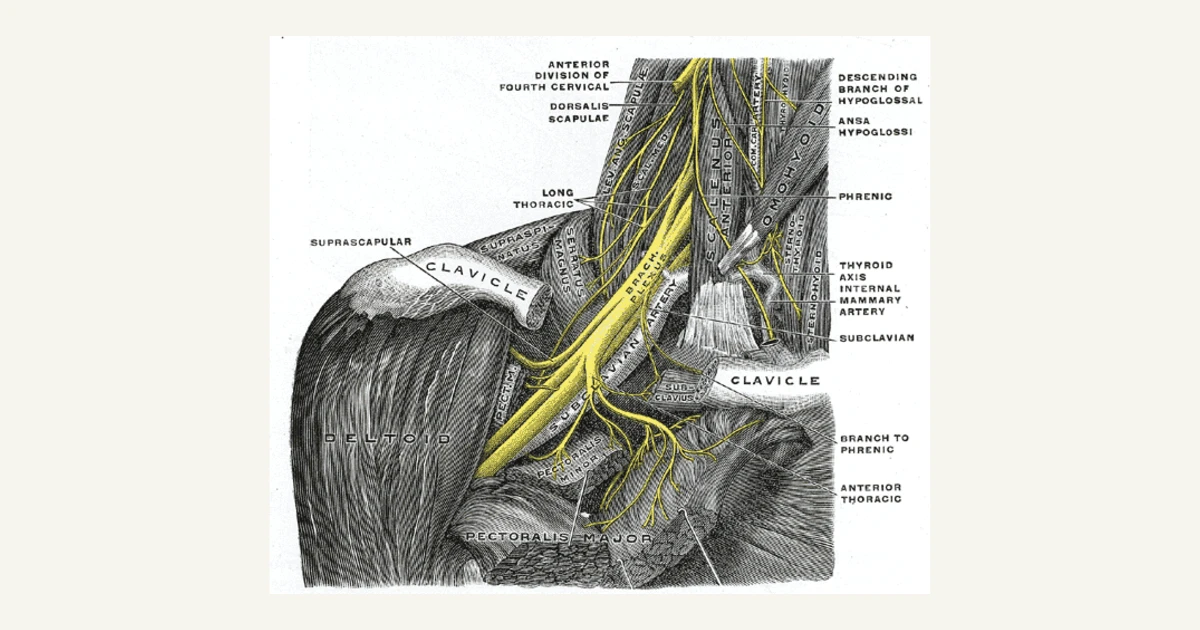
The brachial plexus is a complex network of intertwined nerves that originates from the root of the neck, travels downwards to pass across the chest over the first rib, through the arm pit (axilla) and then downwards into the arm.
It is made up of the lower four cervical nerves (C5-8) and the uppermost thoracic nerve (T1) and it directly controls movement and sensation in the shoulder, arm and hand.
Nerves carry electrical impulses, information and signals from one part of the body to another.
They carry messages from the brain telling muscles to contract or relax to produce movement, as well as carrying sensory information e.g. touch and temperature.
In the case of brachial neuritis, the brachial plexus becomes inflamed and the nerves don’t function normally, leading to a combination of motor and sensory issues including pain and weakness.
There are two different types of brachial plexopathy:
1) Inherited Brachial Neuritis
This is an inherited condition where there is a mutation in the SEPT9 gene on chromosome 17q and it is an autosomal dominant condition. This means that a parent who carries the gene has a 50% chance of passing the faulty gene onto any child they have.
2) Idiopathic Brachial Neuritis
This is the most common type.
The exact cause is unknown, but doctors and researchers believe that it is due to an abnormality in the immune system which causes it to attack the nerve fibers of the brachial plexus, resulting in inflammation.
CAUSES OF BRACHIAL NEURITIS
Whilst the exact cause of brachial neuritis is unknown, the condition has been linked to:
- Infections – viral e.g. upper respiratory tract infection, or bacterial e.g. pneumonia
- Post-surgery complications
- Traumatic injuries – which can happen anywhere in the body and not necessarily to the shoulder
- Vaccinations e.g. flu jab and tetanus jabs
- Child birth and delivery
- Systemic Illness e.g. lymphoma and cancer.
Brachial plexopathy is a rare condition affecting between 1-3 people per 100,000 individuals per year (that’s a rate of 0.00001-0.00003% probability).
SYMPTOMS OF BRACHIAL NEURITIS
Brachial neuritis symptoms typically develops fairly quickly and rapidly, and most patients report that it often starts at night time. Pain tends to be the first symptom, followed by weakness and/or paralysis.
Common symptoms include:
1) Pain
A common symptoms of brachial neuritis is sudden, severe pain.
Our patients tends to describe the pain as sharp, stabbing or burning pain in the shoulder which may spread to the neck, arm and/or hand.
It usually affects one shoulder (most commonly the right or dominant side) but in some patients, it can affect both shoulders at the same time.
Typically the pain gets worse with any movement of the arm and at night. Most patients report that their pain tends to be constant, and only eases with strong painkillers.
2) Weakness
As the pain subsides (this may take days or weeks) patients will notice that they start to experience muscle weakness and/or paralysis.
They start to notice a weakness first and then they find that their affected muscles begin to waste (known as atrophy). This is often visible, such as a winging scapula, which can make it very hard for them to lift and move the affected arm.
The weakness may be challenging, but fortunately is usually temporary.
3) Numbness
If the sensory nerves are affected than your sensation is altered and you may notice some
- numbness
- pins and needles
- decreased sensation.
4) Difficulty Breathing
In some cases (up to 5%), the diaphragm is affected which can lead to shortness of breath.
5) Age Group
It can affect people at any age (including children, which usually indicates the inherited version), but it is most common in younger or middle-aged adults.
6) Gender
Idiopathic brachial neuritis is more prevalent in males, approximately 3:1. Inherited brachial plexopathy affects males and females equally.
DIAGNOSING BRACHIAL NEURITIS
Brachial neuritis can be hard to diagnose and is often misdiagnosed as neck pain or a neck problem.
Your doctor and/or our senior physiotherapists in Phoenix Rehab Singapore will start by taking your medical history, understanding your pain experience and then will examine you, looking first at your arm movements and then assessing your muscle strength.
They may also check your reflexes and sensation.
Your doctor will possibly send you for imaging studies such as an MRI to rule out other conditions such as
- fractures
- shoulder dislocations
- shoulder bursitis
- cervical radiculopathy.
You may even do a shoulder x-ray.
Nerve conduction studies or EMG tests looking at the electrical activity of muscles may also be done to see if the nerves are conducting and functioning correctly. This helps to identify whether the weakness is due to a problem in the muscles themselves, or a problem with the nerves that control the muscles, the latter of which may indicate brachial neuritis.
WHAT ARE YOUR TREATMENT OPTIONS?
The initial goal with brachial neuritis is pain relief. Then, we can work on shoulder and nerve physiotherapy.
1) Medication
Pain relief and anti-inflammatory medication are a decision for your doctor or pharmacist.
2) Shoulder & Neck Physiotherapy
Initially, you will be advised to rest until your pain is under control, but then it is important to start physical therapy to address the associated muscle weakness and loss of movement.
Our goal of physical therapy is to:
a) Maintain and Improve Range of Movement:
What our patients say
Google reviews from our clinics in Singapore.



In the beginning, the range of motion exercises may be entirely passive exercises (when the arm is moved without the muscles having to work), either by someone else moving your arm, or you using your good arm to support the arm and lead the movement.
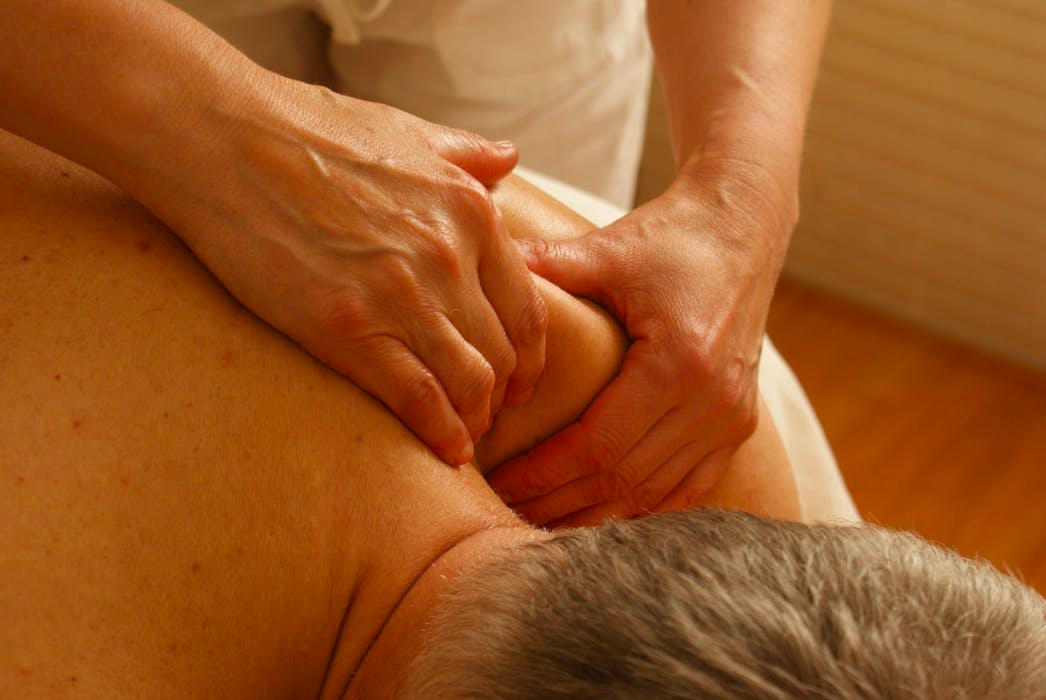
Once the pain is under control you can then move to active range of movement exercises (where you perform the movement yourself with the affected arm).
b) Regain Strength:
Once the pain is manageable, you can start rotator cuff strengthening exercises and scapular stability exercises to regain the strength and control around the shoulder.
We may also use treatments such as
- cold therapy
- heat packs
- TENS machines (transcutaneous electrical nerve stimulation)
to help relieve pain. Patients may also receive the following physiotherapy treatment modalities:
- cold therapy
- heat therapy
- moist heat paraffin wax therapy
- radio-frequency Indiba physiotherapy to accelerate soft tissue healing
- joint mobilization
- stretching exercises
- strengthening exercises
- scar management
- hands-on manipulation and mobilization (manual therapy)
- soft tissue management
- heat therapy, heat treatment and heat packs to relieve tight muscles and joints
- ultrasound therapy to accelerate soft tissue healing
- exercise therapy
- acupuncture and/or dry needling
- deep tissue release.
3) Surgery
If symptoms fail to settle after a number of months, your doctor may recommend you to consider corrective surgery.
This usually consists of nerve grafts and/or tendon transfers (where healthy sections of nerves or tendons are taken from elsewhere in the body and used to repair the damaged nerves/tendons) to rebuild muscle function
RECOVERING FROM BRACHIAL NEURITIS
Recovery from brachial neuritis varies between patients, but in most cases most patients can make a full, or nearly full recovery.
Typically the neurological pain settles within a few weeks, but it can take a number of months to regain full strength and range of motion at the shoulder.
Around 80% of people who suffer from brachial neuritis will make a full recovery within 2 years, with another 10% recovering further in the following year.
In some cases, some patients may be left with lingering persistent pain and/or weakness, and reduced endurance in the shoulder muscles.
Recovery time is often linked to how long the painful stage lasts (longer painful stage = longer recovery time).
Recovery from brachail neuritis tends to take longer if symptoms happens in both arms at the same time (termed as “bilateral”).
Recurrence is more common with inherited brachial neuritis (approximately 75% recurrence rate) as compared to idiopathic brachial neuritis (between 5-26% recurrence).
Reference
- https://www.shoulder-pain-explained.com/brachial-neuritis.html
If your shoulder blade now lifts away from the ribs, see winged scapula.
Where are you with this right now?
1. It is settling on its own
Most injuries and most flare-ups settle over weeks with sensible load management and a return to normal movement. Improvement is judged over a month, not over a day, and good days and bad days inside that are usual. If you are doing more this month than last, and sleeping better, it is behaving the way it should. You do not need us for this, and we would rather say so.
2. It has stopped improving
You have adapted without noticing. The other side takes the load, you plan movements you used to make without thinking, and you have quietly dropped things you used to do.
Pain is the first thing to leave. Movement and strength are the last things trained back, and most people stop before that part is done. That is the gap worth measuring, and it is not measured by how you feel on the day.
The Stalled Recovery Review is three appointments over three weeks with the same therapist, because what a joint does under load cannot be read in one visit. The first finds what is limiting it. The next two measure how it responds. $690, nett, no GST, which is three appointments at $230.
3. You have had surgery, or you have a date
Recovery after an operation has a shape, and knowing which stage you are in tells you whether you are on it. See the recovery programs, hand and physiotherapy, or the four stages and what each one works on if you are not sure which applies to you.
All of it runs on the same four stages. The Phoenix Recovery Protocol explains what each stage works on and what you have to meet to move up. No referral needed to start.
Next step
Find out which stage you are in
Pain is the first thing to leave. Movement and strength are the last things trained back, and most people stop before that part is done. One Assessment and Treatment is a single 45-minute appointment at $230, nett, no GST. Your therapist finds what is actually limiting you, treats it in the same appointment, and you leave with your current stage and a written plan.
Prefer to phone? Each of our five clinics has its own number on the clinics page. No referral needed to book.
Related reading
- What Is Myofascial Release? Singapore Physio’s Explain Here
- Your Concise Guide to Pelvic Floor Physiotherapy
- Physiotherapy for the Most Common Cycling Injuries
- The Phoenix Recovery Protocol, and the four stages
- All recovery programs, hand and physio
- What is the Difference Between Shockwave Therapy vs Ultrasound Therapy?
Where we are
Clinics across Singapore
ORCHARD
400 Orchard Road #12-12
Orchard Towers, S238875
NS22 Orchard MRT
Physiotherapy and hand therapy in Orchard →
WhatsApp 8800 1830TAMPINES
9 Tampines Grande #01-20
Asia Green, S528735
EW2DT32 Tampines MRT
Physiotherapy and hand therapy in Tampines →
WhatsApp 8780 9608SERANGOON
265 Serangoon Central Drive #04-269
S550265 · Lift C only
NE12CC13 Serangoon MRT
Physiotherapy and hand therapy in Serangoon →
WhatsApp 8892 4121TANJONG PAGAR
10 Anson Road #02-77A
International Plaza, S079903
EW15 Tanjong Pagar MRT
Physiotherapy and hand therapy in Tanjong Pagar →
WhatsApp 8227 7074JURONG EAST
2 Venture Drive #02-02
Vision Exchange, S608526
NS1EW24 Jurong East MRT
Opening 25 October 2026
Physiotherapy and hand therapy in Jurong East →
WhatsApp 8242 7340