
Written by the Phoenix Rehab physiotherapy team.Clinically reviewed by Louise Yow, Principal Physiotherapist & Director, AHPC A1300363H.Last reviewed 4 October 2026.
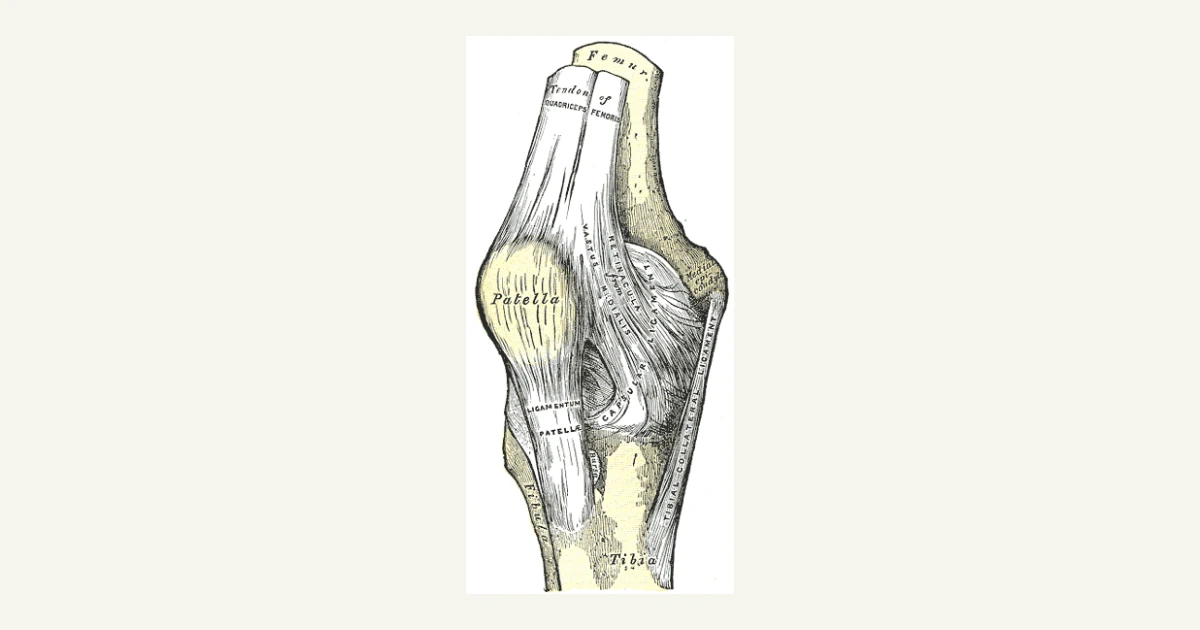
A dislocated kneecap is when the kneecap slips out of its groove, almost always to the outside of the knee, usually during a twist with the foot planted. It often pops back in by itself when the leg straightens. Even then, a first dislocation needs a doctor the same day, because the ligament that holds the kneecap in place usually tears, and a piece of cartilage can break off.
What happens when the kneecap dislocates
A sudden twist on a planted foot, a cut in netball, basketball or football, a dance turn, and the kneecap shifts out to the side. The knee buckles, hurts sharply and swells within hours. The inner side of the kneecap is tender, where the main restraining ligament (the medial patellofemoral ligament, or MPFL) has torn.
If the kneecap is still out: do not try to push it back. Keep the leg in the position that is most comfortable and go to the emergency department.
Dislocated kneecap or something else?
| What happened | More likely | Read more |
|---|---|---|
| Twist, the kneecap visibly shifted to the side, it popped back | Kneecap dislocation | This page |
| Twist, a pop inside the knee, swelling within hours, the knee gave way | ACL injury | ACL injury |
| Twist, pain on the inside or outside of the joint, catching or locking | Meniscus tear | Meniscus tear |
| No injury, an ache around the kneecap on stairs and squats | Patellofemoral pain | Kneecap pain |
| A fall or blow onto the front of the knee, then swelling and trouble lifting the straight leg | Kneecap fracture | Patella Fracture Recovery Program |
Dislocated kneecap recovery time
Most people are walking without a limp within a few weeks, and back to cutting and twisting sport in about three to six months, once the measures allow. Your doctor decides on imaging, bracing and whether surgery is needed. A loose piece of cartilage, or a kneecap that keeps dislocating, may need an operation.
Will it happen again?
It can. After a first dislocation, a second is common, especially in teenagers, people with loose joints and people whose kneecap groove is shallow.1 The torn ligament heals, but often longer and looser than before. That is why the rehabilitation does not stop when the swelling goes. Quadriceps and hip strength, and control of the knee when you land and twist, help hold the kneecap in its groove day to day.
What we work on, stage by stage
- Stage 1, Calm & Protect: settling the swelling, getting the quadriceps to switch on again, walking without the knee giving way, with a brace if your doctor advises.
- Stage 2, Move & Mobilize: full straightening, then bending, step by step.
- Stage 3, Rebuild & Strengthen: quadriceps and hip strength measured on each leg, single-leg control, step-downs that stay straight.
- Stage 4, Return & Perform: running, hopping, landing, then cutting and twisting last.
Tested, not dated. You cut and twist again when the measures say so. Pain is the first thing to leave. Strength is the last to train and recover.
When to see a doctor first
- Go to the emergency department now if the kneecap is still out of place, or you cannot put weight on the leg.
- See a doctor the same day after a first kneecap dislocation that has gone back in, or a knee that swelled within a few hours of a twist.
- See a doctor the same day if the knee locks and will not fully straighten.
- See a doctor soon if the knee catches, or the kneecap has dislocated more than once.
Where are you with this right now?
1. It is settling on its own
If the swelling is down, you are walking without the brace and the knee feels steadier each week, keep at your exercises. You are probably in Stage 2 of 4.
2. It has stopped improving
Three months since netball. The knee looks normal. You still go down stairs one at a time, you will not jump for the ball, and every quick turn feels like it could happen again. That fear is information. Quadriceps strength and landing control on that leg can be measured against the other one.
WhatsApp us · Get Assessed & Treated · One 45-minute appointment, $230, nett, no GST.
3. You have had surgery, or you have a date
After an MPFL reconstruction or a cartilage repair, the stages are set with your surgeon. See physiotherapy after surgery. All of it runs on the four stages of the Phoenix Recovery Protocol.
Related reading
Sources: 1. Stefancin JJ, Parker RD. First-time traumatic patellar dislocation: a systematic review. Clin Orthop Relat Res. 2007;455:93-101.
Where we are
Clinics across Singapore
ORCHARD
400 Orchard Road #12-12
Orchard Towers, S238875
NS22 Orchard MRT
What our patients say
Google reviews from our clinics in Singapore.


Physiotherapy and hand therapy in Orchard →
WhatsApp 8800 1830TAMPINES
9 Tampines Grande #01-20
Asia Green, S528735
EW2DT32 Tampines MRT
Physiotherapy and hand therapy in Tampines →
WhatsApp 8780 9608SERANGOON
265 Serangoon Central Drive #04-269
S550265 · Lift C only
NE12CC13 Serangoon MRT
Physiotherapy and hand therapy in Serangoon →
WhatsApp 8892 4121TANJONG PAGAR
10 Anson Road #02-77A
International Plaza, S079903
EW15 Tanjong Pagar MRT
Physiotherapy and hand therapy in Tanjong Pagar →
WhatsApp 8227 7074JURONG EAST
2 Venture Drive #02-02
Vision Exchange, S608526
NS1EW24 Jurong East MRT
Physiotherapy and hand therapy in Jurong East →
WhatsApp 8242 7340