
Physiotherapy after surgery · Singapore
Ankle Ligament Reconstruction Recovery Program
Written by Zita Sham, Fairuuz Saleh and Shiv Mohan Banka, Principal Physiotherapists at Phoenix Rehab.Clinically reviewed by Louise Yow, Principal Physiotherapist & Director, AHPC A1300363H.Last reviewed 12 October 2026.
The ligament was not the only thing that failed. The sense of where your foot is failed with it, and that part is trained back.
A lateral ligament reconstruction rebuilds the ligaments on the outside of the ankle after repeated sprains and ongoing giving way. The ligament is fixed in theatre. The balance system that let the ankle roll is fixed afterwards or not at all. This program is run by our physiotherapy team.
No referral needed. Every first visit is one 45-minute Assessment & Treatment, $230, nett, no GST. Bring your operation note or scan report.
Where are you right now?
Four situations we see
- Your ankle keeps giving way and surgery has been mentioned. A proper strength and balance program is the first line and a good proportion of people avoid surgery with it.
- Surgery is booked. Boot, weight bearing timeline and when range starts vary by surgeon and by what was done.
- You are in the boot now. The useful work is the hip, the knee and the other leg, and keeping the foot from stiffening in the positions it is allowed.
- Months on and you still do not trust it on uneven ground. That is proprioception rather than ligament, and it is trainable and testable.
What actually gives way
Repeated sprains damage the position sense in the joint, not only the ligament
Ligaments do two jobs. They physically restrain the joint, and they are full of receptors that tell your nervous system where the joint is and how fast it is moving. A sprain damages both. Surgery improves the first. The second recovers only with specific balance and reaction training, and without it the ankle keeps rolling on kerbs and uneven ground despite being mechanically sound.
This is the reason people who have had a reconstruction sometimes still feel unsafe. The ligament test in clinic is normal, the ankle is stable to the hand, and the patient is still putting a foot wrong. Single leg balance with eyes closed, hop tests and reaction to perturbation are the measurements that describe that, and they are all trainable.
It is also the reason the strongest evidence in ankle sprain care is for a supervised balance program, whether or not there is surgery. If you have sprained the same ankle several times and nobody has ever put you on one leg with your eyes shut, that is the gap.
Usually expected, and what is not
Is this normal after a reconstruction?
Ankles swell for a long time and that alone is not a sign of a problem.
Usually expected
- Swelling that comes up by the end of the day for months.
- A stiff ankle out of the boot, particularly into pointing the toes down.
- A calf that is visibly smaller than the other one.
- Numb patches around the scars.
Contact your surgeon or doctor
- Calf pain, swelling or tenderness: a doctor the same day, because it can be a clot.
- Breathlessness or chest pain: call 995.
- Wound discharge, spreading redness or fever.
- A sudden pop or give with a return of instability.
- Pain out of proportion with color, temperature and sweating changes and extreme sensitivity.
If you have sudden severe pain with a leg or foot that is cold, white or losing sensation, or you are unwell with fever and a hot swollen wound, that is an emergency department today, not a therapy appointment.
If it is not going to plan
You have been discharged and you still tape it to play
Taping an ankle that has been surgically reconstructed is usually a confidence problem rather than a mechanical one, and confidence follows evidence. People trust an ankle once they have watched it survive something.
Hop distance, single leg balance time and side to side calf strength are the evidence. They are quick to take, they are comparable to the other leg, and they turn feels dodgy into a number that either has moved or has not.
The Stalled Recovery Review is three appointments over three weeks with the same therapist, because what tissue does under graded work cannot be read in one visit. $690, nett, no GST.
The shape of it
What happens, week by week
After a lateral ankle ligament reconstruction the ankle is usually protected in a boot for about six weeks, and many people return to sport at around four to six months. Your surgeon’s timeline takes precedence.
- Weeks 0 to 2Stage 1 · Calm & ProtectBoot or cast, weight through the foot as your surgeon set, elevation, and the hip and knee kept working.
- Weeks 2 to 6Stage 2 · Move & MobilizeThe boot continues. Gentle up-and-down ankle movement where allowed, and turning the foot inward avoided to protect the repair.
- Weeks 6 to 12Stage 3 · Rebuild & StrengthenOut of the boot, walking made normal again, full range, calf and peroneal strength, and balance work.
- Weeks 12 to 16Stage 4 · Return & PerformHopping, cutting, landing and uneven ground, then sport.
The weeks are typical ranges, not a promise. You move up a stage when you meet its criteria, and your surgeon’s protocol takes precedence over anything on this page.
The program
The four stages, and what moves you up
- Stage 1, Calm & Protect. Boot and weight bearing to your surgeon timeline, swelling controlled, and the hip and knee kept working.
Move up when: the wound has healed and your surgeon allows weight through the foot in the boot. - Stage 2, Move & Mobilize. Ankle range recovered in all directions and normal walking without the boot. Criteria to move up are range and gait, measured.
Move up when: you are out of the boot and walking without a limp, and ankle range is recorded close to the other side. - Stage 3, Rebuild & Strengthen. Calf strength loaded to failure, peroneal strength, and the balance program begun in earnest.
Move up when: single-leg calf raises are counted and close to the other side, and single-leg balance is steady. - Stage 4, Return & Perform. Hopping, cutting, landing and uneven ground. Cleared on hop and balance test results compared with the other side.
Graduate when: hop and balance tests are measured against the other side, and your surgeon has cleared sport.
Measured at your first appointment and again at graduation: an ankle function questionnaire, single-leg heel raises counted on both sides, and a single-leg hop against the other leg once it is allowed.
Logistics
When can I…
Your surgeon decides, based on healing and what your job demands. These are typical points, not permissions.
| Activity | Typical point | What has to be true first |
|---|---|---|
| Desk work | 1 to 2 weeks | Swelling controlled, and you can get to work safely in the boot. |
| Driving | 2 to 8 weeks | Left ankle in an automatic is often sooner. Right ankle usually waits until the boot is off and you can brake hard. Check your insurer. |
| Walking without the boot | 4 to 6 weeks | Your surgeon clears it, and you walk without a limp. |
| Jogging | 10 to 12 weeks | Stage 3 criteria met, including single-leg balance and a hop without pain. |
| Cutting and landing sport | 4 to 6 months or later | Stage 4 criteria met, including hop tests against the other leg, and your surgeon’s clearance. |
| IPPT (sit-ups, push-ups, 2.4 km run) | The 2.4 km run around 4 to 6 months | Jogging without swelling the next day, single-leg calf raises and balance close to the other side, and your surgeon’s go-ahead. Your unit’s medical officer decides your medical status and when you take IPPT. |
| Medical certificate | Your doctor issues it | Physiotherapists do not issue MCs. We can write a report on your functional limits for your doctor or employer. |
Who you will see
The physiotherapy team that runs this program
This program is run by the physiotherapy team. You are matched to the therapist whose declared clinical interest fits what happened to you and the clinic that suits you, and you stay with the same therapist through the program. Every appointment is one to one with your therapist for the full 45 minutes. All are registered with the Allied Health Professions Council.


Principal Physiotherapist. Shoulder and knee problems, spinal dysfunction, sports injury.
Orchard, Tampines
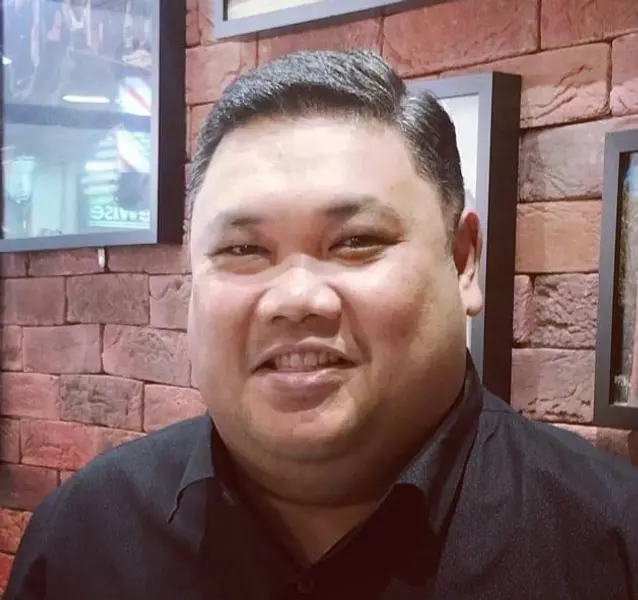
Principal Physiotherapist. ACL reconstruction and return to sport, hip and knee rehabilitation.
What our patients say
Google reviews from our clinics in Singapore.



Tampines

Principal Physiotherapist. Achilles tendinopathy, rotator cuff injury and repair, shoulder stiffness.
Orchard, Tampines, Jurong East

Principal Physiotherapist. Knee and hip replacement recovery, neck and shoulder pain, dry needling.
Tanjong Pagar, Jurong East
The program belongs to Phoenix, not to one therapist. Your plan, your measurements and your surgeon’s protocol move with you if you change clinic.
What it costs
$230 per 45 minute appointment
One to one with your therapist for the whole 45 minutes. Nett, no GST. Same price for your first appointment and your last. Stage 3 carries most of the appointments, because calf strength and balance both respond to progressive loading rather than to time. The Ankle Ligament Reconstruction Recovery Program is 12 appointments, $2,760 in all. You pay for each appointment as you attend it. If you need more, your therapist shows you which stage criteria are still open, and each extra appointment is $230.
This program runs Stages 1 to 4 of the Phoenix Recovery Protocol, and sits under physiotherapy after surgery alongside the rest of our recovery programs.
Prefer to phone? Each of our five clinics has its own number on the clinics page. No referral needed to book.
Timeframes on this page are typical ranges, not promises. Where your surgeon has given you a protocol, that protocol takes precedence over anything written here.
Where we are
Clinics across Singapore
ORCHARD
400 Orchard Road #12-12
Orchard Towers, S238875
NS22 Orchard MRT
Physiotherapy and hand therapy in Orchard →
WhatsApp 8800 1830TAMPINES
9 Tampines Grande #01-20
Asia Green, S528735
EW2DT32 Tampines MRT
Physiotherapy and hand therapy in Tampines →
WhatsApp 8780 9608SERANGOON
265 Serangoon Central Drive #04-269
S550265 · Lift C only
NE12CC13 Serangoon MRT
Physiotherapy and hand therapy in Serangoon →
WhatsApp 8892 4121TANJONG PAGAR
10 Anson Road #02-77A
International Plaza, S079903
EW15 Tanjong Pagar MRT
Physiotherapy and hand therapy in Tanjong Pagar →
WhatsApp 8227 7074JURONG EAST
2 Venture Drive #02-02
Vision Exchange, S608526
NS1EW24 Jurong East MRT
Opening 25 October 2026
Physiotherapy and hand therapy in Jurong East →
WhatsApp 8242 7340