
Written by Zita Sham, Principal Physiotherapist at Phoenix Rehab, AHPC A1302159H.Clinically reviewed by Louise Yow, Principal Physiotherapist & Director, AHPC A1300363H.Last reviewed 8 October 2026.
A dislocated ankle is an emergency: the bones of the ankle joint have been forced out of line, and in most cases one of them has also broken. Call 995. Do not try to put it back, keep the leg still as it lies, and do not eat or drink in case you need an operation.
Key takeaways
- An ankle dislocation is the shinbone and the fibula forced out of line with the talus, the bone they sit on. Most come with a fracture, and doctors call that a fracture-dislocation.
- An ankle that looks out of place, a foot at an odd angle to the leg, or a cold, pale or numb foot after an injury is a 995 call. Do not try to put it back.
- In hospital a doctor puts the joint back in line, usually under sedation, and X-rays it. Most fracture-dislocations then need an operation to hold the bones with a plate and screws.
- Your surgeon’s protocol sets when the foot can take weight. Walking without the boot is typically at 6 to 10 weeks, and running sport at 4 to 6 months or later.
- A calf that turns painful, swollen or warm in the weeks in a boot needs a doctor the same day. Chest pain or sudden breathlessness needs 995.
- Months later, what holds most people back is ankle bend and calf strength. Both are measured: the knee-to-wall test in centimeters, and single-leg calf raises counted against the other side.
Is it dislocated? What to do in the first minutes
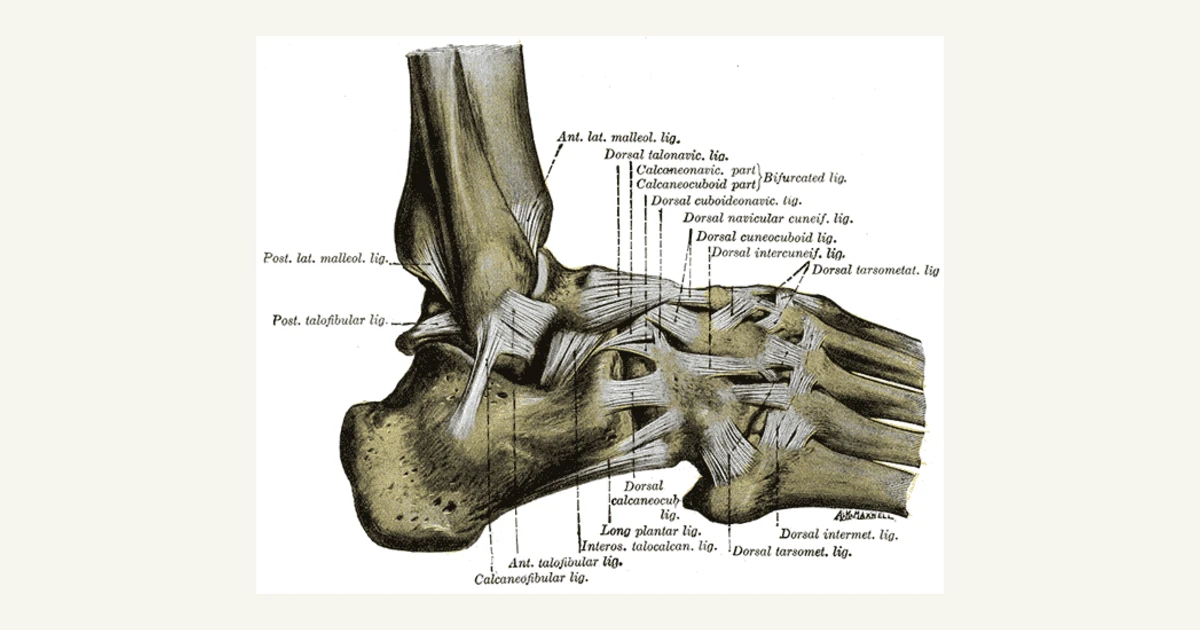
Ankle dislocation occurs when the tibia and fibula (lower leg bones) lose alignment with the talus bone in the foot. It takes force: a fall from a ladder or down a flight of stairs, a road accident, a hard tackle, a bad landing from a jump, a foot caught in a drain while the body keeps going.
The signs are hard to miss:
- The ankle looks out of place, or the foot points at an odd angle to the leg.
- You cannot take any weight on it at all.
- Severe pain, and swelling that comes up fast.
- The foot below the injury turns cold, pale or blue, or goes numb or tingles.
- The skin over the ankle is broken, stretched tight and white over a bone, or bone is showing.
What to do while you wait
- Call 995. An ankle that is out of place needs an ambulance, not a taxi and not a drive to a clinic. A cold, pale or numb foot below the injury makes it more urgent, because the blood vessels and nerves to the foot run right past the joint.
- Do not try to put it back, and do not let anyone pull on the foot. Putting a dislocated ankle back is a job for a doctor, with an X-ray and pain control.
- Keep the leg still, supported as it lies with a pillow, a rolled towel or a folded jacket on each side. Do not stand on it to test it.
- Do not eat or drink until a doctor says you can. You may need sedation or an operation the same day.
- A wrapped ice pack on the swelling can help while you wait, if you can place it without moving the ankle. Keep a cloth between the ice and the skin.
- If there is a wound, cover it with a clean cloth. Do not push anything back in.
- Pain relief and anti-inflammatory medication are a decision for your doctor or pharmacist.
Dislocated, broken or sprained?
Ask three things: how much force was there, what shape is the ankle, and can you take any weight on it.
| Injury | How it happened | What you notice | What it needs first |
|---|---|---|---|
| Ankle sprain | Rolled the ankle inward on a step, a curb or in sport | Swelling and bruising on the outer ankle. The ankle keeps its shape. Painful to walk, but you can take a few steps | Ice, early protected walking, then physiotherapy |
| Ankle fracture | The same roll with more force, a fall from height, or a direct blow | Tender on the bone itself. You cannot take four steps | A doctor the same day. The emergency department now if the ankle looks deformed |
| Ankle dislocation or fracture-dislocation | High force: a fall, a crash, a tackle, a landing | The ankle looks out of place or the foot points the wrong way. No weight at all. Sometimes a cold, pale or numb foot | Call 995 |
| Popped out and back in (subluxation) | A twist with a shift and a clunk | The shape looks close to normal afterward, with fast swelling, and the ankle feels as if it could go again | The emergency department now. A fracture or a torn ligament needs ruling out |
| A tendon slipping over the outer ankle bone | A sharp turn or a cut, often in sport | A snap or a flick behind the outer ankle bone. The ankle keeps its shape and takes weight | A doctor soon, then physiotherapy |
Ankle dislocation can also happen partially. This is known as subluxation. Unlike a true dislocation, subluxation refers to a partial displacement of the ankle joint, and the bones go back into line on their own. The ligaments can still be torn, which is why it needs the same check.
What usually happens in hospital
The emergency doctor checks the pulse, the color and the feeling in the foot first. An X-ray shows which way the joint has gone and whether a bone has broken. Anterior dislocations occur when the talus moves forward, while posterior dislocations happen when it shifts backwards.
The doctor then puts the joint back in line, which is called a reduction, usually under sedation or anesthesia. A plaster back-slab or a splint holds it, and a second X-ray checks the position. A CT scan is sometimes used to map the fractures before an operation. Whether you need a scan is your doctor’s decision.
With a fracture: the usual case
Most ankle dislocations come with a break in one or more of the bony knobs of the ankle. In a 2017 review, dislocations with no fracture at all made up about 0.46% of ankle dislocations, fewer than 1 in 200.1
Most fracture-dislocations are held with an operation called open reduction and internal fixation: the surgeon lines the bones up through a cut and holds them with a plate and screws. The operation often waits until the swelling settles, and some ankles have a temporary metal frame on the outside of the leg first. Your surgeon decides the timing.
The syndesmosis is the strong band of ligament that holds the shinbone and the fibula together just above the ankle. It is often torn in a fracture-dislocation, and the surgeon may hold it with a screw or a suture-button device. That can change how long weight is limited. Ask whether yours was injured.
Without a fracture
A dislocation without a fracture is often managed without an operation: a reduction, then a cast or boot for several weeks, as the surgeon sets. An open wound, a joint that will not stay in line, or damage to the blood vessels changes that. In the same 2017 review, stiffness was the most common problem afterward, in about 18%, and arthritis from the injury came next, in about 10%.1,2 Your surgeon follows both.
Questions to ask your surgeon
- Was there a fracture, and was the syndesmosis injured?
- When can I put weight through the foot, and how much?
- When does the cast or boot come off?
- Which movements am I allowed while it is on?
- When is my next X-ray?
- Are there signs of nerve damage?
The first weeks in the cast or boot: what is usually normal?
Your surgeon’s protocol governs weight bearing, and the plan in your discharge letter comes before anything here. After surgery, weight through the foot is often limited for about six weeks, then built back over the next six.
Usually expected:
- Swelling around the ankle and foot by evening, better after a night with the leg raised.
- Bruising that tracks down to the toes and the sole of the foot.
- An ache inside the cast or boot, worse when the leg hangs down.
- A stiff ankle and a visibly thinner calf when the boot comes off. The foot will not bend up the way the other one does.
- Being able to feel the plate under the skin, particularly on the inner ankle.
- Swelling at the end of the day for six months or more.
Keep the toes, the knee and the hip moving, keep the other leg strong, and raise the leg when you sit. Leave alone: walking on the foot before your surgeon clears it, and taking the boot off between reviews unless you have been told you can.
When to see a doctor first
- Call 995 if, after a fall, a twist or a crash, the ankle looks out of place or the foot points the wrong way, the foot below the injury is cold, pale, blue or numb, or bone is showing. Also in the weeks in a cast or boot, or after the operation, for chest pain, sudden breathlessness or coughing up blood, which can be a clot that has traveled to the lungs.
- Go to the emergency department now for numbness, a change of color in the toes, or severe pain that keeps climbing inside the cast or boot. For a leg that grows tighter and harder hour by hour after the injury, with pain far out of proportion and pain when the toes are moved. For an ankle that felt a shift and a clunk and now will not take weight, or one that looks out of line again after it was put back. And for a fall onto the operated ankle with new pain and no weight.
- See a doctor the same day if the calf becomes painful, swollen, warm, red or tender, which can mean a clot in the leg. Also for a wound that is red, hot, opening or leaking, a fever, or a sore from the cast or boot if you have diabetes.
- See a doctor soon if the swelling is worse each week instead of better, a numb patch on the top or outer edge of the foot is not shrinking, the ankle clicks, catches or gives way once you are walking, or the walk and the calf raises have not changed over 3 to 4 weeks of rehabilitation.
Months on, and the ankle still is not right
The X-ray tracks the bone. It does not show how far the ankle bends or how strong the calf is, and those two decide how you walk.
- Stiffness. The knee will not travel forward over the foot. You turn the foot out to walk, and squatting to the bottom shelf means going onto your toes.
- Swelling by evening. The sock leaves a ring around the ankle, and the shoe you wore in the morning is tight by night.
- The calf raise. You cannot rise onto your toes on that foot alone, or you manage a few and the other side does many more.
- Stairs. Going down one step at a time, injured foot first, hand on the rail.
- Uneven ground. Slopes, grass, the broken pavement by the bus stop. The ankle feels as if it will go.
In one study of patients after an ankle fracture, eight weeks in a cast left the calf weaker at every speed tested, and calf strength predicted how well they walked and climbed stairs.3 The calf is the muscle that pushes you off each step and lowers you down each stair. If this is where you are, see the three states near the end of this page.
When can I drive, work or run again?
Your surgeon decides, based on healing and what your job demands. These are typical points, not permissions. Your surgeon’s protocol takes precedence.
| Activity | Typical point | What has to be true first |
|---|---|---|
| Drive | 6 to 10 weeks | Left ankle in an automatic is often sooner. Right ankle usually waits until you are out of the boot and can brake hard. Your surgeon agrees, and check your insurer. |
| Desk work | 2 weeks | Swelling controlled, leg up when you can, and a safe way to get to work. |
| Walk without the boot | 6 to 10 weeks | Your surgeon clears full weight, and you walk without a limp. |
| Stairs leg over leg | Up: often by about 3 months. Down: 4 to 6 months or later | Ankle bend close to the other side, single-leg calf raises approaching the other side, and you can stand on the injured leg for 30 seconds. |
| Jog | 3 to 4 months | Stage 3 criteria met, including calf strength against the other leg. |
| Sport with sprints, cuts and jumps | 4 to 6 months or later | Stage 4 criteria met, including hop and change-of-direction tests against the other side, and your surgeon’s clearance. |
| Medical certificate | Your doctor issues it | Physiotherapists do not issue MCs. We can write a report on your functional limits for your doctor or employer. |
These ranges are for a fracture-dislocation held with a plate and screws, and match our Ankle Fracture Surgery Recovery Program. A dislocation without a fracture, or one with a syndesmosis repair, can run on a different timetable.
What we measure
- Ankle bend. The knee-to-wall test: how far your foot sits from the wall with the knee still touching it, in centimeters, against the other side.4
- Single-leg calf raises. How many you manage to fatigue at a set pace on each leg, and how high the heel lifts.
- Single-leg balance. Seconds standing on the injured leg, eyes open and then closed, against the other side.
- Hops. At Stage 4, single-leg hops in place, forward and side to side, counted and measured on each leg before sprinting and cutting come back.
- Swelling. A tape run around the ankle and foot in a figure of eight, in centimeters, at the same time of day at each review.
- Your own score. The Lower Extremity Functional Scale5 or the Foot and Ankle Ability Measure6, short questionnaires on what the ankle stops you doing, scored at the start and at each stage review.
Tested, not dated. You move up a stage when you meet its criteria. The weeks in the table are the usual shape, and the measures decide each step.
Ankle dislocation: who does what
- A doctor (the emergency department, then your orthopedic surgeon, your GP or a polyclinic doctor) examines the ankle, makes the diagnosis, puts the joint back in line, decides on X-rays and CT scans, decides about medication, including anything to prevent a clot, and refers you on.
- An orthopedic surgeon decides whether you need an operation, carries it out, sets when the foot can take weight and when the boot comes off, and clears you for sport.
- A physiotherapist runs the rehabilitation to your surgeon’s protocol: assesses and measures the ankle, treats the stiffness and the swelling with hands-on joint mobilization and soft tissue work, sets and progresses the exercises, explains each stage, and refers you back to a doctor when a finding needs one. If your surgeon referred you, they get a one-page report.
The four stages, applied to an ankle dislocation
In the Phoenix Recovery Protocol the work starts at Calm & Protect: weight bearing as your surgeon allows, the swelling, and the hip, knee and other leg kept strong. Move & Mobilize takes you out of the boot, brings the ankle bend back toward the other side, and gets you walking without aids or a limp. Rebuild & Strengthen loads the calf from two legs to one and trains single-leg balance. Return & Perform tests the tasks themselves: stairs down leg over leg, slopes, uneven ground, the jog, the cut on the futsal court. None of the four is passive. The measures set the pace.
Where are you with this right now?
1. It is settling as expected
You are out of the boot, and each week the ankle bends a little further. The evening swelling is smaller than it was last month. This week you took the MRT stairs up leg over leg, hand on the rail. That is a fracture-dislocation recovering the usual way. Keep to your surgeon’s protocol and your exercises. You do not need us for this, and we would rather say so.
2. It has been months, and the ankle still is not right
Five months since the plate went in. The surgeon says the bone has healed. You still take the MRT stairs down one at a time, injured foot first, hand on the rail. By evening the sock has left a ring around the ankle, and the work shoes go back on with the laces loose.
The shift is eight hours on your feet, and by four you are sitting on a carton in the stockroom. The futsal group still asks about Thursday. Your MC runs out at the end of the month.
It is only stiff, and it will loosen with time. You have been giving it time since the boot came off in week eight. The evening swelling is the same as it was in month three, and you still cannot stand on that foot alone long enough to pull on a sock.
The X-ray says the bone has healed. Has anyone counted your calf raises, or measured how far your knee travels over that foot?
If the calf is painful, swollen or warm, the wound is red, or anything in the doctor list applies, see a doctor first. If a doctor has ruled those out, or your surgeon has cleared you to load the ankle, one Assessment & Treatment with a physiotherapist measures the ankle bend against the other side, counts single-leg calf raises, times your balance, treats what is limiting you in the same visit, and tells you which stage you are in.
3. You have had surgery, or you have a date
Most ankle dislocations come with a fracture, and most of those are held with a plate and screws. The Ankle Fracture Surgery Recovery Program runs the weeks after that operation to your surgeon’s protocol. If a ligament reconstruction is planned for an ankle that keeps giving way, the Ankle Ligament Reconstruction Recovery Program covers the weeks after it. Your surgeon’s protocol takes precedence.
What our patients say
Google reviews from our clinics in Singapore.


If you have been treated and it has stopped improving, the Stalled Recovery Review is three weeks with the same physiotherapist. The first visit measures the ankle bend, the calf raises and your balance. The next two measure how they respond.
All of it runs on the same four stages. The Phoenix Recovery Protocol explains what each stage works on and what you have to meet to move up. No referral needed to start.
Next step
Find out which stage you are in
Pain is the first thing to leave. Movement and strength are the last things trained back, and most people stop before that part is done. One Assessment and Treatment is a single 45-minute appointment at $230, nett, no GST. Your therapist finds what is actually limiting you, treats it in the same appointment, and you leave with your current stage and a written plan.
Prefer to phone? Each of our five clinics has its own number on the clinics page. No referral needed to book.
Related reading
Sources: 1. Wight L, Owen D, Goldbloom D, Knupp M. Pure ankle dislocation: a systematic review of the literature and estimation of incidence. Injury. 2017;48(10):2027-2034. 2. Chaniotakis C, Tsioupros A, Samartzidis K, Alpantaki K, Stavrakakis IM. Pure ankle dislocation: a case report and a narrative literature review. Cureus. 2023;15(8):e43071. 3. Shaffer MA, Okereke E, Esterhai JL, Elliott MA, Walter GA, Yim SH, Vandenborne K. Effects of immobilization on plantar-flexion torque, fatigue resistance, and functional ability following an ankle fracture. Phys Ther. 2000;80(8):769-780. 4. Bennell K, Talbot R, Wajswelner H, Techovanich W, Kelly D, Hall A. Intra-rater and inter-rater reliability of a weight-bearing lunge measure of ankle dorsiflexion. Aust J Physiother. 1998;44(3):175-180. 5. Binkley JM, Stratford PW, Lott SA, Riddle DL. The Lower Extremity Functional Scale (LEFS): scale development, measurement properties, and clinical application. Phys Ther. 1999;79(4):371-383. 6. Martin RL, Irrgang JJ, Burdett RG, Conti SF, Van Swearingen JM. Evidence of validity for the Foot and Ankle Ability Measure (FAAM). Foot Ankle Int. 2005;26(11):968-983.
Where we are
Clinics across Singapore
ORCHARD
400 Orchard Road #12-12
Orchard Towers, S238875
NS22 Orchard MRT
Physiotherapy and hand therapy in Orchard →
WhatsApp 8800 1830TAMPINES
9 Tampines Grande #01-20
Asia Green, S528735
EW2DT32 Tampines MRT
Physiotherapy and hand therapy in Tampines →
WhatsApp 8780 9608SERANGOON
265 Serangoon Central Drive #04-269
S550265 · Lift C only
NE12CC13 Serangoon MRT
Physiotherapy and hand therapy in Serangoon →
WhatsApp 8892 4121TANJONG PAGAR
10 Anson Road #02-77A
International Plaza, S079903
EW15 Tanjong Pagar MRT
Physiotherapy and hand therapy in Tanjong Pagar →
WhatsApp 8227 7074JURONG EAST
2 Venture Drive #02-02
Vision Exchange, S608526
NS1EW24 Jurong East MRT
Opening 25 October 2026
Physiotherapy and hand therapy in Jurong East →
WhatsApp 8242 7340