
Written by Tan Yi Roe, Principal TCM Physician at Phoenix Rehab, TCMPB T1102830D.Last reviewed 3 October 2026.
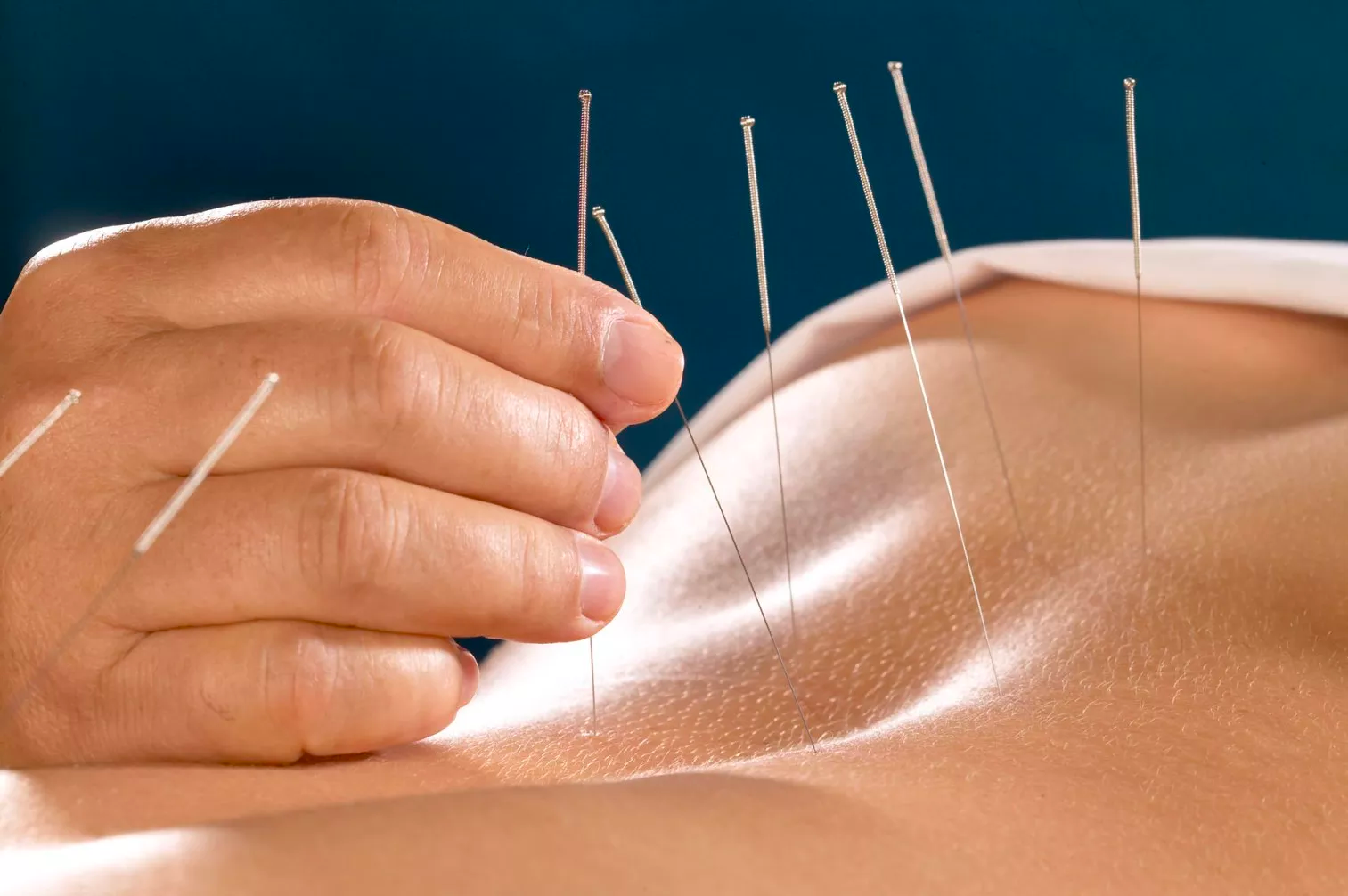
Acupuncture is the insertion of very fine, single-use needles at specific points on the body. It comes from traditional Chinese medicine (TCM), which maps the points along channels called meridians. At Phoenix it is done by our TCM physician, Tan Yi Roe, at Orchard and Tanjong Pagar, mostly for muscle and joint pain: back pain, neck pain, sciatica and knee pain.
How TCM acupuncture works
TCM describes acupuncture as regulating the flow of qi and blood through the meridians. In physiological terms, the needles stimulate nerves in the skin and muscle, and that input changes how the nervous system processes pain, including the release of the body’s own pain-modulating chemicals such as endorphins.
The research on acupuncture is mixed. It is stronger for some kinds of pain than others, and the physician will tell you plainly if they do not think it suits your problem.
What we use it for
At Phoenix, acupuncture is used for muscle and joint problems, and for the tightness and pain that come with them. It is often combined with Chinese herbal medicine, and many patients have it alongside physiotherapy.
It does not replace medical care, and we do not offer it in place of your doctor’s treatment for any medical condition.
Is acupuncture safe?
Done by a registered practitioner with single-use needles, serious problems are rare. The most common side effect is mild bruising or soreness where a needle went in. Some people feel tired or light-headed for a short while afterwards, and some notice a short flare of their symptoms for a day or so.
Tell the physician before treatment if you are pregnant, take blood thinners or have a bleeding disorder.
If you have large bruising, sharp pain, swelling or dizziness after acupuncture, tell the physician and see a doctor the same day. Difficulty breathing after acupuncture to the chest, back or shoulders is a 995 call.
Frequently asked questions on TCM acupuncture
How many acupuncture appointments do I need?
It depends on the problem and how long you have had it. After the first appointment, the physician will tell you what they suggest and when to check whether it is helping. If it is not, we stop.
Is acupuncture painful?
Usually very little. Some people feel nothing; some feel a small prick as the needle goes in. Once it is in, you may feel tingling, a dull ache, warmth or heaviness around the point. Tell the physician if anything feels sharp.
What if I’m afraid of needles?
It is the most common worry, especially the first time. Acupuncture needles are solid and very fine, far thinner than the needles used for injections or blood tests. Tell the physician. They can start with fewer needles and talk you through each one.
Are the acupuncture needles clean or sterile?
Yes. We use individually packed, single-use, disposable needles. They are never reused.
How deep will the acupuncture needles go?
Usually not deep. It depends on where the point is, the area being treated and your build: a few millimeters in the hands and feet, deeper over large muscles.
How long does each TCM acupuncture appointment last?
Up to 45 minutes, depending on what is being treated. A consultation and treatment is $230.
What should I expect during my first TCM acupuncture appointment?
The physician asks about the problem, your medical history and the medicines you take, and about things TCM treats as relevant: sleep, digestion, diet and work. They may examine areas away from where it hurts, because TCM links points along the meridians. For back pain that can include the legs and feet.
Do I need to prepare anything?
Wear loose, comfortable clothing so the physician can reach points on your arms, legs and back. Arrive 5 to 10 minutes early so you are not rushing in.
For an hour before and after, avoid a large meal, fasting for more than six hours, alcohol, hard exercise, strong perfume, and food or drinks that stain the tongue, because the physician may look at your tongue as part of the assessment.
Can I have acupuncture when I am unwell?
If you have a fever or an infectious illness, reschedule. If you are not sure, message the clinic before you come.
How will I feel after acupuncture?
Most people feel relaxed. Some feel tired or drowsy for a few hours. Some notice a change in their pain the same day, some only after a few days, and some notice a short flare first. For the rest of the day, avoid hard exercise, large meals and alcohol. A gentle walk is fine.
Tan Yi Roe practices at Orchard and Tanjong Pagar. More about TCM at Phoenix and Chinese herbal medicine.
Where are you with this right now?
1. It is settling on its own
Most injuries and most flare-ups settle over weeks with sensible load management and a return to normal movement. Improvement is judged over a month, not over a day, and good days and bad days inside that are usual. If you are doing more this month than last, and sleeping better, it is behaving the way it should. You do not need us for this, and we would rather say so.
2. It has stopped improving
You have adapted without noticing. The other side takes the load, you plan movements you used to make without thinking, and you have quietly dropped things you used to do.
Pain is the first thing to leave. Movement and strength are the last things trained back, and most people stop before that part is done. That is the gap worth measuring, and it is not measured by how you feel on the day.
The Stalled Recovery Review is three appointments over three weeks with the same therapist, because what a joint does under load cannot be read in one visit. The first finds what is limiting it. The next two measure how it responds. $690, nett, no GST, which is three appointments at $230.
3. You have had surgery, or you have a date
Recovery after an operation has a shape, and knowing which stage you are in tells you whether you are on it. See the recovery programs, hand and physiotherapy, or the four stages and what each one works on if you are not sure which applies to you.
All of it runs on the same four stages. The Phoenix Recovery Protocol explains what each stage works on and what you have to meet to move up. No referral needed to start.
What our patients say
Google reviews from our clinics in Singapore.



Next step
Find out which stage you are in
Pain is the first thing to leave. Movement and strength are the last things trained back, and most people stop before that part is done. One Assessment and Treatment is a single 45-minute appointment at $230, nett, no GST. Your therapist finds what is actually limiting you, treats it in the same appointment, and you leave with your current stage and a written plan.
Prefer to phone? Each of our five clinics has its own number on the clinics page. No referral needed to book.
Related reading
Where we are
Clinics across Singapore
ORCHARD
400 Orchard Road #12-12
Orchard Towers, S238875
NS22 Orchard MRT
Physiotherapy and hand therapy in Orchard →
WhatsApp 8800 1830TAMPINES
9 Tampines Grande #01-20
Asia Green, S528735
EW2DT32 Tampines MRT
Physiotherapy and hand therapy in Tampines →
WhatsApp 8780 9608SERANGOON
265 Serangoon Central Drive #04-269
S550265 · Lift C only
NE12CC13 Serangoon MRT
Physiotherapy and hand therapy in Serangoon →
WhatsApp 8892 4121TANJONG PAGAR
10 Anson Road #02-77A
International Plaza, S079903
EW15 Tanjong Pagar MRT
Physiotherapy and hand therapy in Tanjong Pagar →
WhatsApp 8227 7074JURONG EAST
2 Venture Drive #02-02
Vision Exchange, S608526
NS1EW24 Jurong East MRT
Opening 25 October 2026
Physiotherapy and hand therapy in Jurong East →
WhatsApp 8242 7340