
Written by Zita Sham, Fairuuz Saleh and Shiv Mohan Banka, Principal Physiotherapists at Phoenix Rehab.Clinically reviewed by Louise Yow, Principal Physiotherapist & Director, AHPC A1300363H.Last reviewed 28 September 2026.
Back pain is a common ailment known to affect 80% of adults in Singapore. While it can be caused by a variety of factors, one particular cause that often goes unnoticed is back pain when breathing in. This type of back pain can be both alarming and debilitating, making it difficult to perform everyday tasks.
In this article, we will explore the various causes of back pain when breathing in, including conditions related to lifestyle and injuries or deformities. We will also discuss when back pain may require prompt medical attention and the available treatment options.
Understanding the Chest Cavity
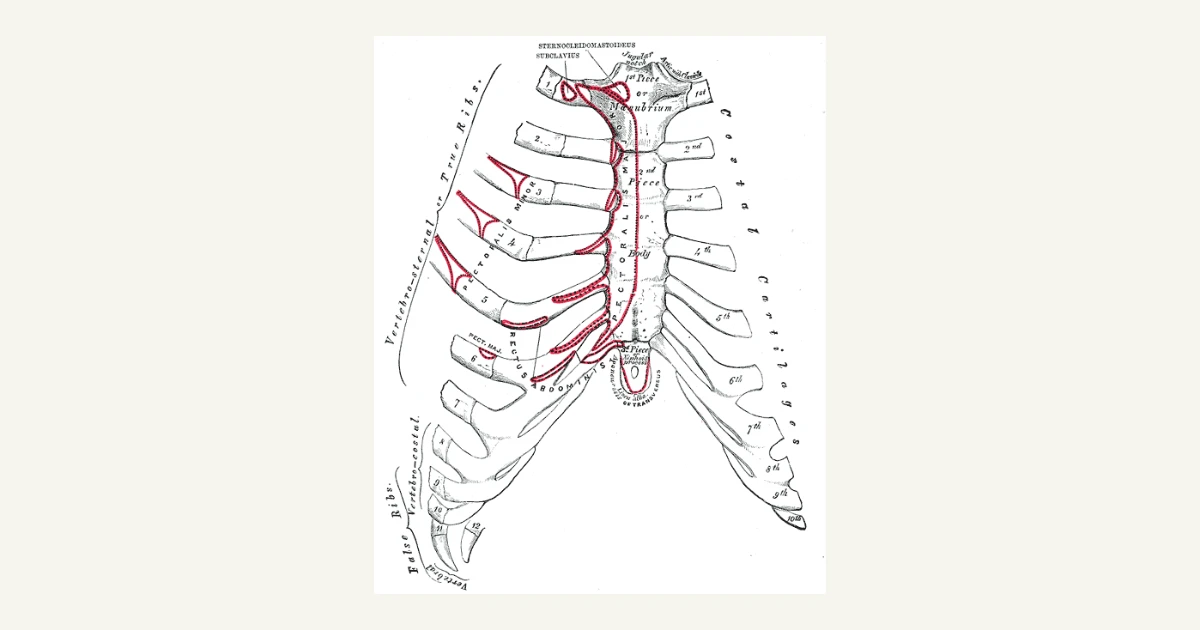
The chest cavity plays a crucial role in respiration, protection, and the functioning of multiple systems in the body. Also known as the thoracic cavity, it’s the second largest hollow space in the body, enclosed by the rib cage, vertebral column, and sternum (breastbone), and is separated from the abdominal cavity by the diaphragm.
The chest cavity contains various vital organs and structures, including the lungs, airways, heart, blood vessels, and oesophagus. It’s lined with a serous membrane called the pleura, which secretes a thin fluid to reduce friction during respiratory movements.
Causes of Back Pain While Breathing
As mentioned, the chest cavity or thoracic cavity, enclosed by several anatomical structures, protects many internal organs and structures. Any injury or trauma within or around the thoracic cavity may result in back or chest pain, with some warranting the patient to seek immediate medical care. Here are possible causes of back pain, especially while breathing deeply:
Conditions Related to Lifestyle
Several lifestyle factors can contribute to back pain when breathing in. Here are some of them:
Obesity
Excess body weight from normal adds stress on the spine, resulting in heightened pressure on the intervertebral discs and joints. This can result in disc degeneration, herniation, or compression of nerves, causing back pain. Obesity is also associated with respiratory problems that can affect breathing and can contribute to back pain.
Improper sleeping positions
Improper sleeping positions can contribute to back pain when breathing in by putting strain on the spine and affecting the alignment of the body. Sleeping in awkward positions can lead to misalignment of the spinal column, causing pain and discomfort.
Heartburn
Heartburn itself may not directly cause back pain when breathing in. However, in some cases, severe heartburn can lead to referred pain that radiates to the back and chest. This pain can be mistaken for back pain when breathing in.
Injuries or Deformities
Injuries and deformities can also be a significant cause of back pain when breathing in.
Muscle strain is a common injury that can occur from lifting heavy objects or sudden movements. This strain can cause pain that worsens when taking deep breaths.
Bruised or broken ribs or vertebrae can also lead to back pain when breathing in. The impact of a fall or accident can cause fractures or contusions, resulting in discomfort during respiration.
Additionally, scoliosis, a condition characterised by an abnormal curvature of the spine, can cause back pain when breathing in. The altered shape of the spine puts pressure on the surrounding muscles and nerves, leading to pain.
Another condition that can contribute to back pain when breathing in is a herniated disc. This occurs when the jelly-like substance within a spinal disc leaks, putting pressure on nearby nerves and causing pain.
Conditions that May Signal a Medical Emergency
While most cases of back pain when breathing in are not life-threatening, there are certain conditions requiring immediate medical attention. Here are some conditions that may warrant immediate or emergency medical attention:
Pleurisy
Pleurisy, also known as pleuritis, is the inflammation of the lining around the lungs or the inside wall of the chest. When pleurisy is present, breathing in deeply or coughing can worsen the pain, as it puts strain on the inflamed pleurae. This strain can also affect the back, leading to back pain when breathing in. It can cause sharp, stabbing pain in the chest and back, which worsens with breathing.
Pulmonary embolism
A pulmonary embolism is a life-threatening respiratory illness that occurs when a blood clot travels to the lungs. It can contribute to back pain when breathing in when the blood clot obstructs blood flow to the lungs, causing increased pressure in the pulmonary arteries. This increased pressure can then be transmitted to the adjacent structures, including the chest wall and back muscles, leading to pain and discomfort.
Lung cancer
Lung cancer can contribute to back pain when breathing in due to various reasons, which include the tumor itself pressing on the nerves in the spine or back. Another reason is the cancer spreading outside of the lungs can affect the bones or spine, resulting in back pain.
Heart attack
A myocardial infarction, commonly known as a heart attack, occurs when the blood flow to the heart muscle is suddenly blocked, leading to tissue death in the heart muscle. While a heart attack itself may not directly cause back pain when breathing in, it can lead to referred pain that radiates to the back and chest and may be accompanied by other symptoms such as shortness of breath, nausea, and dizziness. If you suspect you may be experiencing a heart attack, it is crucial to seek immediate medical help.
When Does Back Pain Need Prompt Medical Attention?
While most cases of back pain when breathing in can be managed with conservative measures, certain red flags warrant immediate medical attention. If you experience sudden, severe back pain that is accompanied by difficulty breathing, chest pain, or numbness and weakness in the extremities, it’s important to seek medical help as soon as possible. These symptoms may indicate a serious underlying condition that requires prompt diagnosis and treatment.
Treatment Options for Back Pain When Breathing
In many cases, back pain, when breathing in, resolves on its own with time and rest. If the pain is mild and does not persist or worsen, a wait-and-see approach may be appropriate. During this time, it’s important to avoid activities that exacerbate the pain and to practice good posture to relieve strain on the back. However, if the wait-and-see approach and resting doesn’t alleviate the pain, it’s time to consider the following treatment options:
Over-the-Counter Medication
For mild to moderate back pain when breathing in, over-the-counter pain relievers such as nonsteroidal anti-inflammatory drugs (NSAIDs) can provide temporary relief. These medications help reduce inflammation and alleviate pain. However, it is important to follow the recommended dosage and consult a healthcare professional if the pain persists or worsens.
Physiotherapy
Physiotherapy can be an effective treatment option for back pain when breathing in. A physiotherapist such as that from Phoenix Rehab can assess the underlying causes of the pain and develop a personalised treatment plan focusing on back pain physiotherapy.
This may include exercises to strengthen the back muscles, improve posture, and increase flexibility. Manual therapy techniques, such as massage and spinal manipulation, may also be utilised to alleviate pain and improve mobility.
Surgery
In severe cases of back pain when breathing is caused by structural issues or injuries, it may be necessary for the patient to undergo a surgical procedure. Surgical interventions aim to correct deformities, repair damaged structures, or relieve pressure on nerves. However, surgery is typically considered a last resort when conservative measures have failed to provide relief.
Final Words
Back pain, when breathing in, can significantly impact our quality of life and hinder our ability to perform daily activities. If you are experiencing back pain when breathing in, it is important to consult with a healthcare professional to determine the underlying cause and develop an effective treatment plan. With the right approach, it is possible to alleviate pain, improve breathing, and improve overall back health.
If the pain is at the front, beside the breastbone, and pressing the spot reproduces it, read costochondritis. If it runs along one rib at the side and started with a cough or a twist, it is more likely an intercostal muscle strain.
Rib pain that started with a fall or a blow to the chest is covered in rib fracture.
Where are you with this right now?
1. It is settling on its own
Most episodes of back pain settle substantially within six weeks, and staying active beats resting. Scans early on tend to find changes that are common in people with no pain at all. If it is easing week on week and you are moving more rather than less, that is the normal course. You do not need us for this, and we would rather say so.
2. It has stopped improving
You think about how you will get out of the car before you park. You brace before you sneeze. You have stopped lifting anything off the floor without planning it.
What our patients say
Google reviews from our clinics in Singapore.



The pain leaving is not the same as the capacity coming back. If nothing was loaded again, the back returns to daily life with less than it had. That is the gap worth measuring, and it is not measured by how you feel on the day.
The Stalled Recovery Review is three appointments over three weeks with the same therapist, because what a joint does under load cannot be read in one visit. The first finds what is limiting it. The next two measure how it responds. $690, nett, no GST, which is three appointments at $230.
3. You have had surgery, or you have a date
Recovery after an operation has a shape, and knowing which stage you are in tells you whether you are on it. See the recovery programs, or lower back physiotherapy if you are not sure which applies to you.
All of it runs on the same four stages. The Phoenix Recovery Protocol explains what each stage works on and what you have to meet to move up. No referral needed to start.
Next step
Find out which stage you are in
Pain is the first thing to leave. Movement and strength are the last things trained back, and most people stop before that part is done. One Assessment and Treatment is a single 45-minute appointment at $230, nett, no GST. Your therapist finds what is actually limiting you, treats it in the same appointment, and you leave with your current stage and a written plan.
Prefer to phone? Each of our five clinics has its own number on the clinics page. No referral needed to book.
Related reading
- physiotherapy after surgery
- lower back physiotherapy
- Natural Home Remedies for Back Pain: Effective Solutions for Relief
- Cervical Herniated Disc Relief: Understanding Causes and Treatments
- Slipped Disc Sleeping Position: Tips for Resting Comfortably
- The Phoenix Recovery Protocol, and the four stages
- All recovery programs, hand and physio
Where we are
Clinics across Singapore
ORCHARD
400 Orchard Road #12-12
Orchard Towers, S238875
NS22 Orchard MRT
Physiotherapy and hand therapy in Orchard →
WhatsApp 8800 1830TAMPINES
9 Tampines Grande #01-20
Asia Green, S528735
EW2DT32 Tampines MRT
Physiotherapy and hand therapy in Tampines →
WhatsApp 8780 9608SERANGOON
265 Serangoon Central Drive #04-269
S550265 · Lift C only
NE12CC13 Serangoon MRT
Physiotherapy and hand therapy in Serangoon →
WhatsApp 8892 4121TANJONG PAGAR
10 Anson Road #02-77A
International Plaza, S079903
EW15 Tanjong Pagar MRT
Physiotherapy and hand therapy in Tanjong Pagar →
WhatsApp 8227 7074JURONG EAST
2 Venture Drive #02-02
Vision Exchange, S608526
NS1EW24 Jurong East MRT
Opening 25 October 2026
Physiotherapy and hand therapy in Jurong East →
WhatsApp 8242 7340