
Written by Zita Sham, Fairuuz Saleh and Shiv Mohan Banka, Principal Physiotherapists at Phoenix Rehab.Clinically reviewed by Louise Yow, Principal Physiotherapist & Director, AHPC A1300363H.Last reviewed 28 September 2026.
Knee pain is a prevalent health issue that affects both men and women, but the causes and experiences can differ significantly between the genders.
Women, in particular, may face unique challenges when it comes to knee pain due to several reasons, including anatomy, muscle usage, and hormonal factors. Biologically, women are more prone to knee injuries due to wider hips, putting more stress on joints and limber ligaments.
While women’s general anatomy and physical attributes are not something they can change, there are proven ways to prevent and treat knee pain. But first, understanding the causes of knee pain in women is essential.
In this article, we delve into the complexities of knee pain in women, exploring the various causes, common knee problems, effective treatment and prevention strategies, and knowing when to see a doctor.
Differences in Women’s Leg Anatomy
One key factor contributing to knee pain in women is the inherent differences in leg anatomy compared to men.
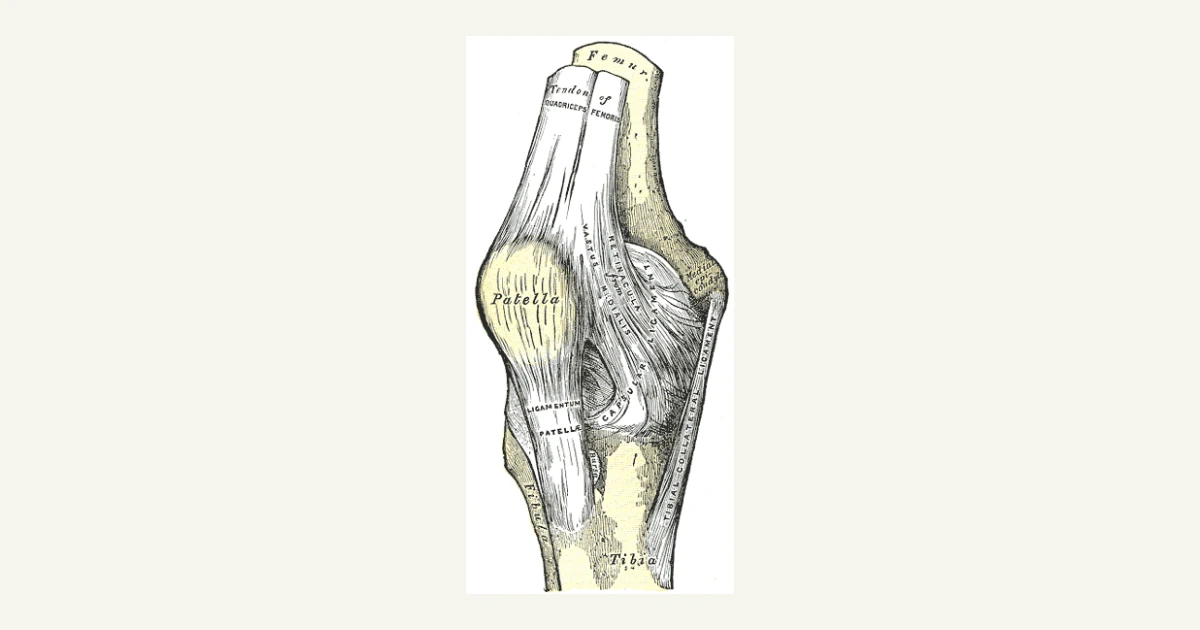
Women often have wider hips and a greater angle of the thigh bone where it meets the knee, known as the Q angle. This structural variation can place increased stress on the knee joint, leading to issues like patellofemoral pain, where the knee cap rubs against the thigh bone, causing discomfort and inflammation.
People who run or play sports that involve jumping commonly experience patellofemoral pain. Nonetheless, women didn’t have to engage in sports to develop aching knees. In fact, nearly 10 million women see a doctor for experiencing knee pain simply from lifting boxes, carrying weights, or going up and down staircases, as per UCSF Health.
Women Use Their Muscles Differently Than Men
Women utilize their muscles differently than men, which can affect knee joint mechanics. For instance, women typically rely more on their quadriceps muscles than their hamstrings during activities like running or jumping. This muscular imbalance can result in improper knee cap tracking and increase the risk factors of conditions like patellar tendon or anterior cruciate ligament (ACL) injuries.
This type of knee injury happens when a force exceeds what the ligaments can handle, such as when there is a rapid change of direction or pivot. If you have poor physical conditioning and lack of flexibility, knee injury or pain is a common problem you might face.
Hormonal Factors Contribute to Women’s Knee Pain
Hormonal fluctuations, particularly during menstruation and pregnancy, have been linked to women’s experience of knee pain and injury risks. Clinicians have seen relationships between estrogen levels and alterations in knee laxity and ligament stiffness, potentially increasing susceptibility to knee injuries. Likewise, a study found that muscle and joint pain are top menopausal symptoms for women in Singapore.
Additionally, conditions like rheumatoid arthritis (RA), which commonly affects women about three times more due to low levels of estrogen, also contribute to chronic knee pain and inflammation.
Common Knee Problems Women Encounter
Knee pain in women often stems from aging, sports injuries, or repeated stress. As people get older, their knee joints wear down, leading to conditions like osteoarthritis (OA). In Singapore, women over 60 have a higher prevalence of experiencing the symptoms of OA than men, with an estimate of 18% and 9.6%, respectively.
Understanding the causes and management of knee problems in women is crucial for finding the right treatment and early prevention, whether through exercise, lifestyle changes, physical therapy, or medical treatment.
Patella or Kneecap Pain and Swelling
Patellofemoral pain syndrome, characterized by pain around or behind the kneecap, is a common complaint among women. Activities that involve repetitive flexed knees, such as squatting or climbing stairs, can exacerbate this condition, leading to aching knees and discomfort during movement.
In a healthy knee, the patella moves smoothly up and down as you straighten your leg. However, sometimes it can shift off its usual path, causing it to rub against nearby bone and cartilage. This friction can result in pain and swelling, and you might even notice a crackling sound.
Meniscus Tears
The meniscus, a C-shaped knee cartilage, can tear due to sudden twisting movements or wear and tear over time. Women involved in sports that require pivoting and cutting motions, like soccer or basketball, are at increased risk of torn meniscus, which can cause pain, swelling, and limited mobility.
ACL Tears
Anterior cruciate ligament injuries, though not exclusive to women are more common among female athletes. The ACL is one of the major ligaments in the knee joint, providing stability during activities involving sudden stops or changes in direction. Tears or sprains of the ACL can result from landing awkwardly, pivoting abruptly, or direct trauma to the knee, leading to severe pain and instability.
People who have ACL tears often say their knee suddenly feels weak or gives way. They might hear or feel a pop when the injury happens. Other signs include swelling within a few days after the injury, difficulty bending or straightening the knee fully, and the knee giving way during physical activities.
Overuse Injuries
Women who engage in repetitive activities or high-impact sports may experience overuse injuries, such as tendonitis or bursitis, which cause inflammation and swelling around the knee joint. Without proper rest and rehabilitation, overuse injuries can progress to chronic knee pain and functional limitations.
How To Treat Knee Pain in Women?
A comprehensive approach is essential when treating women who experience knee pain.
If your knee problem is causing you distress and disrupting your day-to-day activities, it is time you seek the help of physiotherapy for knee pain in Singapore.
Not all knee problems require replacement or surgery, especially for young adults who have far more options for treatment. Targeted exercises and rehabilitation to strengthen knee joint muscles, particularly the quads and hamstring muscles, can improve overall knee health. Physical therapy is a standard treatment for knee problems and similar injuries, and it aims to provide long-lasting pain relief.
Phoenix Rehab physiotherapists treat knee pain at five clinics in Singapore. Whether surgery or an injection is needed is a doctor decision, not ours, and many knees are managed without either. A trained and experienced knee physiotherapist helps you get back on track, improve mobility and strength, and walk comfortably again.
Home treatment options for less severe knee injury or pain are also helpful, including:
- Rest and Ice: Resting the affected knee and applying ice packs can help relieve pain and reduce inflammation.
- Compression: Use knee braces or wraps to provide support and reduce swelling.
- Heat therapy: Place a heating pad or warm towel on the affected area to relax muscles and enhance blood circulation.
- Over-the-counter pain relievers: Take medications from your doctor to alleviate discomfort.
- Anti-inflammatory: If rest or icing your knee does not work, take prescripted anti-inflammatories to reduce knee swelling. If pain persists, consult a physiotherapist for a thorough evaluation, physical exam, and personalized treatment plan.
For severe injuries or advanced degenerative conditions that require surgical interventions, see a doctor in these cases.
How To Prevent Knee Pain In Women?
To reduce pain and risks of knee injuries in women, always consider what has been proven: prevention. Here are some strategies to help maintain knee health:
- Warm-Up and Stretch: Always warm up before engaging in physical activity and incorporate dynamic stretching exercises to prepare the muscles and joints for movement.
- Cross-Train: Avoid bearing weight or overloading the knees by incorporating various low-impact activities, like swimming or cycling, into your fitness routine.
- Weight management: Maintain a healthy weight to reduce pressure on your knees and prevent further strain.
- Use Proper Technique: Whether running, jumping, or lifting weights, practice proper form and technique to minimize stress on the knees and reduce the risk of injury.
- Wear Supportive Footwear: Invest in well-fitting athletic shoes with adequate cushioning and shock absorbers to reduce impact on the knees.
- Listen to Your Body: Pay attention to any warning signs of knee pain or discomfort, and avoid pushing through the pain to prevent exacerbating existing injuries.
Understanding the unique factors contributing to knee pain in women helps individuals minimize the risk of debilitating injuries. Implementing proactive measures to protect knee health ensures you can maintain an active lifestyle free from chronic pain and limitations.
If knee pain persists despite conservative or home treatments, consult a physiotherapist or a healthcare professional for proper guidance and intervention.
Where are you with this right now?
1. It is settling on its own
Most knee pain that started with a specific moment settles over six to twelve weeks. Swelling that comes and goes with activity, and an ache after a long day, are usual in that window. If it is improving month on month and you can walk, take stairs and sleep, it is behaving normally. You do not need us for this, and we would rather say so.
2. It has stopped improving
You go down stairs one leg at a time. You have stopped squatting to pick things up. You test it before you trust it.
What our patients say
Google reviews from our clinics in Singapore.


Pain settling is the first thing that happens, not the last. Quadriceps strength is the last thing to come back, and it does not come back on its own. That is the gap worth measuring, and it is not measured by how you feel on the day.
The Stalled Recovery Review is three appointments over three weeks with the same therapist, because what a joint does under load cannot be read in one visit. The first finds what is limiting it. The next two measure how it responds. $690, nett, no GST, which is three appointments at $230.
3. You have had surgery, or you have a date
Recovery after an operation has a shape, and knowing which stage you are in tells you whether you are on it. See the ACL Reconstruction Recovery Program, or knee physiotherapy if you are not sure which applies to you.
All of it runs on the same four stages. The Phoenix Recovery Protocol explains what each stage works on and what you have to meet to move up. No referral needed to start.
Next step
Find out which stage you are in
Pain is the first thing to leave. Movement and strength are the last things trained back, and most people stop before that part is done. One Assessment and Treatment is a single 45-minute appointment at $230, nett, no GST. Your therapist finds what is actually limiting you, treats it in the same appointment, and you leave with your current stage and a written plan.
Prefer to phone? Each of our five clinics has its own number on the clinics page. No referral needed to book.
Related reading
- physiotherapy after surgery
- knee physiotherapy
- Knee Pain When Cycling: Causes and What to Check
- Inside Knee Pain: Common Causes and Care Options
- Soft Tissue Knee Injury: Causes and Recovery
- The Phoenix Recovery Protocol, and the four stages
- All recovery programs, hand and physio
- Sharp Knee Pain: Common Causes and When to Seek Help
Where we are
Clinics across Singapore
ORCHARD
400 Orchard Road #12-12
Orchard Towers, S238875
NS22 Orchard MRT
Physiotherapy and hand therapy in Orchard →
WhatsApp 8800 1830TAMPINES
9 Tampines Grande #01-20
Asia Green, S528735
EW2DT32 Tampines MRT
Physiotherapy and hand therapy in Tampines →
WhatsApp 8780 9608SERANGOON
265 Serangoon Central Drive #04-269
S550265 · Lift C only
NE12CC13 Serangoon MRT
Physiotherapy and hand therapy in Serangoon →
WhatsApp 8892 4121TANJONG PAGAR
10 Anson Road #02-77A
International Plaza, S079903
EW15 Tanjong Pagar MRT
Physiotherapy and hand therapy in Tanjong Pagar →
WhatsApp 8227 7074JURONG EAST
2 Venture Drive #02-02
Vision Exchange, S608526
NS1EW24 Jurong East MRT
Opening 25 October 2026
Physiotherapy and hand therapy in Jurong East →
WhatsApp 8242 7340