
Written by Zita Sham, Principal Physiotherapist at Phoenix Rehab, AHPC A1302159H.Clinically reviewed by Louise Yow, Principal Physiotherapist & Director, AHPC A1300363H.Last reviewed 3 November 2026.
Ten weeks after the surgeon fixed the ankle with a screw or a suture button, the boot is off. So why does the front of the ankle still pinch on every step down to the MRT platform, and why does it feel like the joint has a block in it when you squat?
A high ankle sprain is an injury to the ligaments that bind the two shin bones together just above the ankle. It is less common than the usual rolled ankle and much slower to settle, and the unstable ones are fixed surgically. This page covers how to tell it from an ordinary sprain, when it needs surgery, what recovery after the fixation usually looks like week by week, the signs that mean a doctor first, and what to do when the ankle stops improving.
What is a high ankle sprain?
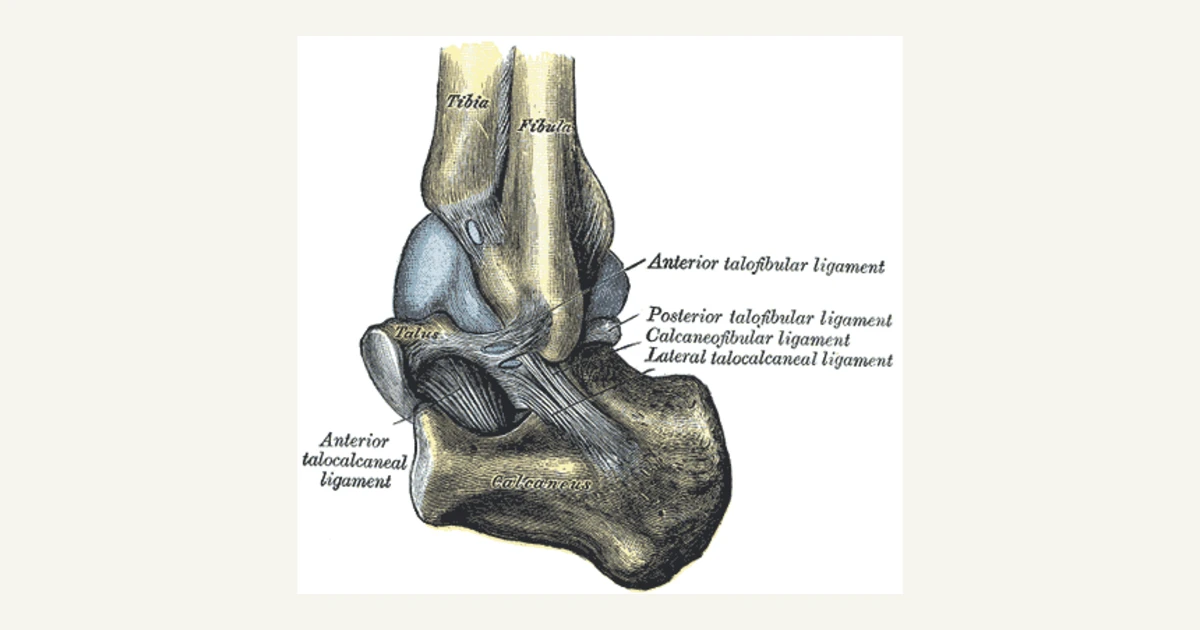
A high ankle sprain is an injury to the syndesmosis, the group of ligaments that holds the lower ends of the tibia and fibula together just above the ankle joint. It usually happens when the foot is forced to twist outward. Stable injuries are managed without surgery. When the two bones separate under load, the injury is unstable and a surgeon usually fixes it with a screw or a suture button.1,2
Key takeaways
- A high ankle sprain injures the ligaments binding the two shin bones together above the ankle, not the ligaments on the outside of the ankle that a rolled ankle injures.
- It usually comes from the foot twisting outward, and the pain sits at the front of the ankle, above the joint line.
- It takes longer to settle than an ordinary ankle sprain.
- Stable injuries are managed without surgery. When the shin bones separate, a surgeon usually fixes them with a screw or a suture button.
- After fixation, the surgeon’s protocol sets when you can take weight. Pushing off, going down stairs and squatting are usually the last things to come back.
First, the signs that mean a doctor, not this page
- Call 995 if the ankle is visibly out of shape, bone shows through a wound, or the foot is cold, white or blue. Also for sudden breathlessness or chest pain after an injury or operation.
- Go to the emergency department now if you could not take four steps straight after the injury, the bone is tender at the back edge or tip of either ankle bone, or pain is severe and getting worse with the lower leg tight and hard. Those are signs that call for an X-ray or urgent review.
- See a doctor the same day if the wound after surgery is red, hot or oozing, you have a fever, or one calf is swollen, hot and tender. After ankle surgery that calf can be a blood clot.
- See a doctor soon if pain at the front of the ankle, above the joint, has not eased after two to three weeks, or pain returns suddenly after a fixation with a new click or give.
None of these? Then the rest of this page is for you.
High ankle sprain or a rolled ankle?
| High ankle sprain | Rolled ankle (lateral sprain) | |
|---|---|---|
| How it happened | The foot twisted outward, often with the body turning over a planted foot | The foot rolled inward, over its outer edge |
| Where it hurts | The front of the ankle, above the joint line, between the two shin bones | The outside of the ankle, below and in front of the outer ankle bone |
| What hurts most | Pushing off, going down stairs, squatting with the knee over the toes, turning the foot outward | Rolling the foot inward, uneven ground |
| Swelling | Often less than you would expect for how much it hurts | Often a visible egg on the outside of the ankle |
| Who confirms it | A doctor, with X-rays and sometimes an MRI. Separation of the shin bones decides whether surgery is needed | |
The ordinary rolled ankle is covered in ankle sprain: what happens in the ligament.
How long does a high ankle sprain take to heal?
Longer than an ordinary sprain. Stable high ankle sprains managed without surgery commonly take six to eight weeks or more before running and cutting sports, and often about twice as long as a rolled ankle of similar severity.1 After surgical fixation, return to running is usually around three to four months and to cutting sports around four to six months, set by your surgeon’s protocol.
Does a high ankle sprain need surgery?
Only when it is unstable. A stable injury, where the shin bones stay together under load, is managed in a boot or brace with rehabilitation. When the bones separate on X-ray or under stress, or the injury comes with an ankle fracture, a surgeon usually holds the bones together with a screw or a suture button while the ligaments heal.2 That decision belongs to your orthopedic surgeon. Screws are sometimes removed at a later, smaller operation. In a pooled analysis of trials, fewer suture buttons than screws needed removing.3 If you have a screw, ask your surgeon whether it will come out and when.
Recovery after syndesmosis fixation, stage by stage
Every surgeon has their own protocol, and theirs takes precedence over this table. These are the usual ranges, and how they map to the four stages of the Phoenix Recovery Protocol.
| Weeks after surgery | Stage | What usually happens |
|---|---|---|
| 0 to 2 | Calm & Protect | Splint or boot, crutches, weight through the leg only as your surgeon allows, the leg up, wound care. Hip and knee kept strong. |
| 2 to 6 | Calm & Protect | Boot, weight increased in steps your surgeon sets, gentle ankle movement within the limits you were given. |
| 6 to 12 | Move & Mobilize | Out of the boot, full weight, crutches off, ankle bend measured with the knee-to-wall test, walking without a limp. |
| 3 to 4 months | Rebuild & Strengthen | Calf strength against the other side, single-leg balance, stairs and squats, then a return to running once the criteria are met. |
| 4 to 6 months onward | Return & Perform | Hopping, cutting and the demands of work and sport, tested side to side. |
If the syndesmosis was fixed together with an ankle fracture, the Ankle Fracture Surgery Recovery Program runs on this shape.
When can I…?
| Activity | Typical range after fixation |
|---|---|
| Return to desk work | 1 to 3 weeks, with the leg up and a safe way to get there on crutches |
| Drive | Left ankle in an automatic car: once off strong painkillers and out of the splint. Right ankle: usually not until you are out of the boot and can brake hard, often 6 to 10 weeks. Check with your surgeon and your insurer. |
| Walk without the boot | 6 to 10 weeks |
| Stairs foot over foot | 2 to 3 months |
| Running | 3 to 4 months, once strength criteria are met |
| Football, basketball, badminton | 4 to 6 months |
| Medical certificate | Your doctor issues it. Physiotherapists can write a report on your functional limits |
Is this normal after the fixation?
Usually expected: swelling that is worse by evening for several months; stiffness bending the ankle up in the morning; aching at the front of the ankle after a day on your feet; a patch of numb skin near the scar.
Contact your surgeon: a new click, give or sudden pain at the front of the ankle; a wound that is red, hot or oozing; fever; a hot, swollen calf; or ankle bend that has stopped improving for two to three weeks despite doing the exercises.
Why the boot comes off and the ankle still is not right
The thinking goes: the surgeon fixed it, the X-ray shows the bones together, the boot is off. Walk on it and it will free up.
At week twelve you still go down the MRT stairs with the other foot first. Stepping off the bus onto the kerb pinches at the front of the ankle. You cannot squat to the bottom shelf at the supermarket without lifting the heel. The futsal boots are still in the bag, and the return-to-work date is two weeks away.
The ligaments between the shin bones are the first thing to heal. The ankle bend and the calf strength are the last things to come back, because for weeks the ankle was held in a boot and kept from loading. Walking on the flat uses little of either. Going down stairs and squatting need the ankle to bend well past what walking asks, which is why those are the movements that still pinch.1
Your ankle may no longer hurt much on the flat. Has anyone measured how far your knee travels past your toes on that side against the other, or counted how many single-leg calf raises each side can do? If not, nobody knows what is still missing, or what the next stage asks of it.
What a physiotherapist does with it
Finding the real problem is half the battle. Treating it is the other half.
At the Assessment & Treatment, a physiotherapist reads your surgeon’s protocol, then measures what the ankle can do today: ankle bend with the knee-to-wall test against the other side, single-leg calf raises, single-leg balance, how you go down a step, how you walk, and, once your surgeon allows, a hop. Without surgery, the same tests are done along with the squeeze and external rotation tests that point to a high ankle sprain. If the tests suggest instability or a missed fracture, we stop and write to your doctor. Imaging and the decision to operate are theirs. Physiotherapists do not order imaging.
Most of the 45 minutes is treatment: hands-on work for the stiff ankle within the allowed range, calf and hip loading that starts where the leg is and is measured up at each review, and balance retraining. You leave knowing which stage you are in, what is limiting the ankle, and what the next stage asks of it, with a written plan.
More on physiotherapy for ankle pain, ankle fracture physiotherapy if the bone broke too, and physiotherapy after surgery. Every appointment is one to one with your physiotherapist for the full 45 minutes, at five clinics: Orchard, Tampines, Serangoon, Tanjong Pagar and Jurong East. Bring your surgeon’s letter, the operation note if you have one, and your boot.
Questions about high ankle sprains
How long does a high ankle sprain take to heal?
Longer than an ordinary rolled ankle. Stable injuries managed without surgery commonly take six to eight weeks or more before running and cutting sports. After surgical fixation, return to running is usually around three to four months and to cutting sports around four to six months, set by the surgeon’s protocol.
What is the difference between a high ankle sprain and a low ankle sprain?
A low ankle sprain, the usual rolled ankle, injures the ligaments on the outside of the ankle when the foot rolls inward. A high ankle sprain injures the ligaments that bind the two shin bones together above the ankle, usually when the foot twists outward. It hurts at the front of the ankle above the joint and takes longer to settle.
Can you walk on a high ankle sprain?
Many people can walk on a stable high ankle sprain, often in a boot, and walking itself does not rule it out. Pushing off, going down stairs and squatting usually hurt most. If you could not take four steps straight after the injury, see a doctor for an X-ray first.
Does a high ankle sprain need surgery?
Only when it is unstable. A stable injury is managed in a boot or brace with rehabilitation. When the two shin bones separate, or the injury comes with an ankle fracture, a surgeon usually holds them together with a screw or a suture button. The decision is made by an orthopedic surgeon.
Will the screw in my ankle be removed?
Sometimes. Some surgeons remove syndesmosis screws at a later, smaller operation and others leave them in. Suture buttons are removed less often. Ask your surgeon whether yours will come out and when.
Twelve weeks after the fixation and the other foot still leads on the MRT stairs? Get Assessed & Treated, and leave knowing how far that ankle bends against the other one, which stage you are in, and what the next stage asks of it.
Sources: 1. Williams GN, Allen EJ. Rehabilitation of syndesmotic (high) ankle sprains. Sports Health. 2010;2(6):460-470. 2. Hunt KJ, Phisitkul P, Pirolo J, Amendola A. High ankle sprains and syndesmotic injuries in athletes. J Am Acad Orthop Surg. 2015;23(11):661-673. 3. Shimozono Y, Hurley ET, Myerson CL, Murawski CD, Kennedy JG. Suture button versus syndesmotic screw for syndesmosis injuries: a meta-analysis of randomized controlled trials. Am J Sports Med. 2019;47(11):2764-2771.
Where are you with this right now?
1. It is settling on its own
Most injuries and most flare-ups settle over weeks with sensible load management and a return to normal movement. Improvement is judged over a month, not over a day, and good days and bad days inside that are usual. If you are doing more this month than last, and sleeping better, it is behaving the way it should. You do not need us for this, and we would rather say so.
2. It has stopped improving
You have adapted without noticing. The other side takes the load, you plan movements you used to make without thinking, and you have quietly dropped things you used to do.
What our patients say
Google reviews from our clinics in Singapore.


Pain is the first thing to leave. Movement and strength are the last things trained back, and most people stop before that part is done. That is the gap worth measuring, and it is not measured by how you feel on the day.
The Stalled Recovery Review is three appointments over three weeks with the same therapist, because what a joint does under load cannot be read in one visit. The first finds what is limiting it. The next two measure how it responds. $690, nett, no GST, which is three appointments at $230.
3. You have had surgery, or you have a date
Recovery after an operation has a shape, and knowing which stage you are in tells you whether you are on it. If the syndesmosis was fixed together with an ankle fracture, see the Ankle Fracture Surgery Recovery Program. If your outer ankle ligaments were also reconstructed at the same operation, see the Ankle Ligament Reconstruction Recovery Program. For a syndesmosis fixation on its own, bring your surgeon’s protocol and we work inside it: see physiotherapy after surgery, or all the recovery programs, hand and physiotherapy.
All of it runs on the same four stages. The Phoenix Recovery Protocol explains what each stage works on and what you have to meet to move up. No referral needed to start.
Next step
Find out which stage you are in
Pain is the first thing to leave. Movement and strength are the last things trained back, and most people stop before that part is done. One Assessment and Treatment is a single 45-minute appointment at $230, nett, no GST. Your therapist finds what is actually limiting you, treats it in the same appointment, and you leave with your current stage and a written plan.
Prefer to phone? Each of our five clinics has its own number on the clinics page. No referral needed to book.
Related reading
Where we are
Clinics across Singapore
ORCHARD
400 Orchard Road #12-12
Orchard Towers, S238875
NS22 Orchard MRT
Physiotherapy and hand therapy in Orchard →
WhatsApp 8800 1830TAMPINES
9 Tampines Grande #01-20
Asia Green, S528735
EW2DT32 Tampines MRT
Physiotherapy and hand therapy in Tampines →
WhatsApp 8780 9608SERANGOON
265 Serangoon Central Drive #04-269
S550265 · Lift C only
NE12CC13 Serangoon MRT
Physiotherapy and hand therapy in Serangoon →
WhatsApp 8892 4121TANJONG PAGAR
10 Anson Road #02-77A
International Plaza, S079903
EW15 Tanjong Pagar MRT
Physiotherapy and hand therapy in Tanjong Pagar →
WhatsApp 8227 7074JURONG EAST
2 Venture Drive #02-02
Vision Exchange, S608526
NS1EW24 Jurong East MRT
Physiotherapy and hand therapy in Jurong East →
WhatsApp 8242 7340