
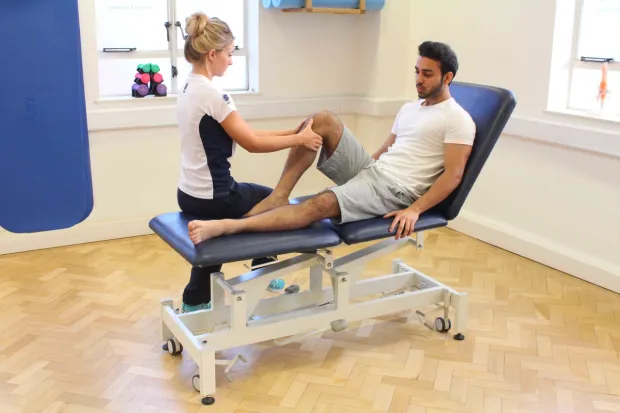
Written by Zita Sham, Fairuuz Saleh and Shiv Mohan Banka, Principal Physiotherapists at Phoenix Rehab.Clinically reviewed by Louise Yow, Principal Physiotherapist and Director, AHPC A1300363H.Last reviewed 28 September 2026.
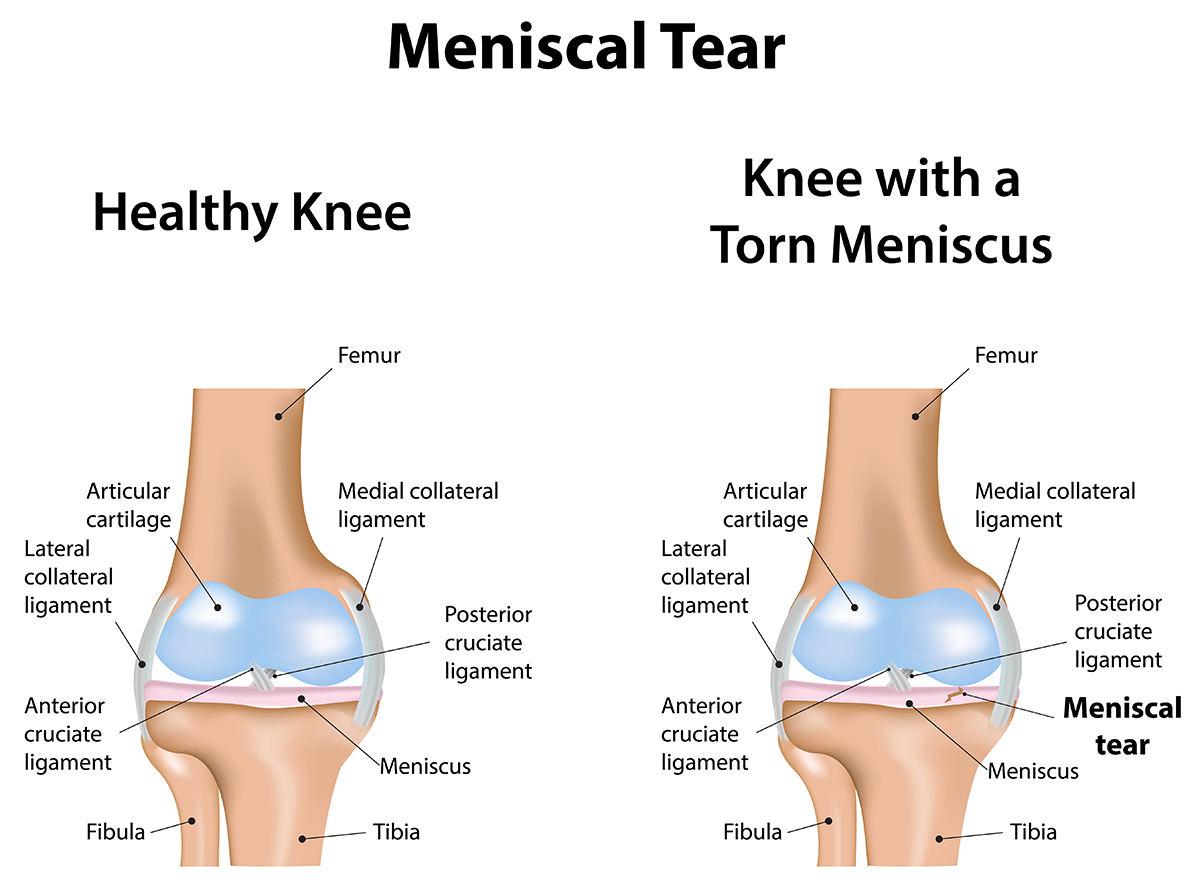
Meniscal tears are common injuries to the cartilage of the knee that can affect athletes and non-athletes alike.
These meniscal tears can be either acute (meaning they happen as a result of a particular movement or accident) or degenerative (meaning they happen over time).
Our senior physiotherapists can help you heal from a meniscal tear and improve your strength and movement. If surgery is required, your physical therapist can help you prepare for the procedure and recover following surgery.
WHAT IS A MENISCAL TEAR?
The meniscus is a cartilage disc that cushions your knee.
Each of your knees has two menisci (plural of meniscus); one on the inner (medial) part of the knee, and the other on the outer (lateral) part of the knee.
Together, they
- absorb shock
- stabilize the knee joint.
Meniscal tears can be classified in two ways: acute or degenerative.
- An acute meniscal tear typically is caused by twisting or turning quickly on a bent knee, often with the foot planted on the ground. This mechanism of injury often produces related injuries, such as an anterior cruciate ligament (ACL) tear.
- Degenerative meniscal tears occur over time, due to repetitive stress being put on the knee, such as in a job or sport that requires a lot of squatting.
WHAT DOES A MENISCUS TEAR FEEL LIKE?
When you tear the meniscus, you might experience:
- A sharp, intense pain in the knee area
- A “pop” or a tearing sensation in the knee area (acute injury)
- Swelling within the first 24 hours of injury
- Difficulty walking or going up or down stairs because of pain or a “catching or locking” sensation in the knee (knee locking)
- Difficulty straightening or bending the knee fully.
HOW IS IT DIAGNOSED?
Our senior physiotherapist will:
- Conduct a thorough evaluation that includes a detailed review of your injury, symptoms, and health history.
- Perform special tests to measure the range of motion (amount of movement) in your knee and determine which specific movements and positions increase your symptoms.
- Use a series of tests that apply pressure to the meniscus to determine whether it appears to be damaged.
The results of these tests may indicate the need for further diagnostic tests, such as magnetic resonance imaging (MRI), or a referral to an orthopedic surgeon for consultation.
HOW OUR SENIOR PHYSIOTHERAPISTS CAN HELP YOU
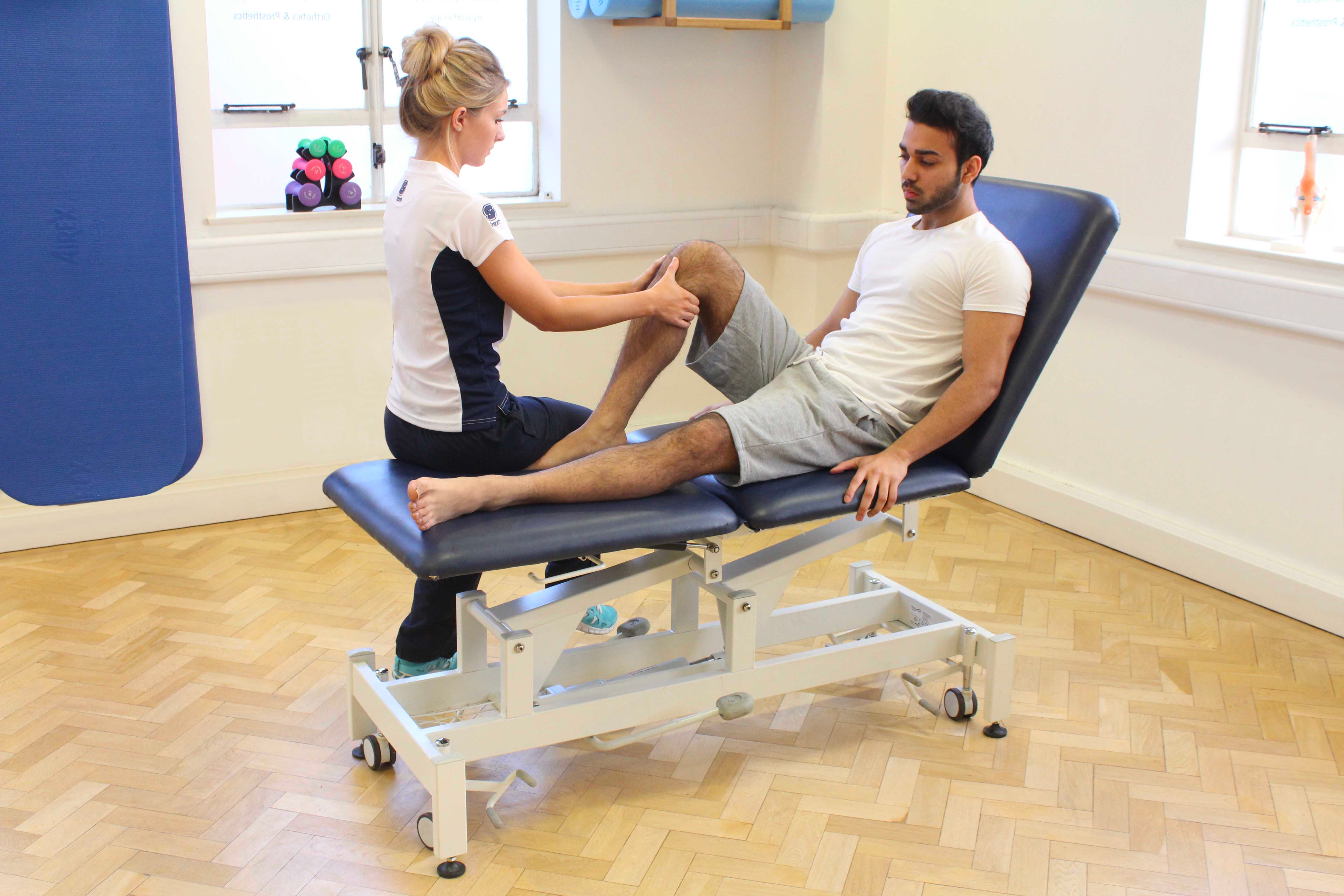
With effective knee physiotherapy, meniscal tears can often be managed without surgery.
A short course of treatment provided by our senior physiotherapists can help determine whether your knee will recover without surgery. We can help control pain and swelling in the knee area and work with you to improve full strength and mobility to your knee.
Your knee physiotherapy treatments may include:
Manual therapy
We may apply manual therapy (hands-on treatment) that may include
- massage
- stretching
- joint mobilization
to help reduce swelling and reduce joint stiffness, and rebuild muscle function around the knee.
Icing
We will apply cold therapy to the painful knee to help control any pain and swelling, and may instruct you to apply icing at home. Swelling is an important “guide” during your rehabilitation and can indicate your level of ability and recovery.
If you experience an increase in swelling, we will modify your treatment program or activity level to ensure your safest, most effective recovery.
Compression
We may recommend the use of compression bandages, stockings, or pumps to assist in the reduction of edema (swelling).
We may include them as part of your regular treatments, and teach you and your family how to use them at home.
NMES
We may use a treatment called neuromuscular electrical stimulation (NMES). NMES uses electrical current to gently stimulate/contract the muscles around your knee to help improve their strength.
Assistive devices
It may be necessary to use assistive devices such as crutches, a cane, or a walker in the short term.
We will make recommendations about which device is best for you, and instruct you in how to use it properly.
Strengthening exercises
We will design exercises to build and maintain your strength during recovery and help improve full movement to the knee. You will be given a home program of exercises that are specific to your condition.
Strengthening the muscles around the knee and throughout the leg helps ease pressure on the healing knee tissue.
If surgery Is required
Patients with more serious meniscal tears, or those who don’t respond to a course of physical therapy, may need corrective knee surgery to repair the injured knee.
Surgically removing the torn cartilage (a procedure called a meniscectomy) usually is a simple procedure that requires a course of physical therapy treatment following surgery.
Many people are able to return to their previous level of activity, including sports, after approximately 4-6 months of knee physiotherapy treatment.
Meniscus removal
Following a simple meniscectomy, your physiotherapy journey will likely be similar to that for non-surgical meniscal injuries. We may use cold therapy to relieve pain and reduce swelling, and will show you how to use these treatments at home.
The focus of your physiotherapy treatment will be on helping you get your strength and movement back, through a series of exercises performed in the clinic and at home, as well as with hands-on treatment (manual therapy).
Initially, it is likely that you will need to use crutches or a cane for walking. We will help guide you in gradually placing your weight on the knee to stand or walk, to allow the meniscus and other tissues in the knee joint to slowly adjust to increased pressure.
Meniscus repair
Sometimes your knee orthopedic surgeon will decide that the torn meniscus can be repaired instead of removed. Research studies show that if a meniscal repair is possible, it can reduce the risk of arthritis developing later in life.
What our patients say
Google reviews from our clinics in Singapore.



Rehabilitation following a meniscal repair is slower and more extensive than with meniscal removal, because the repaired tissue must be protected while it is healing.
The type of surgical technique performed, the extent of your injury, and the preferences of the surgeon often determine how quickly you will be able to put weight on your leg, stop using crutches, and return to your previous activities.
Following surgery for meniscal repair, our senior physiotherapist will:
- Help you control pain and swelling
- Guide you through progressive reloading of weight to the knee to allow the cartilage to slowly adjust to increased compressive stress and pressure
- Help improve your knee and leg range of motion
- Teach you exercises to help improve your muscle strength.
Return to Activity
Whether your torn meniscus recovered on its own or required surgery, we will play an important role in helping you return to your previous activities.
We will help you learn to walk without favoring the leg and perform activities like going up and down stairs with ease.
Return to work
If you have a physically demanding job or lifestyle, we can help you return to these activities and improve how you perform them.
Return to sport
If you are an athlete or active in sports and activities, you may need a more extensive course of knee physiotherapy. We will help you fully improve your
- strength
- endurance
- flexibility
- coordination
to help maximize your return to sports and prevent reinjury.
Return to sport varies greatly from one person to the next and depends on the extent of the injury, the specific surgical procedure, the preference of the surgeon, and the type of sport.
Our senior physiotherapists in Phoenix Rehab will consider these factors when designing and adjusting your rehabilitation program, and will work closely with your surgeon to help decide when it is safe for you to return to sports and other activities.
Where are you with this right now?
1. It is settling on its own
Most knee pain that started with a specific moment settles over six to twelve weeks. Swelling that comes and goes with activity, and an ache after a long day, are usual in that window. If it is improving month on month and you can walk, take stairs and sleep, it is behaving normally. You do not need us for this, and we would rather say so.
2. It has stopped improving
You go down stairs one leg at a time. You have stopped squatting to pick things up. You test it before you trust it.
Pain settling is the first thing that happens, not the last. Quadriceps strength is the last thing to come back, and it does not come back on its own. That is the gap worth measuring, and it is not measured by how you feel on the day.
The Stalled Recovery Review is three appointments over three weeks with the same therapist, because what a joint does under load cannot be read in one visit. The first finds what is limiting it. The next two measure how it responds. $690, nett, no GST, which is three appointments at $230.
3. You have had surgery, or you have a date
Recovery after an operation has a shape, and knowing which stage you are in tells you whether you are on it. See the ACL Reconstruction Recovery Program, or knee physiotherapy if you are not sure which applies to you.
All of it runs on the same four stages. The Phoenix Recovery Protocol explains what each stage works on and what you have to meet to move up. No referral needed to start.
Next step
Find out which stage you are in
Pain is the first thing to leave. Movement and strength are the last things trained back, and most people stop before that part is done. One Assessment and Treatment is a single 45-minute appointment at $230, nett, no GST. Your therapist finds what is actually limiting you, treats it in the same appointment, and you leave with your current stage and a written plan.
Prefer to phone? Each of our five clinics has its own number on the clinics page. No referral needed to book.
Related reading
Where we are
Clinics across Singapore
SERANGOON
265 Serangoon Central Drive #04-269
S550265 · Lift C only
NE12CC13 Serangoon MRT
WhatsApp 8892 4121TANJONG PAGAR
10 Anson Road #02-77A
International Plaza, S079903
EW15 Tanjong Pagar MRT
WhatsApp 8227 7074JURONG EAST
2 Venture Drive #02-02
Vision Exchange, S608526
NS1EW24 Jurong East MRT
Opening 20 October 2026
WhatsApp 8242 7340