Singaporean athletes train, recover, and return to competition. During these times, sports physiotherapy plays a central role in improving recovery outcomes and reducing injury risk.
From elite to recreational athletes pushing performance goals, treatment is no longer limited to rest and basic rehabilitation. Modern sports physiotherapy combines manual techniques, structured exercise programmes, and movement analysis to prevent injury and enhance performance. These techniques are selected based on injury type, sport demands, and individual biomechanics.
What are the Sports Physiotherapy Techniques in Singapore?
Sports physiotherapy in Singapore follows evidence-based rehabilitation principles, often combining hands-on therapy, exercise-based treatment, and advanced recovery tools. Clinics like Phoenix Rehab design treatment plans that progress through stages, starting with pain management, followed by strength rebuilding, and finally return-to-sport training.
Below are the key techniques commonly used in sports physiotherapy practice.
Hands-On Therapy and Muscle Release
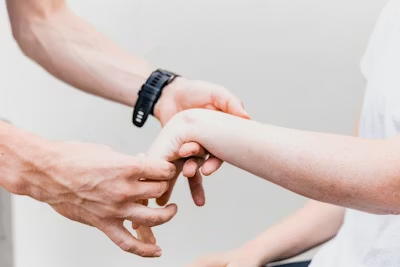
Hands-on therapy focuses on improving joint and soft tissue function through manual techniques. These methods are often used in the early stages of rehabilitation to reduce pain, improve mobility, and prepare the body for exercise-based recovery.
Joint Mobilisation and Manipulation
Joint mobilisation and manipulation involve controlled movements applied to stiff or restricted joints. The goal is to improve joint range of motion and reduce discomfort during movement. It is typically performed in a graded manner, using gentle to moderate pressure depending on tolerance and condition severity. It is commonly used for:
- Stiff knees after injury
- Restricted ankles following sprains
- Shoulder tightness from overuse
In sports rehabilitation, improving joint mobility is important because restricted movement can alter biomechanics and increase the risk of compensation injuries.
Soft Tissue Techniques
Soft tissue techniques focus on muscles, tendons, and connective tissue. These methods aim to reduce muscle tightness, improve blood flow, and relieve tension caused by overuse or injury.
Common approaches include:
- Deep tissue massage
- Myofascial release
- Trigger point therapy
These techniques are especially useful for athletes with muscle strains or chronic tightness. They help restore tissue flexibility and support more efficient movement during training and competition.
Dry Needling and Acupuncture
Dry needling and acupuncture are sometimes used in sports physiotherapy to address muscle tightness and pain points. This method targets specific muscle trigger points to reduce tension and improve function. Acupuncture, based on traditional Chinese medicine principles, is used to support pain relief and recovery.
While these techniques are not standalone treatments, they are often used alongside exercise therapy to improve overall rehabilitation outcomes.
Exercise Therapy and Movement Correction
Exercise therapy is the foundation of modern sports physiotherapy. Unlike passive treatments, it focuses on rebuilding strength, control, and movement efficiency to restore full function and reduce reinjury risk.
Movement correction is also a key component, ensuring that athletes move correctly during sport-specific activities.
Dynamic Stretching
Dynamic stretching involves controlled, active movements that prepare the body for physical activity. It is commonly used during warm-ups to improve mobility and reduce injury risk.
Unlike static stretching, dynamic stretching keeps muscles active while increasing the range of motion. Examples include leg swings, walking lunges, and controlled arm movements.
This exercise is useful for athletes who require explosive movement, such as runners, footballers, and basketball players.
Strength Training
Strength training is essential for rebuilding muscle capacity after injury and improving overall performance. In sports physiotherapy, strength programmes are tailored to the individual’s sport and injury history.
Common focus areas include:
- Quadriceps and hamstring strength for knee stability
- Glute strength for lower limb control
- Shoulder and rotator cuff strength for overhead sports
Progressive loading is used to gradually increase resistance, ensuring tissues adapt without overload.
Core Stability Work
Core stability training focuses on strengthening the muscles around the trunk and pelvis. A strong core supports efficient movement and reduces stress on joints during activity.
Exercises may include:
- Planks and side planks
- Controlled rotational movements
- Anti-extension and anti-rotation drills
Core stability is especially important in sports that involve running, jumping, or rapid direction changes.
Balance and Coordination Training
Balance and coordination training improves neuromuscular control—the body’s ability to stabilise and react during movement. This type of training is crucial after injuries such as ankle sprains or knee ligament injuries, where joint stability may be reduced.
Typical exercises include:
- Single-leg balance drills
- Unstable surface training
- Reaction-based movement tasks
These exercises help reduce reinjury risk by improving joint awareness and control.
Gait and Movement Analysis
Gait and movement analysis involves assessing how an athlete walks, runs, or performs sport-specific movements. This helps identify biomechanical issues that may contribute to injury or reduced performance.
Physiotherapists analyse:
- Foot strike patterns during running
- Knee alignment during squats or landing
- Hip and pelvic control during movement
Based on this assessment, corrective exercises are prescribed to reduce stress on vulnerable areas. This is important for runners and athletes with recurring lower limb injuries.
Supportive Therapies and Recovery Tools
Supportive therapies are often used alongside exercise and manual therapy to help manage pain, reduce inflammation, and support recovery between training sessions. These methods are not standalone treatments but can improve comfort and allow athletes to progress through rehabilitation.
Taping and Bracing
Taping and bracing are commonly used in sports physiotherapy to provide short-term support to joints and muscles. Taping techniques, such as kinesiology or rigid sports tape, help to improve joint awareness and support injured structures during movement. Additionally, it can also help to reduce strain on healing tissues.
Bracing provides external stability, especially for joints like the knee or ankle. It is often used during early return-to-sport phases or when additional support is needed during activity.
While helpful, taping and bracing are temporary aids and should always be combined with active rehabilitation to address underlying issues.
Percussive Therapy
Percussive therapy uses rapid, repetitive pressure applied to muscles using handheld devices. It is commonly used to reduce muscle tightness and improve blood flow. It is typically used as a recovery tool rather than a primary treatment method.
Electrotherapy and Ultrasound
Electrotherapy and ultrasound are modalities used to support tissue healing and pain management. It involves low-level electrical stimulation to help reduce pain and muscle inhibition. Ultrasound uses sound waves to promote tissue circulation and may support healing in soft tissue injuries.
These modalities are generally used in early rehabilitation stages or when pain limits active exercise participation.
Hydrotherapy
Hydrotherapy involves performing exercises in water to reduce load on the body while maintaining movement. The buoyancy of water reduces joint stress, allows earlier movement after injury, and supports gentle strength and mobility work.
Lower limb injuries or post-surgical rehabilitation usually benefit from this method when weight-bearing exercises are still limited.
Targeted Techniques
Other sports physiotherapy techniques are used in specific cases where traditional methods need additional support. These approaches are often introduced during later stages of rehabilitation or for performance enhancement.
Cupping Therapy
Cupping therapy uses suction on the skin to help ease muscle tightness and improve blood circulation. In sports rehabilitation, it may help:
- Relieve deep muscle tension
- Improve tissue mobility
- Support recovery after intense training
While some athletes report short-term relief, it is typically used as an adjunct to exercise-based rehabilitation rather than a primary treatment.
Blood Flow Restriction (BFR) Training
Blood Flow Restriction (BFR) training involves applying a controlled pressure band around a limb during low-load exercise. This reduces blood flow temporarily, allowing muscles to experience strength gains even with lighter weights.
BFR is useful when:
- Heavy loading is not possible due to pain or injury
- Post-surgical recovery limits full resistance training
- Early-stage strength rebuilding is required
Research shows that BFR can help maintain or improve muscle strength while reducing stress on healing tissues, making it a valuable tool in rehabilitation settings.
Choosing the Right Sports Physiotherapy Singapore for Your Needs
With so many treatment options available, what sports physiotherapy to choose depends not only on the techniques used but also on how well they are applied to your condition. When choosing a sports physiotherapy clinic in Singapore, consider:
- Whether the clinic offers evidence-based and exercise-focused rehabilitation
- If treatment plans are individualised based on assessment findings
- The physiotherapist’s experience with your type of injury or sport
- Whether progress is regularly reviewed and adjusted
- If care combines both manual therapy and active rehabilitation
A good sports physiotherapist combines multiple approaches to help athletes return stronger and more confident in their movement. When techniques are matched to the injury and guided by proper assessment, athletes can recover properly and reduce the risk of repeat injuries.