Pickleball has a very specific problem, and it is not the sport’s fault.
It is the easiest ball sport in the world to start. Small court. Light paddle. Slow ball. You can be playing properly inside twenty minutes of picking up a paddle for the first time, which is exactly why it has spread across Singapore the way it has.
That is also the trap.
Because the people filling those courts are not beginners at sport. They are people in their forties, fifties and sixties who played something serious twenty or thirty years ago. Football. Squash. Basketball. Netball. Their brain remembers exactly how to move. Their tendons have not been asked to do it since 2003.
So the skill returns immediately and the tissue does not. That gap is where almost every injury we see from this sport lives.
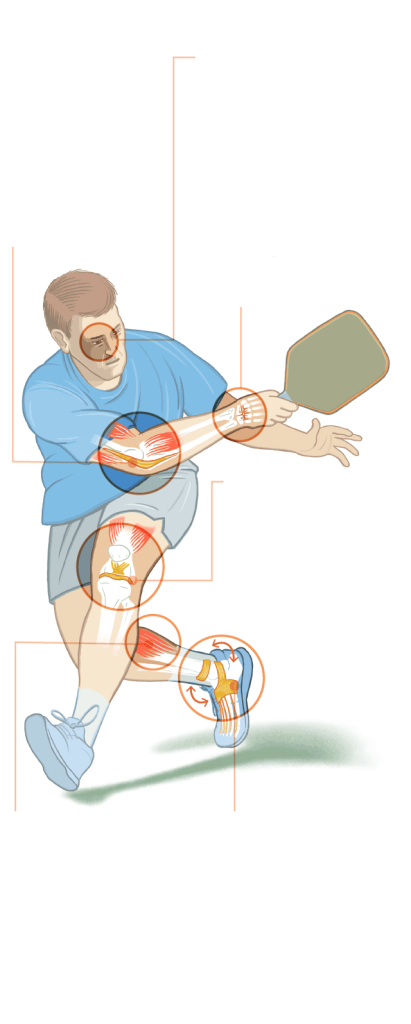
Here are the five, what they actually feel like, and the specific mistake that turns each one from a few weeks into a few months.
The Achilles (The One That Ends Seasons)
If you only read one section, read this one.
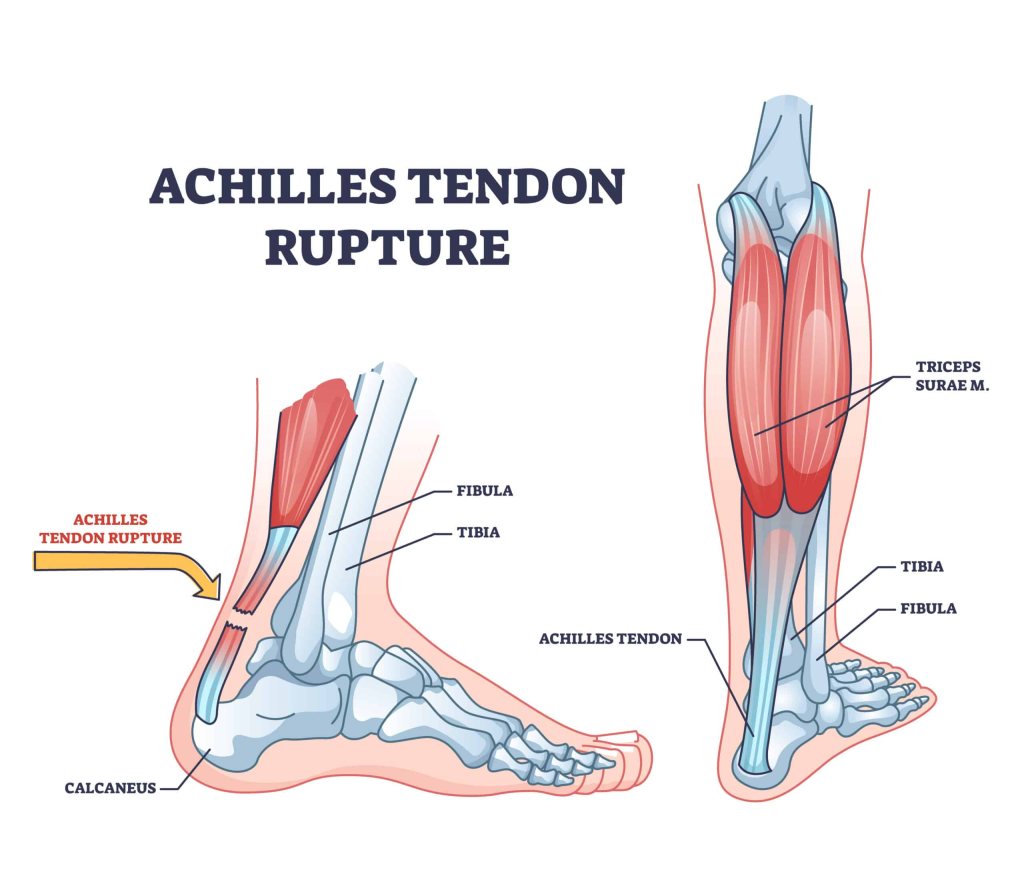
What it actually is. The Achilles is the thick cord at the back of your ankle connecting your calf muscle to your heel. Pickleball asks it to do the one thing it likes least. Stand still, then push off explosively and sideways, over and over, on a hard court, with no warning.
The injury ranges from irritation of the tendon, to a partial tear, to a complete rupture where the cord snaps entirely.
How you will know. Almost everyone describes a complete rupture the same way. A sudden bang or pop at the back of the ankle, and the absolute certainty that somebody behind them kicked them or hit them with a ball. They turn round. Nobody is there.
Then, oddly, they can often still walk. Limping, flat footed, but walking. That is the part that causes the damage.
Where players go wrong. They assume that walking means it cannot be torn. Other muscles in the leg can get you moving well enough to hobble to the car even when the Achilles is completely ruptured. So the visit gets postponed. Ice it, rest it, see how it is on Monday.
A rupture treated late is a different problem to a rupture treated early. The gap between the two torn ends widens, the options narrow, and the calf you get back is usually weaker for good. That weakness is not cosmetic. It is push off power, single leg balance, and how confidently you go down stairs at seventy.
What treatment actually looks like. Our physios at Phoenix Rehab handle both routes, surgical and non surgical, and the choice is made with a surgeon based on the type of tear and on you. What does not change is that the rehabilitation is long, staged and specific. Months, not weeks. Rushing the middle third of it is the most common reason people re rupture.
The line to remember. Sudden pop at the back of the ankle plus a sensation of being struck from behind means get it examined that week. Not when it is convenient.
The One That Gets Confused With It: The Calf Tear
Worth its own paragraph because we see this weekly.
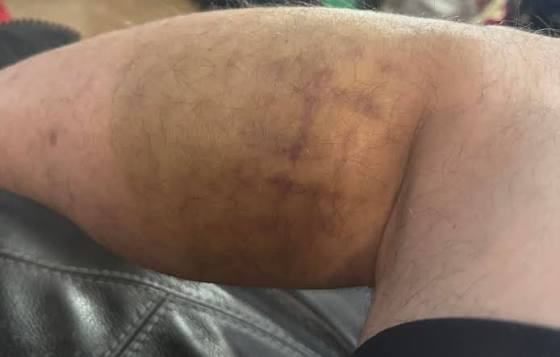
A tear in the calf muscle itself, higher up in the meat of the muscle, produces the same sudden pain and the same “somebody kicked me” story. It is a completely different injury with a much friendlier outlook.
You cannot reliably tell them apart yourself. The two feel similar and the assumption goes both directions. People with a calf tear panic about surgery they do not need. People with a ruptured Achilles relax about surgery they do.
Get told which one you have. It changes everything that follows.
Pickleball Elbow
What it actually is. Pain on the outside of the elbow, at the bony point. The muscles that pull your wrist back all attach there through one shared tendon. Every backhand, every block at the net, every hard shot taken slightly late loads that spot.
It is the same tendon problem as tennis elbow. The nickname just changed sports.
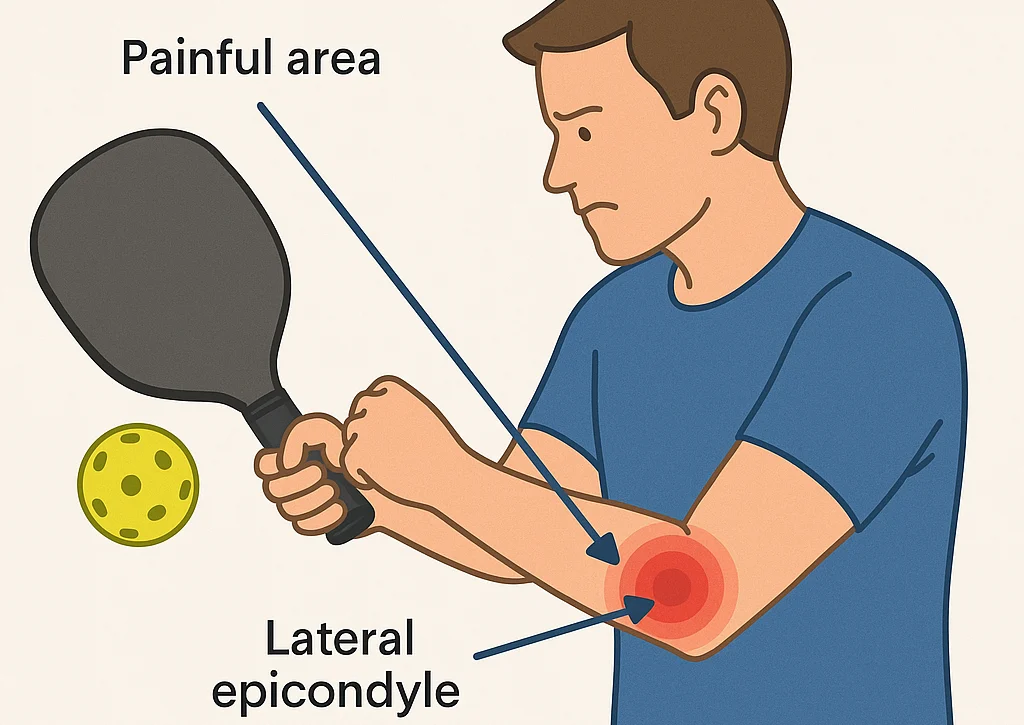
How you will know. Sore on the outside of the elbow. Painful gripping the paddle, shaking hands, lifting a kettle, opening a door. Worse the morning after playing. It builds gradually over weeks, which is why people play through it without ever making a decision about it.
Where players go wrong. Three things, in order of how much damage they do.
Playing more. The sport is addictive and social, and going from two sessions a week to five is where most of these start. The tendon does not care that you are enjoying yourself. It cares about how fast the load went up.
Blaming the paddle. Grip size and paddle weight genuinely matter, but no equipment change fixes a tendon that has already been overloaded. Buying a new paddle instead of getting the elbow treated just delays the treatment by the length of the shipping time.
Complete rest. Two weeks off feels wonderful and rebuilds nothing. The pain returns on the first session back, because a tendon that has been rested is a tendon that has become weaker.
What treatment actually looks like. Our physios load these deliberately and progressively. It is unglamorous, it is measured in weeks, and most players keep playing throughout at a modified volume. That last part is usually what makes people actually complete the programme.
The Shoulder
What it actually is. Serving and smashing put the shoulder overhead repeatedly at speed. The rotator cuff is the small group of muscles holding the ball of the shoulder centred while the big muscles generate the power. Past the age of about forty, that cuff already has some natural wear in it, in people with no symptoms at all.
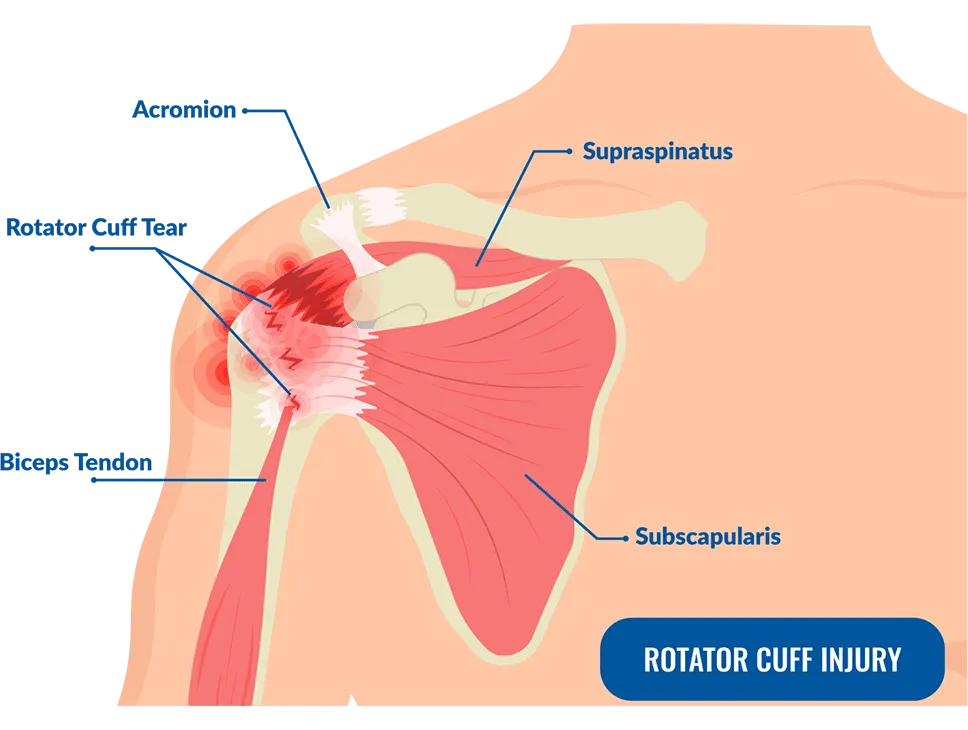
Add a hundred overheads a week to a shoulder that has not gone overhead in years and it makes itself known.
How you will know. Pain reaching up or across. A deep ache on the outside of the upper arm. Difficulty sleeping on that side, which is often the symptom that finally makes people call. Weakness lifting the arm out to the side.
Where players go wrong. Stretching it aggressively and pushing through the overheads. Most pickleball shoulders are an irritation and capacity problem, not a flexibility problem. Stretching a shoulder that is already unstable at the top of its range tends to make it angrier.
What treatment actually looks like. Our physios first work out which of three things this is. A control problem, a capacity problem, or actual structural damage to the cuff. Those need genuinely different plans, and treating a torn cuff as though it were a weak one wastes months.
The Knee
What it actually is. Pickleball has a very particular movement signature. Short lateral shuffles, sudden stops, quick pivots, and a lot of half squatting at the net waiting for the ball. On a hard court, with no shock absorption.
That produces three common problems. Pain at the front of the knee around the kneecap, which is the most common and the least serious. Tears in the cartilage discs inside the knee, usually from a twist or a deep pivot. And in the smaller number of unlucky cases, damage to the ligaments inside the joint from a planting movement that went wrong.
How you will know. Front of knee pain that builds over sessions and hurts on stairs and after sitting. Or a distinct twisting moment followed by swelling that came in over the next day, catching, locking, or a knee that feels like it might give way.
Where players go wrong. Treating swelling as normal soreness. A knee that swells after a specific twisting incident is telling you something happened inside the joint. Swelling that comes back every time you play is not conditioning. It is a joint being asked for more than it can currently give.
What treatment actually looks like. Front of kneecap pain responds very well to guided strength work and load management, and rarely needs anything invasive. The twisting injuries need assessment first, because whether there is a tear inside the joint changes both the plan and the timeline entirely.
Falls: The Wrist And The Ankle
This is the section I want to talk about directly, because falls are the most preventable injury in the sport and the most expensive when they happen.
Nigel Chua here, hand therapist. The wrist half of this is my own field.
The movement that causes it. Someone lobs the ball over your head. You step backwards to chase it, still facing the net, moving heel first. Your weight goes behind your feet. You go down backwards.
That single movement causes more serious pickleball injuries than any other. Nothing else is close.
What happens on the way down. You put a hand out. Everybody does, it is a reflex you cannot train away. The full force of a falling adult lands through one outstretched palm and into the wrist, and the bone just above the wrist joint takes it. That is a distal radius fracture, and it is the classic pickleball fracture.
The other outcome is landing on the hip, which in players over sixty is a serious injury with a long recovery.
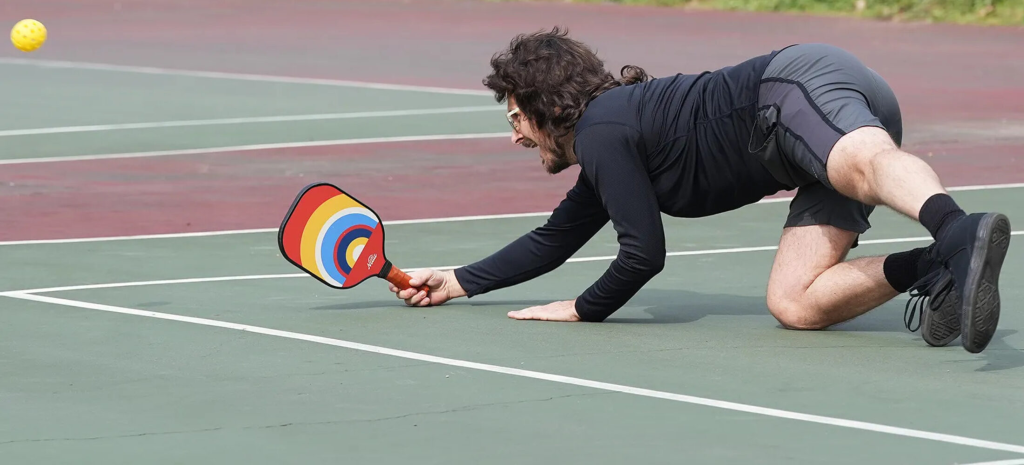
Going forwards, the sport produces a different fall. Lunging for a drop shot at the kitchen line, foot rolls over, and that is your standard sprained ankle on the outside of the joint.
Where players go wrong.
On the ankle, they under treat it. An ankle sprain is treated as a nuisance. Then it sprains again four months later, and again after that, and by the third one the joint has genuinely lost its position sense and the ankle has become unreliable. Repeat sprains are not bad luck. They are an untreated first sprain.
On the wrist, they under estimate the stiffness. A broken wrist gets a cast or an operation, and people assume the healed bone is the end of the story. It is not. Six weeks immobilised leaves a wrist and hand that is swollen and stiff, and a hand that does not move for six weeks does not simply remember how afterwards. Getting movement, grip and rotation back is a separate piece of work from healing the bone, and it is the piece that determines whether you get your hand fully back or almost fully back.
Almost fully back sounds acceptable until you try to turn a key, push out of a chair, or hold a paddle again.
What treatment actually looks like. For the ankle, restoring strength and balance properly the first time so there is no second time. For the wrist after a fracture, hand therapy alongside your surgeon’s plan, starting as early as the surgeon allows, focused on swelling, movement and gradually returning load.
How to not fall in the first place. Never step backwards facing the net. Turn your body sideways and shuffle, or turn and run. If the lob is genuinely over your head, let it go. One lost point against a fractured wrist is not a close decision.
The Four Things That Prevent Most Of This
- Wear court shoes, not running shoes. This is the single highest value change on the list. Running shoes are built to move you forwards and have almost no support sideways. Pickleball is a sideways sport. Playing lateral movement in running shoes is the most common preventable cause of rolled ankles we see.
- Warm up for five minutes. Not stretching. Moving. Walk, shuffle, gentle side steps, a few easy swings before the first hard shot. The Achilles and the calf are the two tissues that most need to be warm before an explosive push off, and they are exactly what people skip.
- Add sessions slowly. Going from two to five games a week in one month is how nearly every tendon problem in this article starts. Add one session and hold it for a few weeks before adding another.
- Turn, do not backpedal. Repeated because it matters most.
When To Get It Looked At
Book an assessment if any of these apply.
- A sudden pop or bang in the calf or back of the ankle, whether or not you can still walk
- A knee that swelled up after a twisting moment
- Any fall onto an outstretched hand where the wrist is still painful or swollen the next day
- An ankle you have now sprained more than once
- Elbow or shoulder pain lasting beyond three weeks despite playing less
- Shoulder pain that is waking you at night
Getting It Looked At
The reason people delay is almost always the same. They are not sure it is bad enough to be worth someone’s time.
The whole job of a first appointment is to answer that question. What it is. Whether it needs a scan or a surgical opinion. How long it will actually take. And whether you can keep playing while it settles, which for most of these is yes with modifications.
WhatsApp us at 83366009.
Tell us what happened and when. We will tell you straight whether this is something we handle, something that needs a scan first, or something you can safely manage yourself.
One to one sessions at Orchard, Tampines, Serangoon and Tanjong Pagar.
Most people find pickleball because they wanted to move properly again. Chase a ball, sweat, be competitive, feel like an athlete rather than someone who used to be one. That is worth protecting properly.
Sort it early and you play through most of it. Leave it and the sport decides for you.
Frequently Asked Questions on Pickleball-related Injuries
- I felt a pop in my calf playing pickleball. Is it my Achilles? It might be the Achilles tendon or a tear in the calf muscle itself. Both produce a sudden pop and the sensation of being struck from behind, and they have very different treatments and timelines. Being able to walk afterwards does not rule out a complete Achilles rupture, so it should be examined promptly.
- What is pickleball elbow? Pain on the outside of the elbow from overload of the shared tendon of the wrist extensor muscles, the same problem as tennis elbow. It usually follows a rapid increase in playing volume rather than any single incident.
- Will a different paddle fix my elbow pain? Grip size and paddle weight influence how much load reaches the tendon, so equipment is worth reviewing. It will not resolve a tendon that is already irritated. That needs progressive loading and a change in playing volume.
- Why do pickleball players fall backwards so often? Chasing a lob by stepping backwards while still facing the net moves the weight behind the feet. It is the most common mechanism for serious pickleball injuries, including wrist fractures and hip fractures. Turning sideways and shuffling, or letting the lob go, prevents most of them.
- How long does it take to recover from a wrist fracture? The bone typically heals over about six weeks, but that is not the same as the hand working normally again. Stiffness, swelling and grip weakness after immobilisation commonly need a further period of hand therapy, and how early that starts affects how much movement comes back.
- Can I keep playing pickleball with an injury? Often yes, with a modified plan, and for tendon problems continued modified activity usually beats complete rest. Suspected Achilles ruptures, swollen knees after a twist, and fresh fractures are the exceptions, and those need assessment before you return.
- Do I need special shoes for pickleball? Court shoes are strongly preferable to running shoes. Running shoes provide little lateral support, and pickleball is a side to side sport. Footwear is one of the few genuinely preventable causes of ankle injury in this game.
- I sprain my ankle every few months. Is that normal? No. Repeat sprains usually mean the first one was never fully rehabilitated. After a sprain the ankle loses strength and position sense, and unless both are restored the joint stays vulnerable.
- Is pickleball safe over the age of sixty? For most people yes, and the health benefits are substantial. The two risks that rise with age are falls and tendon injuries. Court shoes, a short warm up, gradual increases in playing volume and never stepping backwards address most of it.
- Should I see a physiotherapist or go straight to a doctor? For a sudden pop, a swollen knee after a twist, an inability to weight bear, or a suspected fracture, get medical assessment and imaging first. For gradual pain in the elbow, shoulder or knee, a physiotherapy assessment is usually the right starting point and will refer you on if imaging is needed.