
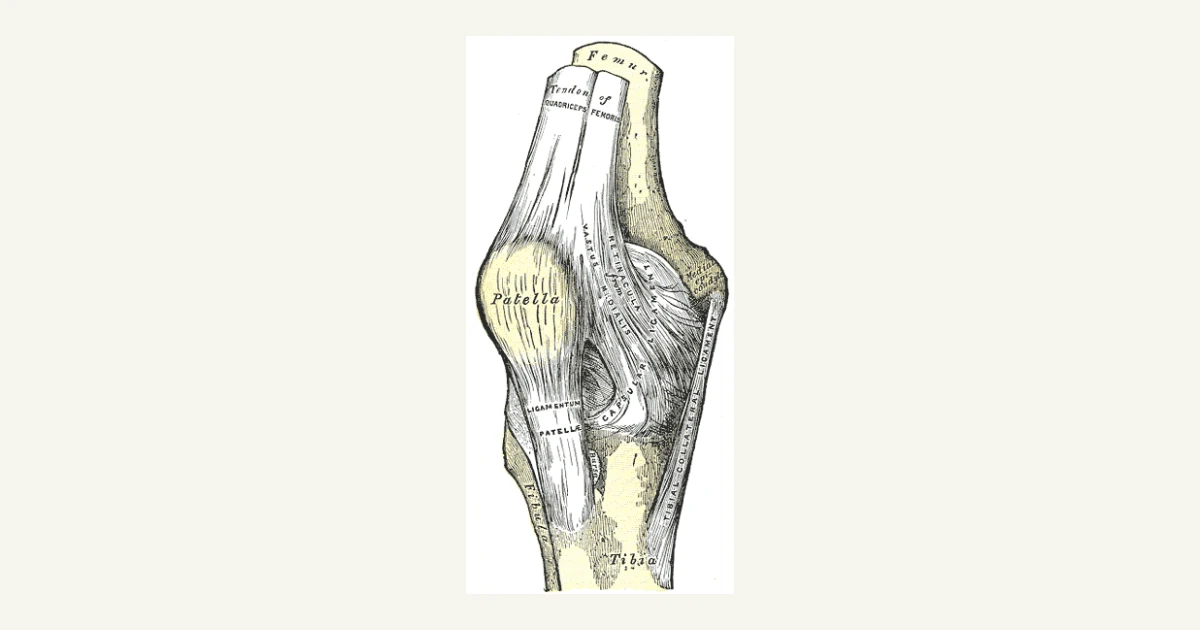
Athletes and non-athletes alike commonly experience knee pain. It is one of the most common sports injuries among active individuals in Singapore, especially young adolescents.
Many people use terms like “knee cap pain”, “patellar pain”, and “patellofemoral pain” interchangeably. In practice, these refer to related but distinct conditions involving the patella (knee cap) and its interaction with surrounding structures.
This guide breaks down the differences between knee cap, patellar, and patellofemoral pain, then focuses on symptoms so you can better identify what you may be dealing with.
Knee Cap, Patellar, and Patellofemoral Key Differences
Although closely related, these three terms describe different aspects of knee pain. The knee cap plays a key role in movement. It sits at the front of the knee and acts as a pulley for the quadriceps muscle, helping the leg extend efficiently. When this system becomes irritated or overloaded, pain can develop in different ways depending on the exact structure involved.
Knee cap pain is a broad, non-specific term. It generally refers to pain felt around or directly on the patella. Causes may include injury, overuse, irritation of soft tissue, or alignment issues.
Meanwhile, patellar pain is more specific and often linked to the patellar tendon or the patella itself. A common example is patellar tendinopathy (“jumper’s knee”), where repetitive stress leads to tendon irritation. A study found that jumper’s knee can have long-term effects lasting more than a decade.
Lastly, patellofemoral pain refers to pain arising from the joint between the patella and the femur (thigh bone). This is often called patellofemoral pain syndrome (PFPS) and is associated with how the patella tracks or moves during activity.
In simple terms:
- Knee cap pain – general area
- Patellar pain – tendon or patella-focused
- Patellofemoral pain – joint mechanics and tracking issue
These distinctions matter because each condition has different contributing factors and responds to slightly different rehabilitation approaches.
Knee Cap Pain Symptoms
Knee cap pain can vary widely depending on the cause, but several patterns appear consistently. Most people describe a dull ache or soreness at the front of the knee, often centred around the patella. The pain may feel localised or spread slightly around the area. It often develops gradually rather than appearing suddenly.
Common symptoms include:
- Pain when bending or straightening the knee
- Discomfort during prolonged sitting, especially with the knee bent (often called “theatre sign”)
- Tenderness when pressing directly on the knee cap
- Mild swelling around the front of the knee
- A feeling of stiffness, especially after rest
Activities that typically worsen symptoms include:
- Climbing or descending stairs
- Squatting or kneeling
- Running, particularly on hard surfaces
- Standing up after sitting for long periods
In some cases, people notice a clicking or grinding sensation when moving the knee. This does not always indicate damage, but when combined with pain, it can suggest irritation within the joint or surrounding structures.
Knee cap pain is often linked to overuse, poor movement mechanics, or muscle imbalance, particularly weakness in the quadriceps or hips. It can also follow a direct impact, such as a fall onto the knee.
Patellar Pain Symptoms
Patellar pain tends to be more specific and is often associated with the patellar tendon, which connects the knee cap to the shinbone.
The hallmark symptom is pain just below the knee cap, rather than around it. This distinction helps separate it from more general knee cap discomfort.
Key symptoms include:
- Sharp or focal pain at the lower edge of the patella
- Pain that worsens with jumping, sprinting, or sudden direction changes
- Increased discomfort during loading activities, such as squats or lunges
- Tenderness when pressing on the patellar tendon
- Stiffness or pain at the start of activity that may ease slightly, then return after exertion
This pattern is typical of patellar tendinopathy, a condition caused by repetitive strain rather than acute injury. It commonly affects athletes involved in sports like basketball, volleyball, or football, where frequent jumping and explosive movements are required.
Unlike general knee cap pain, patellar pain often follows a load-response pattern:
- Pain increases with activity
- Symptoms may settle during rest
- Pain returns if the tendon is overloaded again
In more persistent cases, the tendon may become sensitive even during everyday movements such as walking or climbing stairs.
Another important feature is that patellar pain is usually well localised. Patients can often point to a very specific spot just below the knee cap where the discomfort is strongest.
Patellofemoral Pain Symptoms
Patellofemoral pain presents differently from both general knee cap pain and patellar tendon pain. It originates from the joint between the patella and the femur, so symptoms tend to feel deeper and more diffuse rather than sharply localised.
Most people report a broad, aching pain at the front of the knee, often described as being “behind” or “around” the knee cap. It rarely sits in one exact spot.
Typical symptoms include:
- Pain during activities that load the knee in a bent position
- Discomfort when walking up or down stairs, especially downhill
- Pain with squatting, lunging, or kneeling
- Increased symptoms after prolonged sitting (theatre sign)
- A sensation of grinding, clicking, or catching in the knee
- Occasional mild swelling or a feeling of fullness in the joint
One defining feature is how symptoms respond to repetitive knee flexion. The more the knee bends under load, the more irritation builds within the patellofemoral joint. A heavy seated climb in a spin class is a common example, covered in the spin class injuries guide.
Unlike patellar tendinopathy, the pain is usually:
- Less pinpointed
- More activity-dependent over time rather than instantly sharp
- Often linked to movement quality and alignment
Contributing factors commonly include:
- Weakness in the quadriceps, particularly the vastus medialis
- Poor hip control, especially in the gluteal muscles
- Tight structures such as the iliotibial band
- Abnormal patellar tracking, where the knee cap does not move smoothly within the groove of the femur
Patellofemoral pain is often considered a load management and biomechanics issue, rather than a single injured structure.
Rehabilitation and Exercises
Rehabilitation focuses on reducing pain, rebuilding strength, and improving movement patterns. A structured exercise therapy is an effective long-term approach, particularly for patellofemoral pain. A good program progresses in stages rather than jumping straight into high-load exercises.
Early Stage: Pain Control and Activation
At the start, the goal is to reduce irritation while maintaining movement. Key strategies include:
- Temporarily reduce activities that aggravate symptoms (e.g. deep squats, excessive running)
- Use ice after activity if swelling or irritation is present
- Begin isometric exercises to activate muscles without excessive joint stress
Quadriceps sets (tightening the thigh while the leg is straight), straight leg raises, and gentle range-of-motion exercises can help maintain muscle engagement without worsening symptoms.
Strength Stage: Build Support Around the Knee
Once pain settles, focus shifts to strengthening the muscles that control knee movement. Research highlights two key areas, the quadriceps strength and hip and gluteal strength.
Effective exercises include:
- Squats (starting shallow, progressing gradually)
- Step-ups and step-downs
- Lunges (forward and reverse)
- Glute bridges
- Side-lying leg raises or banded walks
The aim is to improve how the knee tracks during movement. Strong hips reduce inward knee collapse, which is a common contributor to patellofemoral pain.
Control and Movement Quality
Strength alone is not enough; you also need to train how you move. Focus on keeping the knee aligned over the foot, avoiding excessive inward collapse (valgus position), and maintaining control during single-leg tasks.
Useful drills include the following:
- Single-leg squats
- Controlled step-downs
- Balance and stability exercises
Return to Activity
Gradually reintroduce higher-load activities such as running, jumping, or sport-specific drills. Monitor pain levels during and after activity and avoid pushing through sharp or worsening pain.
For patellar tendon issues, eccentric or heavy slow resistance training is often included to rebuild tendon capacity.
Treatment and Management Tips
Manage Load Carefully
Pain often results from doing too much, too quickly. Adjust training volume, intensity, or frequency rather than stopping completely.
A useful guide:
- Mild discomfort during activity can be acceptable
- Pain should not significantly worsen the next day
- Improve Footwear and Surfaces
Worn-out shoes or hard running surfaces can increase stress on the knee. Supportive footwear and varied training surfaces can reduce load on the joint.
Consider Taping or Bracing
Some people benefit from patellar taping or knee braces, which may improve alignment and reduce discomfort during activity. These are usually short-term aids rather than long-term solutions.
What our patients say
Google reviews from our clinics in Singapore.



Address Mobility Restrictions
Tight muscles can alter knee mechanics.
Focus on:
- Quadriceps stretching
- Hamstring flexibility
- Calf and hip mobility
Improved mobility supports better movement patterns.
Use Pain Relief When Needed
Pain relief and anti-inflammatory medication are a decision for your doctor or pharmacist. Use them cautiously and follow medical advice, especially if symptoms persist.
Seek Professional Guidance
In cases involving front knee pain, weakness, or movement-related discomfort, knee physiotherapy focuses on improving knee function through targeted exercises, movement correction, and structured rehabilitation.
A physiotherapist can:
- Assess movement patterns
- Identify specific weaknesses or imbalances
- Tailor a rehabilitation program
Persistent or worsening symptoms may require further evaluation to rule out structural issues.
Conclusion
Knee cap, patellar, and patellofemoral pain all affect the front of the knee, but they differ in location, cause, and behavior. Understanding these differences helps you respond more effectively.
Most cases improve with a structured approach that combines load management, targeted strengthening, and movement control. Early attention to symptoms, rather than pushing through pain, often leads to faster and more reliable recovery.
Where are you with this right now?
1. It is settling on its own
Most knee pain that started with a specific moment settles over six to twelve weeks. Swelling that comes and goes with activity, and an ache after a long day, are usual in that window. If it is improving month on month and you can walk, take stairs and sleep, it is behaving normally. You do not need us for this, and we would rather say so.
2. It has stopped improving
You go down stairs one leg at a time. You have stopped squatting to pick things up. You test it before you trust it.
Pain settling is the first thing that happens, not the last. Quadriceps strength is the last thing to come back, and it does not come back on its own. That is the gap worth measuring, and it is not measured by how you feel on the day.
The Stalled Recovery Review is three appointments over three weeks with the same therapist, because what a joint does under load cannot be read in one visit. The first finds what is limiting it. The next two measure how it responds. $690, nett, no GST, which is three appointments at $230.
3. You have had surgery, or you have a date
Recovery after an operation has a shape, and knowing which stage you are in tells you whether you are on it. See the ACL Reconstruction Recovery Program, or knee physiotherapy if you are not sure which applies to you.
All of it runs on the same four stages. The Phoenix Recovery Protocol explains what each stage works on and what you have to meet to move up. No referral needed to start.
Written by Zita Sham, Fairuuz Saleh and Shiv Mohan Banka, Principal Physiotherapists at Phoenix Rehab.Clinically reviewed by Louise Yow, Principal Physiotherapist & Director, AHPC A1300363H.Last reviewed 28 September 2026.
Next step
Find out which stage you are in
Pain is the first thing to leave. Movement and strength are the last things trained back, and most people stop before that part is done. One Assessment and Treatment is a single 45-minute appointment at $230, nett, no GST. Your therapist finds what is actually limiting you, treats it in the same appointment, and you leave with your current stage and a written plan.
Prefer to phone? Each of our five clinics has its own number on the clinics page. No referral needed to book.
Related reading
- physiotherapy after surgery
- knee physiotherapy
- Straight Talk: Solutions for Knee Pain When Straightening
- Knee Pain When Climbing Stairs: Causes and What Helps
- Knee Pain Location Chart: Understanding Discomfort Sources
- The Phoenix Recovery Protocol, and the four stages
- All recovery programs, hand and physio
- Dislocated kneecap
Where we are
Clinics across Singapore
ORCHARD
400 Orchard Road #12-12
Orchard Towers, S238875
NS22 Orchard MRT
Physiotherapy and hand therapy in Orchard →
WhatsApp 8800 1830TAMPINES
9 Tampines Grande #01-20
Asia Green, S528735
EW2DT32 Tampines MRT
Physiotherapy and hand therapy in Tampines →
WhatsApp 8780 9608SERANGOON
265 Serangoon Central Drive #04-269
S550265 · Lift C only
NE12CC13 Serangoon MRT
Physiotherapy and hand therapy in Serangoon →
WhatsApp 8892 4121TANJONG PAGAR
10 Anson Road #02-77A
International Plaza, S079903
EW15 Tanjong Pagar MRT
Physiotherapy and hand therapy in Tanjong Pagar →
WhatsApp 8227 7074JURONG EAST
2 Venture Drive #02-02
Vision Exchange, S608526
NS1EW24 Jurong East MRT
Opening 25 October 2026
Physiotherapy and hand therapy in Jurong East →
WhatsApp 8242 7340